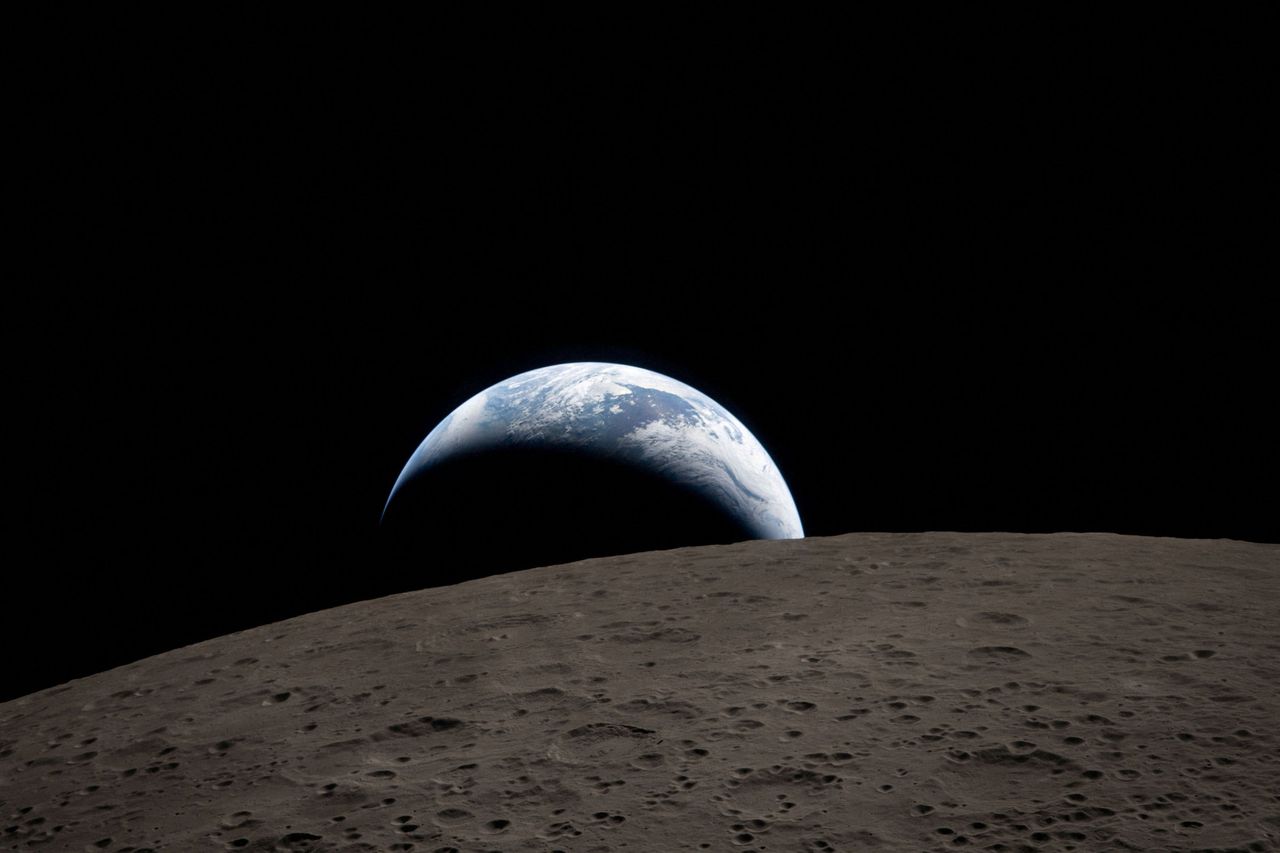
Answering your questions Full disclosure: I did not expect to get drawn in by news and footage of the Artemis II mission a few weeks ago. (Another reminder that I’m a Gen Xer.) But soon enough I was clicking on every new photo, watching videos and searching for confirmation of a safe return home. Our readers were watching closely, too, and sent in some really interesting questions. I shared them with my longtime colleague Sarah Kaplan, a climate and science reporter here at The Washington Post, and she called them “fantastic.” We’re starting with one I’ve actually considered a few times: - Why explore the other side of the moon? Other than just curiosity, how is this important?
Sarah wanted to launch this with really ancient history, so I’m turning it over to her for a lesson here at the top — consider this a long answer to that first question: Let’s start by going back in time about 4.5 billion years. Back then, the infant solar system was crowded with would-be-worlds, called protoplanets, that were constantly colliding and combining with one another. Out of this chaos, a massive, Mars-size protoplanet smashed into Earth. The impact shattered both bodies, causing their materials to swirl together. Most of this mixture coalesced back into our planet, but a fraction was flung into space and became the moon. We only know these facts about the moon because of material collected by the Apollo astronauts more than 50 years ago. When Neil Armstrong brought back the first samples from the lunar surface, scientists were stunned to discover that they had almost the exact same chemical makeup as rocks from Earth. Before that discovery, researchers couldn’t agree on where our only natural satellite came from. But now the moon’s cataclysmal origin story, known as “the giant impact hypothesis,” is part of every textbook. This is just one example of how space exploration can open up whole new opportunities to understand the universe.
– Sarah Kaplan - Why doesn’t the moon revolve on its axis like the earth does?
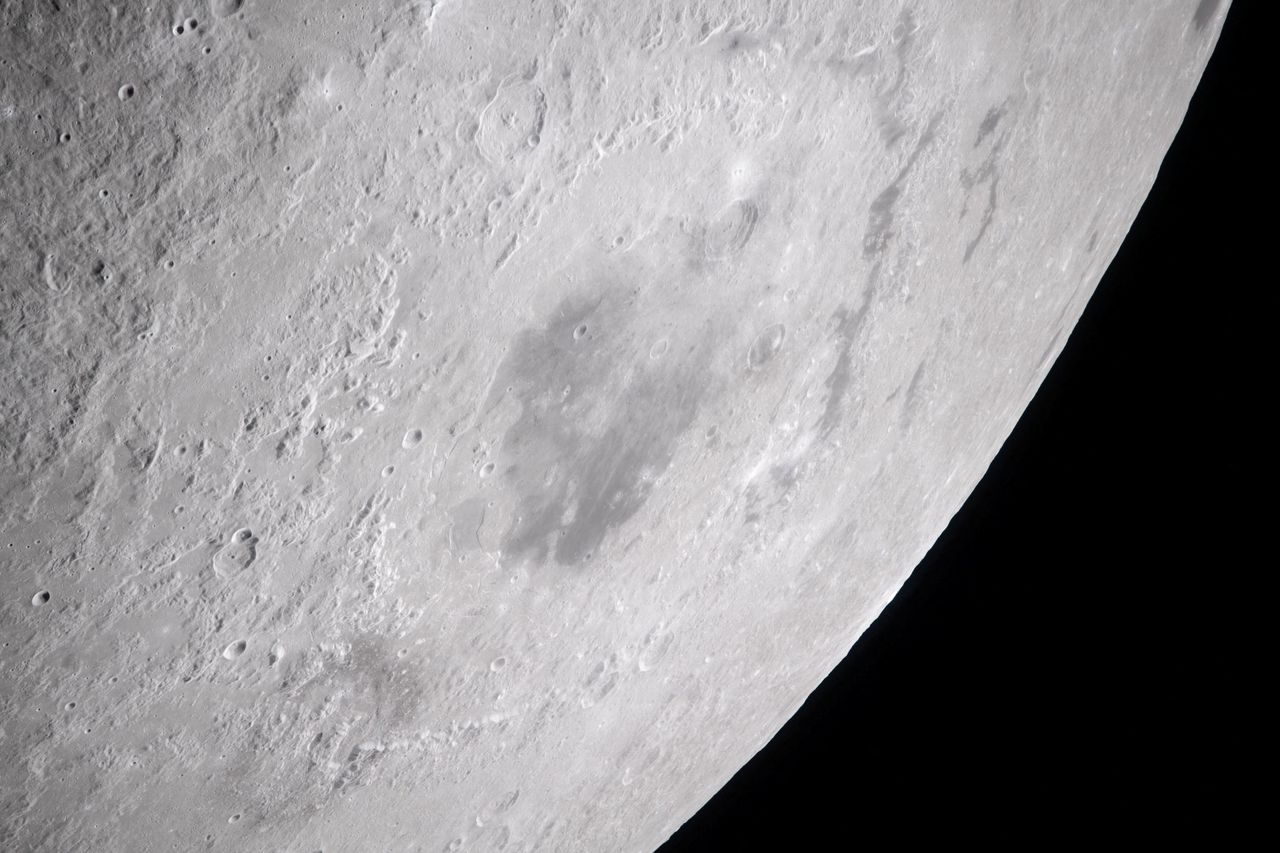
- Since the dark side of the moon is always in the dark, how could the astronauts identify craters and things on this side?
The reason the moon always shows the same face to Earth — a phenomenon called tidal locking — stems from what happened soon after its formation. As the still-molten material spun wildly through the sky, it was tugged by Earth’s gravity, creating a bulge on one side. That bulge caused the moon’s rotation to gradually slow, until eventually it was spinning on its axis at exactly the same pace as it was orbiting Earth. Billions of years later, the bulging heavy side of the moon is permanently drawn toward us, like a dancer who never looks away from her partner. The side we don’t see isn’t actually dark, no matter what Pink Floyd might say; it’s illuminated by the sun just as frequently as the more familiar near side. But the lunar far side is quite different — another by-product of its tempestuous birth. Earth remained a red-hot ball of molten rock for years after the giant impact, radiating heat that kept the moon’s near side molten even as the far side began to cool. This gave the far side a thicker crust, while the near side became more volcanically active. The eruptions on the near side created the dark, smooth swaths of volcanic rock known as maria — the Latin word for “seas.” Meanwhile, the far side was bombarded by the debris that continued to swirl about the early solar system, leaving it pocked with craters. – Sarah Kaplan | 



 John Taylor ">