
|
 |



As the Iran crisis spirals back out of control, it’s a big day for the president of the United States: His official schedule suggests he will have “Executive Time” all morning until 1:30 p.m., followed by a ninety-minute policy meeting and a closed-press session to sign executive orders. Heavy is the head.
Programming note: After a week’s hiatus, MAGA Monday is back! Sam Stein and Will Sommer are going live on Substack and YouTube at 10 a.m. EDT. Happy Monday.
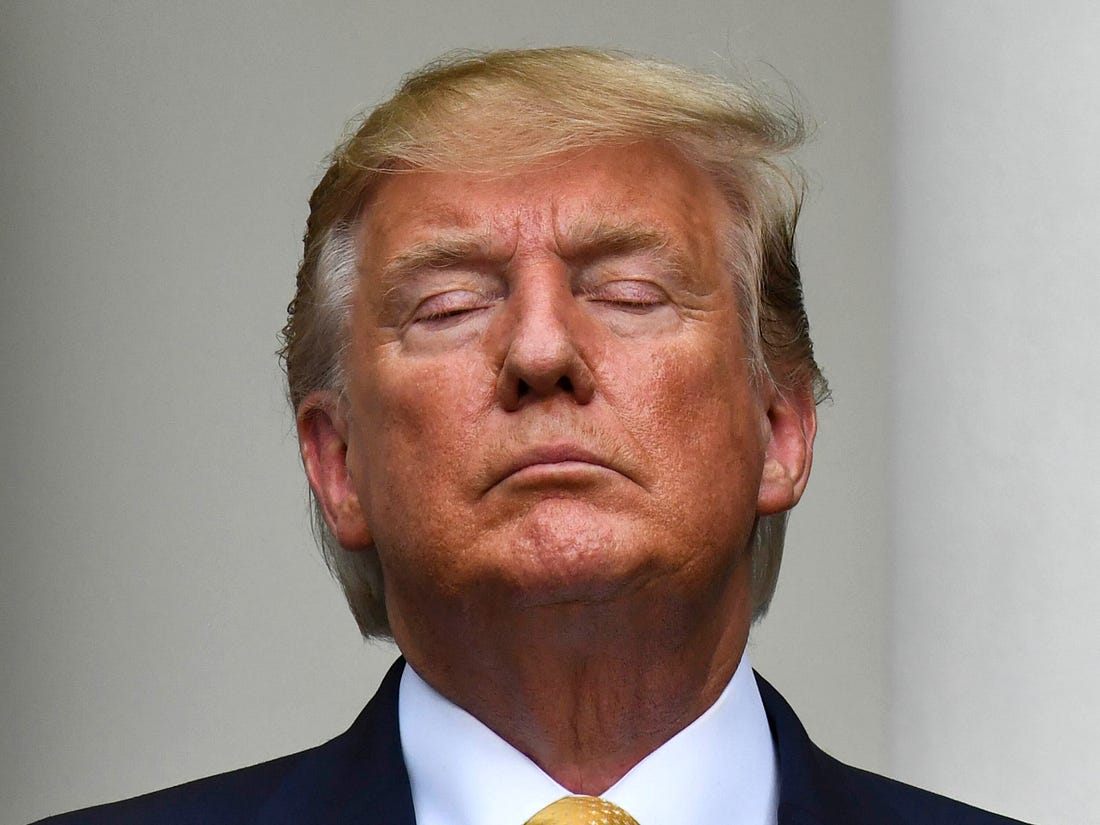 |
Donald Distracted
by Andrew Egger
Well, here we are again: The ceasefire in Iran is once again in a state of near-total collapse. The U.S. military hasn’t yet resumed its bombing campaign of the Iranian mainland, but the danger in the Strait of Hormuz is as bad as ever.
After claiming Friday that the strait was now open and letting a trickle of ships through, Iran abruptly reversed course Saturday, firing on at least two merchant vessels and insisting the strait would remain closed as long as America maintained its military blockade of Iran’s ports. Then, yesterday, U.S. forces fired on and seized an Iranian cargo ship that they said had tried to run their blockade—causing Iran to announce it was pulling out of the second round of Islamabad peace talks, which were scheduled to begin today. Oil prices, which on Friday had fallen by more than $10 a barrel on Iran’s claims of an open strait, rocketed back upward, now hovering back around $100.
In one sense, we’re right back where we were last month—the strait closed, Iran intransigent, Donald Trump threatening. But that undersells the damage. A cancer patient who goes under the knife and wakes to discover they couldn’t remove the tumor isn’t likely to be comforted that at least the doctors stitched him up properly. The ongoing closure of the Strait of Hormuz is becoming a global economic catastrophe, and it’s clear Trump is running out of options to compel Iran to stop throttling it.
The White House has suggested two ways this all might end, and neither seems particularly close to materializing. Trump still seems to think he can bully the Iranians into submission, even though his strategy of making theatrical threats and then backing down at the last second has already failed to accomplish this four or five times. And Defense Secretary Pete Hegseth keeps announcing confidently that Iran’s weapons stockpiles are all but depleted. But the Pentagon has quietly acknowledged the hollowness of this story: “Iran retains thousands of missiles and one-way attack UAVs that can threaten U.S. and partner forces throughout the region,” Defense Intelligence Agency Director Lt. Gen. James Adams noted in a budget memo to the House Armed Services Committee last week. “In addition, Iran poses a persistent threat to freedom of navigation through the Persian Gulf, Strait of Hormuz, and Gulf of Oman, including retaliatory seizures of commercial ships and the threat of mining the Strait of Hormuz.”
But it isn’t just that Trump low on options: More and more, he barely seems to understand what’s going on in the conflict at even a basic layman’s level. His pronouncements—whether they be threats, triumphant announcements, or even just descriptions of what’s underway in the strait—resemble reality less with every passing day.
Sometimes this is a good thing: His genocidal threats that “a whole civilization will die tonight” never materialized. But other times it’s simply an alarming reminder of how fitfully and flightily the president is monitoring his own war. “Iran has agreed to never close the Strait of Hormuz again,” Trump posted Friday morning. “It will no longer be used as a weapon against the World!” He was so confident the end was in sight that he was already throwing the conflict in Iran and the proxy fight in Lebanon on his fanciful list of eight wars he’s “solved”: “It has been my Honor to solve 9 Wars across the World, and [Lebanon] will be my 10th, so let’s, GET IT DONE!” he posted. None of these statements had the slightest bearing on reality.
One other weekend example of Trump’s unaccountably gauzy grasp of the conflict bears pointing out. In announcing America’s blockade of Iran last week, Trump claimed that the United States would be “BLOCKADING any and all Ships trying to enter, or leave, the Strait of Hormuz.” In the following days, U.S. leaders hastened to clarify that America was not blockading the entire strait—which would have violated international law—but was merely blockading Iran’s ports.
But somehow nobody managed to get this simple and crucial fact to lodge in the president’s tortuous mind. “Iran recently announced that they were closing the Strait,” Trump posted Saturday, “which is strange, because our BLOCKADE has already closed it. They’re helping us without knowing, and they are the ones that lose with the closed passage, $500 Million Dollars a day!”
The hour is growing very late. Already the political damage is irreversible for Trump and his party: Energy Secretary Chris Wright acknowledged Sunday that domestic average gas prices would likely not return below $3 a gallon until 2027. (Today gas is north of $4.) And the simple fact causing it all—the same as it’s been all along—is that Trump, having chosen to kick the Iranian hornet’s nest, remains at a loss for what to do next. We’ve known he had no plan for months. But what’s becoming shockingly apparent now is how little he’s even paying attention to the problem.