| | In this edition: Nigeria replaces finance minister, Taiwan cancels Eswatini trip, and Kenya’s revise͏ ͏ ͏ ͏ ͏ ͏ |
| |  | Africa |  |
| |
|
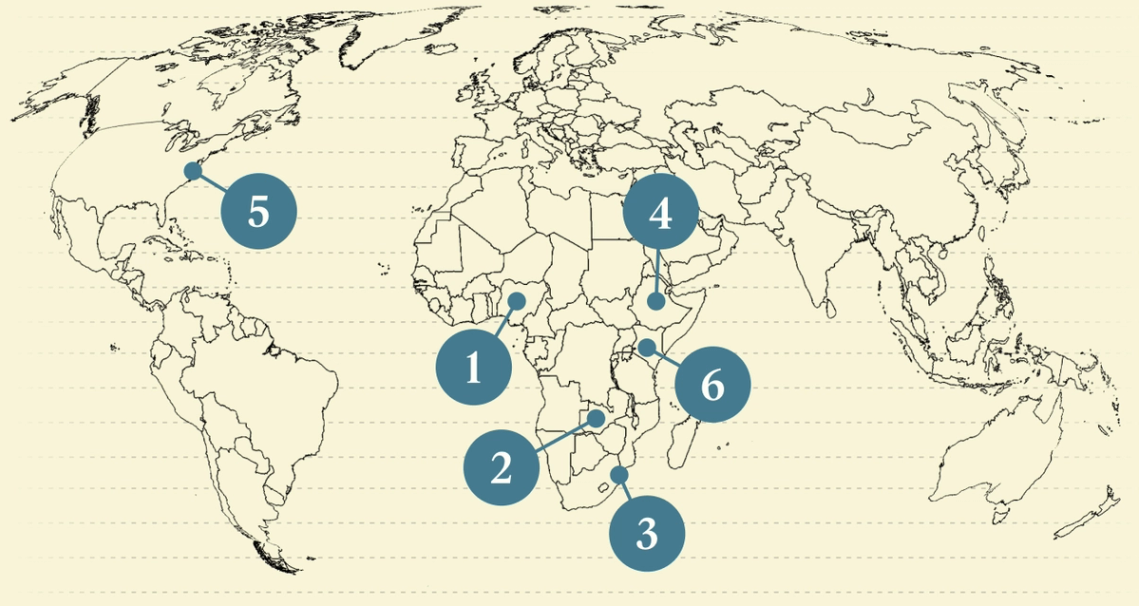 - Tinubu reshuffles cabinet
- BHP eyes Zambian copper
- Taiwan cancels Eswatini trip
- Concerns over Tigray peace
- US questions on terrorism
- Kenya revises tax goal
 Nigerian ecologist wins top environmental prize. |
|
 Sub-Saharan Africa entered 2026 with its fastest economic growth in a decade but that momentum has been upended by the disruption in fuel supply caused by the US and Israeli war with Iran. Last week the International Monetary Fund trimmed its 2026 outlook for Africa to 4.3%, 30 basis points down from its earlier forecast. The downgrade is modest on paper but the sharper signal lies in the risks: In a prolonged conflict scenario, the Fund warned that output could contract by twice as much across the region, as the “lag effect” of higher energy, fertilizer, and shipping costs ripple through already fragile economies. “I think the GDP impact could be deeper as the war becomes protracted,” Standard Chartered Bank’s Africa CEO Dalu Ajene told me. He’s concerned that the drag on growth could worsen and hit unevenly across countries if the war persists. The varying impact of what he calls “imported inflation” is already visible: Oil exporters may enjoy a temporary windfall, but most African economies, still heavily reliant on imported fuel, are reeling. African finance ministers in Washington last week for the IMF and World Bank meetings were scrambling to secure financing as conditions tightened. In Ethiopia, Prime Minister Abiy Ahmed has urged citizens to ration fuel, an early sign of how quickly the shock is feeding into domestic economies. South Africa’s President Cyril Ramaphosa has called on the international community to “redouble efforts” toward restraint and adherence to international law, diplomatic phrasing that masks deeper economic anxiety. The gains of 2025 were real and “hard won,” as the IMF noted. But what this moment reminds us is how quickly external shocks can overwhelm domestic progress. For sub-Saharan Africa, resilience is no longer just a policy goal — like with the COVID-19 pandemic and the fallout from Russia’s ongoing war in Ukraine, it is once again an urgent test. |
|
Nigeria’s new finance minister |
 Nigeria’s new Finance Minister Taiwo Oyedele. Taiwo Oyedele/X. Nigeria’s new Finance Minister Taiwo Oyedele. Taiwo Oyedele/X.Nigerian President Bola Tinubu replaced his finance minister, the architect of a radical economic policy overhaul, less than a year before elections. Wale Edun, a former World Bank official and investment banker, was replaced by Taiwo Oyedele, a junior finance minister who oversaw a revamp of the country’s tax system, in a surprise move that marks Tinubu’s most high-profile cabinet reshuffle since taking office three years ago. It was not immediately clear, however, if the move marked a change of direction at the finance ministry. Edun’s tenure has been marked by an aggressive push to overhaul sub-Saharan Africa’s second-largest economy after two recessions within a decade, leading to an uptick in foreign direct investment inflows. However, Nigeria’s debt burden has shot up thanks to increased government spending. In one of his final acts as finance minister last week, Edun ruled out a borrowing program from the International Monetary Fund. Officials close to the presidency told Semafor his departure had no relation to his performance and had been brewing due to a personal issue, but did not elaborate. Tinubu is set to seek a second term in a presidential election to be held next January. — Alexander Onukwue |
|
BHP mulls Zambia copper exploration |
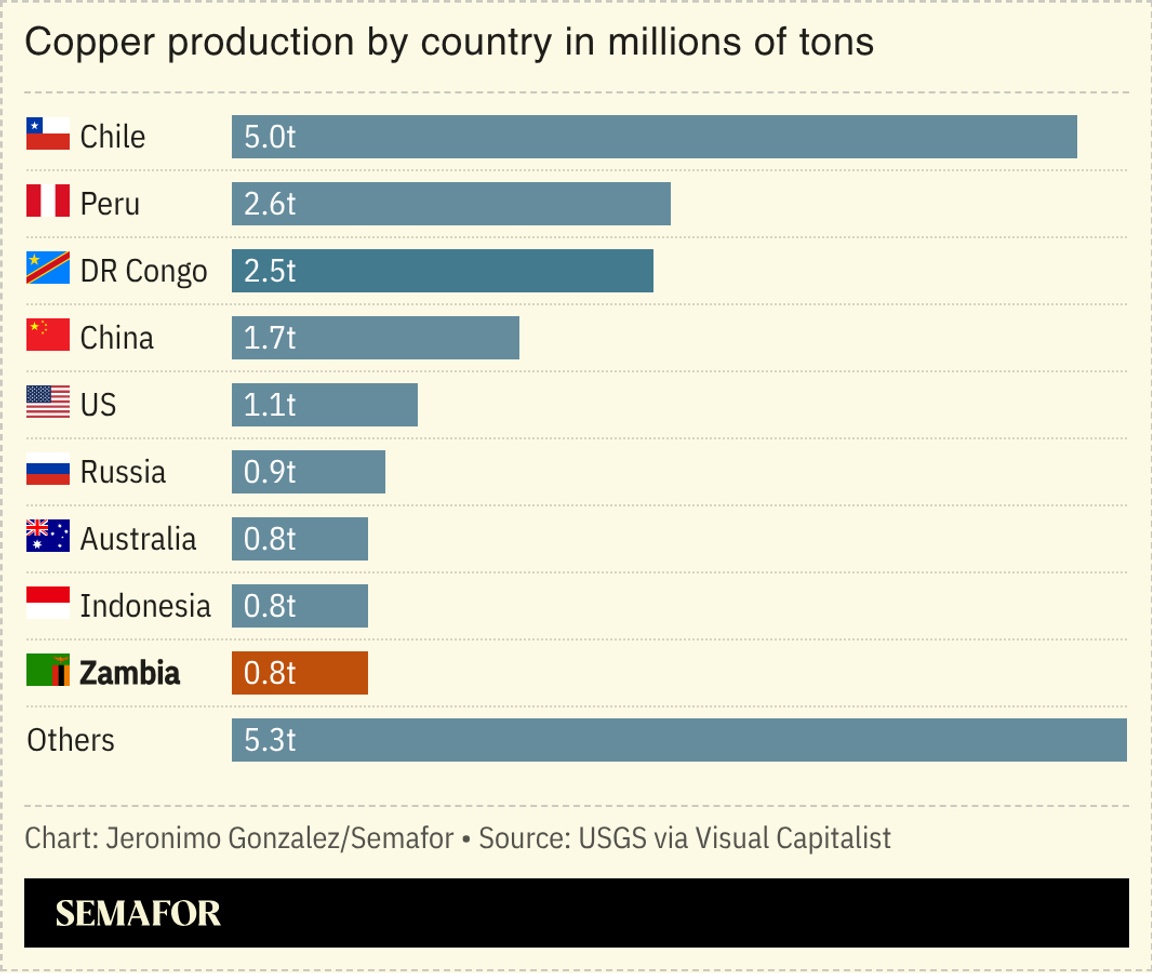 BHP is weighing a major copper exploration push in Zambia, a move that would mark the Australian mining giant’s first large-scale project in Africa for more than a decade as it searches for deposits essential to the clean energy transition. The interest highlights a broader global scramble for copper, one in which supply constraints are colliding with soaring demand from electric vehicles and power grids. The overture by BHP — the world’s largest miner by market capitalization, whose last major African operation was spun out into South32, an Australian mining company, in 2015 — could be seen as a vote of confidence in Zambia. The continent’s second-largest copper producer has in recent years pursued a policy overhaul, which includes a push to digitize geological data. In a statement published by Zambia’s mines ministry, BHP’s head of global generative exploration told officials in Lusaka that the company wants to hunt for deeper, concealed deposits. Lusaka, meanwhile, said it views collaboration with BHP as aligned with its goal of lifting national copper output and attracting more multinational investment. — Tiisetso Motsoeneng |
|
Taiwan cancels Eswatini visit |
 Taiwan’s President Lai Ching-te. Yimou Lee/File Photo/Reuters. Taiwan’s President Lai Ching-te. Yimou Lee/File Photo/Reuters.Taiwan’s president canceled a planned visit to Eswatini after three African countries revoked permissions for his aircraft to pass through their airspace, which Taipei said was due to “intense pressure from China.” Lai Ching-te had been scheduled to attend celebrations marking the 40th anniversary of King Mswati III’s ascension; Eswatini is the only African country with official diplomatic relations with Taipei. But Seychelles, Mauritius, and Madagascar pulled their overflight clearances; China insists that Taiwan is one of its provinces. Beijing has since praised the three countries, saying “a just cause enjoys abundant support” and denied Taiwan’s allegation of economic coercion. China has spent the last decade deepening its ties with African governments through loans, infrastructure projects, and diplomatic courtship. African states that once hedged between Taipei and Beijing have steadily aligned with China — from Nigeria’s forced downgrade of Taiwan’s office in 2017 to Burkina Faso’s diplomatic switch in 2018. Eswatini is the lone holdout. |
|
Tigray peace deal at risk |
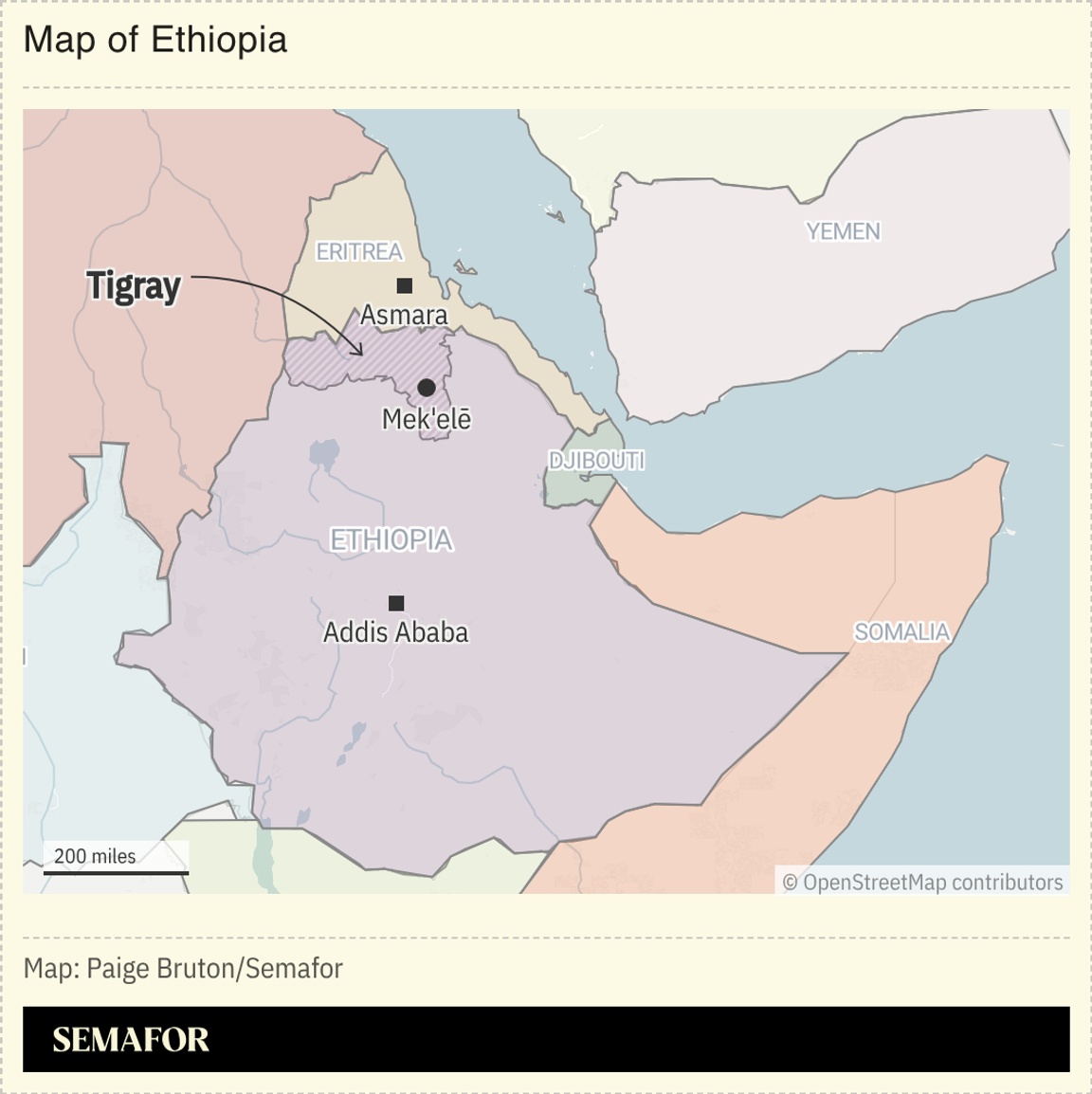 The ruling party in Ethiopia’s northern Tigray region reconstituted a parliament that had been disbanded as part of a postwar accord in 2022. The move threatens to raise tensions between regional adversaries in a country that is still recovering from a civil war that stymied attempts to liberalize one of Africa’s biggest economies. The Tigray People’s Liberation Front announced the decision in a Facebook post on Sunday, accusing the federal government led by Prime Minister Abiy Ahmed of extending the tenure of the region’s interim administrator without consultation. The parliament in question existed before the war between government troops and the TPLF began in 2020. Ethiopia’s two-year civil war in the Tigray region led to the deaths of about 600,000 people. The end of the conflict eased the violence, but a power struggle has continued between the TPLF and Abiy’s deputies in the region. Getachew Reda, a top adviser to the prime minister and a former administrator of the Tigray region, said the TPLF’s latest move is “a clear repudiation of the fragile post-conflict arrangement.” |
|
US senators voice terrorism worries |
 Abdifitah Hashi Nor/AFP via Getty Images Abdifitah Hashi Nor/AFP via Getty ImagesUS senators from both parties voiced concern that the Trump administration had failed to match its tough rhetoric on fighting terrorism in Africa with adequate resources. State Department officials speaking at a US Senate Foreign Relations subcommittee hearing on Tuesday defended Washington’s approach as a pragmatic reset from aid-dependent policies. “We will pursue a disciplined, interest-driven strategy rooted in flexible realism,” said Nick Checker, who leads the department’s Africa bureau. But they faced pushback over ambassadorial vacancies, gutted humanitarian programs, and a lack of transparency. “I cannot accept the premise that there is a match and accord between your actions and your statements,” said Sen. Chris Coons, a Democrat. Republican Sen. Ted Cruz, who chairs the Africa subcommittee, focused on jihadist violence, warning that terrorist groups in Mozambique, the Sahel, and Somalia were “rapidly growing and demand attention.” — Adrian Elimian |
|
Kenya’s new tax revenue goal |
 Kenya’s tax revenue goal for the fiscal year ending in June, lower than prior projections and a challenge for a government that is expanding spending commitments. The Treasury has raised its budget to “accommodate security spending, disaster response, and higher pay demands by government staff,” Bloomberg reported. Kenya’s central bank governor last week said the country had requested rapid financial support from the World Bank to help it manage the economic shocks sparked by the Iran war. As one of many nations on the continent reliant on energy imports, Kenya is trying to avoid fuel shortages. It is the first larger emerging economy to publicly confirm a formal support request on the matter to the World Bank, Reuters reported. |
|
 Business & Macro |
|
|


