| | US stocks hit record highs despite alarm bells among energy executives, the US government may bail o͏ ͏ ͏ ͏ ͏ ͏ |
| |  BRUSSELS BRUSSELS | ISLAMABAD |  XIAMEN XIAMEN |
 | Flagship |  |
| |
|
The World Today | 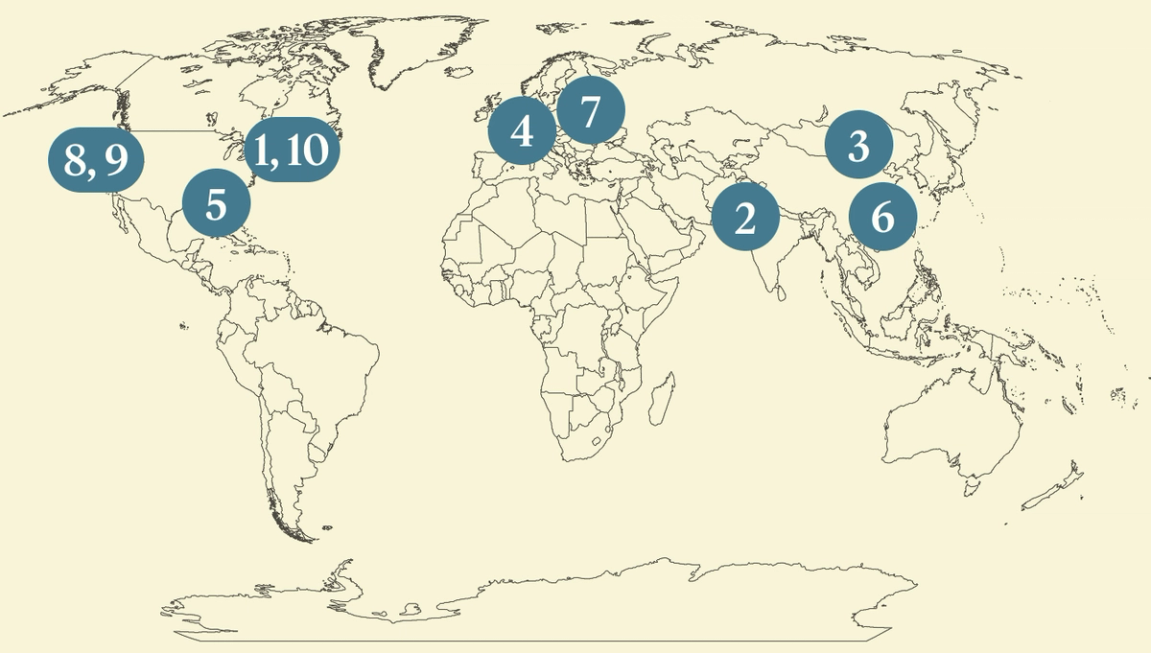 - Stocks soar, energy fears grow
- Indian unease over Pak role
- Paying more for minerals
- Berlin’s new military strategy
- US gov. may rescue Spirit
- China backs space data centers
- Strongman era has peaked
- Slow and steady on AI
- Governing superhuman LLMs
- H5N1 bird flu vaccine trials
 The power of prophecy. |
|
US stocks hit records despite energy woes |
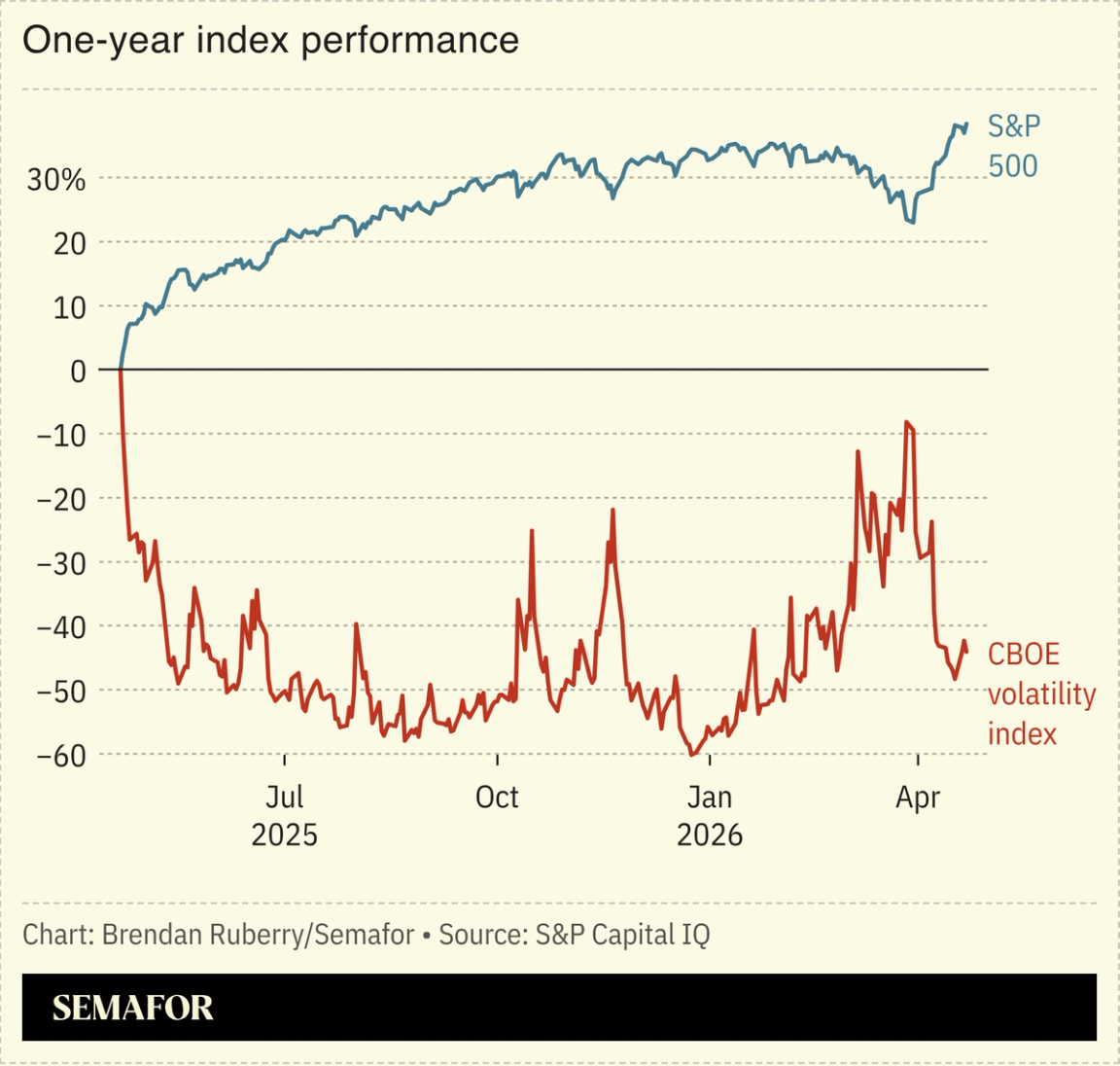 US stocks hit record highs on Wednesday, a day after President Donald Trump extended a ceasefire with Iran, even as energy executives grew more worried about the conflict’s long-term ramifications. The stock market’s animal spirits are returning, CNBC wrote, further evidence that “traders are moving past the Iran war as a major threat.” But elsewhere, warning signs are piling up: A US-led effort to clear mines from the Strait of Hormuz could take six months, according to Pentagon documents, and volatile energy markets are already “pushing the world towards the cliff edge,” The Economist wrote. The pressure is so acute that the Gulf is looking to build brand new trade routes, Semafor’s Saudi Arabia bureau chief wrote. |
|
India bristles at Pakistan’s moment |
 Press Information Department (PID)/Handout via Reuters Press Information Department (PID)/Handout via ReutersIndian political elites are discomforted by regional rival Pakistan’s outsized role in US-Iran peace talks, but there are some bright spots for New Delhi, analysts argued. While India’s prime minister has sought to portray himself as a global leader, the Iran crisis suggests India “remains stuck as a middle power,” The Atlantic argued. The situation is a consequence of New Delhi’s foreign policy approach, an expert wrote in War on the Rocks: “India has built relationships everywhere and obligations nowhere.” Still, an Iran ceasefire, even one brokered by Pakistan, would be in India’s best economic and strategic interests, another argued. And “India is still the story” when it comes to global business, Eurasia Group’s Ian Bremmer said at Semafor World Economy. |
|
US says allies should pay more for minerals |
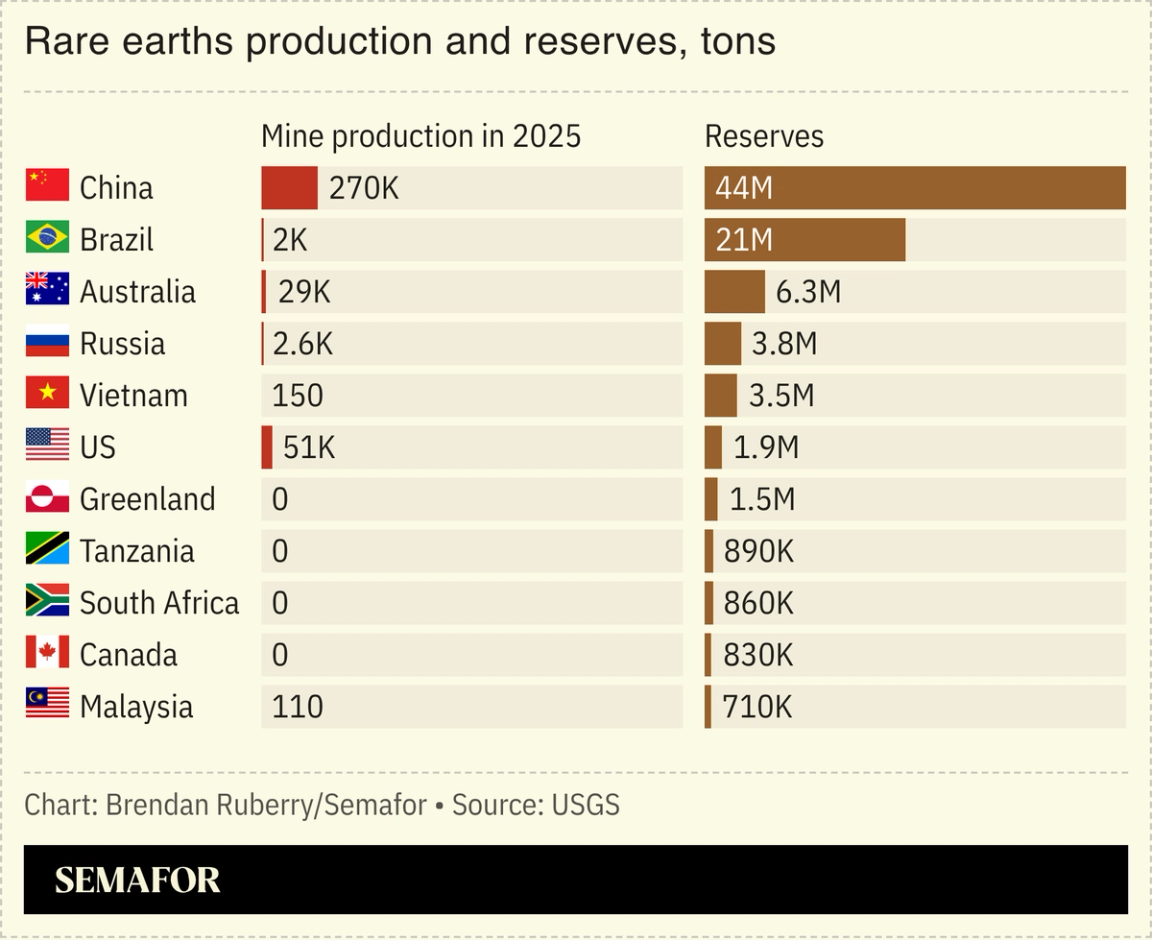 US allies should pay more for critical minerals sourced from outside of China, the White House’s trade representative said, as Washington looks to break Beijing’s dominance in the sector. The EU and US are reportedly nearing an agreement to coordinate on mining, setting up a club of countries to trade the minerals at set minimum prices, which some partners worry would raise costs for businesses and spur China’s retaliation. But US trade czar Jamieson Greer dismissed such concerns, telling the Financial Times that “we will all pay a national security premium to have a secure supply chain.” The divisions underscore the West’s challenges in combating China; following decades of building up its supply chains, Beijing now controls 90% of global processing. |
|
Germany pledges more military might |
 Nadja Wohlleben/Reuters Nadja Wohlleben/ReutersGermany vowed to take on more “responsibility” for Europe’s defense, in the country’s first-ever postwar military strategy. The new 35-page report calls for quickly boosting troop numbers and military capabilities, and is primarily aimed at deterring Russia, analysts said. Germany was long seen as hesitant to appear overly militaristic or nationalistic, but the Ukraine war — and now the Iran conflict — has pushed Berlin to increase defense spending and crystallize its own national interests. The plan makes no mention of the US’ threats to leave NATO, and the implications of that for German security, but the country’s defense minister said Berlin was considering such scenarios. |
|
US nears bailout deal for Spirit |
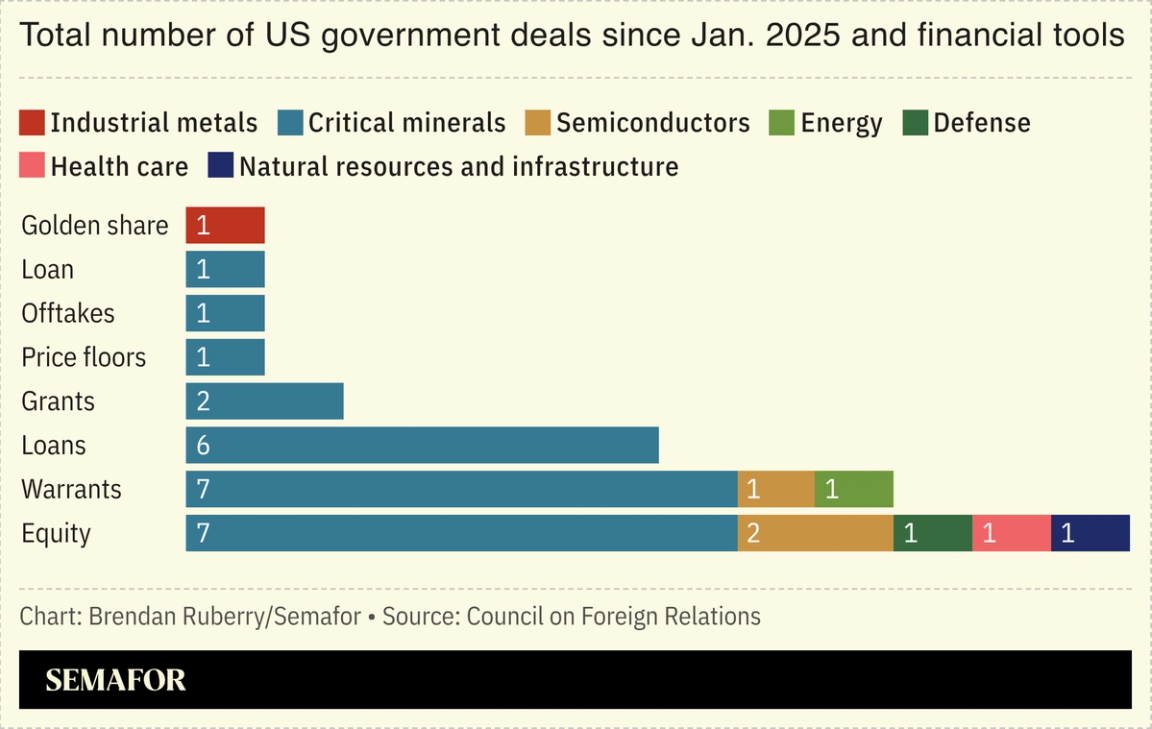 The US government is nearing a $500 million deal to bail out troubled budget carrier Spirit Airlines, a move that would deepen the Donald Trump administration’s stakes in private-sector companies. Under the agreement, the US would have the option to purchase up to 90% of the airline. The White House’s push to buy stakes in private companies is the biggest such effort since World War II, new research shows. But a Spirit deal would be different from the US’ investment in Intel, “which was a good business move for Americans,” Semafor’s Rohan Goswami argued. “Getting involved with Spirit is not.” The carrier is contending with an unwieldy debt load, surging fuel costs, and customer dissatisfaction. |
|
China bets on data centers in space |
 Maxim Shemetov/Reuters Maxim Shemetov/ReutersA Beijing-based space startup secured $8.4 billion in financing commitments from state-owned or -linked banks, part of China’s efforts to explore building orbital data centers. The funding, SpaceNews wrote, speaks to China’s broader space ambitions and strategy of injecting state capital into private industry. China is reportedly aiming to put a data center in space by 2035; other global players including SpaceX and Google are pursuing similar projects. The CEO of US space company Voyager Technologies told Semafor World Economy that orbital data centers would solve several earthly challenges that the facilities face, including insatiable energy needs, not-in-my-backyard concerns, and regulatory hurdles. |
|
The waning allure of the strongman |
 Bernadett Szabo/Reuters Bernadett Szabo/ReutersThe era of the strongman has peaked, a prominent political scientist argued. Hungarian Prime Minister Viktor Orbán’s landslide defeat was not an isolated incident, Stephen M. Walt wrote in Foreign Policy: Other authoritarian figures may remain in power but their allure appears to be waning, and they are struggling to achieve their goals. Even China’s Xi Jinping, Walt noted, has failed to rebalance the economy. Whether or not Walt is right, academics agree that regimes where power is concentrated in an individual tend to underperform those driven by institutions, whether democratic or not. Autocrats lack honest feedback and have few incentives to improve citizens’ lives, a 2025 paper found. |
|
 Tracking trends isn’t enough anymore — so what is? In a must-hear episode of Masters of Scale, futurist Amy Webb explains what leaders across industries and geographies should be paying attention to now. As AI and geopolitics reshape markets, her framework for navigating convergences is essential for any leader who needs to be ready for what’s next. Find this episode of Masters of Scale wherever you get your podcasts. |
|
Don’t count Apple, Google out on AI |
 Apple AppleIncumbent tech giants shouldn’t be counted out of the AI race, analysts argued, given that they control the distribution networks that the tech runs through. Apple’s incoming CEO is under pressure to disprove the company’s reputation as an AI laggard, but such criticisms ignore that it controls “the technological equivalent of the Strait of Hormuz,” a Financial Times columnist argued: AI models will increasingly be run on Apple’s laptops and smartphones. And while Google is facing heat from detractors who say it’s fallen behind on AI-powered coding, it has a massive advantage in the consumer market, where it can “gobble up everyday users that are already accustomed” to using Google for their work and personal lives, Semafor’s tech editor argued.
|
|
Testing oversight of super-smart LLMs |
Anthropic tried to answer a looming worry: How will humans supervise AI models that are smarter than we are? One possibility is using less-smart, but easily controlled, models to train cutting-edge ones. The firm had its Claude AI try to do that, letting it stand in for human researchers using a relatively weak open-source model to supervise a more powerful one. It was only a dry run for future efforts to control superhuman AI models, which will be far harder. The test was limited to one simple task, and some of the Claudes themselves sometimes gamed the system, displaying the exact reward-hacking they were supposed to prevent. But Anthropic argued that it suggested models could “meaningfully” improve AI safety research. |
|
|


