|
|
|
|
|
|
|
|
|
Faced with the prospect of layoffs, employees like Tina Chen aren’t just building emergency buffers – they’re also spending money to secure their next job. Tina Chen/Supplied
|
|
|
|
|
I recently spoke to Canadians feeling anxious about their jobs amid rising layoffs. Beyond saving for everyday expenses in case they’re let go, what stood out was how many of them anticipated spending more on upskilling, career coaching, resume polishing and a host of job-search-related activities. |
|
|
|
|
Take Tina Chen. After the first signs that AI would bring major changes to her company, Ms. Chen started bulking up her emergency fund while seeing what skills she could build on the side. |
|
|
|
|
The company announced it would be “restructuring the team to prioritize AI initiatives,” Ms. Chen said in a recent interview. |
|
|
|
|
Though the Toronto-based product manager wasn’t let go, she began questioning the stability of her role. “I decided to quit … with that news hanging around my head, it wasn’t great,” she said. |
|
|
|
|
|
|
|
|
She gave herself until the end of this year to gain skills that would make her more resilient to AI-driven change, including taking coding courses for Anthropic’s Claude AI platform and courses that would help her create independent income streams. “Everyone in tech is being asked to use AI in their day-to-day job but we didn’t have time to learn,” Ms. Chen said. |
|
|
|
|
Before resigning, she built a six- to 12-month emergency fund and budgeted for several boot camp courses – at roughly $2,000 apiece – offered through paid portals or run by YouTube creators. |
|
|
|
|
Faced with the prospect of layoffs, employees like Ms. Chen aren’t just building emergency buffers, they’re also spending money to secure their next job. |
|
|
|
|
It’s not hard to see why. Canada’s youth unemployment rate rose to 14.1 per cent in February, up from 13.3 per cent at the end of 2025. More ghost jobs
are being posted for market research and compliance purposes with no intention of ever filling them. And then there’s the growing threat of AI – IBM’s chief HR officer recently acknowledged AI can accomplish most of what junior employees did two years ago. |
|
|
|
|
Helping candidates stand out in the job market – or at least boasting that promise – has become big business. |
|
|
|
|
Reverse recruiting, where companies apply to jobs on a candidate’s behalf, is booming. Firms such as Canadian-based Prospect Careers charge upward of $5,000 for services ranging from job sourcing to application management and interview booking, according to the Canadian Labour and Staffing Journal. |
|
|
|
|
In the U.S., parents with deep pockets are spending as much as US$30,000 on coaching to help their kids land jobs in competitive fields such as finance. Professional development firms promise to help students secure investment banking roles that pay more than $180,000 in their first year. |
|
|
|
|
But not everyone can afford to spend thousands in the middle of one of the most financially vulnerable times of their life. And while some coaching services and boot camps may be worthwhile, the growing market for microcredentials is also becoming a Wild West, with limited oversight. |
|
|
|
|
For those facing layoffs, part of the financial strategy should be about not leaving money on the table. Remember: |
|
|
|
|
- Severance is often negotiable, and the first offer may represent only the minimum legal amount.
- If savings are limited, certified financial planner Jackie Porter recommends leveraging your RRSP by moving three-to-six months’ worth of living expenses into a high-interest account within the plan, earmarked for potential withdrawal to give yourself a longer runway before your next opportunity.
- She also suggests contributing severance pay to an RRSP, when possible, to maximize tax advantages as you’ll likely be in a lower tax bracket if you’re not working. This means withdrawals will be taxed at a lower rate.
|
|
|
|
|
Have you recently faced a layoff or voluntary retirement? How did you prepare for it financially? Drop me a line at mpostelnyak@globeandmail.com |
|
|
|
|
Subscribe to the On Money newsletter
Are you reading this newsletter on the web or did someone forward the e-mail version to you? If so, you can sign up for On Money here. |
|
|
|
|
|
|
|
|
|
|
|
|
|
|
|
| Can public grocery stores make food more affordable?
Toronto City Council has introduced a new pilot that would mimic New York Mayor Zohran Mamdani’s proposal to cover construction expenses, rent and property taxes for private grocery store operators in hopes of passing those savings on to shoppers. | | |
|
|
|
|
|
|
|
|
|
|
|
|
|
|
|
|
|
|
|
|
|
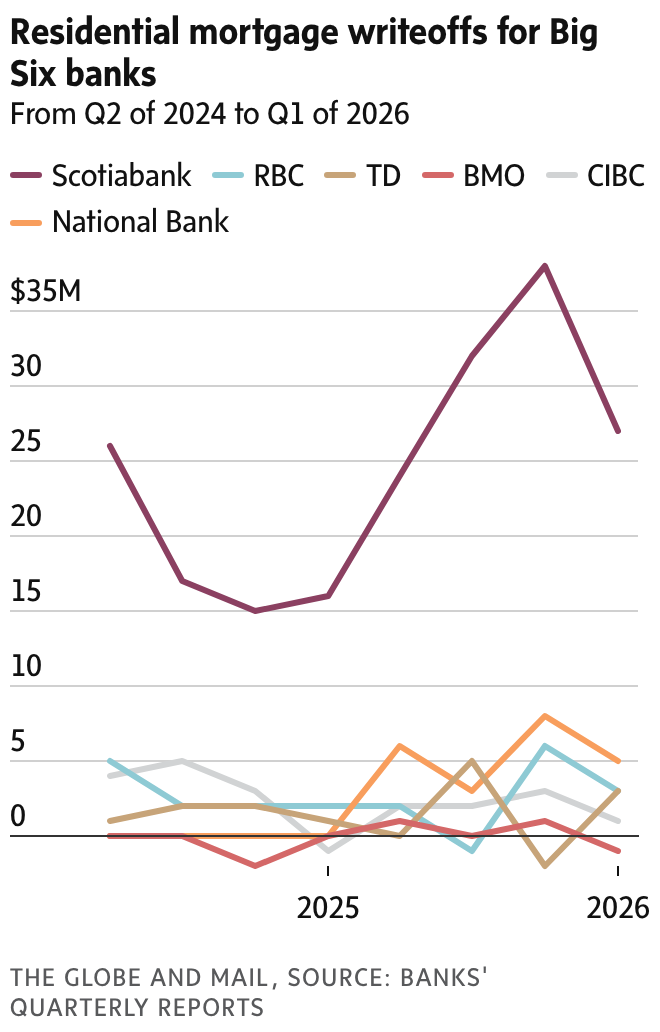
This chart looks at how Canada’s big banks turned mortgages into a nearly risk-free cash machine |
|
|
|
|
|
|
|
|