| | In this edition: Dangote plans new refinery in East Africa, the African nations hit hardest by the I͏ ͏ ͏ ͏ ͏ ͏ |
| |  | Africa |  |
| |
|
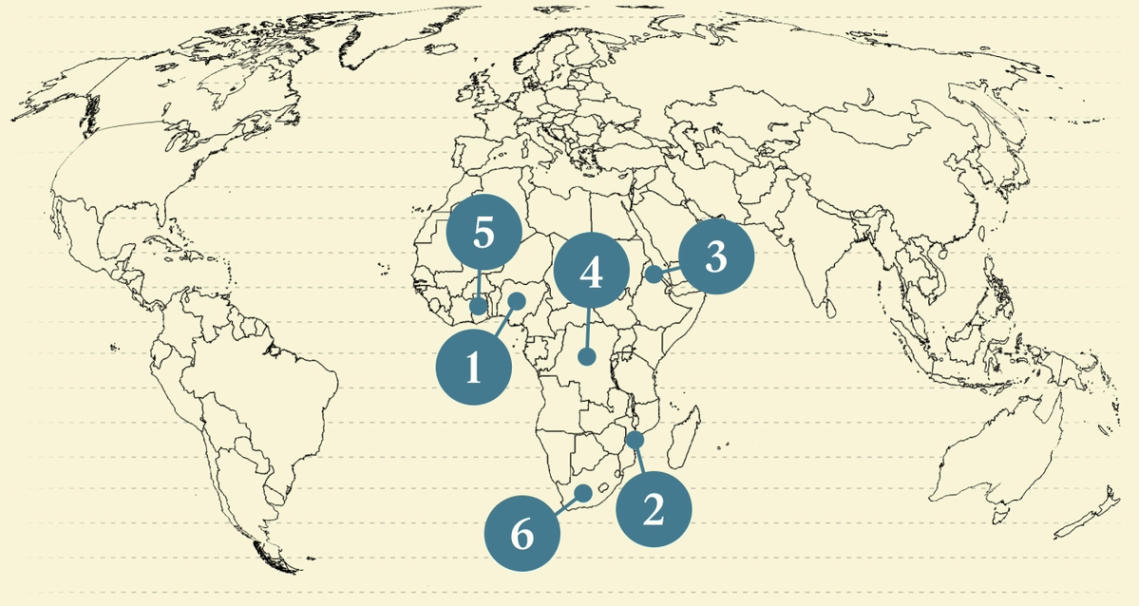 - Dangote’s expansion plans
- Nations worst-hit by Iran war
- US in talks with Eritrea
- US DR Congo deportations
- Ghana’s mining warning
- Renewable energy goals
 Weekend Reads, and South Africa’s car-spinning culture in photos. |
|
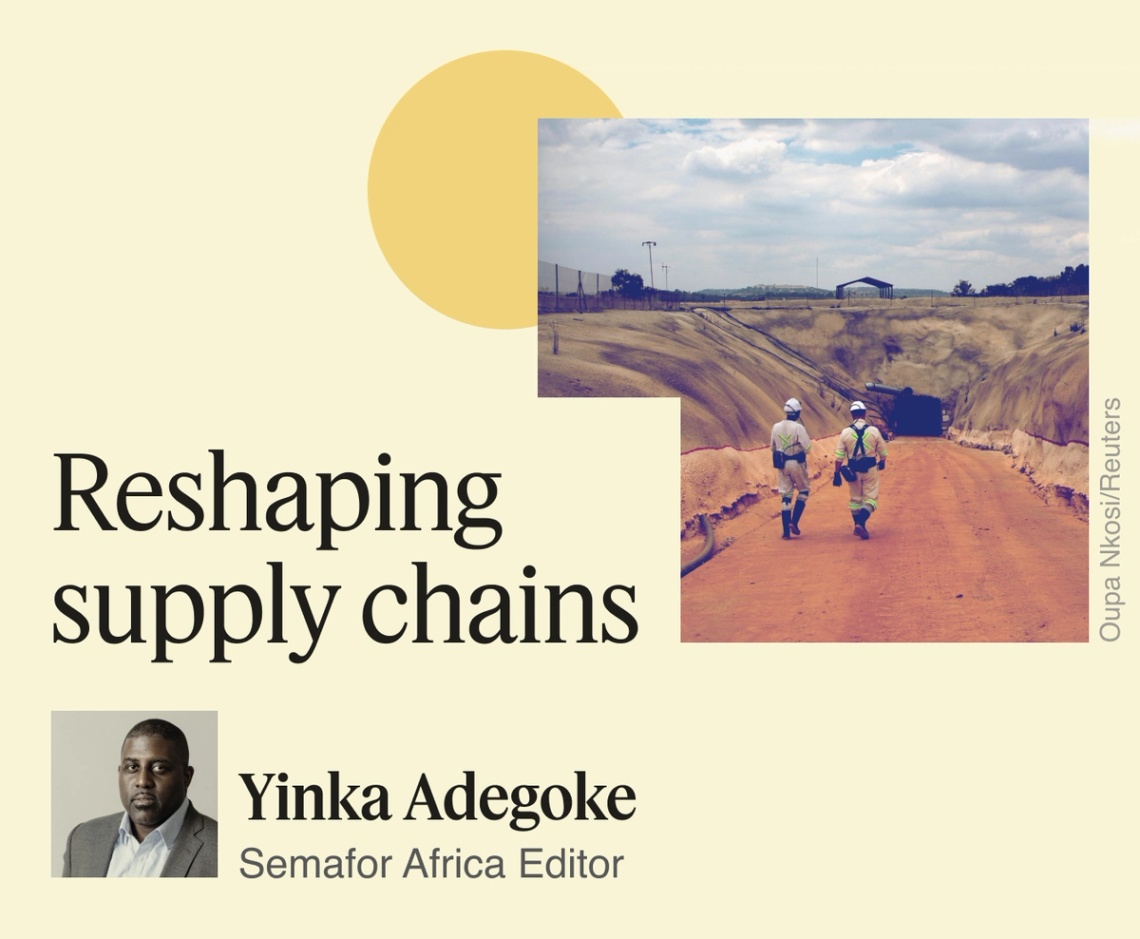 The Trump administration’s drive to secure access to critical minerals is hardening into a defining feature of its trade policy — and African countries are firmly in the frame. A new paper by Columbia University’s Zainab Usman makes clear that resource-rich countries have a rare opportunity to benefit or miss out as Washington actively redesigns the rules of global mineral access through its trade pacts. This week, the US trade representative reinforced that strategy by pressing allies to shoulder more of the supply chain burden. As Usman told me, African governments “should take it quite seriously” — these initiatives represent a structural change, not a passing policy turn, and are likely to outlast any single US administration. Recent US agreements with Ukraine and Malaysia reveal what is at stake: They combine preferential access for American firms with clauses that constrain engagement with third parties — a barely coded reference to China — while elevating US supply priorities. In DR Congo, discussions have reportedly included strategic asset reserves tied directly to American needs. For African producers, the risk of poorly negotiated deals is real. US provisions limiting relationships with non-aligned partners could undermine the continental balancing act many governments depend on, and quietly foreclose independent mineral strategies before they have a chance to develop. But the opportunity is equally tangible. Washington is willing to make concessions where its strategic interests are exposed. The US remains heavily dependent on imports of refined mineral products, with China dominating processing across several critical categories. African governments that arrive at the table with clear asks — investment in refining capacity, infrastructure, skills transfer — have genuine leverage. Done well, these partnerships could help rewire global supply chains in Africa’s favor. Done badly, they risk embedding a new dependency, this time written into trade terms rather than market dynamics. |
|
Dangote proposes new East Africa refinery |
 Toyin Adeokun/AFP via Getty Images Toyin Adeokun/AFP via Getty ImagesNigerian billionaire Aliko Dangote unveiled plans to build a crude oil refinery in Tanzania that would replicate the output of his giant plant in Lagos to leverage continent-wide calls for greater self-sufficiency after the Iran war exposed Africa’s vulnerabilities. East Africa’s major economies are net fuel importers, making them vulnerable to global energy shocks, like the one sparked by the closure of the Strait of Hormuz. Kenya’s President William Ruto announced a plan this week for a joint East African refinery in the Tanzanian port city of Tanga. Crude oil for the refinery will be sourced from DR Congo, Kenya, South Sudan, and Uganda, Ruto said. Dangote pledged to take the lead in building the plant. In Nigeria, Africa’s top crude oil exporter, Dangote’s refinery — the continent’s largest — has become a central player in the domestic energy market since coming on stream in 2024, reducing the country’s decades-old dependence on importing refined fuels. The Dangote Group, which also operates a urea fertilizer production plant alongside the Lagos refinery, plans to diversify into the production of detergents and other chemicals. |
|
Mozambique, Rwanda worst-hit by Iran war |
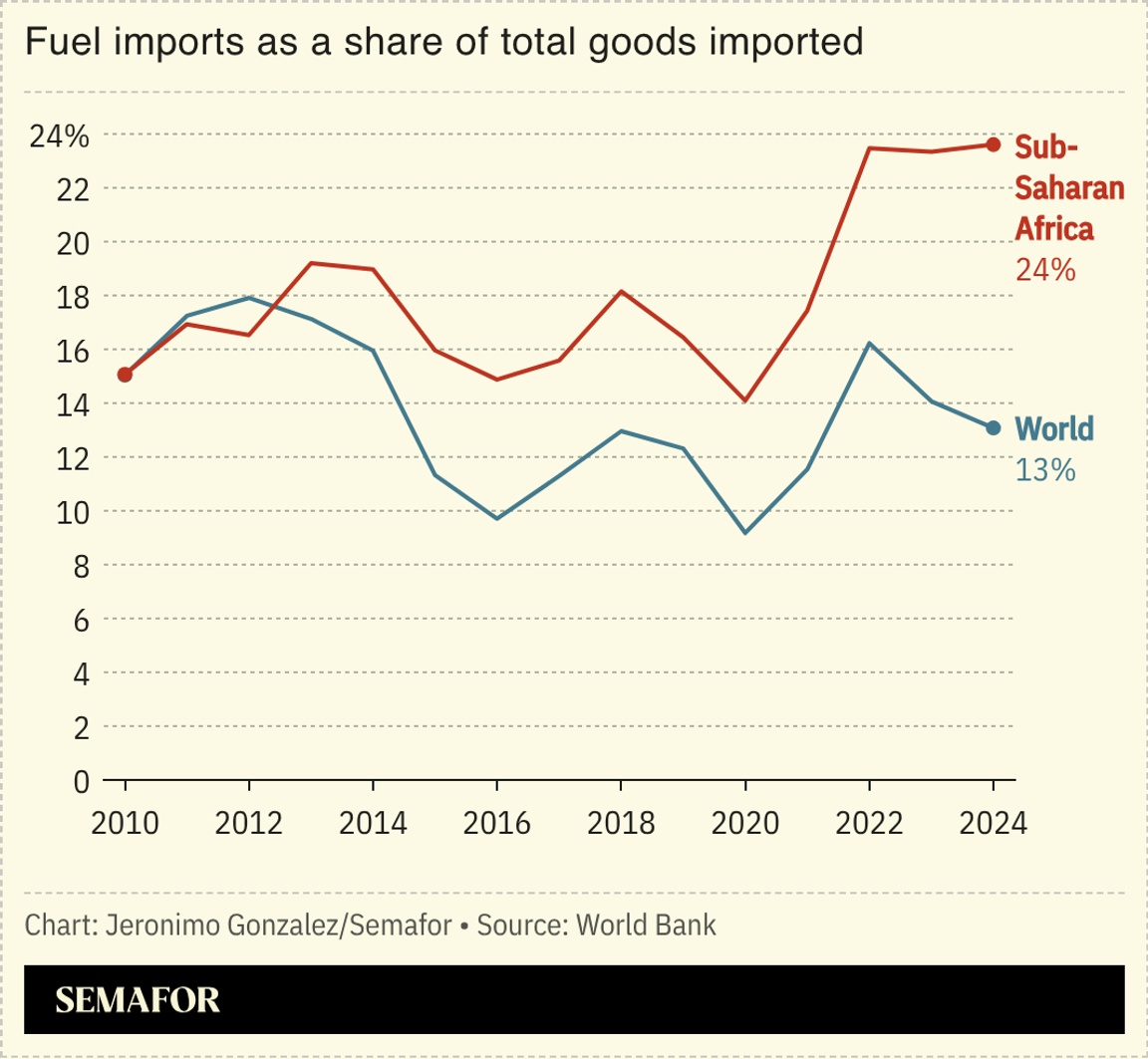 Rwanda and Mozambique are the two sub-Saharan African countries most exposed to the Middle East war, the ratings agency S&P said, as surging fuel costs and disrupted trade routes threaten to derail fragile economic recoveries. Rwanda faces a crisis due to its 71% export dependency on Middle Eastern hubs while Mozambique’s vulnerability stems from a junk-rated sovereign credit rating and thin foreign currency reserves that leave little room to absorb external shock, according to an S&P report. The firm also said South Africa and Nigeria, two of the continent’s largest economies, are somewhat protected from the war’s impact, at least at a macro level: South Africa’s deep capital markets and low foreign-currency debt shield it from volatility, while Nigeria’s rising oil export revenues help offset the fallout of a 65% jump in local fuel costs. — Tiisetso Motsoeneng |
|
US moves to normalize Eritrea ties |
 Eritrean President Isaias Afwerki. Antonio Masiello/Getty Images. Eritrean President Isaias Afwerki. Antonio Masiello/Getty Images.The US government held talks with Eritrea to explore the possibility of normalizing relations with the isolated Horn of Africa state, drawn by its strategically important Red Sea coastline, according to two people familiar with the matter. Eritrea’s President Isaias Afwerki, who has led the country since breaking away from Ethiopia in 1993, met with Massad Boulos, US President Donald Trump’s senior Africa envoy, in recent months in talks brokered by Egypt. Boulos is due to meet with him again soon, according to one source. The US State Department declined to comment on reports of its plans, which were first reported by The Wall Street Journal. A third person familiar with the State Department’s thinking said considerations for an Eritrea relations reset “had been in the works for a very long time.” Several analysts told Semafor, however, that it would be difficult to resume relations with Eritrea due to the unpredictable nature of its leadership. “At some point in time, every US administration has believed it could tame Isaias,” said Cameron Hudson, a former White House Africa official. — Yinka Adegoke |
|
US targets DR Congo deportations |
 Deported migrants disembark a plane chartered from the US. Paul Ratje/Reuters. Deported migrants disembark a plane chartered from the US. Paul Ratje/Reuters.US President Donald Trump’s administration is targeting DR Congo as a location to send deportees, triggering scrutiny about possible violations of international law. The US deported 15 South American migrants to DR Congo this week under a third-country expulsion deal, according to reports. The State Department has reportedly also discussed relocating more than 1,100 Afghans — currently in temporary housing in Qatar — to the Central African nation. DR Congo, which has courted the Trump administration through critical minerals agreements and lobbying, joins a growing list of African nations, including Ghana, Rwanda, and Uganda, that have signed third-country deportation deals with Washington. Democrats estimate the administration has spent at least $40 million on these deportations. In a statement to Semafor, a State Department spokesperson defended plans to relocate the Afghans to a third country, calling it “a positive resolution that provides safety.” — Adrian Elimian |
|
Ghana threatens mining sanctions |
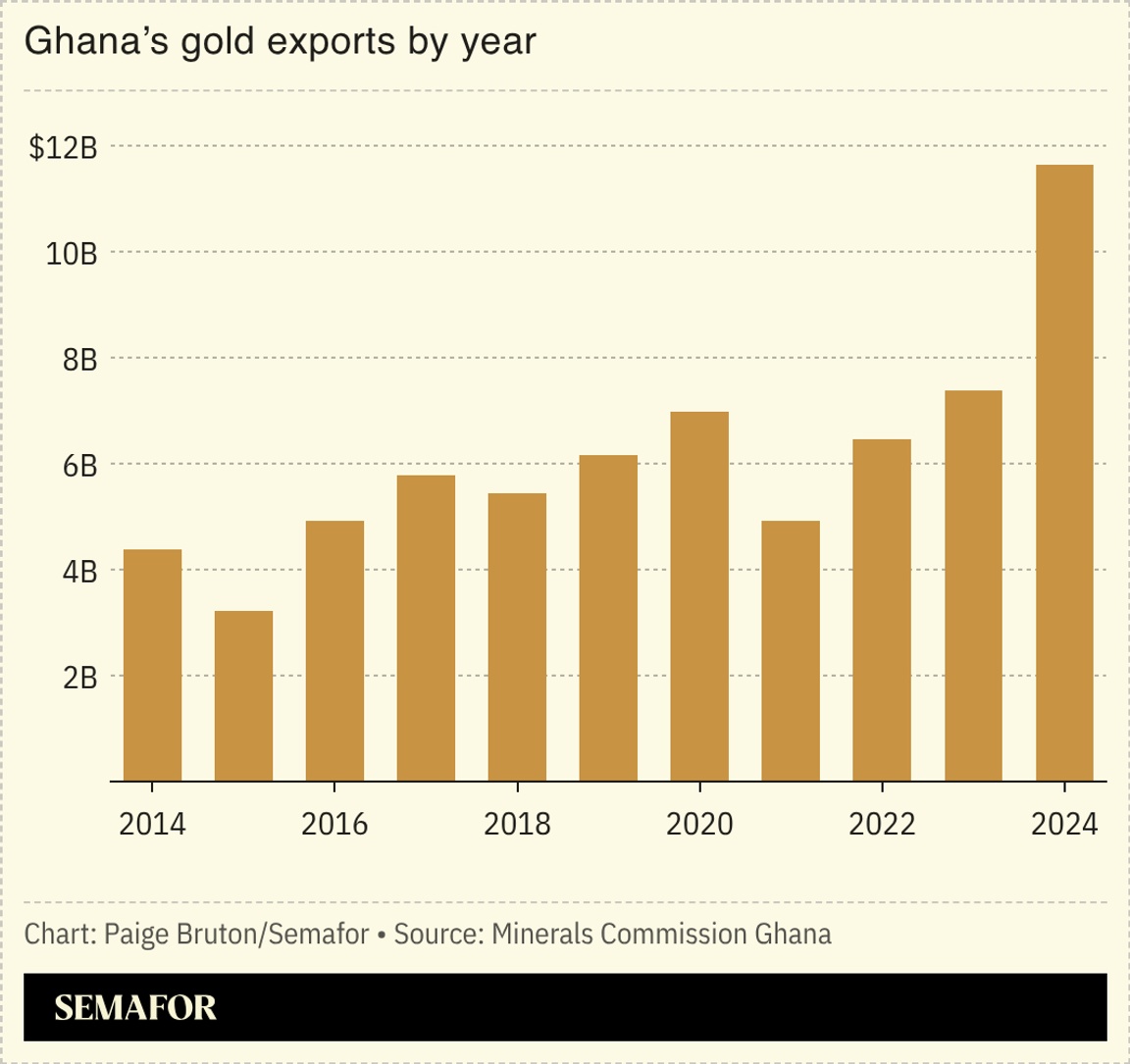 Ghana reportedly threatened to impose sanctions on three multinational mining companies if they failed to include local contractors in domestic mining operations by December. The move is in line with a broader push by African governments to increase domestic value extraction from mineral resources. South African company AngloGold Ashanti, US firm Newmont Mining, and China’s Zijin received the directive from authorities between last October and January, Reuters reported. Newmont requested to comply with the directive by 2027, while AngloGold Ashanti said it was in the process of attaining full compliance by the end of this year. In countries like Burkina Faso, Mali, and Niger, the push to develop local mineral value chains has taken the tone of negotiating higher equity stakes in mining projects for the government, accompanied by threats of seizures and hostile takeovers. |
|
S. Africa’s renewable energy plans |
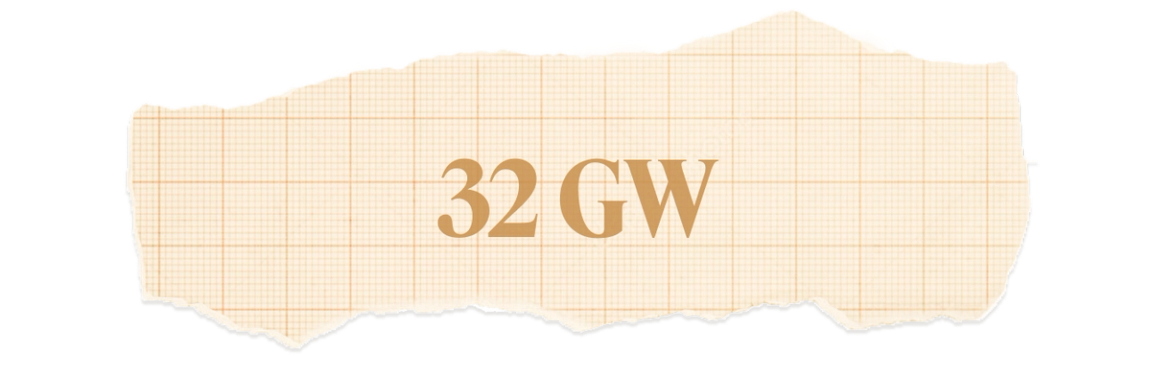 The power to be generated by renewable energy projects that will be connected to South Africa’s grid by 2030, the government said, roughly equivalent to the electricity generated by the entire fleet of coal-fired power stations operated by state utility Eskom. Details of the renewable energy plan are laid out in the latest report by Operation Vulindlela, a government-wide program to cut red tape and accelerate reforms. It shows global developers such as EDF Renewables and Enel Green, alongside turbine suppliers Vestas and Siemens Gamesa, expanding their pipelines as regulatory bottlenecks ease. Infrastructure developers and financiers are among more than 130 entities that took part in the government’s consultation process for the new transmission expansion program, which is estimated to be worth more than $30 billion. |
|
 - Sand dredging in Lagos Lagoon to support a building boom is destroying livelihoods and collapsing marine ecosystems. As part of a photo essay published in The Guardian, Valentine Benjamin explores the effect that unregulated dredging has on fish populations, the knock-on effect this has on thousands of local fishermen, as well as how rising water levels threaten homes. “As Lagos rises, our land washes away,” one local resident says. “They build estates with sand dredged from our waters. But who is building for us?”
- Ukraine is prioritizing Africa in its pursuit to widen its geopolitical influence beyond Europe. However, if this new push is to be successful, Kyiv must first avoid framing its work as simply an effort to counter Russian influence campaigns, Sergey Eledinov, an African security analyst, writes in African Arguments. Though Kyiv offers African nations valuable wartime expertise and intelligence, the country also risks being seen as a Western proxy — offering doctrines or models, rather than true partnership.
- Some African migrant workers in Lebanon are being turned away from aid and shelters, Al Jazeera reports, as part of Israel’s war in the country against militant group Hezbollah. Some workers say they were refused help — that their employers had access to — because they were told that Lebanese nationals needed to be prioritized. In a video report, Al Jazeera follows one former domestic worker from Ethiopia, who decided to set up an aid-distribution service focused on temporary workers.
- The birth of Afrobeat in Nigeria in the 1970s led to a music boom, placing the country on the map internationally for its mix of traditional Yoruba music, funk, and jazz. A new sound known as Afrobeats — which fuses hip-hop, dancehall and African rhythms — emerged in the last decade and has propelled artists like Wizkid and Burna Boy to global stardom. However, Nigeria’s biggest artists now face a period of hyper-commercialization and a lack of innovation, while the returns are increasingly enjoyed by labels in the West, music critic Dami Ajayi tells the Africa Is a Country podcast.
|
|
 Business & Macro |
|
|


