Welcome to INSIGHT
Across all regions, momentum is accelerating as the global eye
health community advances the 2030 In Sight
strategy. From national advocacy and regional partnerships
to community-led innovation, the fourth edition of Insight
highlights progress across diverse contexts and underscores the value
of collective action in translating global ambition into tangible
local impact.
As a pivotal year leading up to the first Global Summit for Eye Health, engagement with key
stakeholders has deepened significantly. These exchanges are
generating valuable insights that will inform and strengthen
deliberations at the Summit.
|
|
|
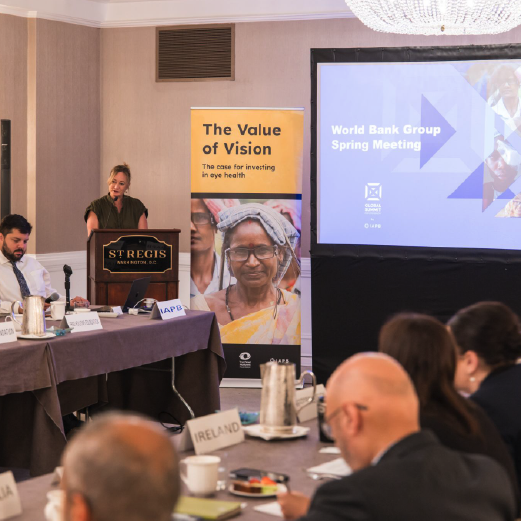
World Bank Spring Meetings
A new collaboration with the World Bank is paving the way for
scaled, sustainable investment in eye health, bringing together
catalytic funding and government financing to support country-led
programmes. This marks a major step towards integrating eye care into
national health systems.
Read more
|
|
Eye Health as a Catalyst of Growth
IAPB shared that investing in eye
health is one of the "best buys" in global development at the Devex
Impact House, during the World Bank Spring Meetings. The conversation
explored innovative funding mechanisms and policy shifts required to
scale vision care globally.
Watch the conversation
|
|
|
Every Story Counts
From a factory worker in Vietnam regaining her independence with a
pair of glasses to a rare disease advocate in Austria shaping global
policy conversations, Every Story Counts brings to life the human impact
behind eye health. These powerful, personal stories from around the
world remind us that eye care is not just about vision, but dignity,
opportunity, and connection.
Explore how lived experiences are influencing policy, improving
access, and driving a more people-centred approach to care.
|
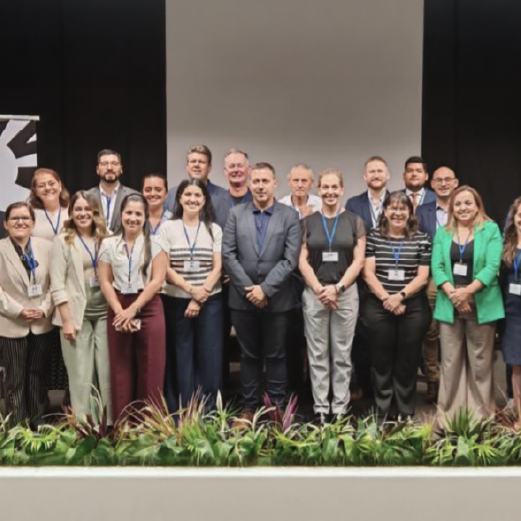
Latin America Region
The region is an example in leading on the ministerial meeting to
gather commitments for the Global Summit for Eye Health.
From the halls of government ministries to packed ophthalmology
conferences, March 2026 saw IAPB's Latin America team cover
extraordinary ground, Brazil, Paraguay, Peru, and Bolivia in under a
month. Across every meeting, a single message resonated: eye health is
not just a health issue, it is a critical economic and social
development issue.
With the Global Summit for Eye Health on the horizon this November
in Antigua and Barbuda, the region is amplifying momentum. Champion
Countries are confirming their seats. Senators are becoming
ambassadors. Ministers are briefing their presidents. And a growing
coalition of members, from Mexico to Argentina, is aligning behind a
shared vision.
|
|
|
Advancing Eye Care in Latin America
Each conversation and engagement with key stakeholders has played a
crucial role in building momentum in the region.
Countries are strengthening efforts to integrate eye care into
health systems, supported by new data, partnerships, and
capacity-building initiatives.
Read more in detail
|
|
|
Recent momentum in global eye health reflects a clear shift from
advocacy to implementation. At the regional level, governments and
partners emphasised translating strong economic evidence into
country-owned commitments, embedding eye care within universal health
coverage, and scaling investments that deliver both health and
development returns. This push is reinforced by recently held
high-level convenings in which where early intervention for paediatric
myopia, cataract, presbyopia and other eyecare issues are being
positioned as a critical systems issue, requiring integration across
health, education, and policy frameworks.
At the same time, global advocacy is converging toward
accountability and structural reform. The Jaipur
Declaration calls for stronger integration of eye care into
national systems, workforce expansion, and sustained investment
aligned with 2030 targets, while practical policy shifts, such as Nepal’s
removal of VAT on spectacles, demonstrate how removing financial
barriers can rapidly improve access. Complementing these policy and
financing advances, countries are also strengthening the evidence
base: Timor-Leste and Nepal have recently completed national surveys
on refractive error, with findings expected to be disseminated soon,
which will be critical for informing context-specific planning and
tracking progress.
|
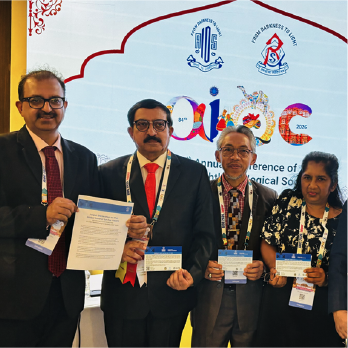
Jaipur Declaration calls for action
The Jaipur Declaration urges leaders to turn commitments into
action ahead of the Global Summit for Eye Health.
It calls for
stronger investment, system integration, and country-led progress.
With over one billion affected, it reinforces the need for
accountability and measurable results.
Read
more.
|
|
|
|
|
Strengthening Refractive Error Services
New evidence from Timor-Leste and Nepal is helping to strengthen
the case for scaling refractive error services—highlighting the
importance of data, policy alignment and system-wide approaches to
improve access to vision care. By linking research to action,
countries are better positioned to expand coverage and deliver lasting
impact.
Read
more
|
|
Nepal leads the way in removing barriers to vision
care
Nepal is demonstrating how policy change can unlock access to eye
care, with progress on removing tax barriers to glasses helping expand
access to essential vision services. It’s a strong example of how
targeted reforms can support the journey to reaching the billion.
Read
more
|
|
|
Vision Atlas: All Eye Care Data at a Click
The Vision Atlas continues to grow as the global
evidence hub for eye health. With each update, it provides richer
data, sharper insights, and better tools to help decision-makers,
advocates, and partners see where progress is happening — and where
action is needed most. Recent improvements expand coverage, enhance
accessibility, and strengthen the case for investment in vision.
|
Western Pacific Region
The IAPB Western Pacific region kicked off the year with strong
momentum towards the 2026 Global Summit for Eye Health, with growing
alignment between governments, members, and regional partners. The
RANZCO-IAPB Global Eye Health Conference in Hobart, Australia,
emphasised cross-sectoral collaboration and public health approaches
to eye health from across the region, bringing together professional
associations, NGOs, governments, and the private sector.
In the Pacific, the appointment of the Hon. Vainetutai Rose
Toki-Brown, Health Minister for the Cook Islands, as Pacific
Ambassador for the Global Summit for Eye Health strengthened regional
leadership and political engagement. The Pacific Pathways meeting in
Fiji further elevated eye health as a political and development
priority, with the IAPB-hosted welcome reception convening senior
leaders, including ministers from the Solomon Islands, Cook Islands,
and Fiji, alongside former Prime Minister of Samoa Fiamē Naomi
Mataʻafa. The launch of the Early Intervention in Paediatric
Myopia Policy Brief and Guide for Advocacy alongside the APAO Congress
in Hong Kong marked an important step in supporting countries to
translate evidence into policy.
At country level, high-level engagement with governments in
China, Lao PDR, Singapore, and Viet Nam continues to build momentum
towards concrete, economically grounded commitments, positioning eye
health firmly within broader health, education, and development
agendas ahead of the Summit.
|
|
|
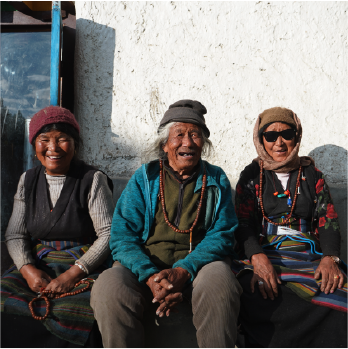
Preserving vision in the world’s most remote
communities
In some of the most challenging and remote environments, innovative
approaches are helping to deliver essential eye care and preserve
vision. This story highlights how local solutions, community
engagement and dedication are making a real difference in reaching
underserved populations.
Read
more
|
|
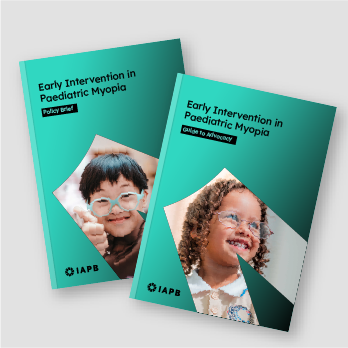
Accelerating action on paediatric myopia
A newly launched Myopia Policy Brief and Advocacy Guide calls for
urgent, coordinated action on paediatric myopia.
It equips
policymakers and advocates with practical, evidence-based
recommendations.Together, they aim to drive early intervention and
protect children’s vision.
Read
more
|
|
|
Asia-Pacific Commitments Dialogue
Leaders from across South-East Asia and the Western Pacific
convened to advance country-led commitments ahead of the Global Summit
for Eye Health.Discussions focused on translating strong evidence into
practical action—strengthening health systems, scaling investment, and
embedding eye health within universal health coverage and national
development agendas.
With over one billion people still living with avoidable sight
loss, participants emphasised the urgent need for coordinated,
scalable solutions. Priority conditions such as cataract, presbyopia,
and myopia were identified as key entry points to drive immediate
impact while building stronger systems.
The consultation concluded
with countries advancing measurable, nationally owned
commitments—signalling a clear shift from evidence to action.
Read more about it from the blogs below.
|
|
|
Turning words into action for eye health
Momentum is building as global partners come together to drive
investment, strengthen systems, and support country-led commitments
for eye health. With the Global Summit on the horizon, the focus is
clear: translating ambition into measurable action that delivers
impact at scale.
Read
more
|
|
Cataract as a catalyst for stronger health
systems
Cataract remains the leading cause of blindness globally, yet it is
highly treatable. This piece explores how improving cataract services
can act as a powerful entry point for strengthening entire health
systems—linking quality care, workforce, financing and policy into a
more effective, integrated approach.
Read
more
|
|
| | | |