|
This edition is sponsored by Tyndale House Publishers |
|
Few people have captured the Substack algorithm like the Christian writer Griffin Gooch. He posts short notes, jokes, longer academic articles, and unapologetic pro-Midwest propaganda there, with his posts often racking up hundreds (or thousands) of likes. |
|
Gooch wrote for Christianity Today this week about how trying to take advantage of an algorithm can morph our own desires. "The more data I gathered from analyzing what kinds of posts ‘worked,’ the more the cadence, style, and rhythm of my short online writing seeped into everything else I did—my lectures, sermons, and emails," he writes. "Even more troubling, social media algorithms were also shaping what I wanted to say. Beyond just influencing little quirks of formatting and grammar, my desire to get ahead of the algorithm was influencing my other desires, and, consequently, my vision of the good life." |
|
Gooch dives into a recent book on linguistics, Algospeak, and how even those of us who are mostly offline still encounter the world as moderated by algorithms. He says: |
|
|
Morphing our own patterns of communication to fit some ever-changing algorithm turns us into people who speak the same language, want the same things, and measure ourselves by the same metrics. Even if an artfully crafted 7 a.m. post pops off on the Substack algorithm, I can’t help but think: Are these aspirations going to lead me deeper into a flourishing life? |
|
|
|
|
Anyone who gets sucked into algorithms—myself very much included—is confronted with this reality sooner or later: Algorithms can’t make us happy. They can’t provide a satisfaction that lasts any longer than a scroll through our notifications. |
|
|
|
"Thankfully," he writes, "Jesus’ vision of the good life didn’t include seeking popularity." |
|
Have you ever thought about all the ways we’ve reshaped Jesus to fit our expectations? We want him to be a life coach for our success, a therapist for our anxiety, a political ally for our causes, and a genie for our desires, but we still feel like something’s missing. What if there was a way to reconnect with the true Messiah—as He is, not the watered-down version we’ve made Him to be? |
|
In The Missing Messiah by Kyle Idleman and Mark E. Moore, you’ll find truth and tools that help you move from a transactional relationship with Jesus to a deep and intimate one. As you trace the prophecies throughout Scripture that uncover the authentic identity of Jesus, you’ll be able to cut through cultural chaos, live the life Jesus promised, and experience transformation as the One True Messiah anchors your faith and empowers your discipleship. Order your copy today to discover the God who’s never stopped pursuing you. |
|
McKay Coppins of The Atlantic joined The Russell Moore Show this week to share his experience diving into the world of online sports betting and prediction markets. Coppins used $10,000 of The Atlantic’s budget to bankroll his immersive reporting for a recent cover story, a journey that left him deeply concerned about gambling’s effects on young men in particular. |
|
"He didn’t let me out of the room until he told me some of those cautionary tales," Coppins said of his bishop, to whom he turned for counsel before agreeing to do the story. "Be careful." | Listen here. |
|
 |
|
| FROM CHRISTIANITY TODAY |
|
|
No matter who you are celebrating this spring–a new graduate, your mother, your father–or if you are just looking for a little bit of renewal and new life for yourself, we have a book for you.
|
|
|
|
|
|
|
|
Marvin Olasky, editor in chief: Wilfred McClay and Stuart Halpern’s Jewish Roots of American Liberty has sprightly chapters on how David, Esther, Samson, Hagar, and the Liberty Bell became metaphors, how Elijah was "America’s Favorite Prophet," and "Why Everyone Loves Daniel." |
|
Emily Belz, senior staff writer: Facebook’s "Buy Nothing" groups for your neighborhood. I just asked for shoe-waterproofing spray on my neighborhood’s group, because I don’t need to buy a whole bottle of that stuff. A neighbor quickly volunteered to let me come by and waterproof my shoes with her spray. We chatted, and I didn’t spend $20. |
|
Jordyn Hibdon, paid media manager: I made this recently! My kids loved the recipe, so I’m impressed we found something moderately healthy that a toddler and preteens also enjoyed. |
|
|
|
|
In the hours after the Supreme Court struck down a Louisiana congressional map and weakened protections given to minority voters under the Voting Rights Act, a bishop overseeing historically Black…
|
|
|
|
|
I accidentally read three books on hell last month. I hadn’t planned to read any of them. What I discovered from the novel, the biography, and the piece of literary…
|
|
|
|
"The U.S. Isn’t Just Getting Older," argued an article at the Harvard Business Review. "It’s Getting More Segregated by Age," and "the extreme degree to which we’ve shunted young people into educational institutions,…
|
|
|
|
|
The first thing I noticed about the manifesto of Cole Tomas Allen, the suspect in the foiled assassination attempt on President Donald Trump at the White House correspondents’ dinner (WHCD), is how…
|
|
|
|
|
|
|
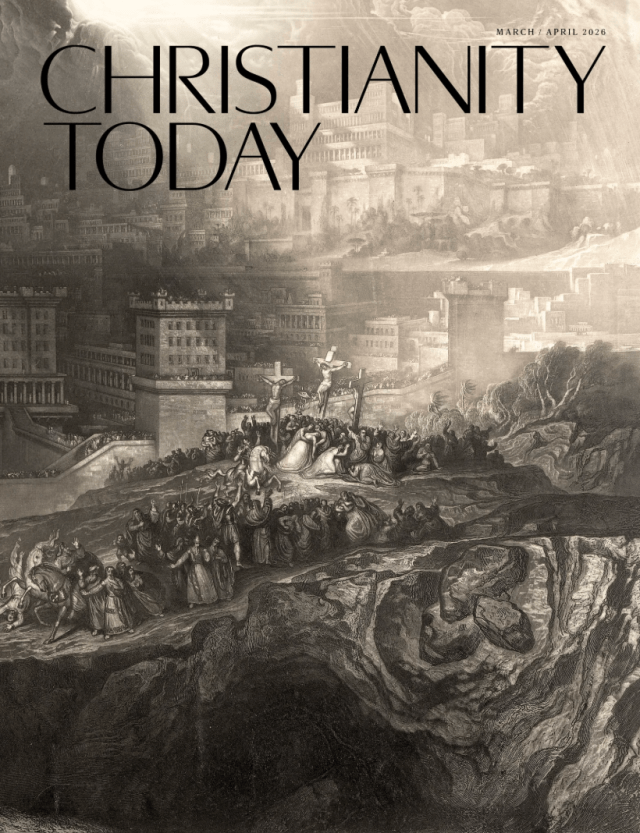
In this issue of Christianity Today and in this season of the Christian year, we explore the bookends of life: birth and death. You’ll read Karen Swallow Prior’s essay on childlessness and Kara Bettis Carvalho’s overview of reproductive technologies. Haleluya Hadero reports on artificially intelligent griefbots, and Kristy Etheridge discusses physician-assisted suicide. There is much work to be done to promote life. We talk with Fleming Rutledge about the Crucifixion, knowing that while suffering lasts for a season, Jesus has triumphed over death through his death. This Lenten and Easter season, may these words be a companion as you consider how you might bring life in the spaces you inhabit. |
| | |