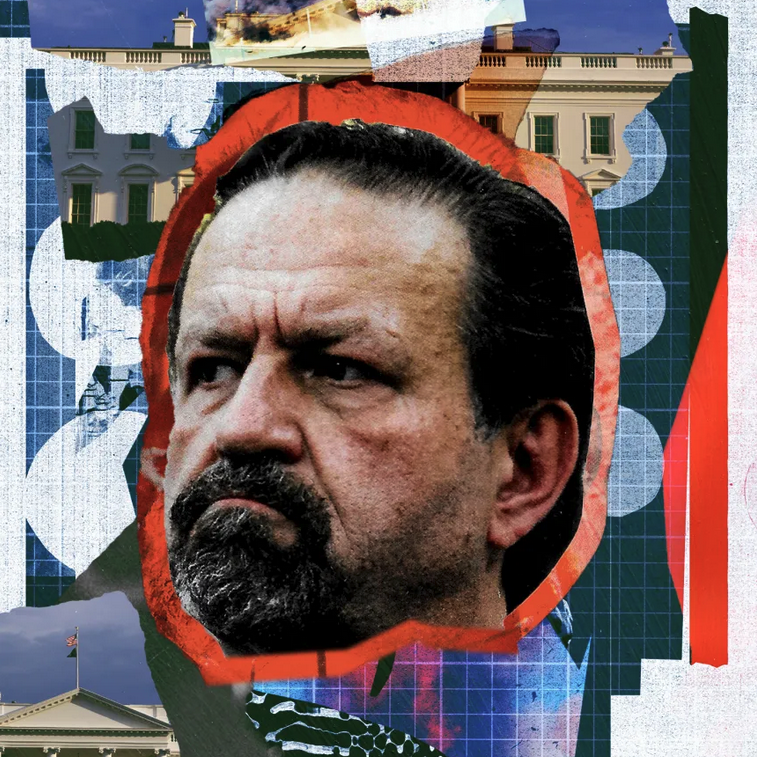
ProPublica reached out to Gorka for comment in multiple ways. He never responded, instead lashing out at me via posts on X before the story published. He told his 1.8 million followers that I was anti-American and accused me of writing a “putrid piece of hackery.”
There went my hopes for a good-faith exchange. After discussion with my editors, ProPublica decided to note the insults in the story. It was another revealing layer to the combustible leader Trump had installed in a sensitive national security role. A former senior official noted the eruption was “Gorka being Gorka.”
Increasingly, journalists are pushing back against attacks on our credibility by “showing the work,” guiding readers through the reporting process to dispel myths and foster transparency. In that spirit, I wanted to take this opportunity to show how basic beat reporting — fact-checking the assertions of a powerful figure — led to a broader story about the state of the U.S. counterterrorism mission at a critical moment.
I’ve covered the post-9/11 counterterrorism apparatus for more than two decades, so Gorka was a familiar presence, an academic known mainly for a well-documented hostility toward Islam, which he has portrayed as inherently violent. Gorka has dismissed criticism of this portrayal as “absurd,” saying his focus is “the war inside Islam” between radicals and Western-aligned Muslim leaders. He also served as an adviser under the first Trump administration but was ousted after just seven months amid White House infighting.
At the time, dozens of lawmakers had demanded his resignation, and investigative outlets detailed links — which Gorka denies — to the Hungarian far right. After the bruising exit, Gorka waited patiently as the Republican Party swung harder right in the Biden era and eventually returned Trump to office.
Gorka was appointed White House counterterrorism czar — he called it his dream job — in a new era without the “adults in the room,” as some officials referred to the more moderate advisers around Trump in the first term. Privately, national security personnel expressed alarm that intelligence about threats was in the hands of an official who reportedly struggled to get security clearance in the first Trump administration.
To me, Gorka was a weather vane for the administration’s national security thinking: Would his “war on terror” mindset clash with the more isolationist “America First” camp that wanted no more forever wars? How would a vast security apparatus built for the Islamist militant threat reorient toward a new focus on far-left “antifa” militants and Latin American drug cartels newly designated as terrorist organizations?
I was especially interested in the status of a national counterterrorism strategy Gorka had been promising since taking office; such documents typically lay out an administration’s approach to fighting the most urgent threats. Though Gorka had described his plan as “imminent” and “on the cusp” of release, months ticked by without any sign of it.
To glean clues about the strategy, I made it my mission to watch every news appearance, read every interview and listen to every podcast featuring Gorka since December 2024, the month before he entered the White House. It took some digging — he rails against the mainstream news media and prefers to appear (largely unchallenged) on niche pro-Trump news outlets and at conservative think tanks.
I developed a nightly ritual. After dinner with my family, I’d hole up to listen to Gorka, hunting for the scraps of news buried in his over-the-top vocabulary and graphic storytelling. Alongside my note categories for “Trump Anecdotes” and “Militant Death Tolls” was one for “Big Words.” For example, the president calls Joe Biden “sleepy”; Gorka prefers “somnambulant.”
Weeks into the reporting, in February 2026, I realized Gorka’s speech had burrowed into my brain when I watched a silly video and thought, in his voice, “Preposterous!” It was time for a break.
I reread my notes from hours of listening sessions. I interviewed counterterrorism analysts and national security watchdog groups about Gorka and his remit. Veteran national security personnel added context and analysis. Just as my editors and I were discussing how to turn the findings into a story, the Iran war began and the spotlight on Gorka grew brighter.
Much of the material on air strikes and the dismantling of guardrails was first incorporated into a story I reported about the Pentagon moving away from more robust civilian protections, a reversal highlighted by a deadly U.S. attack on a girls’ school in Iran. Other reporting ended up in the story about Gorka’s phoenixlike return to the White House and what it says about the Trump counterterrorism doctrine.
Gorka didn’t respond to requests for comment beyond the hostile posts on X. When I asked the White House for comment, spokesperson Anna Kelly praised Gorka’s “incredible job” but sidestepped questions about his approach. “Anyone attempting to smear him and the President’s national security team is only revealing that they haven’t been paying attention for the past year,” Kelly wrote, “as anyone with eyes can see that our homeland is more secure than ever.”
As of writing, exactly two months into the Iran war, Gorka’s counterterrorism strategy has yet to appear.