As summer approaches, so do the predictions for what the song, style, and drink of the season will be, and for the first time in ages, good old beer is back in the conversation. AB InBev, the world’s largest brewer and the maker of Corona, Michelob, and Budweiser, saw its beer business grow for the first time in three years. We join CEO Michel Doukeris in saying, “Cheers to beer!”
The S&P 500, Nasdaq 100, and Russell 2000 closed at new all-time highs yesterday as the ceasefire between the US and Iran appeared to be holding despite escalating tensions. |
|
|
|
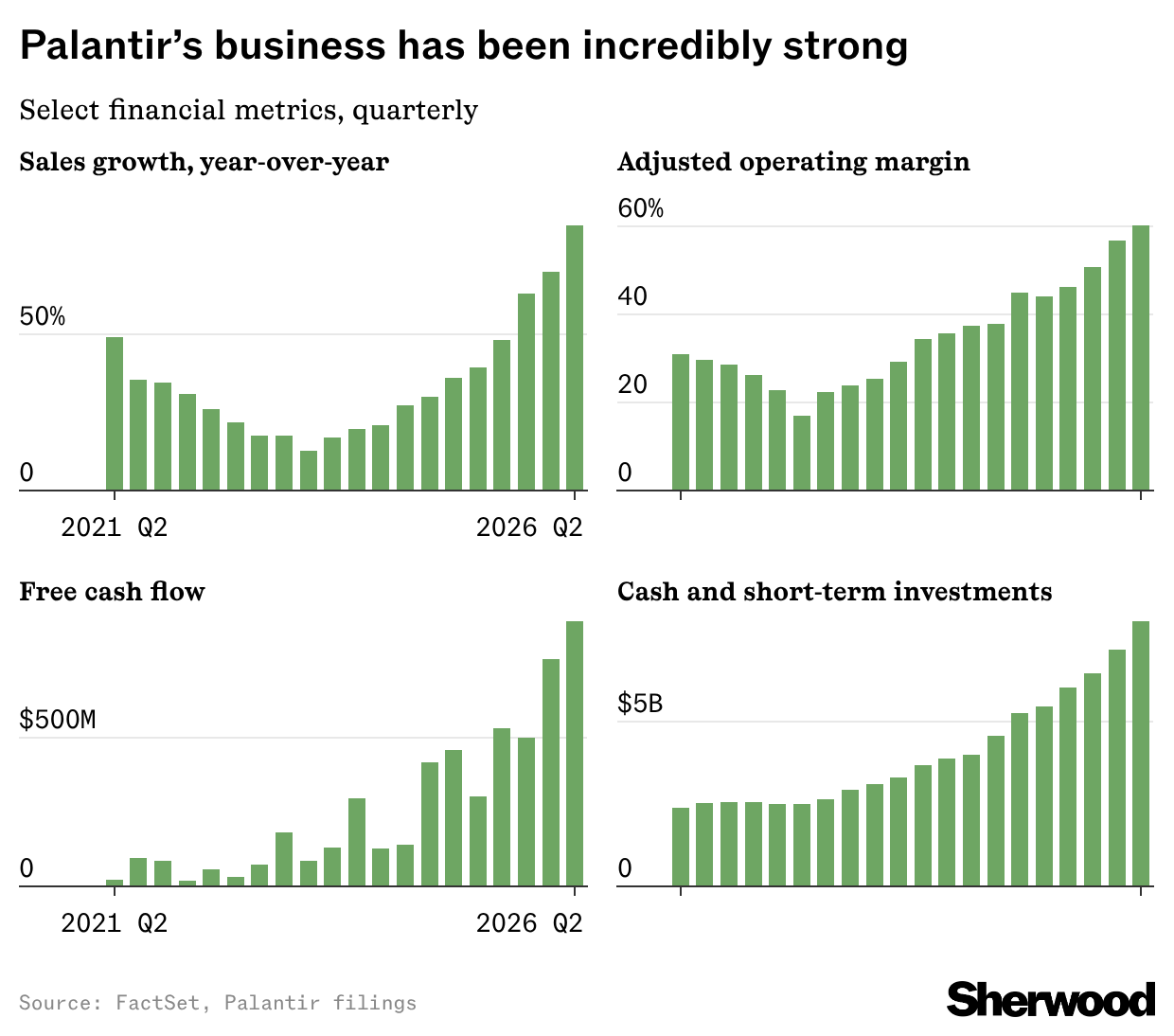
Cash flow for days. Fast-growing profits. An increasingly rational valuation. Where’s the fun in that?
Palantir — the defense, intelligence, and AI software firm — has been performing remarkably well, a fact underscored by its print after the bell Monday. It was, objectively, a remarkable beat and raise, with sales growth sizzling at a better-than-expected 85% to start 2026 and earnings growth rocketing up by 150%. Guidance was hiked across the board.
So why were Palantir’s shares down 7% yesterday alone? |
-
Sticklers point to the fact that the company’s US commercial revenues — which include its fast-growing business selling software that helps corporations better use AI — undershot Wall Street expectations ever so slightly.
-
Back in February, Palantir received a fairly similar post-earnings response after posting exceptional Q4 results. The numbers drew rave reviews from the Street, but the stock dove 12%.
- Palantir, before Monday’s report, had already gone up by an insane amount. That gain of nearly 1,900% over the previous three years basically priced in the current earnings growth the company is seeing.
|
Retail traders, a key constituency for Palantir and CEO Alex Karp over the last few years, have clearly gotten less excited about the stock. Goldman Sachs’ daily read on retail participation in individual shares shows that about 13% of trading in recent days has been retail-related. A year ago, the share of retail trading in Palantir consistently hovered around 25%, according to Goldman.
|
|
|
|
That lack of enthusiasm is also visible in the sharp decline of Palantir’s price-to-earnings multiple, which reached truly ludicrous levels during the peak of the retail frenzy around the stock a couple years back.
Over the last six months, however, Palantir’s price-to-earnings ratio has plunged from more than 250x expected earnings in November 2025 to less than 100x. That’s still elevated, for sure — but also a lot more reasonable. |
|
|
|
Clarity Starts Beneath the Surface |
Price only tells part of the story. In modern markets, real signals live beneath the surface.
Nasdaq TotalView reveals the full depth of Nasdaq’s open order book, displaying every quote and order at every price level for Nasdaq-listed securities. That deeper visibility helps traders identify true support and resistance, identify stacked bids, and spot liquidity zones that can accelerate price moves. TotalView allows you to anticipate shifts based on real-time supply and demand. It brings institutional-grade perspective into focus, helping cut through noise and reduce surprises during volatile sessions.
When conditions change quickly, seeing the full picture matters. Discover Nasdaq TotalView. |
|
|
|
- The discussions include initial talks with Intel about enlisting its chipmaking services, as well as visits by Apple executives to the Samsung chip plant that’s being developed in Texas.
-
The conversations with both companies remain preliminary and no agreements have been made so far, per the report.
- The potential move would give Apple a secondary option beyond its long-standing reliance on TSMC, which has handled production of its main processors for more than a decade.
|
Apple is exploring alternatives partly due to ongoing supply constraints amid strong demand for advanced chips tied to AI growth — constraints that have limited its ability to meet demand for iPhones and Macs, CEO Tim Cook said on last week’s earnings call. Still, Apple has concerns about whether Intel and Samsung can match TSMC’s manufacturing consistency and scale, and may not ultimately move forward with either partner, Bloomberg reports.
|
|
|
|
In a California courtroom, a drama is unfolding that could determine the future of who wins the AI race. It’s the second week of Musk v. Altman, a civil trial where a jury is watching altruism clash with capitalism, while some of the most wealthy and powerful people in the world are airing their long-simmering beefs. Sherwood News’ Jon Keegan reported on the scene from inside the court.
“Then it was a lie” |
|
|
|
|