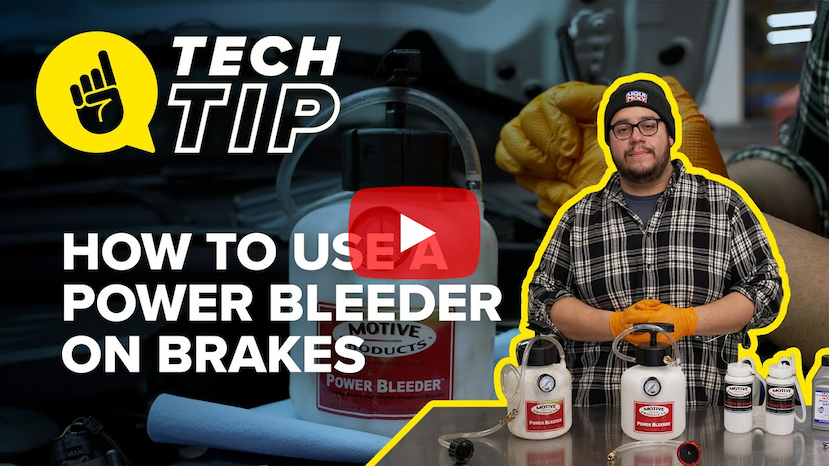
Brake fluid service is one of the most overlooked maintenance items on a European car, but with the right tools, it’s much easier than most people think.
In this week’s Tech Tip, we walk through how to bleed your brakes using a Motive Power Bleeder, explain why brake fluid maintenance matters, and show how simple the process can be for DIYers at home.
Why Brake Fluid Matters
Your brake system is only as good as the fluid running through it. Over time, brake fluid absorbs moisture, reducing its boiling point and impacting braking performance—especially during spirited driving, track use, towing, or repeated hard braking.
If your brake pedal feels soft, inconsistent, or spongy, old fluid could be part of the problem.
Fresh brake fluid helps:
- Maintain consistent pedal feel
- Protect internal brake system components
- Reduce moisture contamination
- Improve braking confidence and performance
Not All Brake Fluid Is The Same
Most European cars use DOT 4 brake fluid, though some applications may call for DOT 3, DOT 5.1, or specialized high-performance racing fluids. While they may look similar, different brake fluids have different boiling points and performance characteristics, making it important to use the correct fluid for your application.
Brake Bleeding Doesn’t Have To Be A Two-Person Job
Traditionally, bleeding brakes meant one person pumping the pedal while another cracked open bleeder screws at each corner. It works—but it can be messy, time-consuming, and frustrating.
That’s where tools like the Motive Power Bleeder make the process dramatically easier.
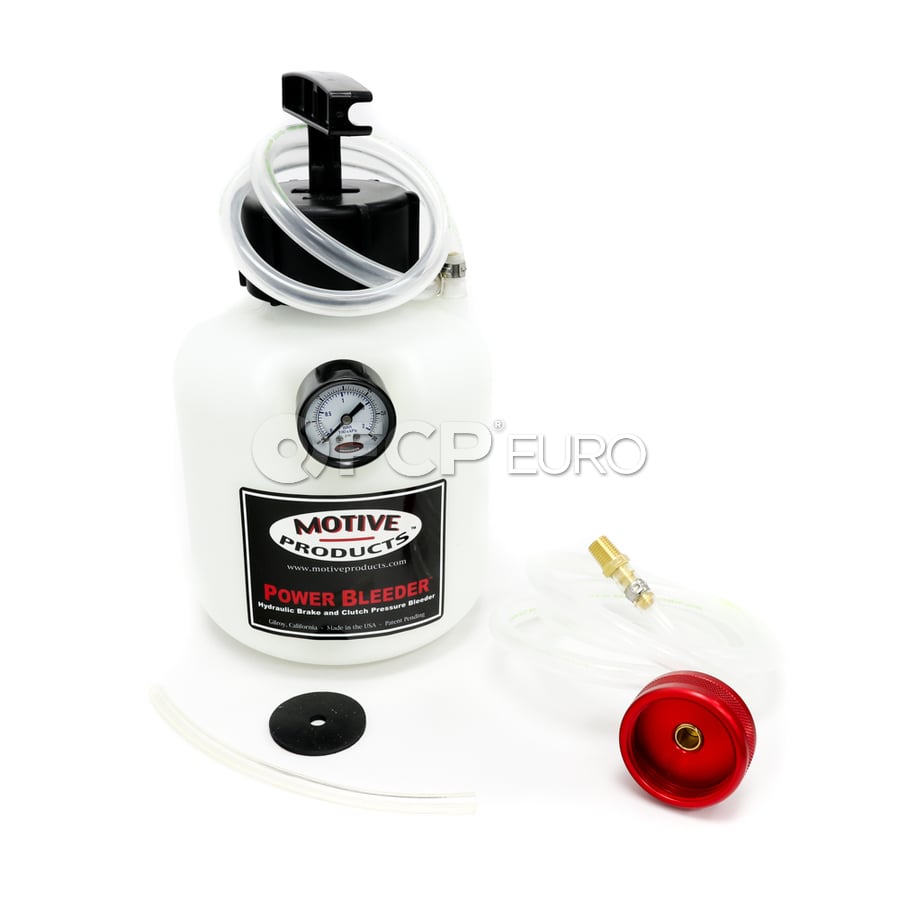
By pressurizing the brake fluid reservoir, the Motive Power Bleeder allows a single person to flush and bleed the brake system cleanly and consistently without needing someone inside the car pumping the brake pedal.
|
|

|
| European Power Bleeder - Motive Products 0100 |
|
|
|
|
|
|
| European Power Bleeder (Black Label) - Motive Products 0109 |
|
|
|
|
|
|
|
How To Bleed Your Brakes With A Motive Power Bleeder
The process is surprisingly simple:
- Fill the Motive Power Bleeder with fresh brake fluid
- Attach it to your brake fluid reservoir
- Pressurize the system
- Open the bleeder screw at each brake caliper
- Allow old fluid and air to flow out until fresh fluid appears
- Repeat at all four corners in the correct sequence for your vehicle
It’s one of the easiest ways to make brake fluid service approachable for DIYers while also helping ensure a more consistent bleed.
Watch The Full DIY Walkthrough
If you’ve been putting off brake fluid service because it seemed intimidating, this video breaks the process down step-by-step and shows how simple it can be with the right tools. Watch now.
|
|
| | |