Gulf exporters caught in Hormuz trap
 

Gulf Currents

Gulf Currents


By Andrew Mills, Deputy Bureau Chief, Gulf 

U.S. President Donald Trump heads to Beijing this week insisting he doesn't need China's help to end the war with Iran. "We'll win it one way or the other, peacefully or otherwise," he told reporters before departing from Washington.  

But the conflict is growing more entrenched, not less. Reuters exclusively revealed this week that Saudi Arabia struck Iran directly for the first time earlier this year. Tehran is expanding its grip on the Strait of Hormuz and cutting bilateral deals to control who gets through. And the damage the war has inflicted on global oil supplies is now far worse than anyone estimated. Here's what you need to know. 


Top headlines from the region

  • Israel steps up attacks on Gaza since Iran truce, as military says Hamas rearming
  • UAE-owned tanker leaks some fuel off Oman following Iranian strike
  • Israeli strikes kill 12 in Lebanon ahead of US-mediated talks
 

News briefing

  • Saudi Arabia launched multiple covert airstrikes against Iran in late March — the first time the kingdom is known to have directly struck Iran — in retaliation for Iranian attacks during the ongoing Middle East war. The strikes, followed by intensive diplomacy and a mutual understanding to de-escalate, mark a significant shift in Saudi Arabia's posture: a country that has long relied on the U.S. military umbrella quietly choosing to defend itself, while still seeking to contain the conflict. 
  • Iran has dramatically expanded its definition of the Strait of Hormuz into a "vast operational area" up to 10 times wider than before the war, stretching from the city of Jask in the east to Siri Island in the west, a senior Islamic Revolutionary Guard Corps Navy officer said on Tuesday. The announcement, the second such expansion since the start of the conflict, significantly enlarges the zone through which roughly a fifth of the world's oil and liquefied natural gas supply normally passes – and which Iran seeks to control. 
  • Kuwait said it had arrested four IRGC-affiliated Iranians who attempted to infiltrate the country by sea, injuring a Kuwaiti soldier in the process — an incident Kuwait condemned as a hostile act, adding that it reserved the right to respond under the UN Charter. Iran rejected the characterisation, claiming the men were on routine maritime patrol and had strayed into Kuwaiti waters due to a navigation malfunction. It demanded consular access to the detainees. 


Trapped: Gulf exporters have most to lose if Iran holds Hormuz 

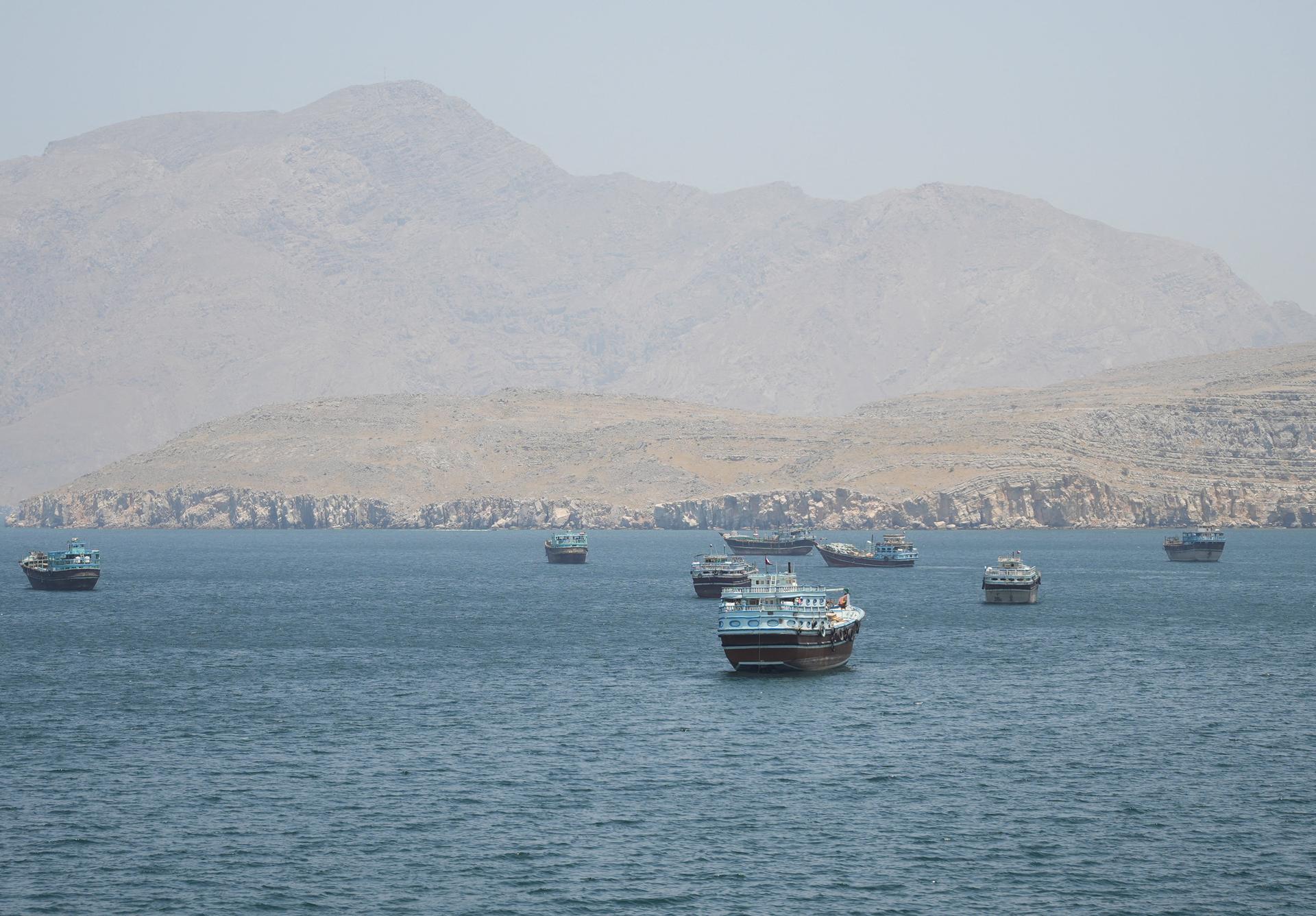
Vessels in the Strait of Hormuz, Musandam, Oman, May 8, 2026. REUTERS/Stringer

The bilateral deals Iraq and Pakistan quietly struck with Iran to secure oil and LNG passage through the Strait of Hormuz this week look like pragmatic crisis management. But they could signal something much more troubling for the Gulf: Tehran cementing permanent control over a globally crucial energy corridor.  

The Gulf states have most to lose if Iranian control holds. 

The war has shattered the key assumption underpinning Gulf energy exports: free navigation through Hormuz. The conflict triggered a cascade of force majeure declarations — from QatarEnergy to Kuwait's KPC and Bahrain's Bapco — as the closure of the strait stranded Gulf energy exports. The bilateral deals now emerging are a response to that emergency. As Claudio Steuer of the Oxford Institute for Energy Studies put it: "Iran has shifted from blocking Hormuz to controlling access to it ... Hormuz is no longer a neutral transit route, it is a controlled corridor.” 

The danger for Gulf producers is that each deal could normalise Iranian control of that corridor. Only Saudi Arabia and the UAE have operational crude pipelines that can reroute flows to bypass the strait. Iraq, Kuwait, Qatar and Bahrain rely on it to deliver virtually all of their energy exports. Iran's selective transit system thus hits the region's most exposed producers hardest. Qatar's Ras Laffan, for example, is the world's largest LNG export terminal at a single location — handling around 77 million tonnes annually, roughly a fifth of global LNG trade — and there is no alternative to shipping that gas through Hormuz.  

Even those with pipeline options face limits. Saudi Arabia's East-West pipeline was attacked by Iran in April. The port of Fujairah, the UAE’s key port on the Gulf of Oman, has been attacked by Iranian drones, disrupting oil loading operations. Rerouting away from Hormuz relocates risk rather than eliminating it, and the threat to Red Sea shipping adds a further layer of persistent maritime insecurity on Saudi Arabia's westward route. 

Shipping traffic through the Strait of Hormuz has largely been blocked by Iran since February 28, and the idea of Iran shutting or selectively controlling Hormuz had, until then, been largely theoretical — the strait had never been fully closed, and most assumed it never would be. Whether Iran can sustain control remains uncertain — but the emerging pattern suggests something more consequential than closure: a strait whose access Tehran now appears able to selectively restrict.  

Gulf states are seriously considering bypass projects. Saudi Arabian Railways announced five new freight logistics corridors in April. Turkish Energy Minister Alparslan Bayraktar has proposed reviving a long-stalled Qatar-Turkey gas pipeline – a massive undertaking. But infrastructure takes years; Iran's leverage is already in place.  

A half-open Hormuz — selectively managed by Tehran — would institutionalise disruption rather than resolve it, leaving Gulf exporters perpetually dependent on a neighbour that has already shown it will weaponise geography. No bypass appears likely to significantly change that calculus. Only a political settlement can.  


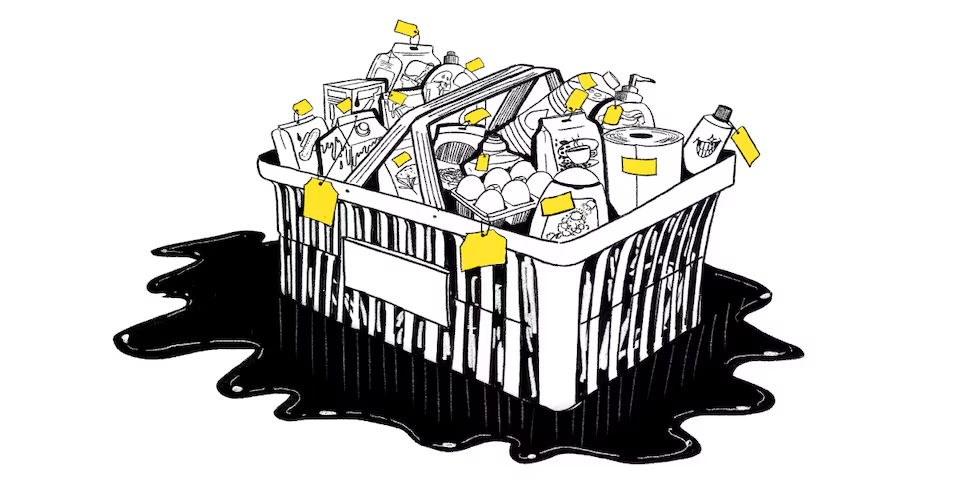
How the Iran war is driving up the cost of your shopping cart


A surge in energy prices caused by the Iran war is rippling through global supply chains for common consumer goods, making materials like chemicals and plastics more expensive and pushing up manufacturing and transportation costs. 

The European price of PET plastic used in soda bottles and other food packaging was 15.4% higher in mid-March than a year earlier, according to data from industry publication Plastics Information Europe (PIE). In North America polyethylene was about 29% higher year-on-year in March, according to estimates from Baird. 

Most plastics are made from oil or natural gas processed into chemical building blocks and then converted into polymers which are used to make wrappings and tubs for products like detergents, as well as polyester fabric for clothing. Read more about how the war on Iran is driving up everyday item prices. 


The last wave: Middle East oil supply disruptions are far worse than prior estimates

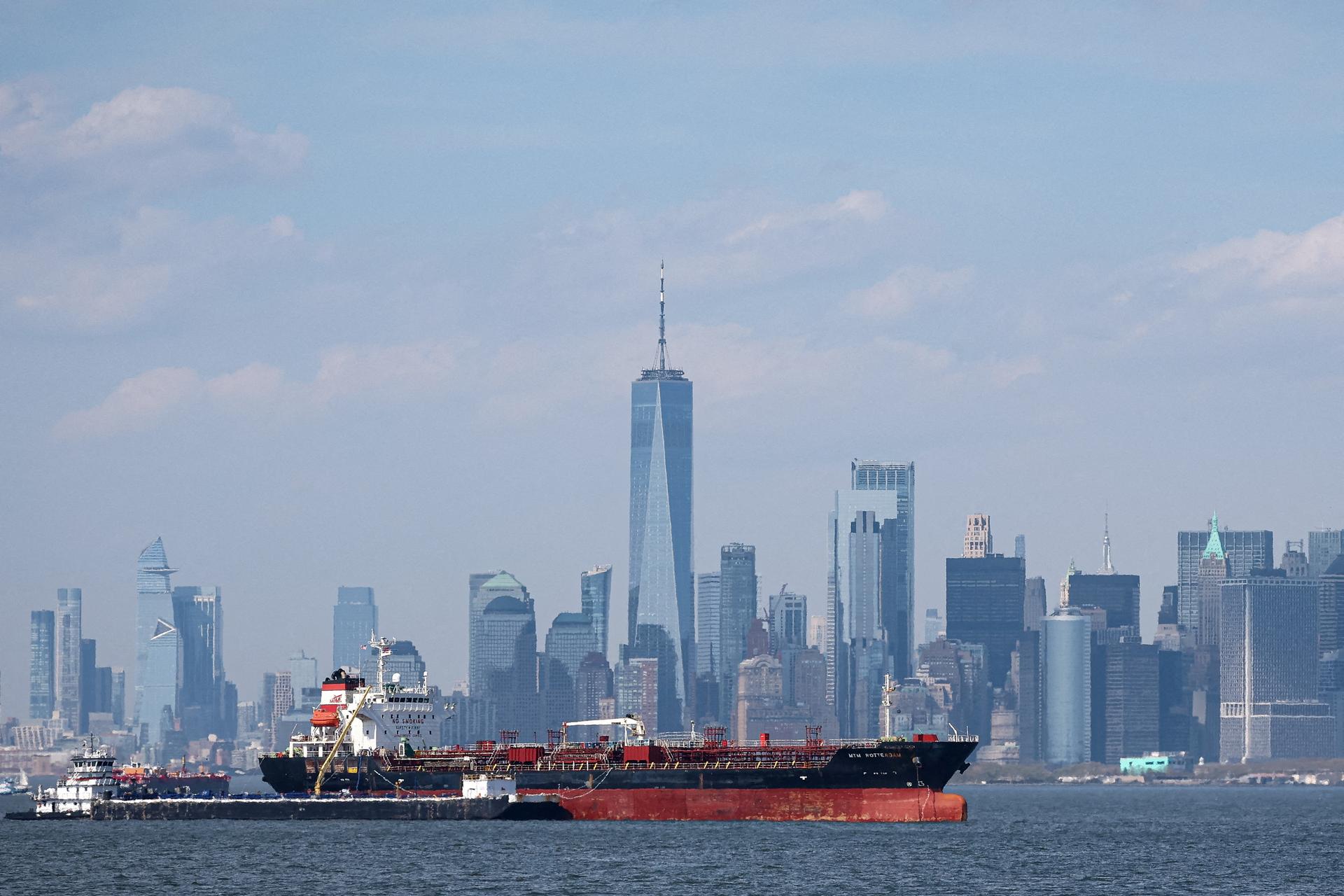
The Mtm Rotterdam, a chemical and oil tanker, sits anchored in New York harbor in New York City, U.S., April 14, 2026. REUTERS/Brendan McDermid/File Photo

The U.S. Energy Information Administration on Tuesday revised its earlier forecasts to reflect a much bigger and lengthier hit to global oil supplies from the Iran war than it previously projected.  

Iran's blockade of the Strait of Hormuz continues to wipe off millions of barrels of global oil supply every day. The EIA now assumes the Strait will be effectively closed through the end of May — moving back its earlier assumption that the closure would last through April.  

The agency estimates 10.5 million barrels of output were shut in – meaning taken offline or halted – across the Middle East in April, rising to a peak of 10.8 million bpd this month. The EIA had earlier forecast production losses would peak at 9.1 million bpd.  

Global oil inventories will fall by 2.6 million bpd this year, up from a prior estimate of about 300,000 bpd. 


This newsletter was edited by Aidan Lewis and produced by Rawan Yaghi.