| | In today’s edition: Alexandria Ocasio-Cortez is in no hurry to make her next move, and the latest hu͏ ͏ ͏ ͏ ͏ ͏ |
| |  | Washington, DC |  |
| |
|
 - AOC’s next move
- China summit vibes
- Ballroom Byrd bath
- Fed transition
- Iran war pressure
- New Dem endorsements
PDB: Supreme Court maintains access to mifepristone  Trump en route back from China … US reports industrial production … CIA Director John Ratcliffe meets with Cuban leaders in Havana |
|
AOC keeps people guessing |
 Tom Williams/CQ-Roll Call/Getty Tom Williams/CQ-Roll Call/GettyAlexandria Ocasio-Cortez is familiar with having her every move analyzed for possible clues to her future. Her approach to this election year, however, sends a clear signal: She’s genuinely unsure what’s next, Semafor’s Nicholas Wu and David Weigel report. The 36-year-old New York democratic socialist is being choosy in which candidates she campaigns for, a shift from past uses of her star power. She’s also broaching 2028 with caution when asked about it in public. With colleagues in private, she’s just as deliberative, according to interviews with more than a dozen Democratic lawmakers, aides, and operatives. Ocasio-Cortez’s allies are ready to cheer whatever she decides. “She’s being strategic, looking at what her options are,” said Minnesota Rep. Ilhan Omar. |
|
China visit: Good vibes, little progress |
  Evan Vucci/Pool/Reuters. Banner credit: Andrew Caballero-Reynolds/AFP via Getty Images. Evan Vucci/Pool/Reuters. Banner credit: Andrew Caballero-Reynolds/AFP via Getty Images.President Donald Trump left China after a summit which emphasized stability and positive vibes but led to no substantive breakthroughs. The Chinese government said it had reached “common understandings” with Washington after the visit, while Trump said Chinese leader Xi Jinping had “become really a friend” and that the two powers had “settled a lot of different problems,” inviting Xi to visit the White House in September. The deals that were signed — including China’s agreement to buy 200 Boeing aircraft and some US oil and agricultural goods — were either smaller than anticipated or vague in scope. That the leaders’ body language was the subject of scrutiny may indicate how little progress there was, although Commerzbank said that “a meaningful de-escalation in tone and a modest step toward trade rebalancing” was a good start. |
|
Trump’s ballroom money faces gauntlet |
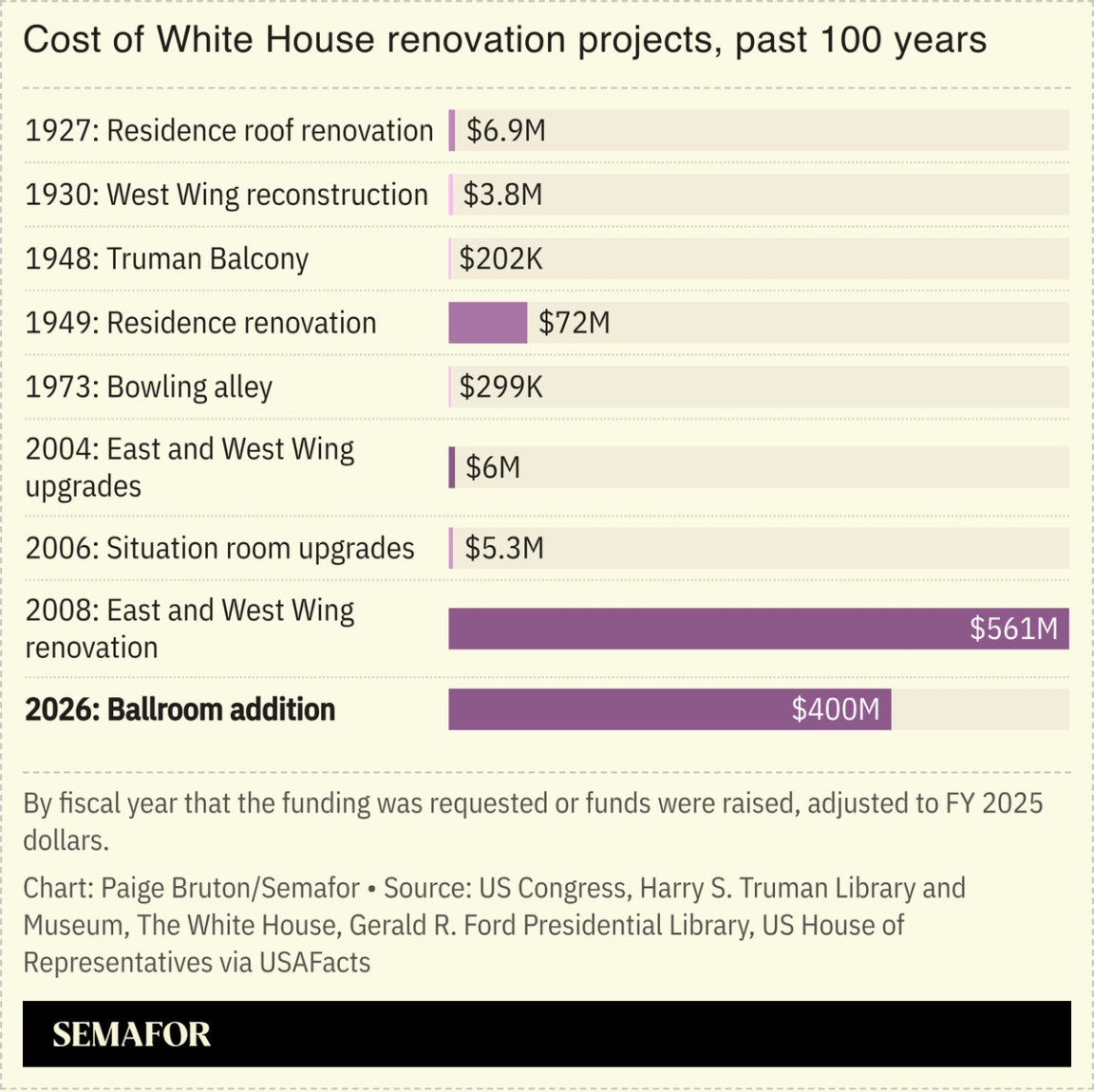 Senate Republicans will soon learn the parliamentary fate of $1 billion in security funding for Trump’s East Wing ballroom project, after the Senate parliamentarian ruled some immigration enforcement funding ran afoul of the Senate rules last night. Today, Democrats will challenge the inclusion of that money in the party’s budget reconciliation package via the Byrd Rule with the Senate parliamentarian, according to three people familiar with the plan. Even if it survives the “Byrd bath,” the proposed funding doesn’t yet have 50 votes. Sen. Dan Sullivan, R-Alaska, called the Secret Service briefing this week “compelling” and said that senators don’t want to “play around” with White House security — but he added that he’s “still looking at it.” Under budget reconciliation, language must primarily have a direct effect on the budget rather than be a policy change. — Burgess Everett |
|
Inside the Fed’s transition of power |
 Kevin Lamarque/Reuters Kevin Lamarque/ReutersThe Senate may have confirmed Kevin Warsh as the next Federal Reserve chair, but that doesn’t mean he’s in the door. Before Warsh can be sworn in, the president — who left for China before lawmakers took their last vote — must sign paperwork installing Warsh in the role. Warsh has also agreed to divest from more than $100 million in undisclosed assets before starting the job (though he has more time to dump other investments). At least one box has been checked: Stephen Miran, who temporarily filled Warsh’s seat at the central bank, sent his letter of resignation yesterday. The White House did not respond to a request for comment on whether Miran, who previously chaired Trump’s Council of Economic Advisers, might return to the executive branch. The president last month tapped University of Minnesota professor Christopher Phelan for Miran’s old job. — Eleanor Mueller |
|
Iran war powers vote comes up short |
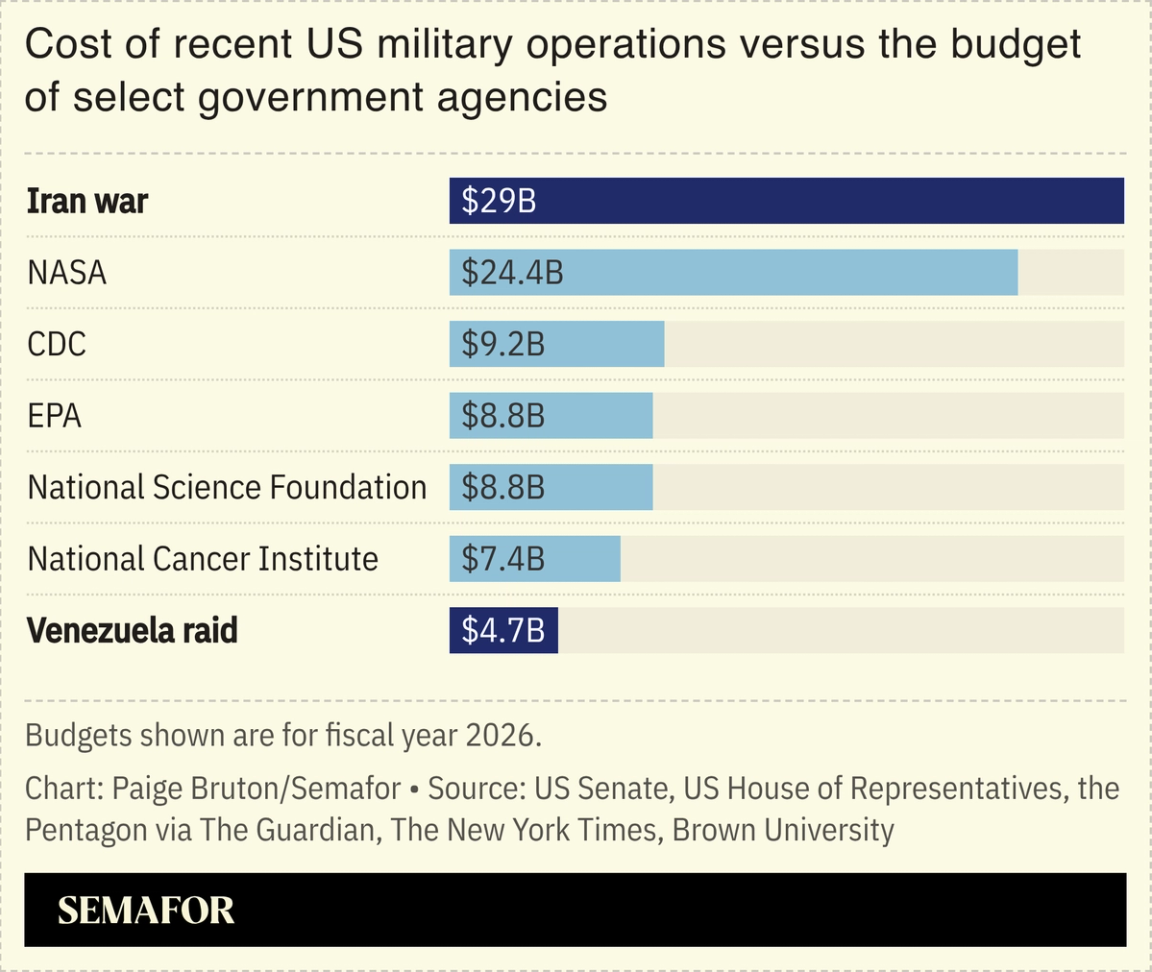 Another measure to rein in Trump’s military campaign in Iran came up short in the House yesterday evening — but the next one might pass. The Democrat-led legislation, which barely failed on a tie vote, would have directed Trump to draw down hostilities within 30 days of their start absent congressional authorization. But one Democrat, Rep. Jared Golden, D-Maine, voted against it, arguing the 30-day period outlined in the legislation was now moot given the duration of the conflict. Instead, he said he’d support a measure likely to come up in the House next week — meaning it could have the votes to pass. Yesterday’s failed vote came on the heels of another in the Senate, where Sen. Lisa Murkowski, R-Alaska, became the third Republican senator to vote with Democrats to end the hostilities without congressional authorization. — Nicholas Wu |
|
Centrist Dems wade into primaries |
 Steny Hoyer. Sebastian Elias Uth/Ritzau Scanpix via Reuters. Steny Hoyer. Sebastian Elias Uth/Ritzau Scanpix via Reuters.The centrist New Democrat Coalition is wading into two contested Democratic House primaries, backing Adrian Boafo in Maryland and Melissa Hernandez in California. Boafo, a protégé of retiring Democratic Rep. Steny Hoyer, has racked up establishment support in the race but also faces well-funded challengers like former Capitol Police officer Harry Dunn and Quincy Bareebe. Hernandez is among the Democrats vying to succeed now-former Democratic Rep. Eric Swalwell, who resigned last month and dropped out of the California gubernatorial primary following sexual misconduct allegations. The centrist Democratic group is “confident that Adrian and Melissa are the strongest and most capable candidates in their field,” said Rep. Greg Stanton, D-Ariz., who chairs the bloc’s political arm. “They are running smart campaigns built on grassroots support with the right message to win their nominations and run through the tape in November.” — Nicholas Wu |
|
Debatable: US-China AI dialogue |
 Fresh off Trump’s visit to China, the US plans to begin talks with the Chinese about how to enact guardrails around artificial intelligence, given risks associated with the fast-evolving technology. Specifically, Treasury Secretary Scott Bessent said on CNBC that the discussions would focus on how to formulate “best practices for AI to make sure nonstate actors don’t get a hold of these models.” Some see value in a channel like this. Others are skeptical and think it could backfire. It’s a debate that doesn’t cut cleanly along partisan lines. “We need to have some dialogue there to be able to talk about what are going to be the parameters,” Sen. James Lankford, R-Okla., told Semafor’s Morgan Chalfant. But Sen. Richard Blumenthal, D-Conn., cautioned against such a dialogue because he’s “not sure that China is a trustworthy partner.” |
|
 Brendan Smialowski/Reuters Brendan Smialowski/ReutersWith US and Chinese leaders meeting at this week’s summit in Beijing, Semafor’s newsroom breaks down the key takeaways — from the durability of Trump’s China deals, to Washington’s rare earths Achilles’ heel, to China’s wider geopolitical calculus. Our coverage brings together reporting and analysis on how the summit will shape energy markets, business, policy, and the broader US-China relationship. |
|
 Beltway NewslettersPunchbowl News: “I have constituents who will be scammed out of their money if we do not regulate this industry,” said Sen. Angela Alsobrooks, D-Md., who voted in favor of the Clarity Act crypto regulation bill that has divided Democrats. “The horse is out of the barn.” Playbook: Both Republican and Democratic voters broadly support gerrymandering to neutralize gains made by the other party, according to a poll conducted by Public First. Axios: Havana’s willingness to host the CIA director suggests it may be leaning toward a deal, according to one senior administration official. “They have no fuel. They have no money. They have no one coming to rescue them. The regime has been stubborn since 1959, but even they realize it’s time for a change.” White HouseBusiness- Qatar, Saudi Arabia, and the UAE have paid Jared Kushner’s private equity firm tens of millions for sway over White House policy towards the Gulf, and are “disappointed with him.” — Bloomberg
- Boeing and Toyota each donated $1 million towards Transportation Secretary Sean Duffy’s new road trip-themed reality show. — WSJ
- A Pentagon group known as “Deal Team Six” is trying to undermine China’s stranglehold over the US’ critical minerals supply chain. — Bloomberg
Courts- The Supreme Court blocked lower court rulings limiting access to the abortion drug mifepristone, allowing patients to obtain it through telemedicine while a court case regarding Louisiana restrictions plays out.
- President Trump plans to drop his $10 billion suit against the IRS over his tax records in exchange for a $1.7 billion fund to compensate supporters who say they were targeted by the Biden administration. — ABC
Immigration- The Department of Homeland Security is moving forward with its plans to convert warehouses into detention centers. — WaPo
|
|
|


