|
|
|
|
|
|
|
|
|
Illustration by Sam Island
|
|
|
|
|
|
|
|
|
|
|
We’re coming up on one year since I took over the newsletter, and I wanted to take a moment to thank everyone who has sent in ideas, shared their stories, or simply told a friend to subscribe. We’re just getting started! |
|
|
|
|
Now back to our regularly scheduled programming. I’m hoping to hear from families about an issue that can quietly reshape even the most carefully built financial plans. Let’s get into it. |
|
|
|
|
The retirement risk nobody talks about |
|
|
|
|
There’s a lot that can throw off a financial plan, including inflation, market swings, job loss, or a death in the family. But there’s one challenge many households experience that people still rarely talk about openly: How cognitive decline changes the way families manage money. |
|
|
|
|
A new survey from Raymond James found that 63 per cent of Canadians worry about how cognitive decline could affect their financial future. Yet only 29 per cent feel strongly aligned with their families on inheritance and wealth planning when brain health enters the conversation. |
|
|
|
|
By the year 2050, more than 1.7 million Canadians are expected to be living with dementia, with an average of 685 individuals being diagnosed each day, according to the Alzheimer Society of Canada. |
|
|
|
|
But we have to remember, cognitive decline doesn’t always look obvious. In many cases, people may not recognize changes in themselves at all. |
|
|
|
|
In a 2024 study published in the Journal of Political Economy, researchers looked at just over 16,000 Americans between the ages of 50 and 80 and found that people who didn’t realize their cognitive abilities were declining were more likely to make poor financial decisions, and lose money because of it. On average, their wealth dropped 8.2 per cent over a two-year period. |
|
|
|
|
The biggest losses showed up among wealthier households, particularly in investments and savings that were easy to access and move around. It’s especially striking that many of these people had spent decades successfully managing their finances. But even as their cognitive abilities changed, their confidence in their financial decision-making often didn’t. |
|
|
|
|
|
|
|
|
I want to dig deeper into this topic, and to do that, I’d love to hear from families navigating it firsthand. Have you, or someone you love, experienced cognitive decline that affected a financial plan? If so, drop me a line at mraman@globeandmail.com. |
|
|
|
|
Subscribe to the Retire Rich newsletter
Are you reading this newsletter on the web or did someone forward the e-mail version to you? If so, you can sign up for Retire Rich here. |
|
|
|
|
|
|
|
|
|
|
|
|
|
|
|
|
|
|
|
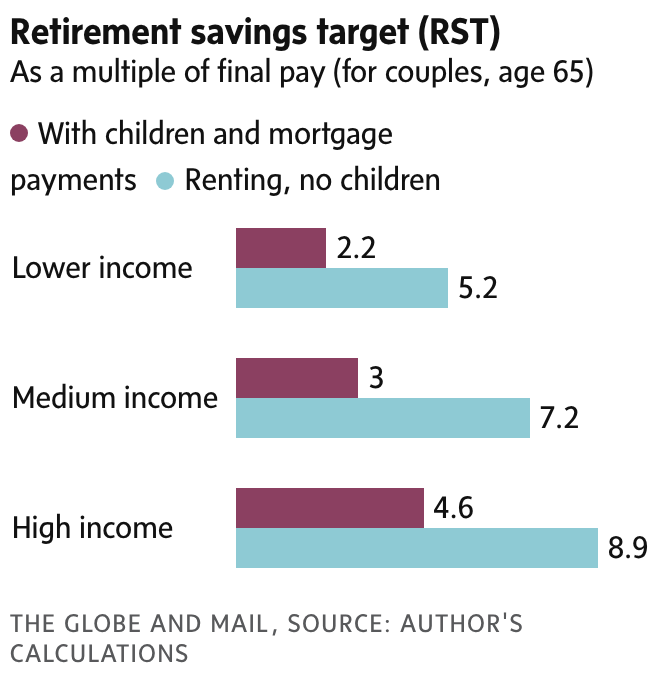
Yes, but: The number changes a lot depending on what your life looks like before retirement. Vettese compared different types of households, including couples still paying a mortgage and raising children versus couples without those costs, across income levels ranging from $70,000 to $280,000. |
|
|
|
|
The takeaway: Canadians with higher expenses in their working years may actually need less retirement income to maintain the same lifestyle later on. |
|
|
|
|
|
|
|
|
|
|
|
|
|
|
|
|
|
|
|
|
|
A car passes through Canmore, Alta., on the Trans-Canada Highway. Concerned about flight prices and weary of friction with the U.S., some Canadians plan to hit the road for shorter domestic trips. Jeff McIntosh/The Canadian Press
|
|
|
|
|
What’s happening: More Canadians are rethinking big summer vacations and opting for shorter road trips and “microadventures” closer to home instead, writes The Globe’s Zarif Sinha. |
|
|
|
|
Why it’s happening: Travel habits are shifting in real time as Canadians adjust to higher costs and global uncertainty. Rising fuel prices, more expensive flights and lingering unease about travel to the U.S. are pushing many households to scale back their plans. |
|
|
|
|
|
|
|
|
|
|
How’s retirement going so far? What’s good and bad about no longer having to work every day? What’s been surprising to you? The Globe wants to hear your stories about life in retirement for its Tales from the Golden Age series.
If you’re interested in being interviewed and agree to use your full name and have a photo taken, e-mail: goldenageglobe@gmail.com. Please include a few details about how you saved and invested for retirement and what your life is like now. |
|
|
|
|
|
|
|
|
|
|
|
|