This issue: The prizewinning short story that people are convinced is AI, a look at the wildest corner of the book internet, and a scene report from the 2026 PEN America Gala.
|
|
|
|
|
Senior newsletter editor, New York |
|
|
|
Granta Says They Weren't Involved in Selecting That Short Story |
|
|
|
Can AI write literature and get away with it? Here’s the type of news story we’re regrettably about to see more of: On May 16, the Commonwealth Foundation, an organization providing grants and other resources to Commonwealth nations, announced the regional winners of its Short Story Prize, awarded to works of unpublished short fiction; the overall winner will be decided in June. A few days later, the winning entry from the Caribbean, “The Serpent in the Grove,” by Jamir Nazir of Trinidad, was drawing attention online not for its “lyrical precision and haunting atmosphere,” as the prize committee put it, but because some people thought it, and other prize-winning stories, reads uncomfortably like AI-generated text. “It’s hard to explain exactly why, but it certainly feels AI, or at least inhuman, to anyone who reads it,” the writer Rory McCarthy told me when I asked what made suspect non-human authorship, pointing to its “constant ersatz kitchy ‘lyricism.’”
The story, which was published on the British literary magazine Granta’s site after being selected, is set in rural Trinidad and involves a woman named Sita’s brush with death when she falls into a well at the edge of her property. It is crammed with metaphor and simile. “Shame is a substance he felt on his skin. It itches. It doesn’t rinse,” the narrator says when Sita’s philandering husband, Vishnu, waits for her in a medical clinic. Some descriptions are significantly less elegant, even bizarre: “The girl smiled like sunrise over a sink”; “She had the kind of walking that made benches become men.” There are other hallmarks of AI writing, like negative parallelisms (“But the grove isn’t a ledger; it’s a mouth. It closes only when it’s satisfied”) and anaphora, or the repetition of words at the beginning of successive sentences or clauses (“The shelf didn’t look like freedom – she couldn’t afford that word yet. It looked like not dying. It looked like not returning to a house where people forgot to see you”).
In a statement shared with Book Gossip today, Razmi Farook, director general of the Commonwealth Foundation, says the prize committee does not use AI checkers in the judging process, calling those programs “not unfailing or infallible.” (Several people online said that AI-checking tools deemed “The Serpent in the Grove” to be 100 percent AI generated, though some studies show how these tools can easily lead to false accusations of LLM use. ) “All shortlisted writers have personally stated that no AI was used and, upon further consultation, the Foundation has confirmed this,” the statement reads. “We place our confidence in the integrity of our contributors and the calibre and experience of the judges and Chair of the Judging panel, and stand by the assurances given by our authors as part of our process.”
In a concurrent statement sent this morning, Granta publisher Sigrid Rausing was less sure, writing that she and her colleagues ran the story through Claude, which concluded that it was “almost certainly” written with the help of an AI tool, though it might have a “human core.” “It may be that the judges have now awarded a prize to an instance of AI plagiarism – we don’t yet know, and perhaps we never will know,” she writes. “There is, however, a certain irony in the fact that beyond human hunches AI itself is the most efficient tool we have for revealing what is AI generated.” A representative from Granta confirmed that its editors did not participate in the selection or editing of the prize-winning stories beyond copy editing, and Nazir did not respond to a request for comment. Stories submitted to the Commonwealth Short Story prize are judged anonymously.
Nazir, a business consultant who used to work in the office of Trinidad & Tobago’s prime minister, per LinkedIn, published a book of poems a few years ago called Night Moon Love: Poems For All Who Have Loved Or Dreamed Of Love. His poetry strikes a different, less abstract tone than his winning story; in one, called “Tribute To My Wife,” he writes, “If ever a man be blessed, then I be he. / I live in constant happiness, / as heaven lies in your arms.” On his public social-media pages, he posts often about AI and seems to sometimes use it to write. His uncannily symmetrical author photo, too, appears to be AI generated. But, of course, that’s all just speculation. Meanwhile, Nobel Prize winner Olga Tokarczuk talked about using LLMs in her writing process at an event in Poland last week, saying “in fluid literary fiction, this technology is an asset of incredible proportions,” and March saw the cancellation of the novel Shy Girl after AI allegations. Like it or not, it seems the serpent’s out of the grove.
|
|
|
|
Subscribe now to get unlimited access to everything New York, including subscriber-only newsletters, exclusive perks, the New York app, and more. |
|
|
|
Why Is Book Threads So Unhinged? For authors and posters alike, the platform can be a scary place.
|
Photo-Illustration: Vulture |
|
|
|
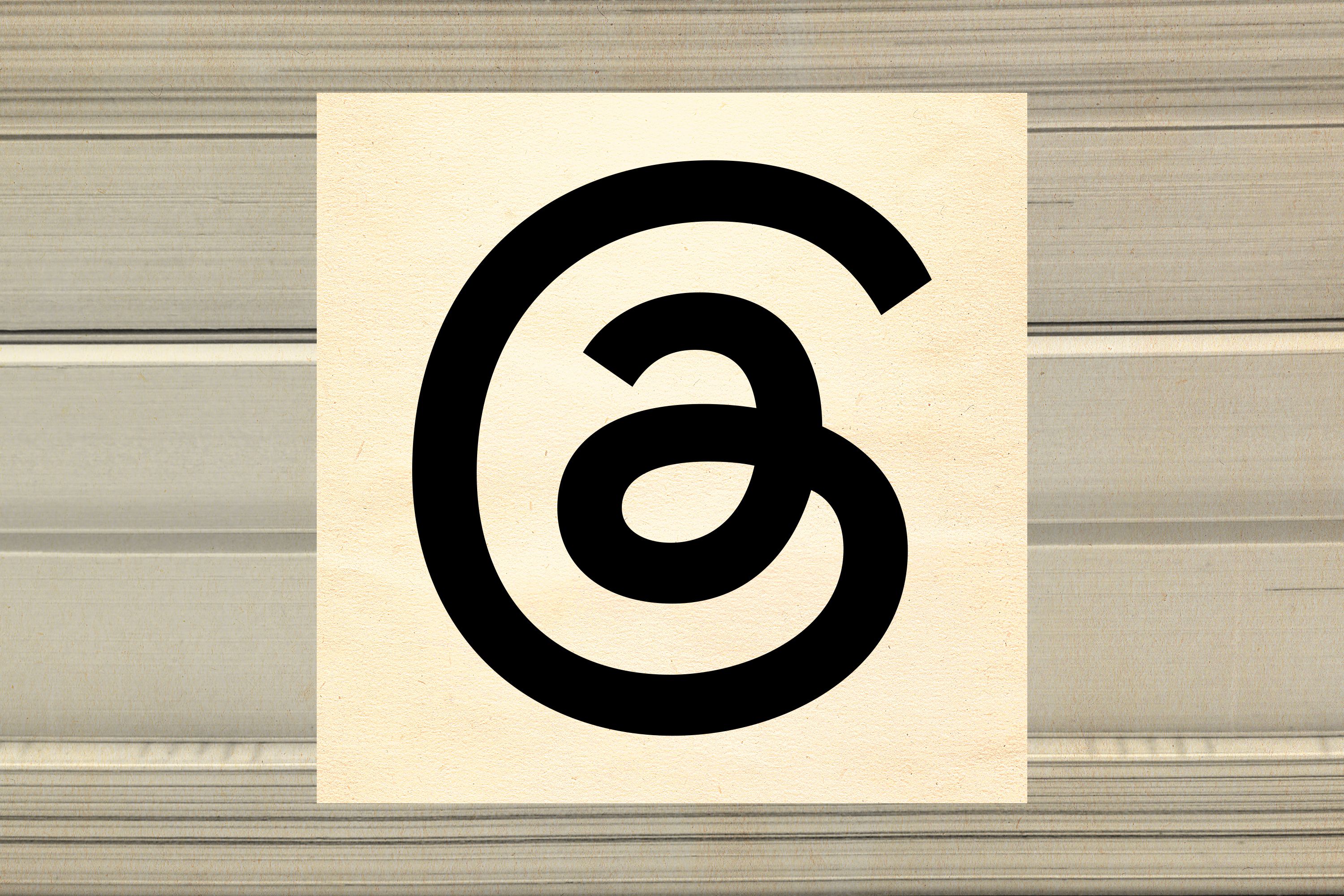
Has online book discourse ever raged as violently as it does today? In the past few weeks, R.F. Kuang caught heat for including a passing reference to an Israeli character in her forthcoming novel, Taipei Story; Rachel Reid was criticized for calling one of her Heated Rivalry characters, Shane Hollander, “stupid” years ago; and Mac Barnett was called to step down from his role as the Library of Congress’s 2025–26 national ambassador for young people’s literature after writing that most of children’s literature is “crud.” This is an incomplete list, and whether or not each of these scandals originated on Threads — the Instagram-based, text-forward social-media platform created in 2023 by Meta to serve as a competitor to Twitter — the app has become the place they most visibly go to fester. Which has led many of us to ask: What is the deal with Books Threads?
“The algorithm is crazy,” said one big-five publicist and Threads lurker on the condition of anonymity. “I feel like if I hover over a post for one second, I immediately see 15 more identical posts.” Vulture critic and features writer Kathryn VanArendonk also highlighted the app’s “truly uncanny ability to show you posts from people you do not follow, who are not using direct keywords for things you're interested in, and yet are talking about a thing that makes you angry — possibly about a thing you wrote.” The particularity of Threads, though, is that while it’s good at showing users exactly the things that will enrage them, it’s uniquely awful at providing context. Spend even a few days there, and you’ll see posts from users begging for people to show them actual receipts for what so-and-so said — or to catch them up on the app’s fast-moving drama, which morphs at such a clip that people may be primed to weigh in on the latest polemic without knowing the full story. This is probably why so many posts, at least of what my algorithm serves me, are urging users to not engage, to sign off and touch grass, and to actually go read a book.
In its three years of existence, the books corner of Threads has transformed from a platform where like-minded people could meet and talk about the books they love to a reactionary factory of high-button conversation, pile-ons, and cancellation. According to Jana, also known as Lady Whistlethreads on the platform, where she writes a weekly roundup of “book discourse, drama, and terrible behavior,” a lot of that vibe shift occurred over the past year. Although Threads has now surpassed X in daily mobile users, many suspect that there are a lot more bots now. “The energy when it first launched was very much liberals and leftists leaving Twitter, and now it's a little bit more diverse perspectives,” she said. A few of the publishing sources I spoke to contrasted Threads with the early days of Twitter, a time when authors, critics, readers, and publishers would all meet for conversation, uplift writers they loved, and innocently recommend other accounts to follow. Obviously, things are different now; social media no longer has the sheen of a new, utopian democratic space, and although cancel culture has faded away in recent years, on Threads, it is still the official idiom. The anonymous big-five publicist added that, unlike BookTok, she doesn’t believe that people on Threads are there to build community: “They're just there to gossip.”
Whether or not Threads gossip carries real-life consequences varies. Last summer, dark-romantasy writer Julie Soto was dropped from Romance Con because her book Rose in Chains had begun as Harry Potter fanfic, which posters on Threads and other apps considered transphobic simply through thematic association with J.K. Rowling. In the case of R.F. Kuang, there is no indication for now that her publisher will be editing her acknowledgment of the existence of the state of Israel out of the manuscript. (Neither Barnett’s nor Kuang’s publicists responded to Book Gossip’s request for comment.) Reid and Barnett each ended up issuing apologies, which in turn were scrutinized and deemed insufficient by various Threads users. Lovers Corner Bookshop LLC, which bills itself as a “pop-up style romance bookshop,” claimed that it would not restock Reid’s books until “changed behaviors happen.” And despite the heated backlash Barnett faced online, his book Make Believe: On Telling Stories to Children made the New York Times best-seller list its first week anyway. Some posters wondered whether all the metaphorical screen time Threads users had given him contributed to the ultimate success of his book. What seems more likely, though, is that most individual book buyers are entirely unaware of the conversation happening there.
Do publishers care about what happens on Threads? Book publicists I spoke to referred to Threads as an important listening tool, but only a few had heard of the above controversies through word of mouth or in trade reporting, if at all. “I'm just one person,” said the anonymous big-five publicist, “but I think that we generally feel like Threads is a very chaotic place on the book internet. Influencers are really important to publishers, but the flare-ups on Threads are not particularly concerning to us because it feels like reader discourse. It feels for better or worse like a real grassroots situation.” Molly Waxman, VP executive director of marketing at Sourcebooks, agreed that “if something is unfolding on Threads and it seems like it's going in a direction that we don't want it to, we don't have to start thinking about all the dominoes it's going to knock over. It doesn't necessarily translate to the feelings and ideas and buying habits of the rest of the market — it just gives the optics that it does.”
That said, for Waxman, what happens on Threads matters a great deal, especially given that Sourcebooks produces some rapid-turnaround e-books in response to trends. “Publishers are trying to capture sentiment like any brand,” she said. “For us, it's one way to tap in to reading audiences and find out what they like and don't like. So we do use it to guide our decision-making because we want to produce books that readers love.”
Book and culture influencer Josh Lora, known under the moniker Tell the Bees across social media, told me he mostly avoids Threads but that its discourse ends up being fed to him on other apps anyway. “There’s definitely a symbiotic relationship between Threads and TikTok,” he said. “It makes sense that people would transfer Threads discourse over to TikTok, where they can get eyeballs and perform informing the masses while also giving their take and getting a ton of clicks on it. Some of them are making their entire living off of this attention economy — and I say this as someone who largely got a following bringing Twitter discourse over to TikTok.” Lora also agreed that the average person is definitely not tapped into what people are furious about online.
“Everyone is vulnerable on the platform, even an author as beloved as R.F. Kuang,” said Waxman, before spinning it more positively. “It will surprise a lot of people, but people are extremely passionate about books and what they mean for the culture,” she said. “You've got all the evidence you need on Book Threads.” —J.V. |
|
|
|
B.J. Novak Thinks Ann Patchett Is a ‘Smoke Show’
|
Photo: Bryan Bedder/Getty Images |
|
|
|
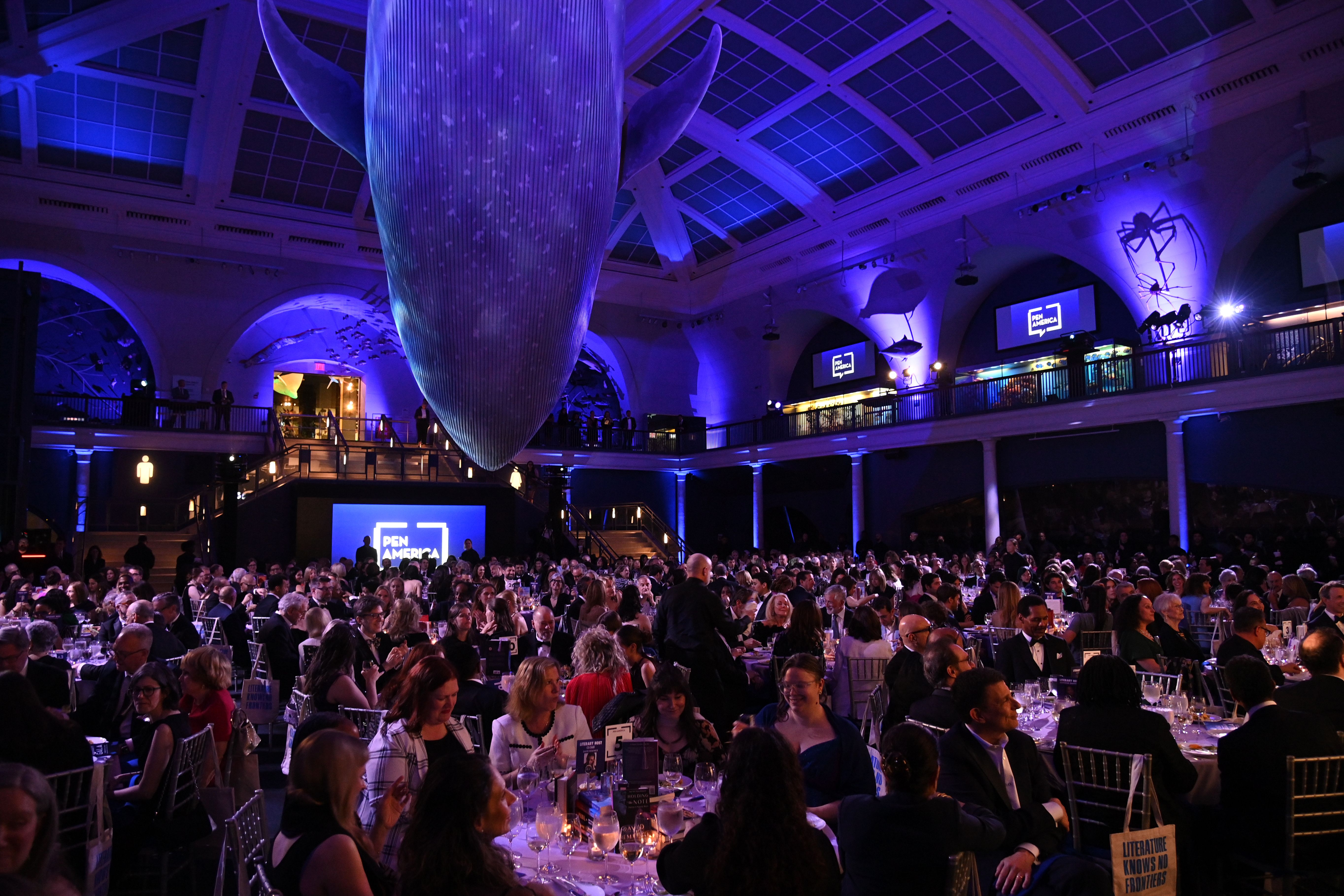
On a warm evening last Thursday, more than 600 writers, publishers, and journalists filtered into the Museum of Natural History for the PEN America Literary Gala, an annual fundraiser for the 501(c)(3) dedicated to free expression. Among the night’s 51 honored authors, I spotted the eccentrically stylish Rivka Galchen — wearing a T-shirt over a cinched maxi skirt — catching up with Hari Kunzru. Romantasy giant Rebecca Yarros, in a strapless navy gown, chatted with Heated Rivalry creator Rachel Reid, who radiated nervous energy. Beneath the barosaurus skeleton, gala co-chair David Remnick dwarfed Megha Majumdar and recent Pulitzer winner Yiyun Li.
While enjoying a truffle-macaroni bite somehow shaped into a perfect cube, I noticed Seth Meyers moving from small group to small group, preceded only by whispers about how handsome he is in person. Meyers, a two-time PEN Gala host himself, told me that the event was one of his favorites and that he was glad B.J. Novak was hosting this year. He praised Novak’s children’s book The Book With No Pictures, a favorite of his own kids that leaves them in stitches. “I’m so jealous I didn’t think of it,” he told me.
When I asked him what book he’d recently loved, he said, “I will out myself as a member of a book club. We get together for dinner once a month, and right now we’re reading Sound and the Fury, which is an impossible book when you read it alone. But with the help of my seven friends, I can say with enthusiasm that I love it.”
Guests then progressed through the Hall of Biodiversity and into the Hall of Ocean Life, where they found their places underneath the 94-foot-long blue whale hanging from the ceiling. Novak soon took to the stage.
“Honestly, to stand here in a tuxedo at a podium at the Museum of Natural Fucking History — I know I can talk like that because PEN is committed to free speech — I feel like we’re in the opening scene of a movie,” Novak said. He used his speech to argue that people are embracing “the real world” — movie theaters, malls, bookstores, and comedy clubs — more than ever, drawing laughs and spontaneous cheers while reciting a litany of reasons why literature is glamorous: “I love that Harry Styles said he would only do the cover of Runner's World if Murakami himself were conducting the interview. I think it's great that Ann Patchett is a smoke show — she doesn't have to be. It's great that the Paris Review still has the coolest parties in Manhattan. It's great that the Drift’s parties are so cool that no one will tell me where they are. The next generation is clamoring for its literary legends, and we all need to work together on this. I want the next Bling Ring movie to be about M.F.A. students robbing Gary Shteyngart’s watch collection. I want Jeremy O. Harris to be arrested in a different foreign country every week, and I want FSG to publish his prison diaries.”
“This speech is kind of fire,” said someone at my table.
Next, Maya Hawke introduced her godfather, the horror-film producer Jason Blum, who received the Business Visionary Award. In his speech, he called for the defense of new forms of expression from suppression and snobbery. A highlight of the night was the presentation of the Courage Award to the Rutherford County Library Alliance, a Tennessee-based organization fighting book banning within their community. “Libraries are not simply buildings full of books. They’re one of the few institutions that truly belong to everyone, regardless of age, income, background, or beliefs,” said the organization’s vice-president, Keri Lambert.
A superlatively passionate career auctioneer named CK Swett then emerged to kick off the paddle raise. “Revolting,” said an expensive-looking woman in the bathroom line, though I supposed that went hand in hand with urging wealthy people to open their wallets. And it was effective: Within minutes, over $2.5 million had been raised.
PEN president Dinaw Mengestu brought it back to a more somber note, honoring incarcerated Iranian writer Golrokh Ebrahimi Iraee and translator and poet Ali Asadollahi, who faces reincarceration, with the Freedom to Write Award. Their portraits sat on two empty chairs, a tradition for paying tribute to writers in prison, which PEN tracks meticulously. In the program notes, Asadollahi dedicated his prize to “everyone in Iran who continues to pay a heavy price for their freedom and their imagination. To those who refuse to let their inner worlds be censored, and who keep dreaming of different forms for our future.”
The gala closed out by presenting Ann Patchett with the Literary Service Award. “Our lives are as miraculous as they are brief,” she said. “And so while we stand against injustice, we must also never fail to see that there is a whale hanging from the ceiling. And if you think that these are the darkest times, take a walk around this museum. The darkness and the light cycle through every day.”
As guests rose from their seats, several gray-haired members of the gala crowd were already making for the exit. I climbed the steps with Jay McInerney, who looked weary and said he planned to slip out. Back in the rotunda, the transition between gala and after-party, hosted by Dream Baby Press with tickets that went for $150 a pop, felt surreal, and not only because the first person I saw was wearing a goat hand puppet. “I think it’s a fun icebreaker,” said Hannah Hightman, who had arrived just for the party, one of several hosted by Dream Baby Press that she’s attended. The party crowd consisted of mostly girls in groups of two to five, the stray tall 20-something man who looked teleported straight out of LES, and some courageous souls who seemed to be there on their own. The rectangular, high-ceilinged space wasn’t particularly compatible with the loud music, a rotation of feel-good classics by Whitney Houston and ABBA and Kool & The Gang.
I asked Novak, one of the few presenters still there, how he thought the event went. “I love literary glamour, and I felt that this event really embodied that well,” he said. “Ann Patchett was about as moving as a person could be, both in her words and the expression of it. I thought Jason Blum tied it all together in a really profound way. I didn’t know he had it in him.”
It wasn’t long before Dream Baby Press co-founder Matt Starr, perhaps best known for hosting erotica readings in a Manhattan Burger King, stood on a chair that had found its way onto the red carpet and addressed the crowd. He spoke about Dream Baby’s mission, though he sounded a bit like a stadium announcer who also happened to be underwater. Starr, who habitually opens Dream Baby events by reading from his poetry book, had a piece that seemed tailor-made for the situation, in its way. “The best place to get fingered / in the Museum of Natural History / is under the large stairwell / right when you enter the room / with the big blue whale … it’s dark / romantic / and feels spontaneous,” Star echoed. “I don’t know what’s happening,” I overheard a gray-haired bespectacled gala attendee say to her companions.
Revelers hit the open bar and packed totes at the free-book table, and by 11 p.m., the dance floor had really filled out. Just when it seemed like all the gala crowd had gone, I spotted a dapper man in coattails blissfully floating between corners overlooking the action. A fundraiser for a theater company in the city, he told me that he had been especially inspired by the librarians from Tennessee. Was he enjoying the after-party? “I think it’s terrific,” he said. “It’s always interesting to see how an important 100-year-old institution like PEN America stays relevant.” —J.V.
| |
|
|
|