
|
 |
For Solo Chiefs—creatives, solopreneurs, and lone leaders orchestrating AI, humans, and chaos with no one to save their ass.



 |
Your problem isn’t the problem, your story about it is.
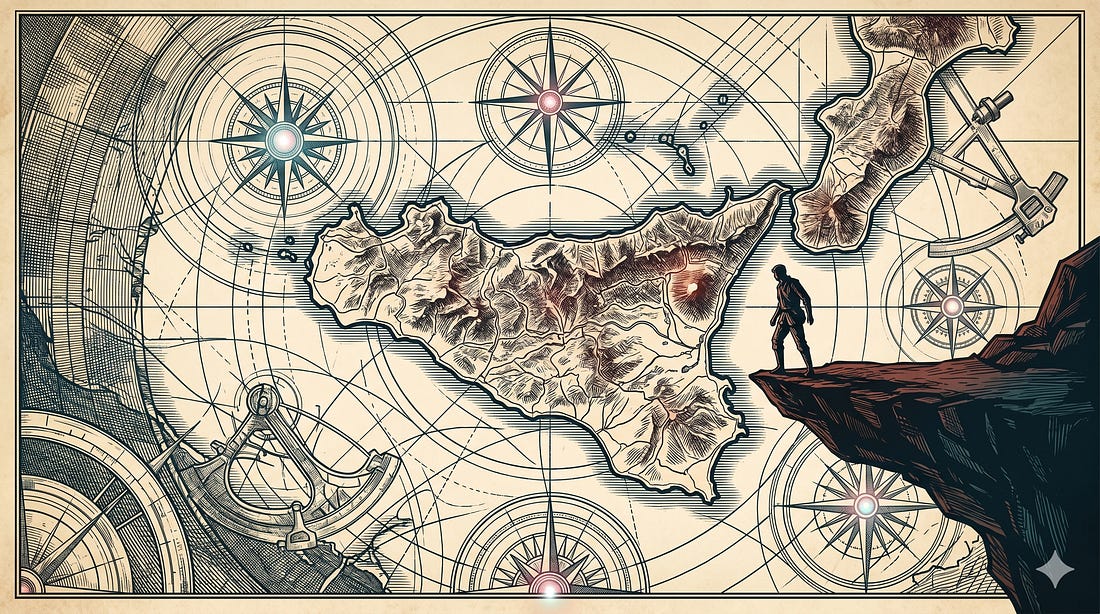
In Sicily, reframing means swapping your cappuccino for a macchiato, and maybe your whole attitude toward your problems.
Be 100x More Productive with This Free Claude Code Guide
 |
Sponsor message presented by Iwo Szapar
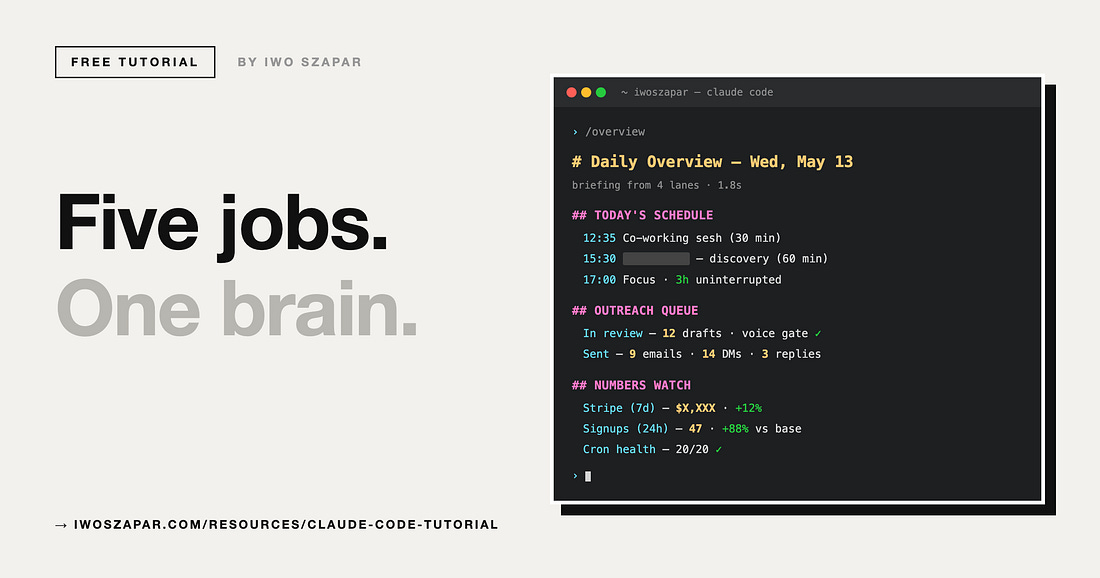
Every Solo Chief hits the same wall: too many decisions, not enough you. I hit it last year and rebuilt my workflow around one constraint: Claude Code has to be able to do anything I can do, from one brain.
Today, it runs five jobs in parallel. drafts emails in my voice, sends the weekly newsletter, handles sales follow-up, prepares my morning briefing, watches my numbers.
Team output. Solo overhead. That's the shift.
If you want to see how it's built, the free guide walks through the first skill end to end.
I’m changing my coffee habit.
Normally, I only drink cappuccinos and cafe lattes, one after breakfast, one after lunch, and one after dinner. But I’m traveling in Sicily now. Everyone tells me that Italians frown upon the idea of ordering milky coffees after 11:00, especially on its more conservative southern island. Of course, I could just ignore the warnings, order my regular cappuccino at 4 pm like the average dumb tourist, and shrug off the local chuckles and eye-rolls behind my back. I’m a paying customer. Who cares what others think?
But that’s not what’s actually happening. Instead, I took this as a chance to get out of my comfort zone and test my adaptability to the local culture and customs. Also, they tell me this is the home of the mafia. I’d rather not find out what happens to disrespectful tourists. So, after lunch, as long as I’m in Sicily, I only order a cafe macchiato, like a decent Italian. And the macchiatos are not so bad, actually. After two weeks of traveling, I might even get used to the reduced milk intake and take the new habit back home. I’m turning the problem into an opportunity.
We call this reframing, or flip-thinking.
We have a great word for it in Dutch: omdenken (coined by Berthold Gunster).
I’m a founder, intrapreneur, and former CIO rethinking governance for the one-person business, navigating sole accountability in the age of intelligent machines—informed by plenty of scar tissue. All posts are free, always. Paying supporters keep it that way (and get a full-color PDF of my book Human Robot Agent plus other monthly extras as a thank-you)—for just one café latte per month.
Reframing or flip-thinking is a way of thinking and acting in which you don’t shy away from problems, but use them as a source of energy for new possibilities. Instead of resisting reality, you accept it as it is, so you can build creative solutions from there.
Reframing is not the same as rethinking. With rethinking, you ask, “What is the truth here, and how can I understand this better?” It involves taking apart old assumptions and redesigning your approach. The problem doesn’t go away; you just try to find a different angle to tackle it.
With reframing (omdenken), you ask, “How else can I interpret this?” The facts of the situation don’t change, but your story about them does, and so does your emotional response. A situation is only a problem when that’s how you decide to see it. The moment you stop treating something as a problem, it might become an opportunity.
For example, you might have been looking for a job for a year, writing a hundred cover letters and sitting through a dozen interviews, all in a hyper-competitive job market where both recruiters and applicants are using AI to ruin the hunting game for everyone. Is this a problem? Maybe. Maybe not. Perhaps you can reframe it as a chance to offer a new job-matching service and disrupt the job market forever.
Or you might have struggled for a year to grow your Substack newsletter. You followed all the advice, tried every growth hacking trick on the planet, and the subscriber count has