
|



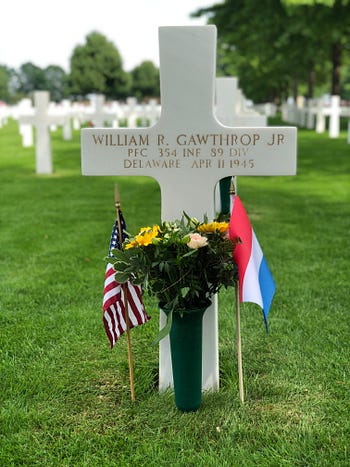
In honor of Memorial Day, I thought I’d share a story I wrote when I visited my uncle’s grave in the Netherlands. Uncle Bill is resting in the American Cemetery at Margraten. I have visited a few times, it’s an emotional experience.
I know many of you have relatives who died in war, and I send my very best wishes to all of you.
This Memorial Day is painful because of the senseless war Trump has put us in. I find it just horrendous that he has such disregard for human life, disregard for the ultimate sacrifice men and women have given for freedom. They died for the cause, and he is attempting to rip it appart.
This originally appeared in Medium. I added some photos today.
 |
For as long as I can remember, my family compared me to my Uncle Bill. I was told that I looked like him, sounded like him, and laughed like him — and that my sense of humor was apparently just like his. I wouldn’t know; Uncle Bill died in April of 1945. But I felt like I knew him.
His Purple Heart and folded American flag sit in a cabinet in my home now. I am the keeper of records, since both my parents are gone. Bill was my mother’s only brother, a younger sibling who was killed at age 19, in World War II. He died just after the Battle of the Bulge, in which 19,276 servicemen and women and lost their lives, making it the third most deadly battle in US history, after Normandy and the WWI Battle of Meuse-Argonne.
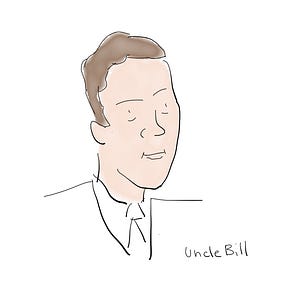 |
My grandfather was an amateur photographer, so I have many pictures of Bill. Growing up, I would study them: Was I living the life he was unable to? He was so beloved — am I living up to him, to his memory, to who he was?
Would I sacrifice my life as he did?
A friend of mine wrote a book, called Second Generation, about his father who survived the concentration camps. In it, he writes about the burden that the war and his father’s suffering placed on him, the son of a Holocaust survivor. It got me thinking about my own relationship with the war. I don’t bear a burden as he does, but I am connected to the war intimately in ways that I wanted to explore. Thousands died, my uncle among them. What does that mean to me?
I decided to go to where my uncle is buried in the Netherlands. By being in the area where he was killed, I thought — maybe if I sat at his graveside — I could understand. It was something I had always planned to do, and now I was going to do it.
 |
The easiest way to get to Margraten, Netherlands, is to rent a car. My mother always told us that she hated Germans because Hitler killed her brother, and she never wanted to own any products made in Germany. So I found it ironic that when I arrived in Brussels, I was given a German car for my trip.
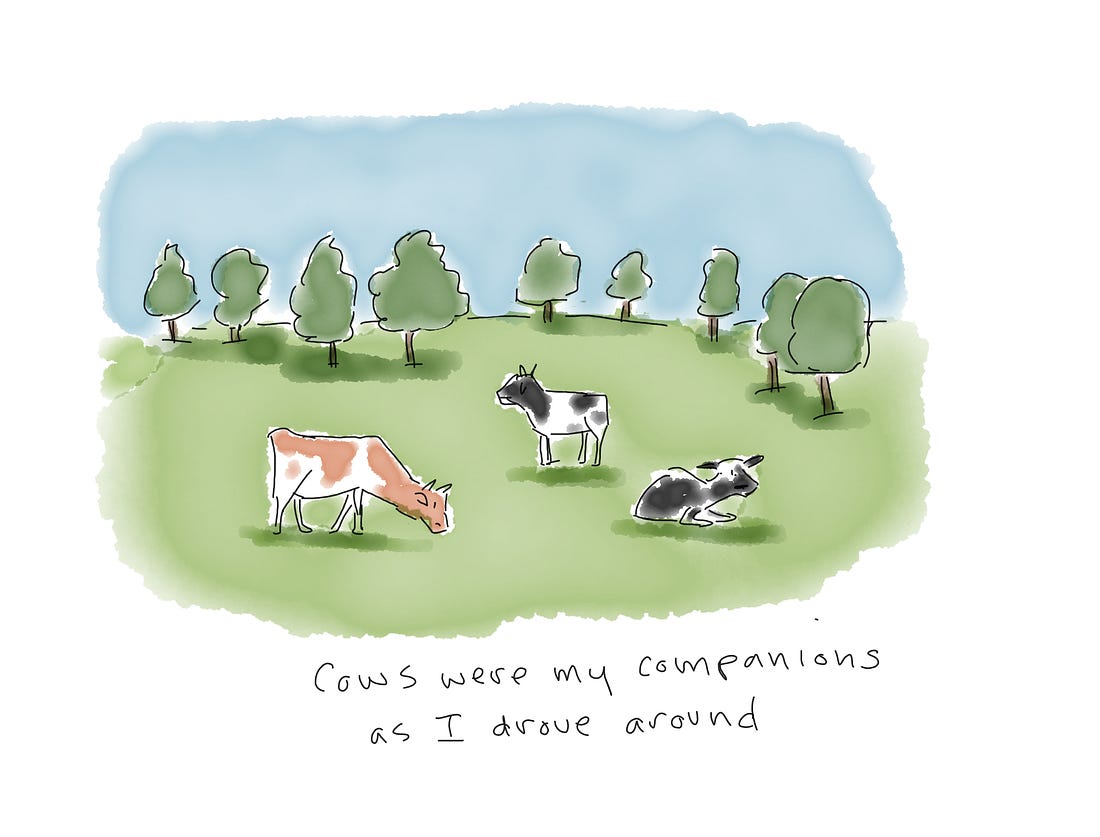
Once I got outside the city limits, the calm of the country set in, and cows along the road were my constant companions. As I grew closer to the area where the battles were fought, I looked at the buildings for clues to … what, I am not sure. I tried to picture the servicemen, my uncle, walking through these streets and towns as they headed to war. I looked for buildings that appeared to be 70 years old, buildings that my uncle might also have walked past.
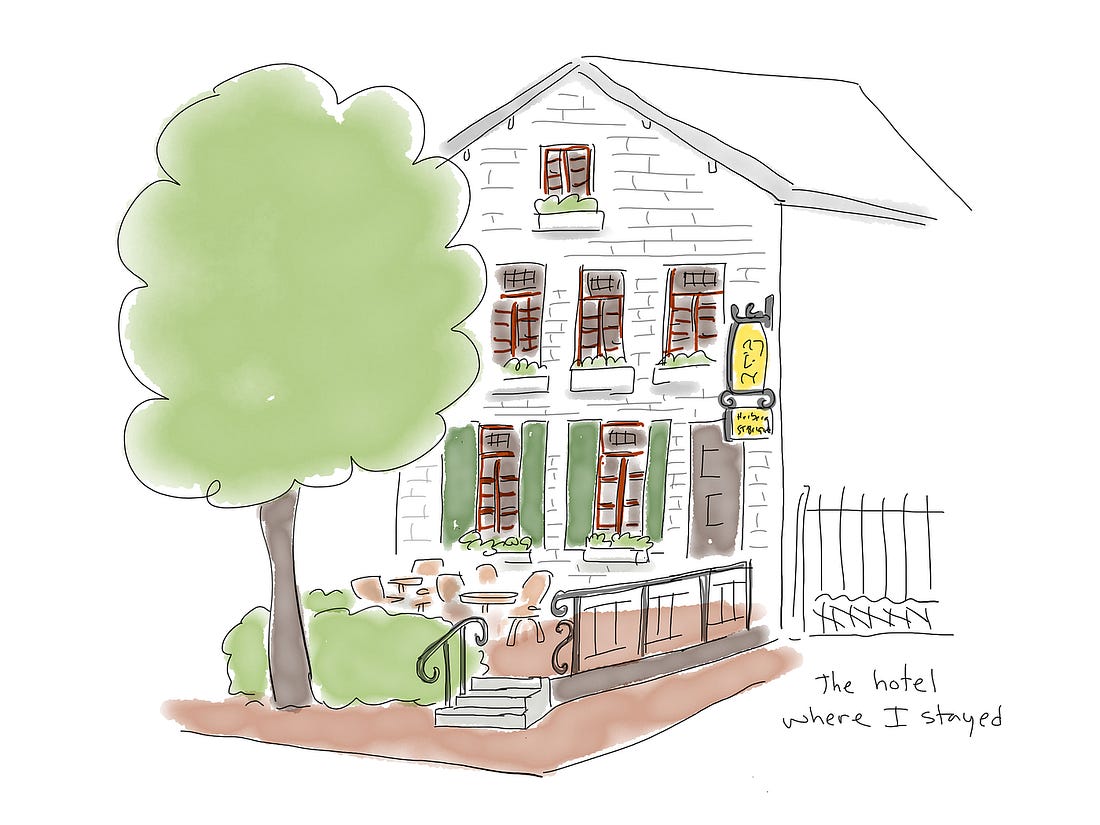 |
I got to my hotel in Norbeek early enough that I could visit Uncle Bill’s grave that afternoon.
I kept asking myself: Why had I not come here earlier in my life?
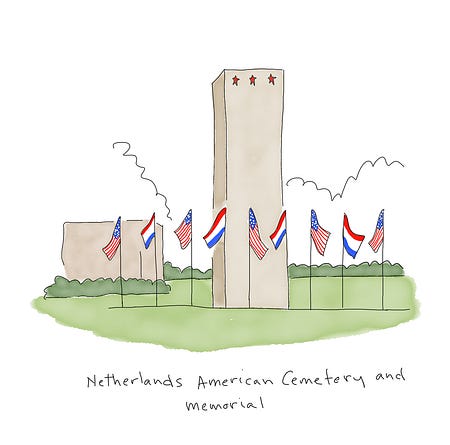 |
When I walked up to the cemetery, I entered the visitors’ center first because I had no idea how to find a grave. A man greeted me warmly. As I told him I was looking for my uncle’s grave, my eyes unexpectedly filled with tears. I handed him a piece of paper that I had printed from the internet, that had information on my uncle’s rank and division.
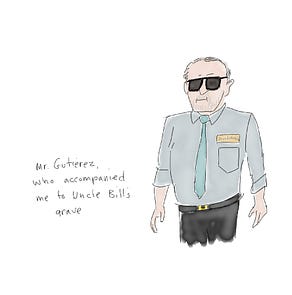 |
The man — Mr. Gutierez — told me to wait a moment, as he went into the back room. I gathered my emotions. Upon his return, he had a packet for me, and he said he would like to go