
|
 |



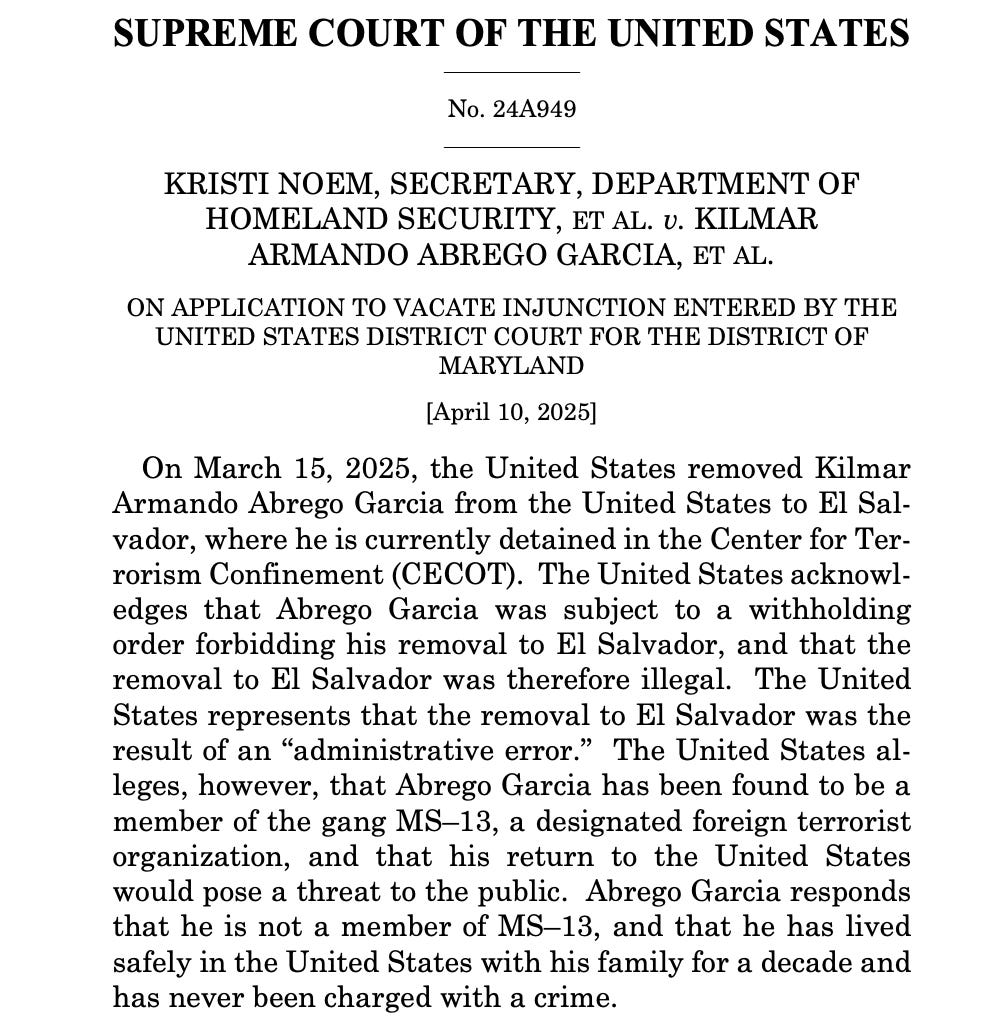
In another black eye for the government, a sign that Trump’s revenge-driven criminal justice agenda is a failure, a federal judge dismissed the criminal case against Kilmar Abrego Garcia late last week. He dismissed it based on the defendant’s vindictive prosecution argument.
Abrego Garcia was deported to CECOT prison by the Trump administration due to what they subsequently called an “administrative error.” The indictment happened after the courts forced the government’s hand and ordered Abrego Garcia’s return to the U.S.
 |
Preet Bharara and I were joined by former Alabama Senator and current candidate for governor Doug Jones when we taped The Insider Podcast this morning. Doug got it just right in our conversation about the government’s loss. He said it was “textbook of what is wrong with this Justice Department and this administration.”
After being ordered to “facilitate” Abrego Garcia’s return to the U.S., the Trump administration attempted to save face by filing criminal charges involving human smuggling against him. Comments made by government officials went far beyond the facts alleged in the indictment—a clear violation of DOJ policy—in describing his conduct and claiming he was a serious violent criminal who, among other things, had sexually assaulted women. His lawyers told the court: “[S]ince the indictment was unsealed, the government has made nearly three dozen statements about the fact that it has charged Mr. Abrego with a crime, without reference to the presumption of innocence.”
 |
There were other signs of trouble with the criminal case early on. For instance, there were reports that the government’s key witness, Jose Ramon Hernandez Reyes, likely the owner of the car Abrego Garcia was driving during the incident he was charged with, was a three-time convicted felon and that he was given early release from federal prison in exchange for his cooperation. In a hearing, an ICE official testified that Hernandez Reyes was due to be deported and that his cooperation in the case was keeping him in the U.S. The Washington Post reported that he said in court that the government “is also likely to give him a work permit.”
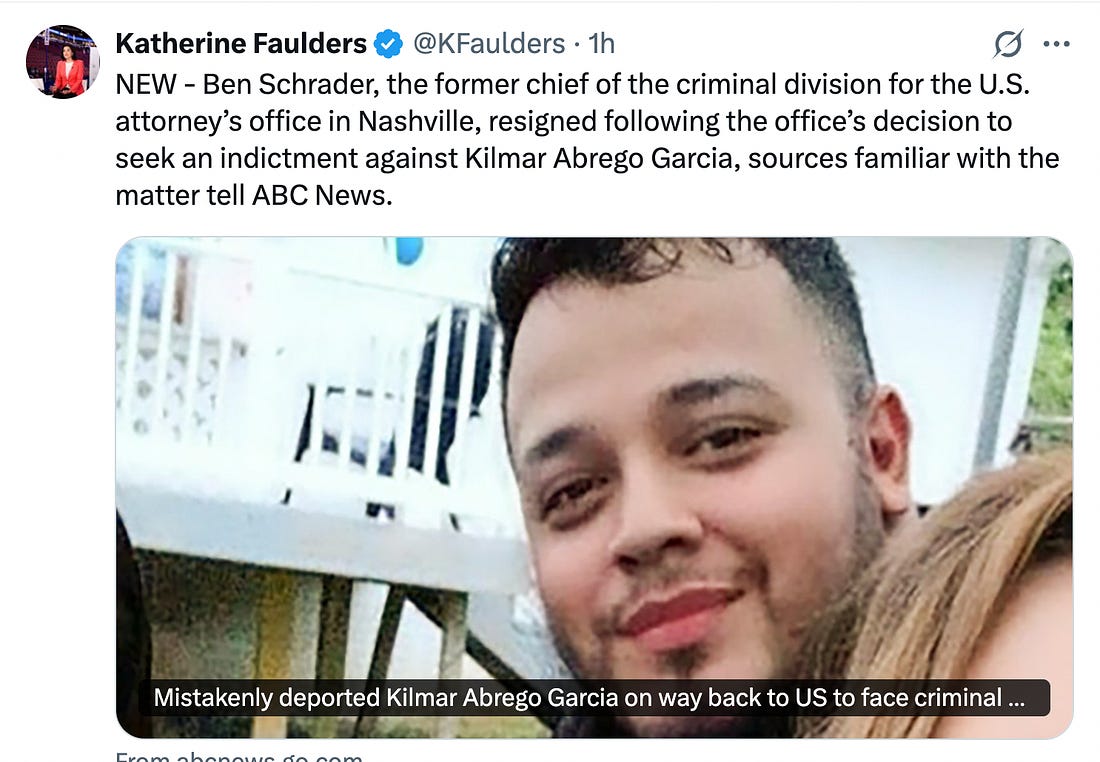
After the case was indicted, the criminal chief in the U.S. Attorney’s office in Nashville, a career employee for more than a decade, quietly resigned. There was reporting that the resignation happened because he disagreed with the decision to indict the case.
 |
Against that backdrop, U.S. District Judge Waverly D. Crenshaw considered the defendant’s motion to dismiss and found that the government “failed to rebut the presumption of vindictiveness.”
The Judge put together an extensive timeline of the case, showing how the previously closed criminal case was opened just as the administration realized it had no choice but to return Abrego Garcia to the U.S. from El Salvador. A vindictive prosecution occurs when the government punishes a defendant for exercising their rights by bringing criminal charges. Here, Abrego Garcia was punished for challenging his deportation.
The charges, brought in 2025, were the result of a November 2022 traffic stop. Then-Deputy Attorney General Todd Blanche made “unrebutted public statements tying the reopened investigation to Abrego’s successful lawsuit,” the Judge found, writing that Blanche’s comments “taint[s] the investigation with a vindictive motive.” He points out that despite its protestations all along that Abrego Garcia was in Salvadoran custody and they could not reach him, “after the indictment was presented, the Executive Branch found a way to return Abrego to the United States to comply with the District of Maryland’s order to facilitate his return.” And then, they subjected him to the criminal process, placing him in custody while awaiting trial.
And so, the Judge held, “Because the presumption of vindictiveness remains unrebutted, the indictment must be dismissed.”
Although it’s far from a routine motion, allegations of vindictive prosecution are raised from time to time. But it’s rare for them to be granted. This one, however, seemed a likely candidate from the outset. The government made little effort to hide the retaliatory nature of its prosecution from the start. That’s what happens when you’re stuck between hyping your work for an audience of one and your duty to the rule of law and the Constitution. Increasingly, the fault lines the courts are exposing at the Justice Department show an institution that is being fractured by its subservience to a president who does not care about justice.
It’s not just this case, or a couple of cases. As New York Times reporter Alan Feuer noted today, “under President Trump, the Justice Department has had serious difficulties presenting cases to grand juries, running into problems that would have seemed unthinkable a year ago.” Grand juries. Where prosecutors could notoriously indict a ham sandwich before the start of this administration.
In dismissing the Abrego Garcia prosecution, the Judge wrote, “Then-Attorney General Robert H. Jackson warned his fellow prosecutors long ago of the danger of picking the person first and the crime second. ‘Therein is the most dangerous power of the prosecutor: that he will pick people that he thinks he should get, rather than pick cases that need to be prosecuted.’” The Judge concluded, “That is the situation here.”
 |
He didn’t add, but could have, that Mr. Abrego Garcia wasn’t alone. “Blanche started the investigation to implicate Abrego,” the Judge wrote. “He did so to justify the Executive Branch’s decision to remove him to El Salvador.” Abrego Garcia caused the Trump administration no small amount of pain when the unjust nature of his deportation came to light. Americans protested for him, carrying placards that read, “Due Process.” His crime was that