_01KC54FVCNB45GK7RQERTWGT7B.png)
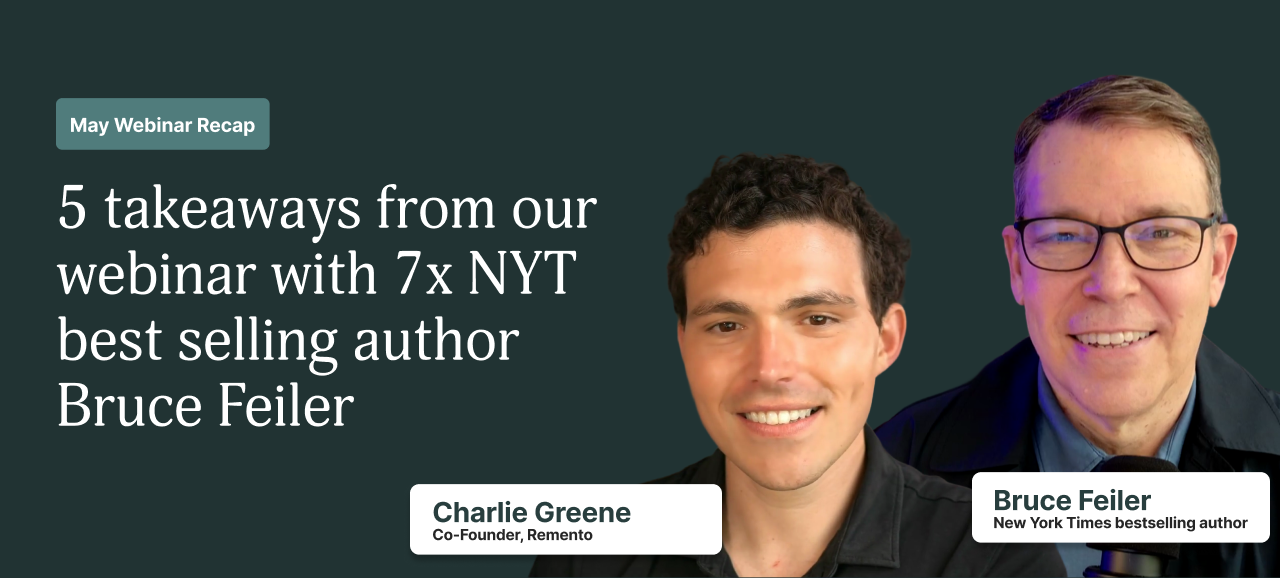
Family stories do more than preserve the past. They shape identity, deepen belonging, and help families understand one another in ways that last for generations.
Yestereday, we hosted a conversation with bestselling author Bruce Feiler about the power of storytelling, rituals, and family connection. Bruce’s work has long explored why families who share stories are often more resilient, more connected, and more grounded in who they are.
Whether you joined us live or are just catching up now, here are the five biggest ideas we hope stick with you.
5 takeaways from the webinar
1. The stories we know about our families shape how we see ourselves.
Bruce spoke about the work of Emory University psychologist Marshall Duke, whose research found that children who know more about their family history are often better able to navigate the highs and lows of their own lives. The reason is not that these children believe their families were perfect. It is the opposite. They understand that their families have lived through success, failure, loss, recovery, change, and reinvention.
Bruce described this as an “oscillating” family narrative. When people hear stories about relatives who lost jobs, missed chances, got sick, moved, struggled, recovered, and kept going, they learn that life’s reversals are not abnormal. They are part of being human. Family stories give people a wider frame for their own challenges and remind them they are part of a longer story than the moment they are currently living through.
2. Family storytelling is not about performance. It’s about participation.
A major theme of the conversation was that storytelling does not need to be formal, perfect, or overly produced to matter. Families often put off preserving stories because they imagine the process needs to feel like writing a memoir or preparing a speech. Bruce’s point was much simpler: the real value comes from the act of sharing.
The stories that help families most are often the ones that include both joy and difficulty. Not just the awards, vacations, and big milestones, but the moments of uncertainty, disappointment, humor, embarrassment, and resilience. Those stories make past generations feel real. They also help younger generations understand that the people they love faced hard things too, and found ways through them.
3. The smallest details often become the most meaningful memories.
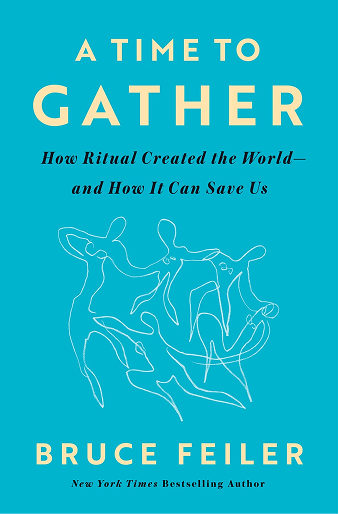
Bruce’s new book, A Time to Gather, is about the power of ritual at a moment when many traditional forms of gathering are changing or disappearing. He described rituals as shared, unnecessary acts that make us feel at home. That definition is powerful because it reminds us that rituals do not have to be grand or complicated. They simply need to be intentional.
A ritual can be a holiday meal, a birthday tradition, a recurring family question, a moment around an old photo album, or a regular time set aside to ask someone about their life. What matters is that the act is shared, repeated, and emotionally meaningful. In that sense, family storytelling can become a ritual of its own: a way of gathering people around memory, identity, and belonging.
4. Rituals create belonging.
One of Bruce’s most compelling points was that many older, top-down rituals are fading, but new, more personal rituals are rising in their place. Families are creating their own ways to mark births, losses, transitions, illnesses, recoveries, new chapters, and endings. These rituals work because they combine something familiar with something personal.
Bruce described the best rituals as having a balance between tradition and personalization. They need enough connection to the past to feel meaningful, but enough specificity to the present to feel true to the people involved. That idea applies beautifully to family storytelling. The goal is not to preserve a generic family history. It is to preserve this family, in this voice, with these memories, values, jokes, photos, and lived experiences.
5. Legacy is not just what we leave behind. It’s what we share while we’re here.
Perhaps the clearest takeaway from the conversation was that storytelling is not just an archival act. It is a relationship-building act. When families ask better questions, revisit old memories, and listen to stories in someone’s own voice, they often discover new dimensions of people they thought they already knew.
Bruce talked about rituals as “embodied storytelling” and “values lived out loud.” That same idea applies to preserving family stories. The process is not only about creating something for future generations. It creates connection right now. It gives families a reason to gather, listen, laugh, reflect, and say the things that too often go unsaid.
The real legacy is not just the book, the recording, or the archive. It is the closeness created along the way.
Watch the full webinar
If you’d like to watch the full conversation with Bruce Feiler, you can view the recording below.
CHECK OUT
BRUCE’S NEW BOOK
Bruce’s newest book, A Time to Gather, explores the power of rituals, connection, and the moments that bring families together.
Any questions? View our help center or simply reply to this email.


Sent by Remento, 11600 Washington Place, Los Angeles, CA 90066
Don’t want to receive emails from Remento? Unsubscribe with one click