| | In today’s edition: An Iran ceasefire extension hangs in the balance, and Bondi prepares to testify.͏ ͏ ͏ ͏ ͏ ͏ |
| |  | Washington, DC |  |
| |
|
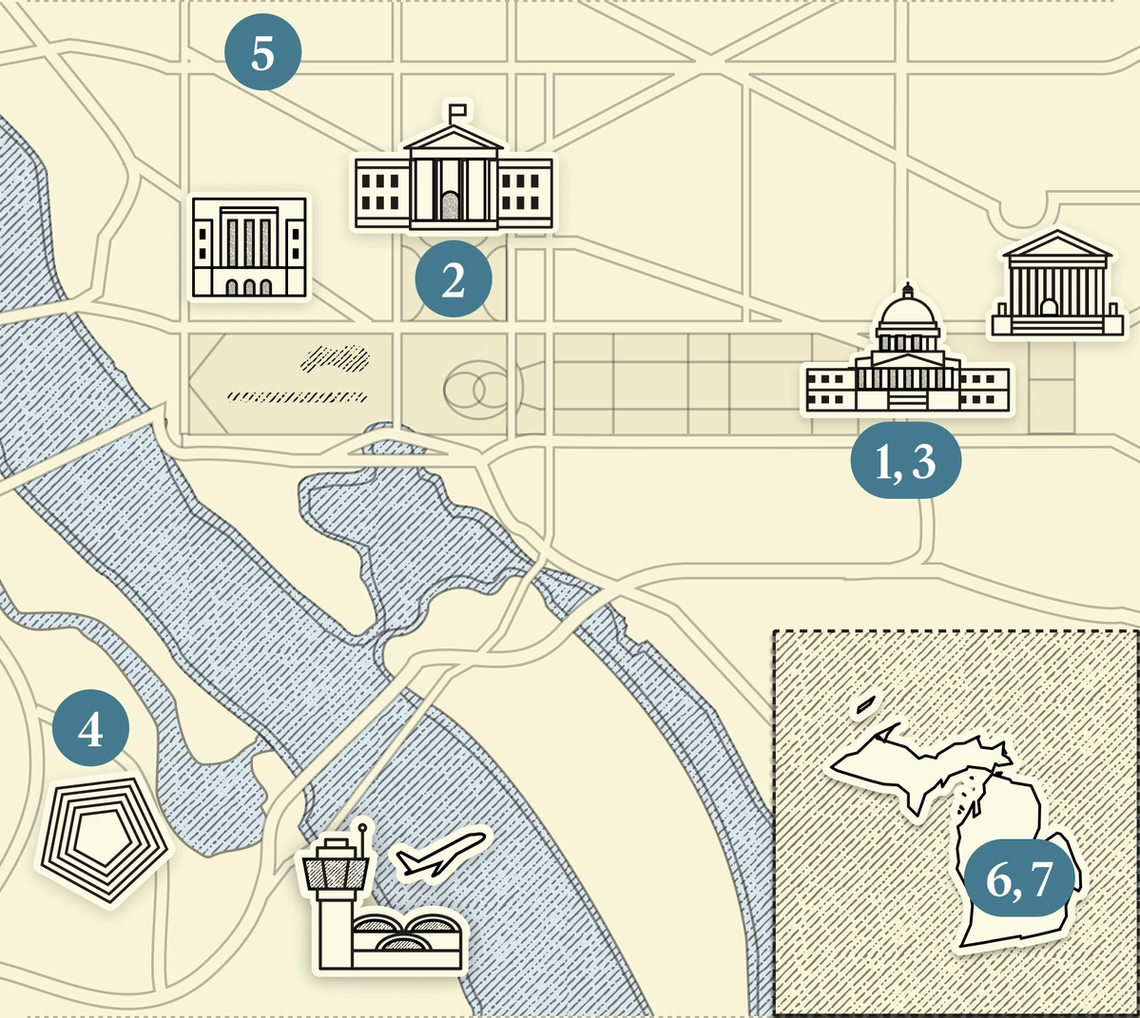 - Hill Republicans’ bind
- Iran ceasefire extension?
- Bondi’s moment
- Hegseth in Singapore
- 60 Minutes overhaul
- Whitmer’s choices
- Michigan Sen worries
PDB: White House’s new ‘aliens’ website maps immigration arrests  Trump signs executive orders … Bessent speaks at Reagan National Economic Forum … US posts wholesale inventories |
|
Republicans stuck on immigration bill |
 Eric Lee/Reuters Eric Lee/ReutersSenate Republicans are still seeking reassurances from the White House on guardrails for President Donald Trump’s $1.8 billion fund to compensate people allegedly victimized by the government — and they can’t advance their immigration enforcement bill without an answer, people familiar with the matter told Semafor. The easiest path forward for the bill is to return to the narrow approach that Senate Majority Leader John Thune started out with: solely funding ICE and Border Patrol through Trump’s presidency. “I would hope that we can … take care of our law enforcement. That was our focus, it remains our focus,” Sen. Deb Fischer, R-Neb., told Semafor yesterday. Trump’s so-called anti-weaponization fund “caught a lot of us off-guard,” she added. Republicans want to pass the bill as quickly as possible, but the party-line bill’s exposure to anti-weaponization fund amendments is clouding its path in both chambers. — Burgess Everett |
|
Trump weighs Iran ceasefire extension |
 A tentative agreement on a 60-day memorandum of understanding extending the ceasefire and continuing negotiations between the US and Iran is still awaiting Trump’s signature. The MOU marks the next step in a potential peace deal with Iran, but it falls short of immediately addressing Trump’s main goal of preventing Iran from obtaining a nuclear weapon — thereby opening him up to criticism from Republican hawks, assuming the president signs off on it. Administration officials have expressed cautious optimism about reaching a deal, though weeks of negotiations have failed thus far. Trump’s own expectation for a “perfect” deal, which he expressed this week, is a high bar and major sticking points over Iran’s nuclear program and control of the Strait of Hormuz remain. “The Iranians want a deal,” Vice President JD Vance insisted yesterday, saying the administration believes “they’re negotiating in good faith.” — Shelby Talcott |
|
Bondi faces Oversight on Epstein |
 Nathan Howard/Reuters Nathan Howard/ReutersFormer Attorney General Pam Bondi is set to testify this morning behind closed doors in the House Oversight Committee’s Jeffrey Epstein investigation. She’ll face a grilling from lawmakers over the Justice Department’s compliance with legislation requiring the release of Epstein files. Trump ousted Bondi from the department last month as frustration mounted among Republicans about her handling of the Epstein controversy, though she was recently named to a presidential council on science and technology. It’s not just Democrats who might confront Bondi. They walked out of a previous closed-door briefing, but that meeting also left some Republicans unsatisfied. Democrats have objected to today’s interview format, which doesn’t have the same requirements as a deposition. They’ve also taken issue with Assistant Attorney General for Civil Rights Harmeet Dhillon representing Bondi despite Bondi no longer serving in the department. — Nicholas Wu |
|
Hegseth spotlights US-Asia ties |
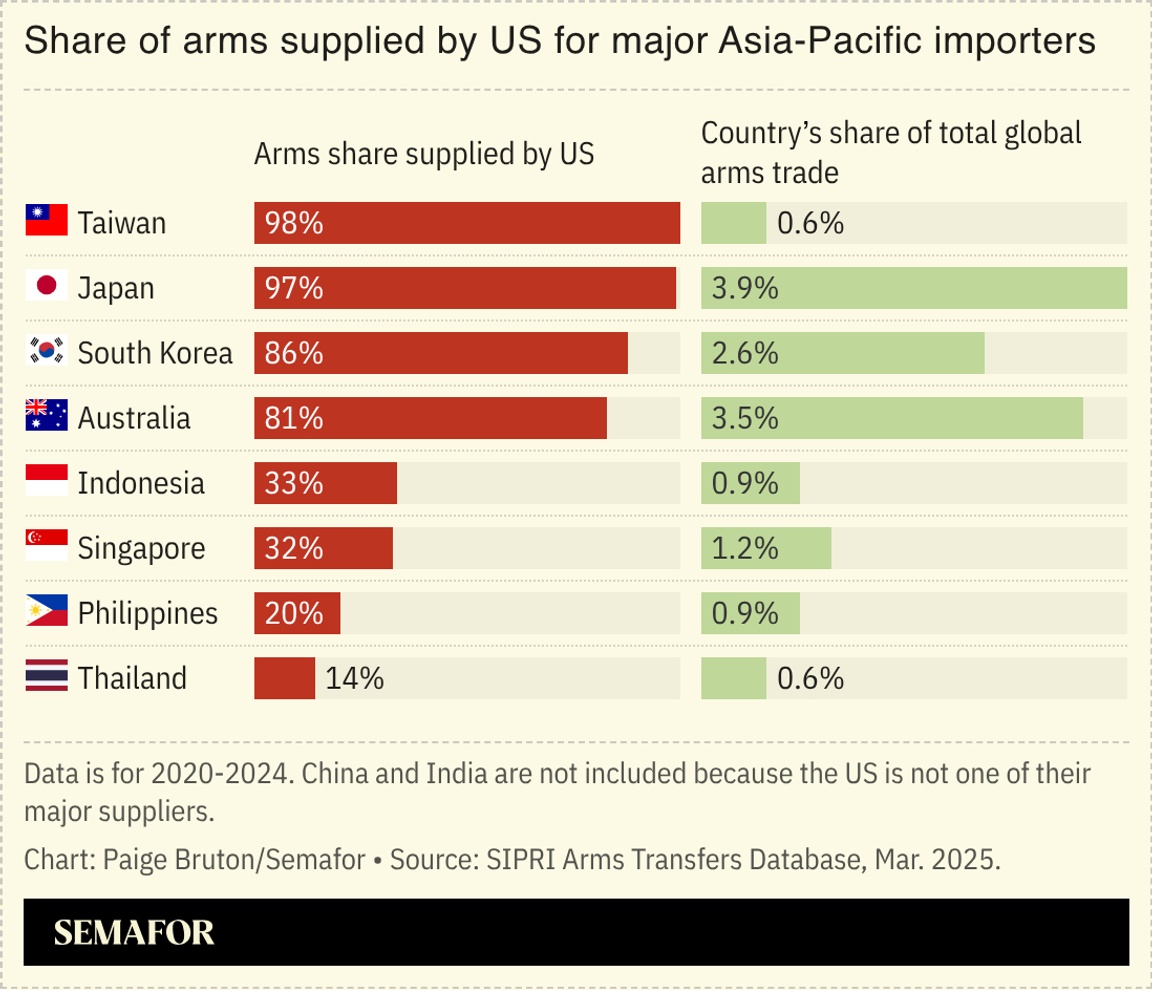 The Iran war and Trump’s pause on arms sales to Taiwan will cast a shadow over a gathering in Singapore of US and Asian officials. Defense Secretary Pete Hegseth is representing the Trump administration at the annual Shangri-La Dialogue; he’s scheduled to address the conference tomorrow and will meet with Singapore’s prime minister and defense minister, as well as take part in “several bilateral and multilateral meetings,” the Pentagon said, without providing further details. Asian countries will have questions about the results of Trump’s recent trip to China, as well as the administration’s way forward in Iran. The war has dragged down Asian economies and eroded US weapons stockpiles that would be critical in a potential conflict with China. But unlike Europe, Asian countries are doubling down on US partnerships, Bloomberg notes, as the US bulks up its military might in the Pacific. |
|
Bilton on his plans for ‘60 Minutes’ |
| |  | Max Tani |
| |
 Shannon Stapleton/Reuters Shannon Stapleton/Reuters“My job is going to be rethinking how we tell stories in a completely new way,” Nick Bilton, who was tapped to be the new executive producer of 60 Minutes on Thursday, told me. “There’s enough people inside 60 Minutes that know which buttons to press to make sure it goes on air.” I asked Bilton, a former New York Times reporter and documentary producer, whether he was daunted by the notion of entering television news for the first time to lead the industry’s most popular show. “It’s not the slightest bit intimidating,” he replied. Bilton’s hiring signals that Editor-in-Chief Bari Weiss’ overhaul of CBS News will be radical and total, and that the newly minted mogul is willing to bear years of audience decline in the service of a new vision of a video news network that serves America’s broad, elusive middle. |
|
What’s next for Gretchen Whitmer? |
 Mike Blake/Reuters Mike Blake/ReutersMichigan’s Democratic governor, Gretchen Whitmer, is batting down one exit opportunity: president of Michigan State University. She’s been pushed for the top job, as former Detroit Mayor Mike Duggan has been suggested for the University of Michigan’s presidency, according to multiple people familiar with the process. But Whitmer spokesperson Bobby Leddy said Thursday: “MSU is a phenomenal university. The governor does not have an interest in that position and looks forward to the university hiring a new leader for its next chapter.” Whitmer equivocated Thursday on her future, first telling a local TV reporter she wouldn’t be a 2028 presidential contender before backtracking and later telling Mackinac Policy Conference attendees that, “at this juncture, I’ve got nothing to announce.” She’s also been privately hinting to Michigan Democrats she might not run for president, the people familiar said, though she could change her mind. — Nicholas Wu |
|
Debate stokes Dems’ primary fears |
 Jim West/UCG/Universal Images Group via Getty Images Jim West/UCG/Universal Images Group via Getty ImagesDemocrats are worried about the Senate primary in Michigan — and yesterday’s debate was the latest reminder of that. Rep. Haley Stevens, D-Mich., who Senate Democrats see as the most electable, stumbled over a question about the filibuster, saying it should go. But she also said it should have been used “to not allow the big ugly bill to pass,” referring to the GOP megabill passed via reconciliation last year. Former public health official Abdul El-Sayed highlighted his purity on campaign finance, chiding his opponents, who also include state Sen. Mallory McMorrow, for seeking support from AIPAC and previously taking money from the Blue Cross/Blue Shield PAC. Stevens, an AIPAC ally in her other races, didn’t directly answer a question about what AIPAC’s support got Israel’s backers. “It buys $3.5 billion sent to a foreign military that could be used here,” countered El-Sayed. — David Weigel |
|
 Fox News host Bret Baier has spent years interviewing presidents, moderating debates, and operating at the center of American political media. On this week’s episode of Mixed Signals, he joins Max and Ben to discuss how he navigates tough questions while maintaining access to President Donald Trump, what he actually learned from the Fox News Dominion discovery process, and why he doesn’t vote. Plus, his new book, his 2028 predictions, and whether CBS News has any shot at replicating what he’s built. |
|
Debatable: The scope of green card curbs |
 A new push by the Trump administration for green card applicants to begin the application process overseas is sending tremors through Big Tech and other industries that rely on nonimmigrant visas to hire skilled workers, Semafor’s Morgan Chalfant writes. The policy, rolled out last week by US Citizenship and Immigration Services, would require most aspiring permanent residents to seek green cards outside the United States except in “extraordinary” circumstances. The Trump administration later suggested that H-1B and L-1 visa holders wouldn’t be affected by the new policy, creating more confusion around the directive and the scope of its disruption. A USCIS official told Semafor the memo “will have no noticeable impact on highly qualified applicants and skilled professionals who have followed the law.” Some immigration lawyers don’t buy those assertions, however, after reading the fine print. |
|
 Beltway NewslettersPunchbowl News: “I ran in ‘20, I ran in ‘22 and I ran in ’24. This feels different,” said Democratic State Sen. Sarah Trone Garriott of the House race in Iowa’s 3rd district. Playbook: “The factional and fiery Michigan Senate Democratic primary is shaping up to be a microcosm and harbinger of the party’s looming 2028 pileup.” Axios: White House Director of Media Affairs Sonny Joy Nelson is leaving to start a communications firm, Cornerstone Strategics. White House Screenshot of the White House “aliens” website. Screenshot of the White House “aliens” website. |
|
|


