| | Israeli troops capture a Crusader-built castle in Lebanon, Washington pressures Asian allies to spen͏ ͏ ͏ ͏ ͏ ͏ |
| |  DUNKIRK DUNKIRK |  DONGGUAN DONGGUAN | SINGAPORE |
 | Flagship |  |
| |
|
The World Today | 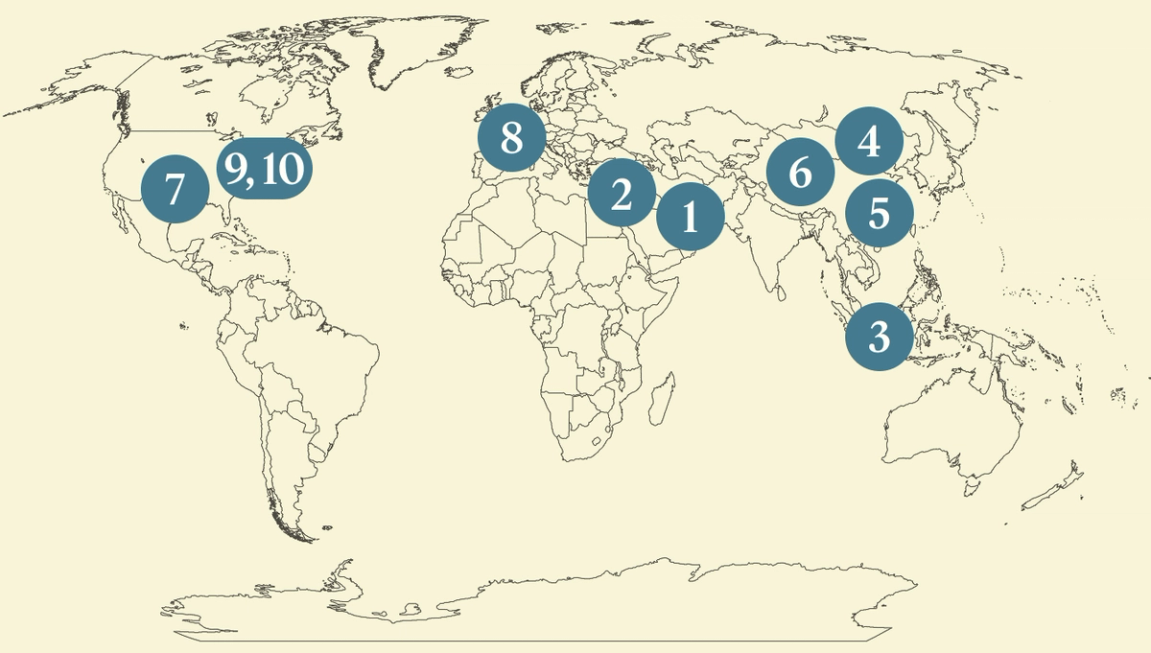 - No US-Iran breakthrough
- Israel seizes Lebanon castle
- US pressures Asian allies
- Beijing expels NYT reporter
- Lung cancer drug trial
- China economic headwinds
- Legacy tech makes comeback
- Data centers in Europe
- AI-powered recycling
- Exoplanet weather forecast
 A remake of a remake of a film stirs the pot. |
|
No breakthrough in US-Iran talks |
 Aaron Schwartz/Reuters Aaron Schwartz/ReutersA US-Iran peace agreement failed to materialize Sunday — just as negotiators appeared near the finish line — after President Donald Trump said he was in “no hurry” to strike a deal. White House officials said last week they had reached the broad strokes of a pact to reopen the Strait of Hormuz and open talks over Tehran’s nuclear program. But Trump, concerned about aspects of the deal that could unfreeze Iranian assets, toughened Washington’s terms for peace. Iranian officials accused the US of stalling with “excessive” demands. A formal response, though, could take three days, an American official told Axios: The country’s leaders are “really hiding in caves and they’re not using email.” |
|
Israel seizes Lebanon Crusader castle |
 Israeli military/Handout via Reuters Israeli military/Handout via ReutersIsraeli forces seized a 12th-century Crusader castle in southern Lebanon, as Israel intensifies its farthest incursion into the country in 26 years, despite a nominal ceasefire. Previously occupied by Israeli forces from 1982 to 2000, Beaufort Castle symbolizes “Israel’s long and costly presence in Lebanon,” a defense analyst said. It provides Israel with little military advantage — Hezbollah is mostly using drones, not ground troops — but offers “a kind of victory image,” another expert told The Guardian. Further negotiations between Israel and Lebanon scheduled this week in Washington raised speculation that the two sides could reach a new ceasefire, which Iran has demanded as a precondition of any broader diplomatic settlement with the US. |
|
Pentagon chief softens on China |
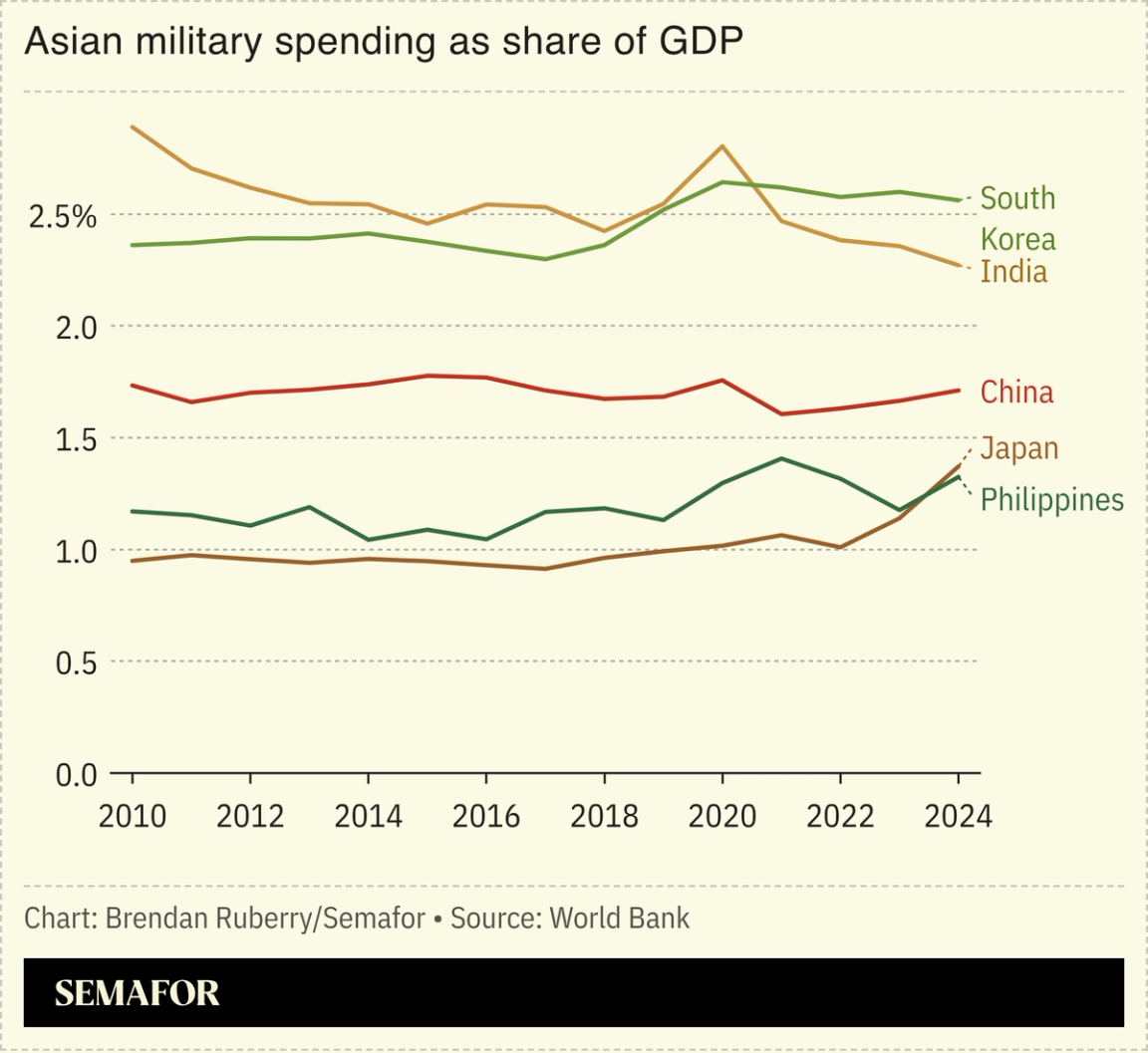 The US Defense secretary urged Washington’s Asian allies to spend more on defense if they want to buy more American arms, in a speech that was notably softer on China. Speaking at the Shangri-La Dialogue in Singapore, Pete Hegseth cast the relationship with Asia “in more transactional terms,” Politico wrote, similar to the Trump administration’s posture toward European countries. Hegseth notably didn’t mention Taiwan at the security forum, weeks after Chinese leader Xi Jinping warned of “clashes” if Washington mishandles the situation surrounding the island, which Beijing views as a breakaway province. Hegseth’s remarks mirrored how the White House has become more muted on China: A strategy document last year removed Beijing as the US’ No. 1 threat. |
|
US, China engage in media tit-for-tat |
 Kylie Cooper/Reuters Kylie Cooper/ReutersThe US revoked the visa of a Chinese state media journalist after Beijing expelled a New York Times reporter, in a diplomatic tit-for-tat. China ordered Vivian Wang to leave the country over a Times event last year — which Wang had no involvement in — that featured an interview with Taiwan President Lai Ching-te. The move reflected Beijing’s media crackdown, which has intensified in recent years; China has used its visa policy to keep out journalists whose work it doesn’t like. The US’ reciprocal decision threatens to inflame tensions between the superpowers. Other Western media outlets, meanwhile, are growing more uneasy about what possible interviews with Lai could mean for their presence in China, The Associated Press reported. |
|
A ‘miracle month’ for global medicine |
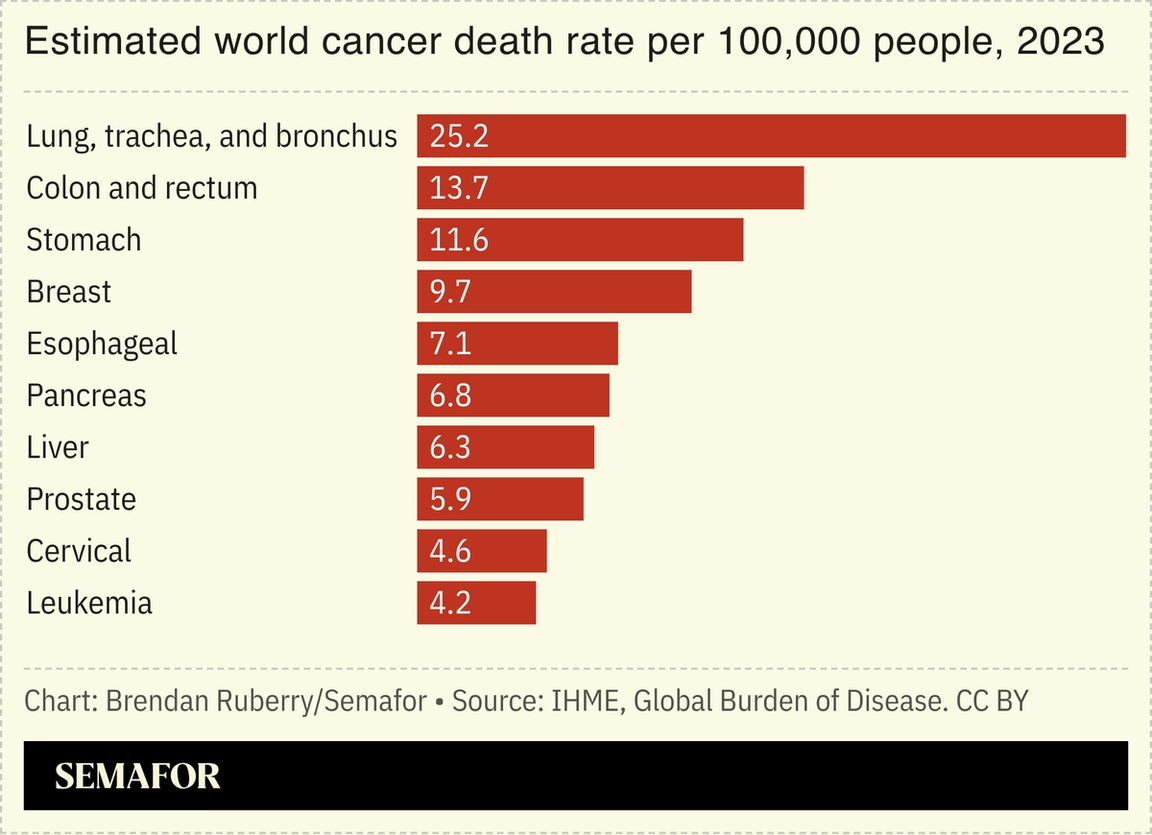 A lung cancer drug reduced the risk of death by 34% in a late-stage trial, in the latest sign of China’s pharmaceutical ascendance. The results from the trial conducted in China showed the drug, when combined with chemotherapy, kept people with squamous non-small-cell lung cancer alive for a median of four months longer than the standard treatment, though scientists are debating the findings. “The Chinese biotech industry has arrived,” an oncologist said, as the country churns out drug innovations. The results cap what one journalist called “a miracle month in medicine” globally: Eli Lilly’s new obesity drug showed patients in a trial shedding nearly a third of their body weight, and a pancreatic cancer drug exhibited life-extending potential. |
|
Slowdown in China shows Iran war strain |
 Go Nakamura/Reuters Go Nakamura/ReutersChina’s manufacturing activity slowed in May, new data showed, in the latest sign of strain for the world’s second-largest economy amid the Iran war. Beijing has been relatively shielded from the worst effects of the conflict because of its crude stockpile and diverse energy mix, but the lagging factory data showed the impact of rising oil prices. The recent slowdown is raising hopes for broad stimulus measures, but economists don’t expect policymakers to intervene because exports have remained strong: The global data center buildout has helped push shipments above last year’s record levels. The consumer economy, though, is flagging; pork prices have plunged amid a glut and languid spending, in a microcosm of muted demand in the country. |
|
Legacy tech makes a comeback |
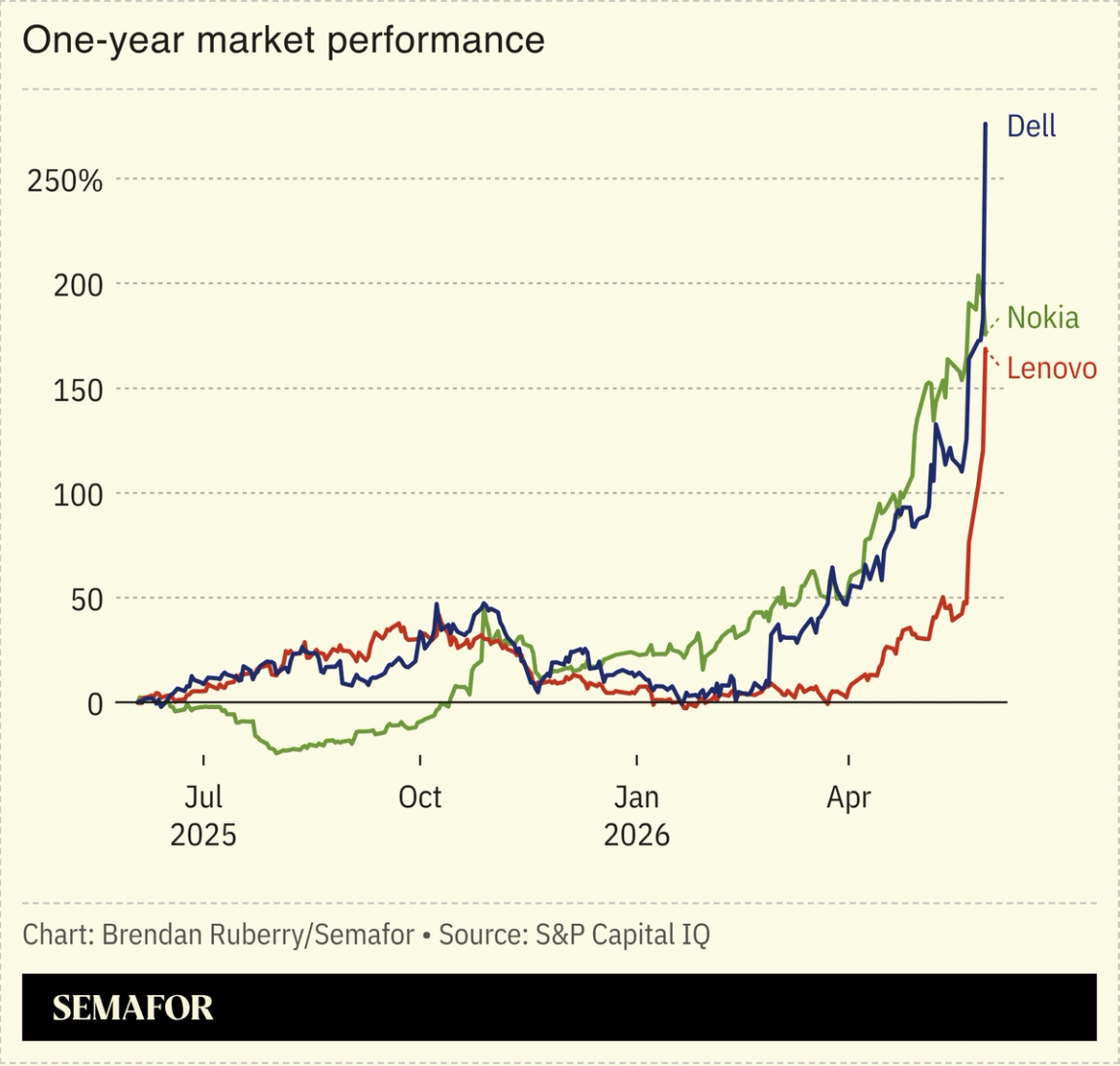 The surge in demand for AI computing power is making old tech cool again. Dell shares soared 33% on Friday — the company’s largest jump since 2018 — as it forecast strong sales for servers that power AI. Dell is among a class of legacy tech firms, including Nokia, Lenovo, and Cisco, that are “back with a vengeance” thanks to AI, which has triggered a massive computing infrastructure buildout, Bloomberg wrote. That benefits the “boring hardware space,” an investor said. Companies that had a sluggish start to the AI boom of the 2020s, like Intel and Texas Instruments, are also catching back up thanks to their data center exposure. |
|
 Fox News host Bret Baier has spent years interviewing presidents, moderating debates, and operating at the center of American political media. On this week’s episode of Mixed Signals, he joins Max and Ben to discuss how he navigates tough questions while maintaining access to President Trump, what he actually learned from the Fox News Dominion discovery process, and why he doesn’t vote. Plus, his new book, his 2028 predictions, and whether CBS News has any shot at replicating what he’s built.
|
|
SoftBank invests in French data centers |
 Toru Hanai/Reuters Toru Hanai/ReutersJapan’s SoftBank will invest more than $50 billion over the next five years to build up French AI infrastructure, delivering a boost to the continent’s tech ambitions. CEO Masayoshi Son’s largest investment outside the US, the data centers will provide 3.1 GW of capacity, with an additional 2 GW planned. Though Europe, which lags the US and China in AI, yearns to lead in the technology, it has only 3,400 data centers to the US’ 5,400 — a disparity attributed partly to the continent’s strained energy grid; OpenAI has paused its UK and Norway investments due to high energy prices, while France — with its plentiful nuclear energy — remains attractive to investors, the Financial Times wrote. |
|
AI-powered recycling focuses on aluminum |
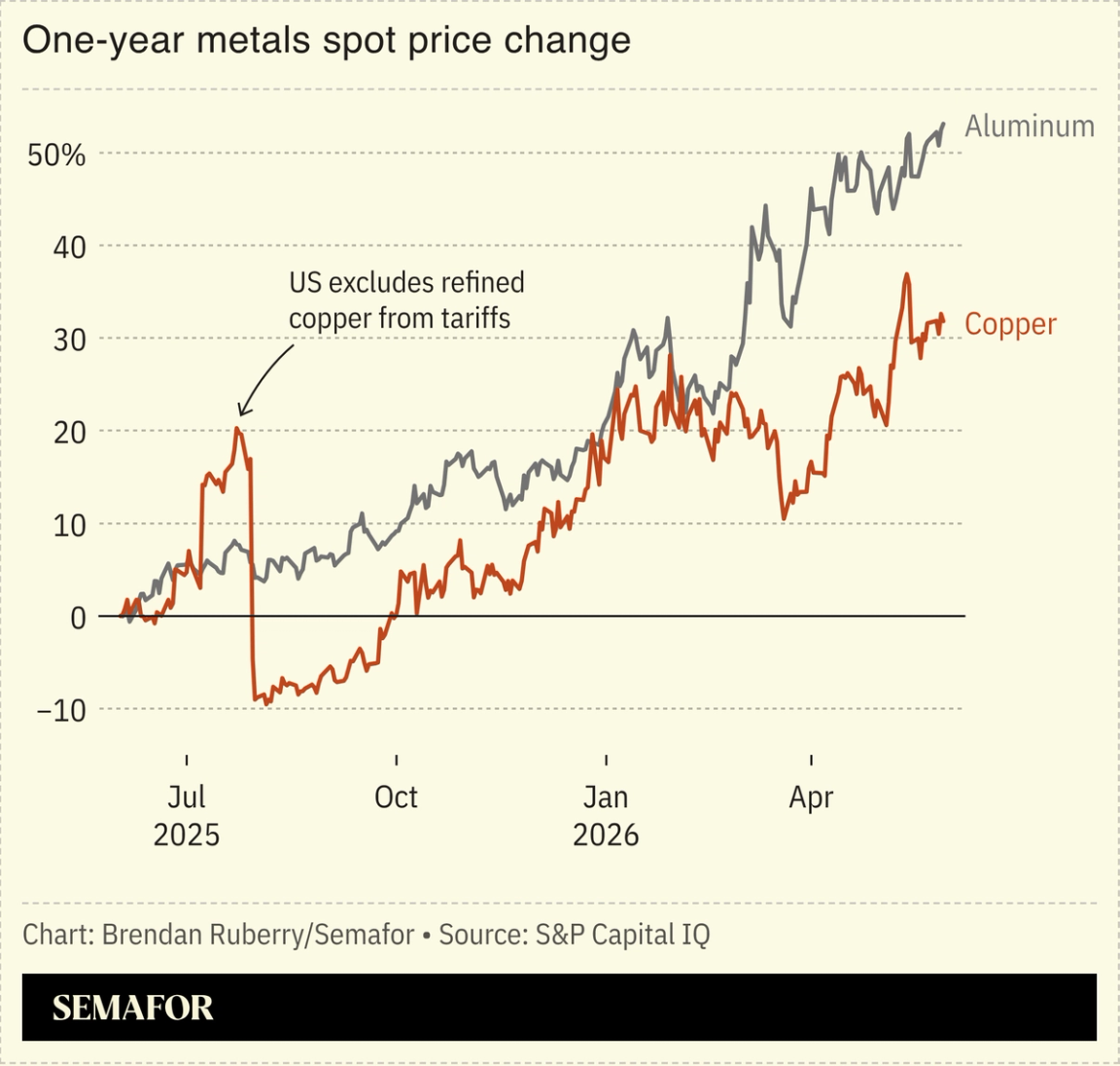 The rising cost of aluminum has driven interest in AI-powered recycling. Prices are up 50% from a year ago, driven by constricted supply from the Iran war and rising demand from the energy and AI industries. Aluminum is one the most recycled metals in the US, but only 20% is recycled. It “often trades for over $1,000 per ton,” one startup CEO told TechCrunch, making waste-sorting and recycling increasingly economic. One firm said it could process up to 240 million pounds of aluminum a year. Its systems use sensors that allow AI algorithms to classify each scrap. Another company uses puffs of air or robotic arms to push items from a conveyor belt into different bins. |
|
|


