| | In this edition, what’s really behind the token stinginess, and some JPMorgan employees spend more o͏ ͏ ͏ ͏ ͏ ͏ |
| |  | Technology |  |
| |
|
 - Altman on the Hill
- Tokenmaxxing banks
- Token stinginess
- PCs are back
- OpenClaw for all
 How Microsoft is catching up on AI, and why philosophers are in demand again. |
|
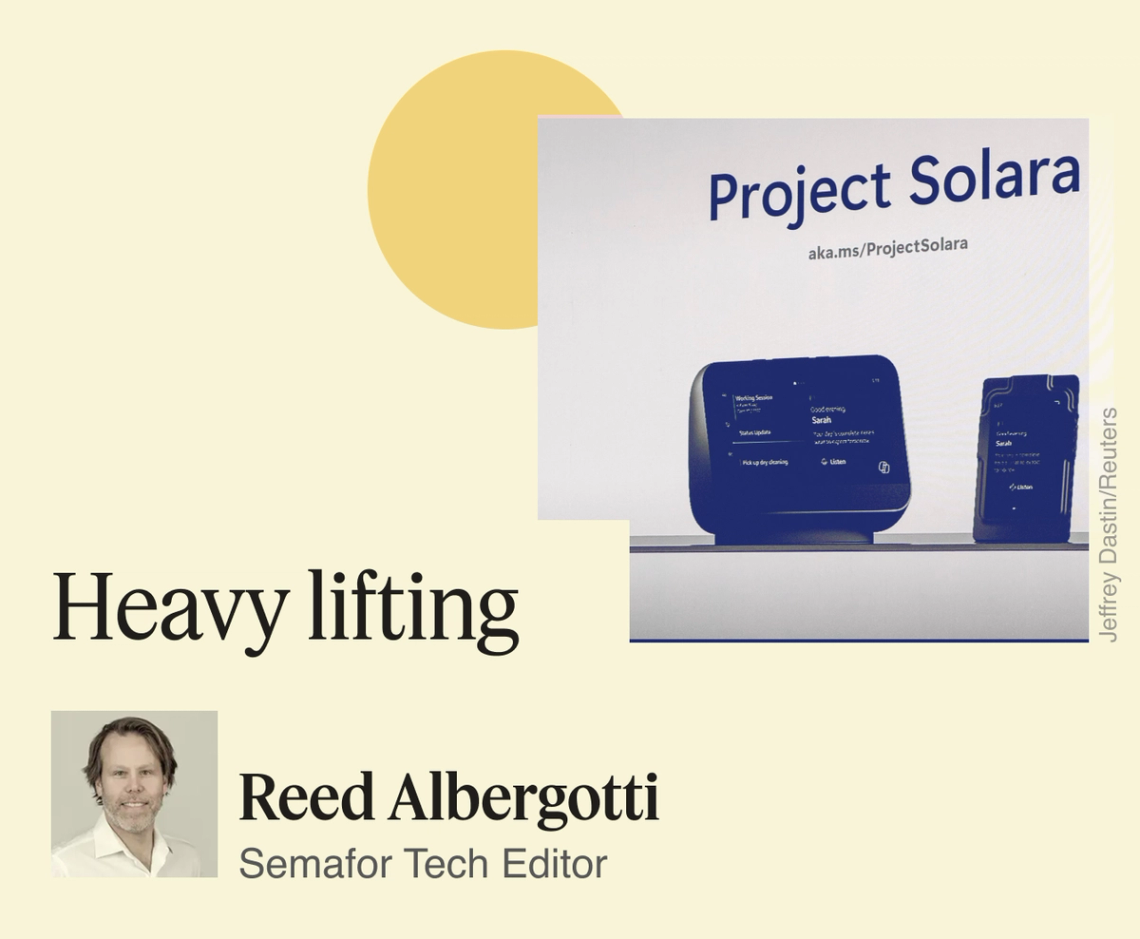 Microsoft’s AI chief is in the middle of the greatest game of catch-up ever played. “We are one of the largest tech companies in the world, and we have the resources to make sure that we do catch up,” Mustafa Suleyman, executive vice president and CEO of Microsoft AI, told me in an interview ahead of this week’s Build conference (which is dominating tech news, as you’ll see below). There’s no doubt Microsoft is behind. But as it rushes to build its own frontier AI models, custom accelerator chips and high-performing “harnesses” that compete with those made by Cursor, Anthropic, OpenAI and Google, something else caught my eye this week: A hardware platform it’s building on Android and designing for the AI era. Called Project Solara, it’s built on the idea that as AI takes over, hardware needs to change. The apps and proprietary software that control our devices are already outdated. Take my AI exercise tracking app (OK, it’s a personal trainer I named Arnold). I wanted to give Arnold access to my scale to track body fat percentage, but the scale doesn’t have a public API so there was no way to do that automatically. So I jury-rigged a system to email the scale readings from its proprietary app — and then I built my own app to replace it. I ran into similar roadblocks with my smartwatch. The problem goes beyond hardware. The calorie-tracking app I used also didn’t have an easy way to interface with Arnold, so I switched to a new app that does. These are not everyday user problems yet, but they will be. This kind of thing has only really been possible for people like me (with zero technical experience) since early this year. As it spreads, and everybody is building their own custom software, they won’t want to use the subpar, walled-off apps that hardware companies offer. They’ll want to use their own. Even if Project Solara doesn’t succeed, something like it probably will. And eventually, every hardware product will be something that AI-created software controls. Companies, engineers, and entrepreneurs still holding on to the idea that they can retain a tight grip on how people use their products are going to become obsolete. |
|
Sam Altman goes to the Hill |
 Trump with AI leaders in 2025. Carlos Barria/Reuters. Trump with AI leaders in 2025. Carlos Barria/Reuters.With OpenAI CEO Sam Altman and Sen. Bernie Sanders set to meet on the Hill Wednesday to discuss the senator’s plan to take half the equity of AI frontier labs to fund a US sovereign wealth fund, OpenAI has been preparing its own policy framework, according to people familiar with the matter. Altman is also meeting with Senate Minority Leader Chuck Schumer, House Speaker Mike Johnson, House Minority Leader Hakeem Jeffries, and others. The news comes as OpenAI is pushing a state-level regulation strategy in which key states would pass uniform legislation, creating a de facto national regulatory framework to fill the federal vacuum. President Donald Trump signed an executive order earlier this week asking AI companies to give 30 days’ notice of new, powerful models coming out. While a big equity grab seems unlikely, it’s increasingly plausible that AI will soon have some guardrails in place. Whether those guardrails change much is another question. Anthropic’s Mythos AI model, which has advanced cybersecurity capabilities, sent shockwaves through the industry and Capitol Hill. Anthropic said it was deliberately delaying the release of Mythos to give stakeholders time to adjust and adapt to its capabilities. Policymakers are also worried about the labs approaching “recursive self-improvement,” where models are capable of improving themselves. Laws requiring companies like Anthropic to provide more time could make an impact. But it’s unclear whether lawmakers would be able to mitigate threats like a runaway AI model that threatens all humanity — another concern that Sanders has flagged. Altman is also planning to attend the G7 this month, an OpenAI spokesperson told Semafor. — Reed Albergotti |
|
When AI costs exceed employees’ salaries |
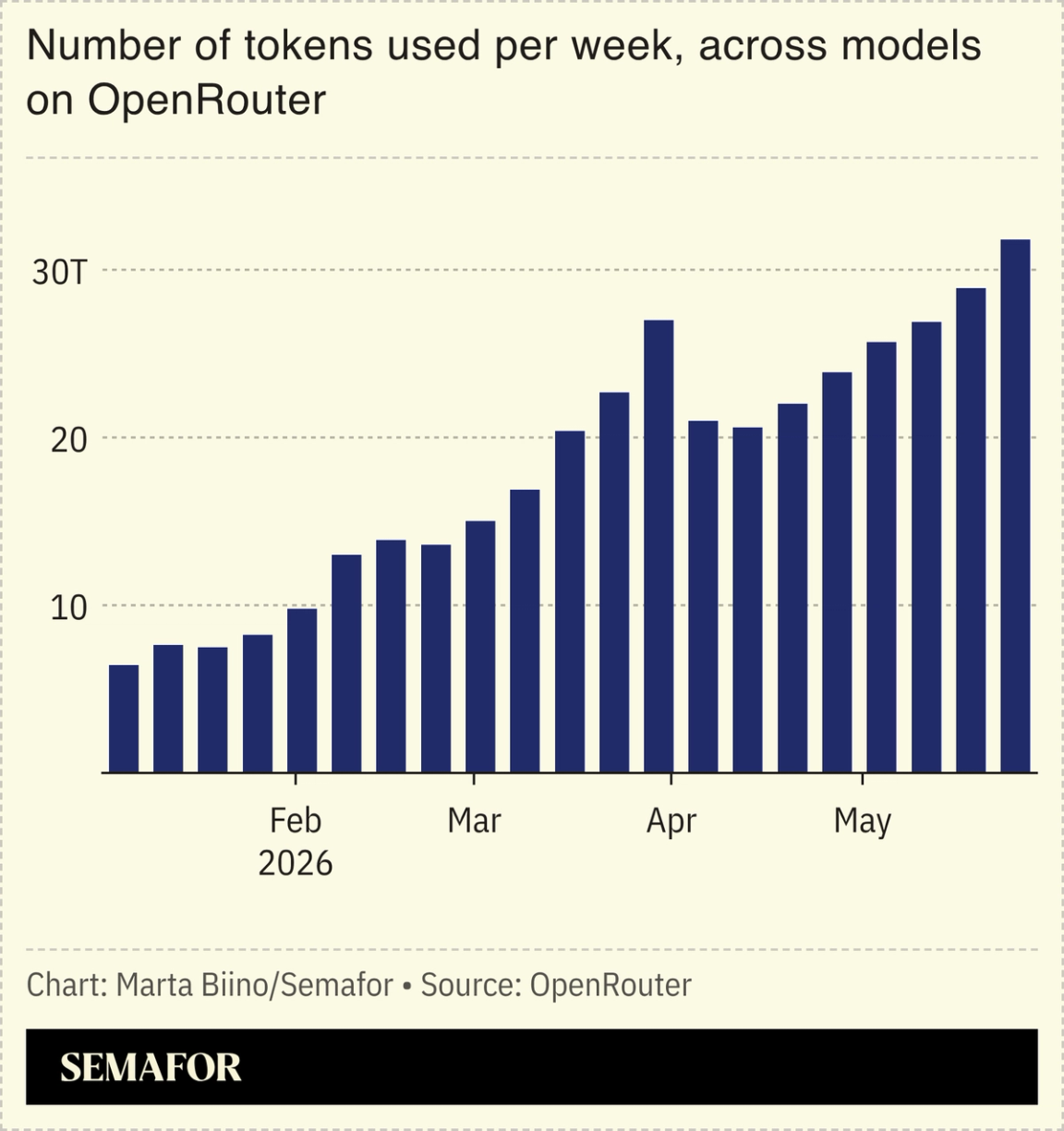 The cost of tokenmaxxing is hitting the banks. Some JPMorgan employees are “spending more on tokens than their salary,” Zachery Anderson, chief data and analytics officer at JPMorgan’s Payments division, told Semafor when asked about how token costs are weighing on budgets. After pushing employees to find ways to integrate AI into their daily work, corporations are now grappling with the rising costs of all those tokens, and some are limiting which employees can use specific AI tools. The bank isn’t the type to have “AI token usage leaderboards” and there’s no companywide effort to scale back or ration AI usage, Anderson said at a New York Tech Week event, but “we’re monitoring it.” Analysts in JPMorgan’s markets division have long used financial models that rack up hefty bills. The puzzle for financial institutions now will be figuring out whether AI should be similarly reserved for a subset of analysts. — J.D. Capelouto |
|
 Steve Marcus/Reuters Steve Marcus/ReutersWhat’s behind all the token stinginess? Last year, it looked like a lot of tasks could be handled by smaller AI models fine-tuned for specific tasks. But that’s not the way things have gone. It turns out, harnesses that massively increase the power of AI models tend to work better on frontier models. And the more Anthropic or OpenAI tokens you throw at a problem, the better they perform. AI capabilities are moving too fast for open-source or competing models to close the gap. The added costs to snag a 10% to 20% edge in performance is worth it for faster-moving companies, but maybe not for older, slower ones. “If you spend a bunch of money on tokens, what is that code meant for? Just generating a lot of code doesn’t do anything,” Jay Parikh, Microsoft’s executive VP of Core AI, told me at the Build conference. At some point, though, either the capabilities will begin to plateau or the difference in performance for most white-collar tasks will be so similar that it won’t matter as much. When that happens, the big tech companies will begin to optimize and costs will come down very fast. Companies like Microsoft and Google, that have seen previous tech waves, are waiting for this moment. It’s where they usually shine. — Reed Albergotti |
|
Tech companies bet on PC comeback |
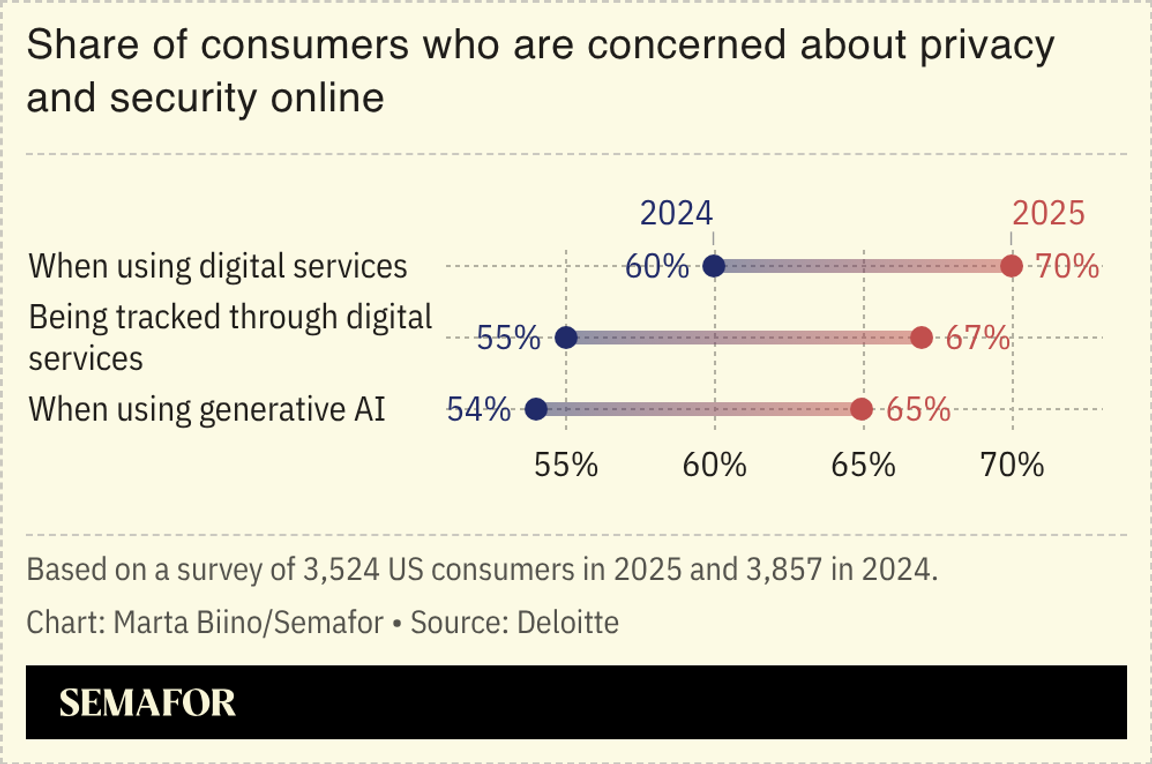 A few big companies are betting that data privacy concerns in the AI era will only grow, creating an opening for computing products that rely less on the cloud. Nvidia this week unveiled that its latest chip will embed more AI capabilities onto laptops, challenging the hold that Apple, Intel, and Qualcomm have on consumer device chips. Perplexity also announced that its AI assistant called “Computer” will autonomously select which workloads to run locally and which to send to data centers, based on the sensitivity of the data. Other AI products have allowed users to manually toggle between the two — which can be tedious — but this appears to be the first case of automating that. Personal processors are nothing new for gamers and the tech community, but adoption has generally stopped there, with expensive hardware and maintenance making it less attractive for consumers. Americans are also increasingly cautious about where sensitive information like health data and financial records rest. The percentage of US consumers worried about data privacy and security rose to 70% last year from 60% in 2024. — Rachyl Jones |
|
‘Scout: reschedule meeting, order a burrito’ |
 Courtesy of Microsoft Courtesy of MicrosoftSoftware engineers have largely reaped the benefits of AI agents, but workers in other roles have been slower to adopt the technology. Microsoft is launching a new AI assistant powered by OpenClaw, which could give businesses a taste of what agentic AI looks like at scale. Called Microsoft Scout, the agent can schedule meetings around both personal and work calendars, remind users when tasks have fallen through the cracks, order Chipotle, and claims to even file expenses — a capability that we’ve long been waiting for but remain skeptical about. It is rolling out to a small group of customers before expanding more broadly, the company said. While the open-source software behind OpenClaw has been around for several months, companies have largely waited for security vulnerabilities to be shored up before integrating it internally. Nvidia is among the tech firms that announced it is working on a more secure version of the agent. Omar Shahine, corporate vice president at Microsoft, told Semafor the company has taken steps to ensure that OpenClaw won’t run off on its own or delete all your emails. The agent doesn’t have access to anything that hasn’t been authorized, and users can choose to approve actions ahead of time. The big question is the cost, as companies including Microsoft itself have started to roll back their AI spending. Shahine wouldn’t disclose how the company plans to charge for Scout. In the preview, though, he said Scout will pull from customers’ monthly credit allowance through the business and enterprise subscriptions to GitHub Copilot, which respectively cost $19 and $39 per seat per month — with the option to buy more credits. — Rachyl Jones |
|
 The 5-minute AI brief 550,000 professionals read every morning. What’s actually new in AI this morning? Techpresso is the five-minute daily newsletter that more than 550,000 tech professionals trust to stay on top of AI breakthroughs, tools, and industry trends. No noise, no fluff, just what matters. Subscribe free. |
|
 Courtesy of Anthropic Courtesy of AnthropicThe rise of AI has made it “probably the best time to be a philosopher since Aristotle was hired as tutor to Alexander the Great,” one philosophy graduate told WIRED, turning the old joke about philosophy degrees on its head: “Could God make a degree so worthless even He couldn’t get hired?” In the AI era, philosophers are in high demand. Anthropic philosopher Amanda Askell has become one of the most recognizable faces at the company (which we’ll remind you recently visited with the pope), while Google DeepMind has an in-house ethicist. As AI becomes more powerful, ensuring it has values commensurate with those of humanity becomes more important, so establishing what those values actually are is ever more pressing. As the AI thinker Nick Bostrom warned in 2014, we now have “philosophy with a deadline.” |
|
|


