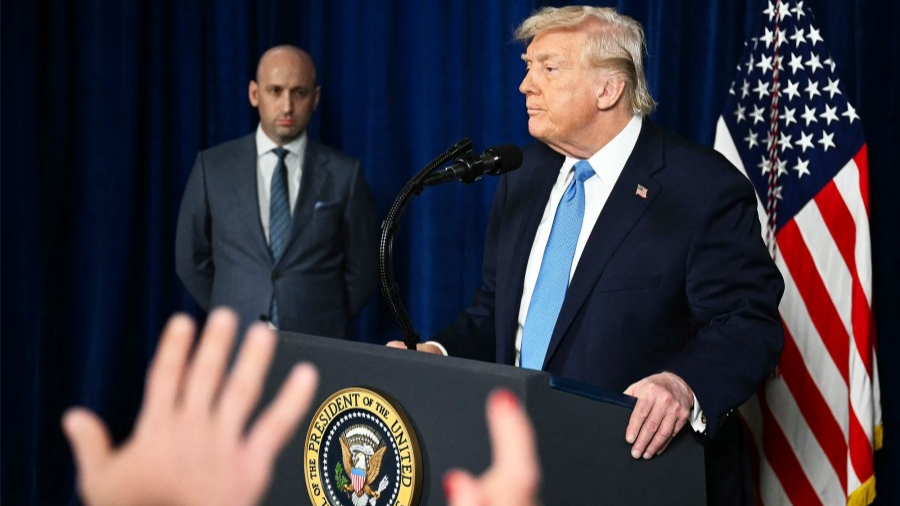
Since Donald Trump emerged as a major political force a decade ago, observers have struggled to define his ideology.
Even in his second term, the president resists easy categorization. Aside from his long-standing support for tariffs and tighter immigration policies, his positions on everything from cryptocurrency to foreign policy have shifted repeatedly.
As Republicans start to look ahead, influential conservative thinkers have tried to sketch out what Trumpism without Trump would look like. But that starts with figuring out what Trumpism meant in the first place.
This particular fight isn’t happening in campaign ads or speeches in the Senate, but rather in the pages of obscure policy journals and the halls of Washington think tanks.
Just as he’s upended so much of national politics, Trump has thrown a monkey wrench into the traditionally staid right-of-center world of policymaking, transforming or pushing aside established institutions and boosting startups such as the America First Policy Institute, American Compass and Advancing American Freedom that are hoping to rebuild a new conservative order.
The new generation of organizations emerged after 2020 as conservatives sought to make sense of Trump’s first term and develop an intellectual framework that would better align with the party’s evolving base.
Read Lily Becker’s analysis here.