Hi! Join the club: Golf caddying could be the latest job that AI threatens to replace, as an autonomous trolley with more than 40,000 preloaded course maps is set to begin shipping next year. Today we’re exploring: |
-
Peak profit: S&P 500 companies are keeping more of every dollar they make.
- Sounds familiar: Kids these days are listening to more songs from the good old days.
- Nine zeroes in: ChatGPT just hit 1 billion users only three years after launch.
|
Corporate America has never been this profitable |
AI is lifting almost everything in sight, from minting new millionaires at a historic pace to vaulting an entire country up the ranks of the world's biggest stock markets. And, with the US sitting at the center of that boom, corporate America is squeezing more profit out of every dollar it brings in than ever before.
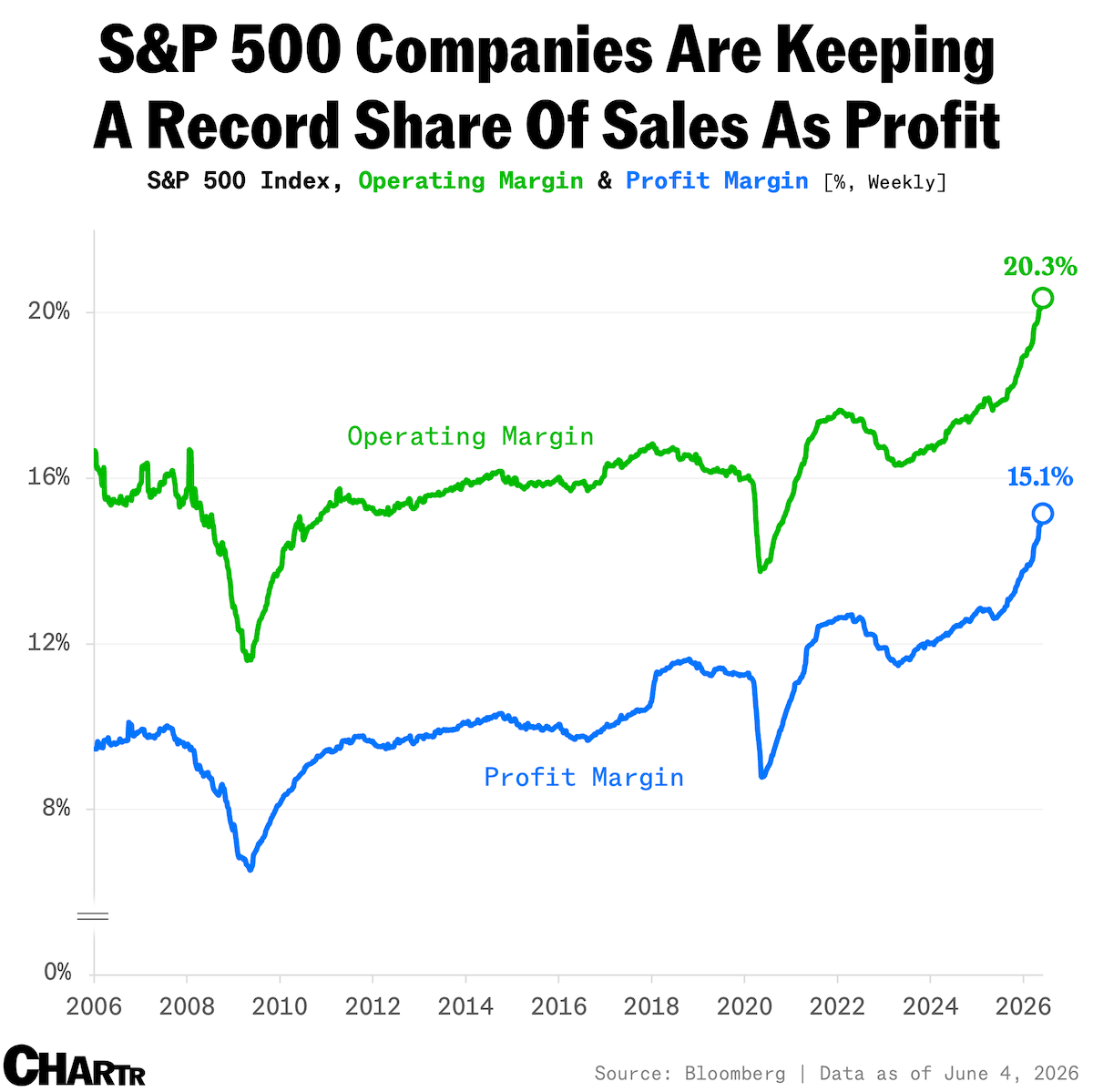
In the first quarter, S&P 500 companies kept nearly 15 cents of profit for each dollar of revenue it made, according to FactSet — the highest figure recorded since the data provider began tracking the metric in 2009, and more than double the long-run average of ~6 cents going back to 1946.
Much of it comes down to the index’s new center of gravity: a handful of unusually profitable tech giants. The Magnificent 7 alone account for more than a third of the S&P 500’s total market value, and they’re punching far above their weight, posting 63.2% earnings growth in Q1, which is nearly 4x the rate of the other 493 companies.
|
Bloomberg data through Thursday shows the trend still holding, with both operating and net profit margins at their highest in at least two decades. This means that companies are making more from their core businesses, as well as keeping more for shareholders after costs, interest, and taxes are paid.
Both measures have climbed sharply back from the depths of the financial crisis and the Covid-era shock, with the latest leg ripping higher on strong AI demand, blockbuster mega-cap earnings, and years of sweeping layoffs and “efficiency” pushes that have become a staple of Big Tech earnings calls.
Still, the profit boom comes with concentration risk. Last week, Goldman Sachs warned that companies benefiting from AI infrastructure are expected to account for roughly half of all S&P 500 earnings growth this year, leaving more of the outlook riding on whether the massive AI buildout eventually translates into durable profits.
|
Kids these days are listening to more songs from the good old days |
With Mexico about to host a raft of World Cup games, the zeitgeist moving on from a recent “Star Wars” movie, and Michael Jackson storming the charts, you’d be forgiven in 2026 for thinking you’d gone back in time to 1986.
As a buzzy biopic moonwalks the King of Pop back into the mainstream, Jackson’s “Billie Jean” recently topped both Spotify’s global streaming chart and the Billboard Global 200 more than 43 years after its initial release. But, zooming out, lists indicating the most-listened-to songs today are increasingly populated by some of the biggest pop tracks of yesteryear.
|
A new article in the Wall Street Journal unpacks how the latest generation of music listeners are now congregating around songs from the past — from early ’10s Justin Bieber hits to niche ’60s bops — citing data company Luminate’s Retro Revival report, released Wednesday.
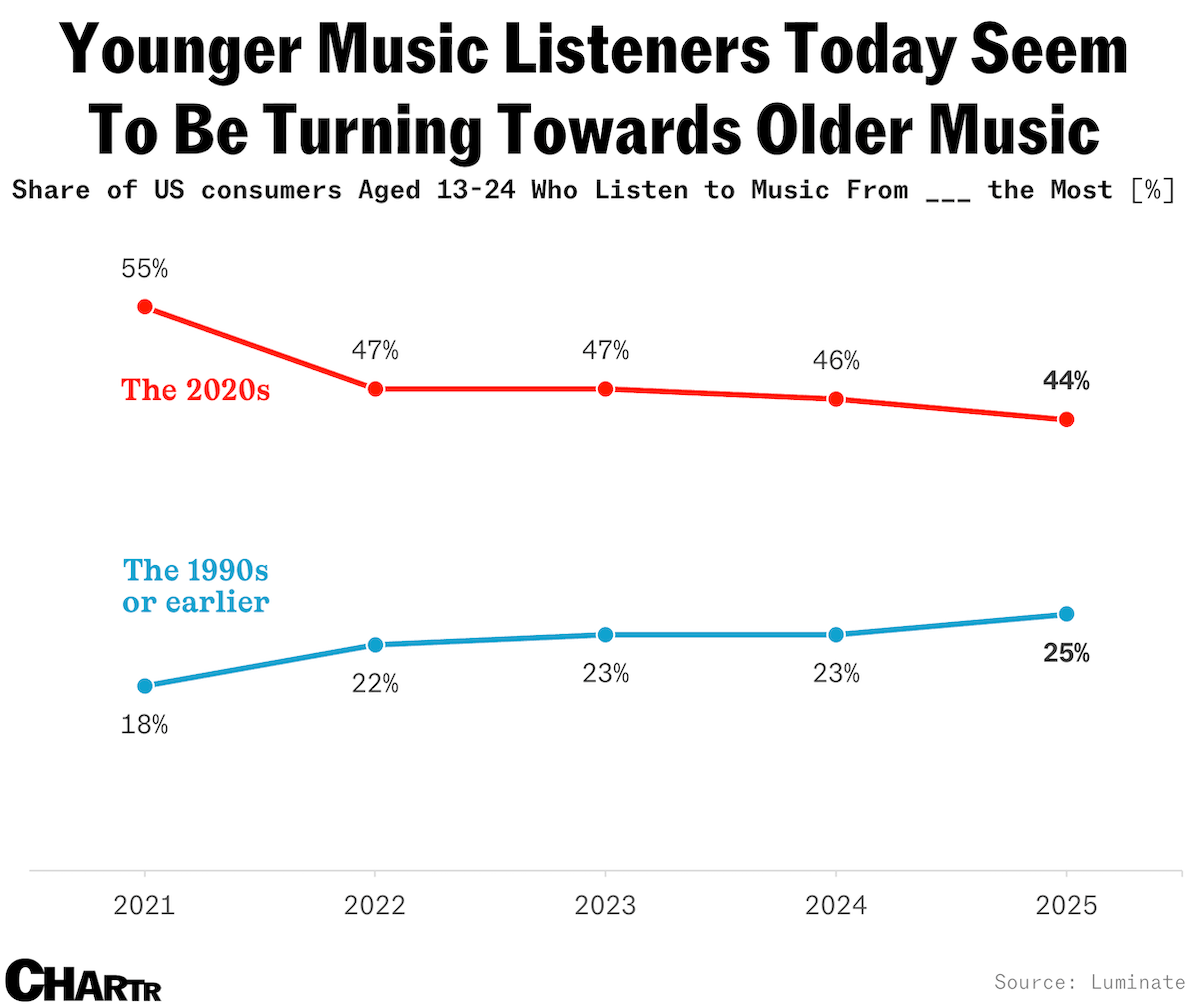
In a survey of US consumers aged 13-24, Luminate found that 44% of respondents last year said they listened to music from the 2020s the most of any decade, down from 55% in 2021; at the same time, a quarter of this cohort reported most often listening to music from the ’90s or earlier. |
Although 2020s remained the most popular music era for young people, the report also indicates that the ’90s was the fastest-growing decade by streams, rising 8% from Q2 2024 to Q2 2025, with 64% of the US general population surveyed saying they listened to music from that era, more than the ’80s (58%) and the 2020s (53%).
Spotify echoes the throwback trend: in the first four months of the year, roughly one in every three streams on the platform went to songs at least a decade old, with about one in six streams going to a track at least two decades old, per the WSJ. A company spokesman called 2026 “the most nostalgic year” the world’s biggest music streamer has ever seen.
But how does streaming lend itself to users rediscovering the classics, and is the past now the best place to shop for future hits? |
|
|
|
ChatGPT hit 1 billion users nearly twice as fast as TikTok did |
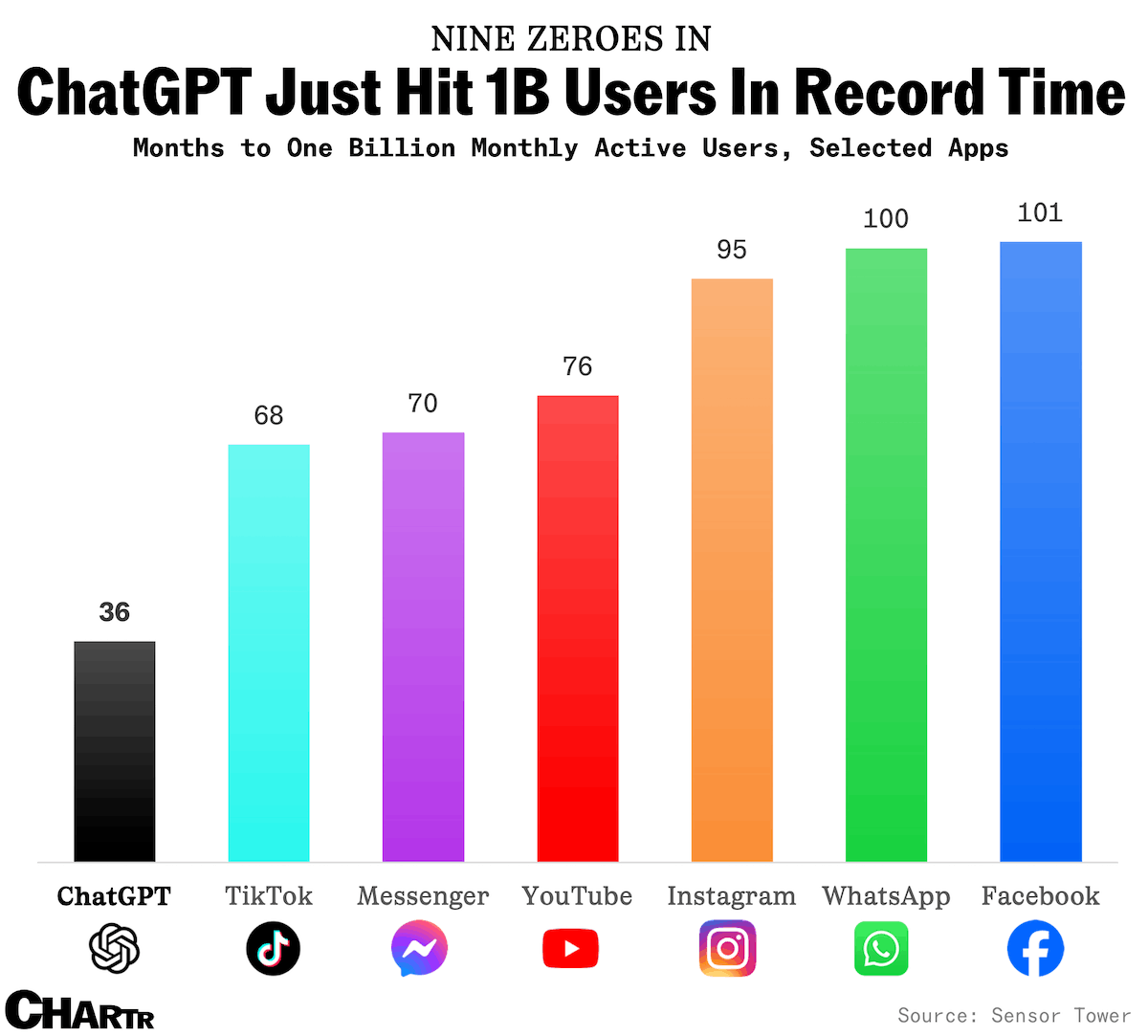
It took Facebook and Instagram around eight years; it took YouTube just over six; even TikTok, which at the time felt like it was a global sensation almost as soon as it arrived, took more than half a decade.
Now, though, the mobile version of ChatGPT has positively left the biggest platforms (and probably all of your other favorite apps) in the dust, hitting 1 billion monthly active users in just three years, per new data from market intelligence firm Sensor Tower, as more users turn to OpenAI’s chatbot each month. |
While rival Anthropic might be pulling ahead in terms of annualized recurring revenue, enterprise customer adoption, and valuation, the app version of Claude, a market-leading chatbot on several counts, has clocked only 56 million monthly active users in the quarter to date.
In fact, according to Abe Yousef, a senior insights analyst at Sensor Tower, ChatGPT’s monthly active user count for the quarter to date outweighs the figures for Claude, Gemini (472 million), Doubao (106 million), Dola (78 million), DeepSeek (68 million), Meta AI (61 million), Grok (50 million), Perplexity (44 million), and Copilot (31 million)... combined.
ChatGPT made a pretty big splash in the tech world when it landed toward the end of 2022, but there’s no question that the mobile versions — which launched on iOS in May 2023, then on Android a couple months later — helped to catapult the chatbot into the mainstream proper.
|
|
|
|
-
The US economy added 172,000 jobs in May, far exceeding economists’ forecasts of 85,000, while the unemployment rate held steady at 4.3%.
-
Sub-30: Walmart is adding Subway sandwiches to its 30-minute grocery delivery service, with all 1,400 in-store Subway locations expected to join by late July.
-
Meta reportedly started building five 125,000-square-foot tents between April and June to house data centers — a strategy reminiscent of when Tesla built cars under temporary canopies back in 2018.
-
Digital wallet platform Cash App just launched a $25 NFC-powered gadget shaped like a magic wand.
-
Sequesteracha: Over 100,000 live cockroaches were confiscated from a single breeder in Australia, officials said Friday, marking the country’s largest-ever seizure of exotic invertebrates.
|
|
|
|
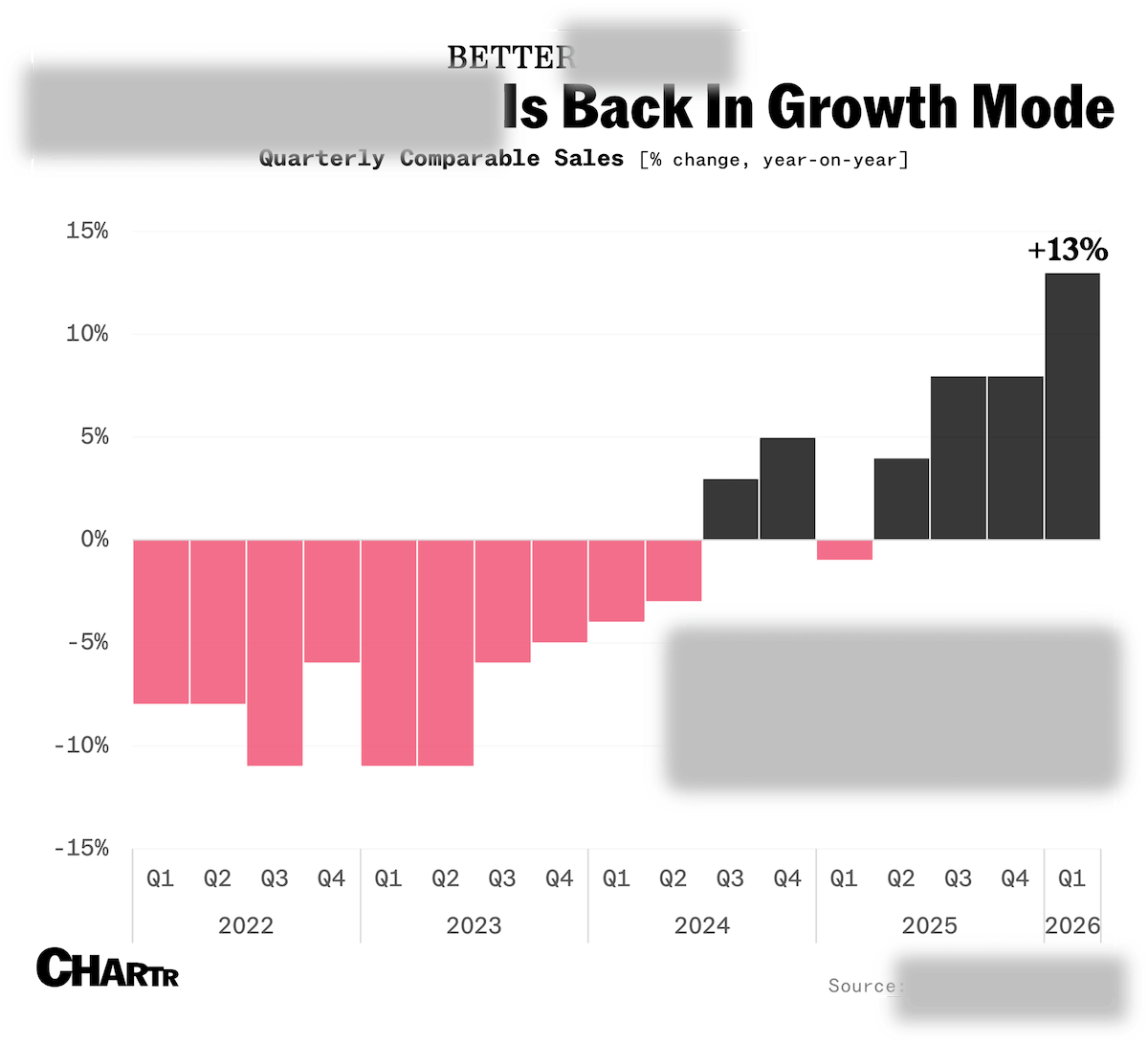
Off the charts: Which womenswear brand saw its shares soar 50% on Tuesday after raising its full-year outlook, following years of slumping sales? [Answer below]. |
Not a subscriber? Sign up for free below. |
Sherwood Media, LLC produces fresh and unique perspectives on topical financial news and is a fully owned subsidiary of Robinhood Markets, Inc., and any views expressed here do not necessarily reflect the views of any other Robinhood affiliate... See more |
|
|
|
SHERWOOD MEDIA, LLC, 85 Willow Road, Menlo Park, CA 94025 |
|
|
|
|