|
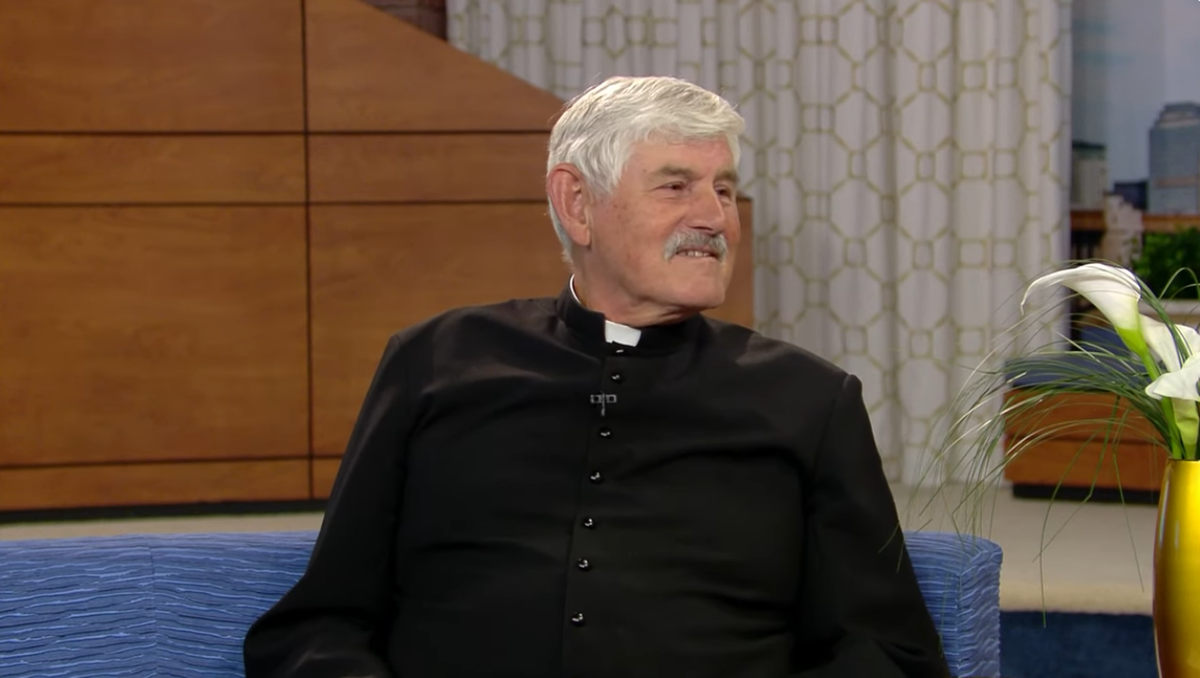
For more than five decades, Father Jurgen Liias has been a prominent voice in Christian ministry across Massachusetts, serving congregations through seasons of renewal, controversy, growth, and transformation. Today, Father Liias serves as senior priest at St. Patrick Parish in Stoneham. His path to the Catholic priesthood, however, was anything but conventional. It is a story shaped by war, immigration, theological conviction, and a lifelong desire to help people encounter Christ. Over the course of more than 40 years in the Episcopal Church before becoming a Catholic priest, Liias helped revitalize congregations, mentored dozens of future clergy, advocated for pro-life causes, and established ministries that continue to serve vulnerable populations today. His leadership has touched communities from Charlestown and Malden to Hamilton and Boston’s North Shore, leaving a lasting mark on Massachusetts’ faith landscape. Born in Germany in 1948, Liias entered the world in the shadow of World War II. His parents were refugees whose lives had been profoundly altered by the conflict. His father, an Estonian farmer, was conscripted into the German army and severely wounded during the war, losing a leg and becoming displaced from his family. His mother, a German teenager living in Poland at the war’s end, was separated from her parents during the Russian advance and never saw them again. “I always think of the extraordinary loss and trauma that my parents went through,” Liias said. When he was four years old, his family immigrated to the United States through the sponsorship of an Estonian relief organization. Their first home in America was a refugee camp in western Massachusetts. Their second home was even more unusual: the rectory of an Episcopal church in Charlestown. Raised in a working-class neighborhood largely populated by Irish Catholic families, he often felt different, particularly as the son of immigrant parents. Yet the church community provided stability, belonging, and purpose. An Episcopal priest named Walcott Cutler became a particularly important influence. “The church became kind of our family, and that old priest became like a godly grandfather figure,” Liias said. “From the time as a little boy, because of him, I wanted to be a priest.” That calling never faded, remaining with him through high school, college, seminary, and ultimately into ordained ministry. Liias attended Boston Latin School, one of the city’s most prestigious public schools and a traditional pathway for ambitious children of immigrant families seeking opportunity. After graduating in the top ten of his class, he was accepted at Harvard. Ultimately, he attended Amherst College, where he received a full scholarship. He graduated Phi Beta Kappa before attending seminary in Cambridge and being ordained as an Episcopal priest in 1972. During college, he met his future wife, Gloria, a Smith College student and mathematician who later worked at Lincoln Laboratory, affiliated with MIT. The couple has been married for decades, raised two children, and now cherish time spent with their five grandchildren. While his early ministry followed a traditional Episcopal path, Liias experienced what he describes as a profound spiritual renewal through the charismatic movement. Looking back on that pivotal period, he often summarizes it with characteristic humor: “I jokingly say, I was ordained first and converted later.” The experience led him toward a deeper commitment to Scripture, personal faith, evangelism, and what he viewed as a more authentic relationship with Christ. It also transformed his vision for ministry and the future of the church. Liias felt increasingly compelled to help bring spiritual renewal to struggling congregations. “The church needs renewal. The church needs to come back to Christ,” he said. For decades, that conviction guided his ministry throughout Massachusetts. While serving congregations, Liias became a leading figure in the charismatic renewal movement throughout northern New England. Conferences hosted through his ministry attracted believers from across the region seeking deeper faith, biblical teaching, and spiritual formation. Meanwhile, he devoted himself to mentoring younger clergy, eventually helping guide dozens of seminarians into ministry. However, Liias increasingly found himself involved in theological and cultural debates within the Episcopal Church. His convictions led him to become active in pro-life advocacy and other issues where he believed the church was departing from historic Christian teaching. The churches and ministries Liias helped build reflected that mission. Initially unsure how to respond to the growing number of vulnerable people appearing at church events, Liias attempted to reserve the dinners primarily for church members and their families. But he soon felt compelled to respond differently. Liias felt the Lord telling him, “I'm sending you these people. Don't turn them away.” That moment became the catalyst for what would eventually become Bread of Life, one of his most significant ministries serving struggling members of the community. The organization continues to operate today and remains one of the lasting legacies of his ministry when he was a priest in Malden, Massachusetts. Eventually, conflicts about Christian orthodoxy contributed to a major division within the Episcopal Church. Liias joined other clergy and congregations who formed the Anglican Church in North America. On the North Shore, he helped establish Christ the Redeemer Anglican Church in 2009, guiding the congregation through its formative years and helping secure a permanent home in a former Catholic church building. Yet even after decades of ministry, his theological journey continued. Inspired by Pope Benedict XVI's creation of the Ordinariate for former Anglicans entering full communion with Rome, Liias decided to become a Catholic priest. After a year of formation, study, and discernment, he became a Catholic priest in 2013. While no longer leading a parish full-time, Liias continues his ministry as a senior priest at St. Patrick Parish in Stoneham and as chaplain for Emmaus Ministry for Grieving Parents. The nonprofit supports mothers and fathers navigating the loss of a child. Father Liias has also taught a monthly Bible study at the well-known Thursday Morning Men’s Breakfast at the Union Club in Boston for more than 40 years. The breakfast meets each Thursday at 7:30 a.m., drawing men from various Christian denominations for fellowship and biblical teaching. Founded in 1981, the group has roughly 200 members, with about 70 men attending each week. Another major part of Liias’s ministry has been leading pilgrimages to the Holy Land, Egypt, Turkey, and Europe, visiting sites mentioned in the Old and New Testaments. He has led these trips for decades. Underlying all of Liias’s work is a consistent philosophy of leadership grounded in humility, accountability, and dependence on God. For Liias, effective leadership begins not with organizational skill or personal charisma, but with spiritual maturity. “The very first thing about spiritual leadership is you've got to have a really strong relationship with the Lord,” he said. “You're really working for him. You're serving him.” Throughout his ministry, he maintained close relationships with fellow clergy for mutual accountability and spiritual support. He regularly sought guidance through confession and spiritual direction, believing leaders must honestly confront their own weaknesses before they can effectively serve others. Reflecting on a lifetime of ministry, Liias continues to emphasize dependence on God over personal accomplishment. “The first obstacle is your own sin,” he said. “The key to godly leadership is cooperating with God…It's not your own thing.” Whether mentoring seminarians, preaching renewal, or serving grieving parents, Father Jurgen Liias has had a profound impact on the spiritual life of many hundreds of people. He has helped them find meaning and purpose in their lives and spiritual renewal. His enduring contribution to the Commonwealth is not simply the churches he has served or the ministries he has founded, but the generations of believers he has encouraged to remain rooted in faith and committed to serving others.
|