|
 |



In court this week:
In the Kennedy Center case
Trump’s name is gone, but the case isn’t quite over.
In a status report filed on Friday, the plaintiff noted that “Defendants’ submission confirms that they plan to turn the Kennedy Center into a lifeless husk by refusing to take any steps to maintain the Center’s operations, and will effectively close the Center as a performing arts venue come July 5, 2026—contrary to the Court’s preliminary injunction order.” The plaintiff, Congresswoman Joyce Beatty, is careful to say she isn’t asking the court to micromanage the shows that will appear on stage, but that the government must not be allowed to violate the court’s prior order.
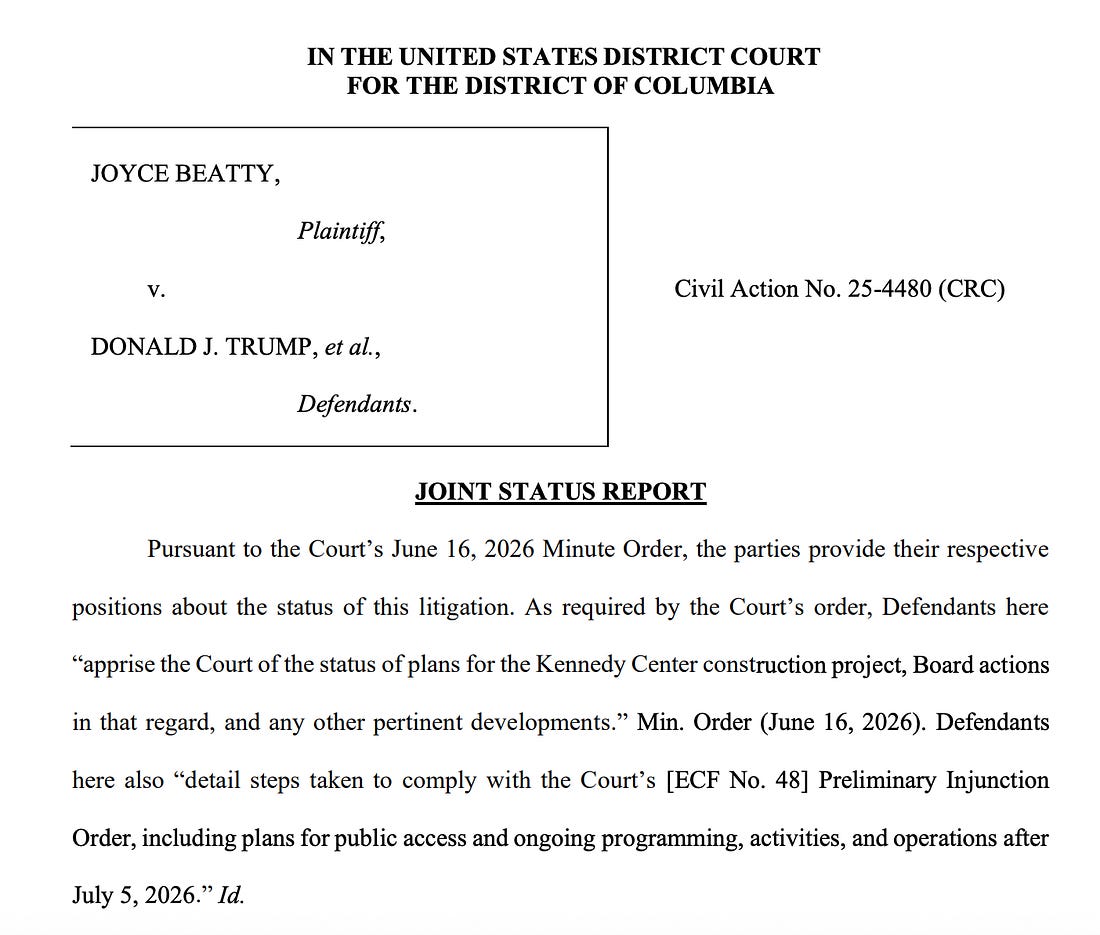 |
Beatty is also trying to force the government to remove the tarp that’s still hanging on the front of the Kennedy Center, or as she puts it, “Today, the tarp inexplicably remains.” She calls it “a transparent effort to frustrate a return to the status quo that existed prior to the Board’s unlawful vote to rename the Kennedy Center.”
The ball is with the court to determine what happens next this week, now that this status report has been filed.
Ongoing proceedings in Trump v. IRS, in Florida
In the slush fund case, the 35 former federal judges who filed a brief objecting to the closure of the case at Trump’s request after both his slush fund and his “almost a pardon” deal with the government were disclosed, filed their response to Trump’s efforts to keep the case closed. The table of contents outlines the judges’ argument. The key point is that the Trump plaintiffs have perpetrated a fraud on the court, and the court should not let it stand. That’s a highly persuasive argument to any federal judge who intends to protect their integrity. The question is, what does the court have the ability to do about it?
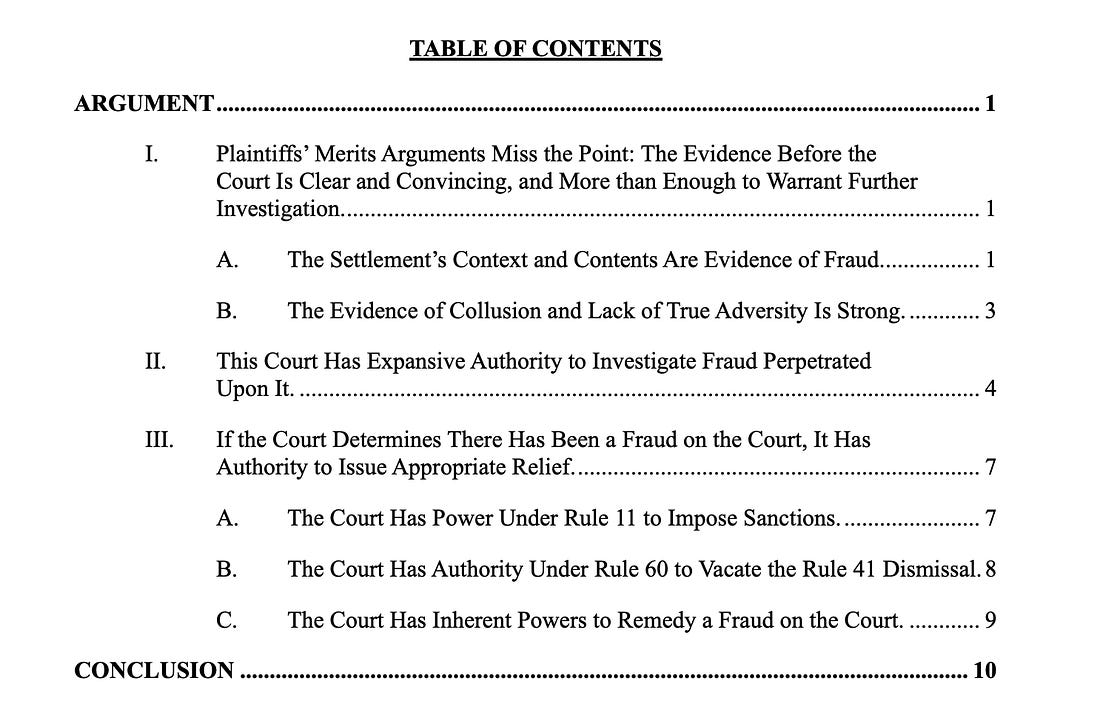 |
The judges argue that “the Court has ample authority under Rule 11, Rule 60, and its inherent authority to issue remedies.” As we discussed previously, the Trump argument is that because they moved to dismiss the case before the defendant replied, the Federal Rules of Civil Procedure required the Judge to dismiss the case, and once that was done, she has no more ability to act. The judges’ group points out that the Court retains the ability to impose sanctions under a rule barring frivolous proceedings and to reopen the case despite the prior dismissal because of the allegations of fraud that have surfaced. The court has “inherent authority,” according to the judges, to take appropriate action in the face of fraud. “That authority,” they write, “gives courts the power “to punish conduct which abuses the judicial process” and fashion “an appropriate sanction, from dismissal of a lawsuit to an assessment of attorney’s fees.”
The Trump plaintiffs’ position is made worse by DOJ’s refusal to file the sworn declaration it has abandoned its slush fund plans in the case pending in the Eastern District of Virginia. The court ordered them to do so by Friday or face further proceedings. Predictably, they refused to file under oath while complaining about the court violating separation of powers by requiring them to get some legal tooth to their promises in court. Their word, senior DOJ officials say in their brief, should be enough, before claiming that “the Court’s demands are unnecessary.”
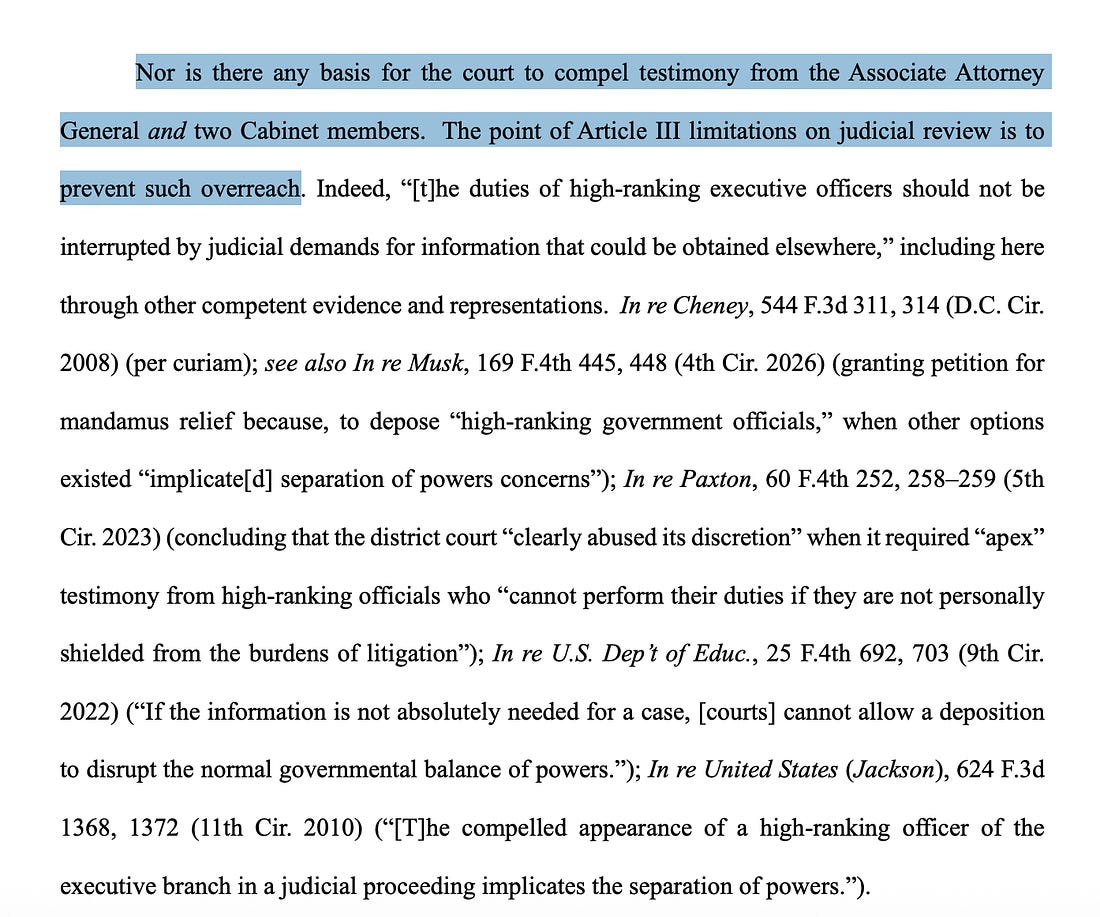 |
Unfortunately for Todd Blanche, who is one of two cabinet-level officials ordered to certify an end to the slush fund in writing, under oath, the Judge will get the last word on what suffices here. Her view may likely align with that of Rhode Island Senator Sheldon Whitehouse: