| | In this edition: Pretoria reeling after PEPFAR cut, Ethiopia election win strengthens Abiy’s positio͏ ͏ ͏ ͏ ͏ ͏ |
| |  Pretoria Pretoria | Addis Ababa |  Accra Accra |
 | Africa |  |
| |
|
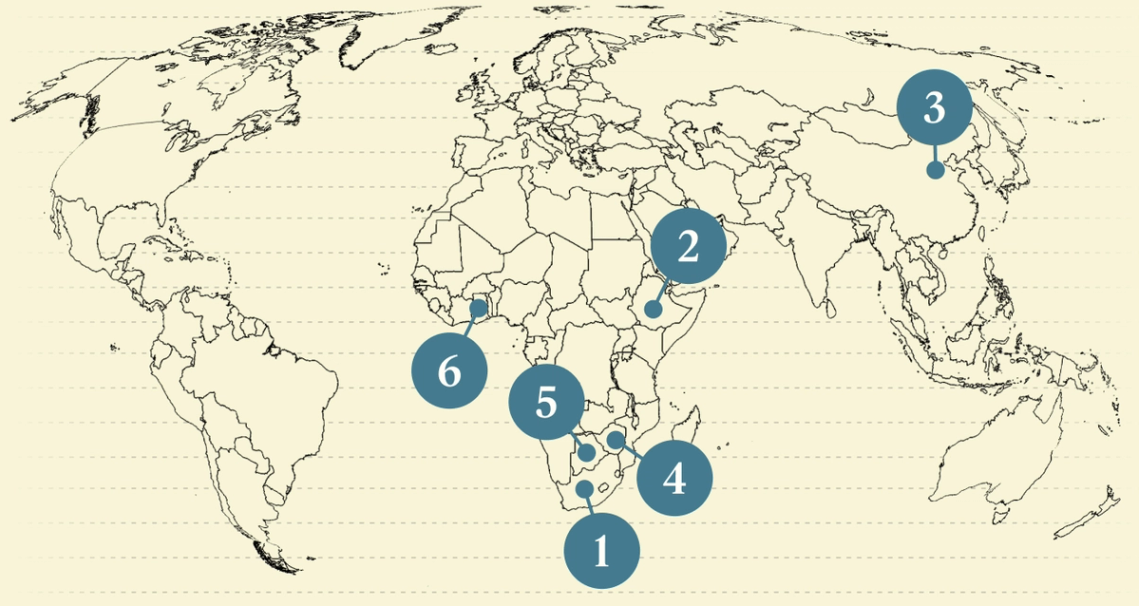 - PEPFAR cut rattles Pretoria
- Abiy’s election win
- China-Africa trade booms
- Lithium processing hesitation
- Solar plant funding
- Slavery reparations
 Distance runners descend on South Africa. |
|
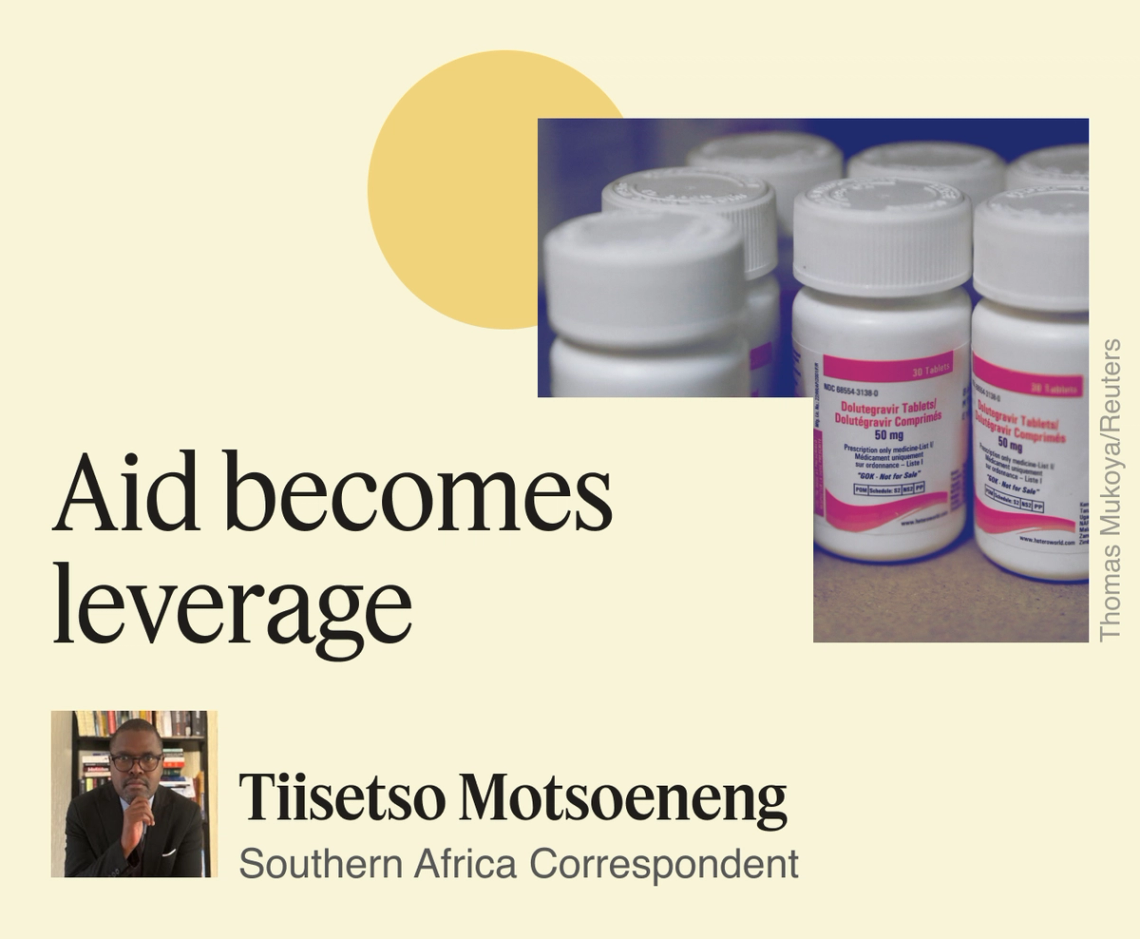 The US decision to wind down PEPFAR — first reported by Semafor — threatens the operational backbone of South Africa’s HIV response and converts a predictable funding stream into a nearly $2 billion fiscal gap. There is a case for transition. After two decades of external support, moving toward country ownership and sustainable financing is reasonable, something Washington says it is aiming to do across Africa. Emergency aid, by definition, is temporary. The arrival in May of a twice-yearly injectable, Lenacapavir, cuts the frequency of missed doses that require tracing, adding weight to the argument in theory because it means fewer visits to far-flung areas and longer protection. This is not to say Washington’s attempt to force Pretoria into gutting laws born of South Africa’s constitutional settlement doesn’t cross a line. PEPFAR did more than buy pills: It paid for the entire administrative and community spine. Estimates already circulating inside the government point to a gaping budget hole and modeled projections that could translate funding cuts into new infections and deaths. Officials and one rural outreach manager I spoke to over the weekend described anger and a sense of betrayal, feeling blindsided by a decision that ties life-saving aid to demands over post-apartheid transformation laws. Pressing South Africa to dismantle these measures as the price of treatment is indefensible, undermining sovereignty, and making cooperation on health harder. The current approach also undercuts Washington’s own interest in disease control. Curbing an infectious disease abroad protects health at home, reducing the risk of cross-border transmission and lowering the chance of new, costlier public health threats. So, the question is one of design, not principle. A defensible transition in funding needs to protect continuity of care by preserving outreach teams during the shift and coordinating the rollout of new products like Lenacapavir so clinics can deliver injections on schedule. An abrupt, politicized withdrawal will be costly — in money, in trust, and in lives. |
|
S. Africa to raise aid cuts at UN |
| |  | Tiisetso Motsoeneng |
| |
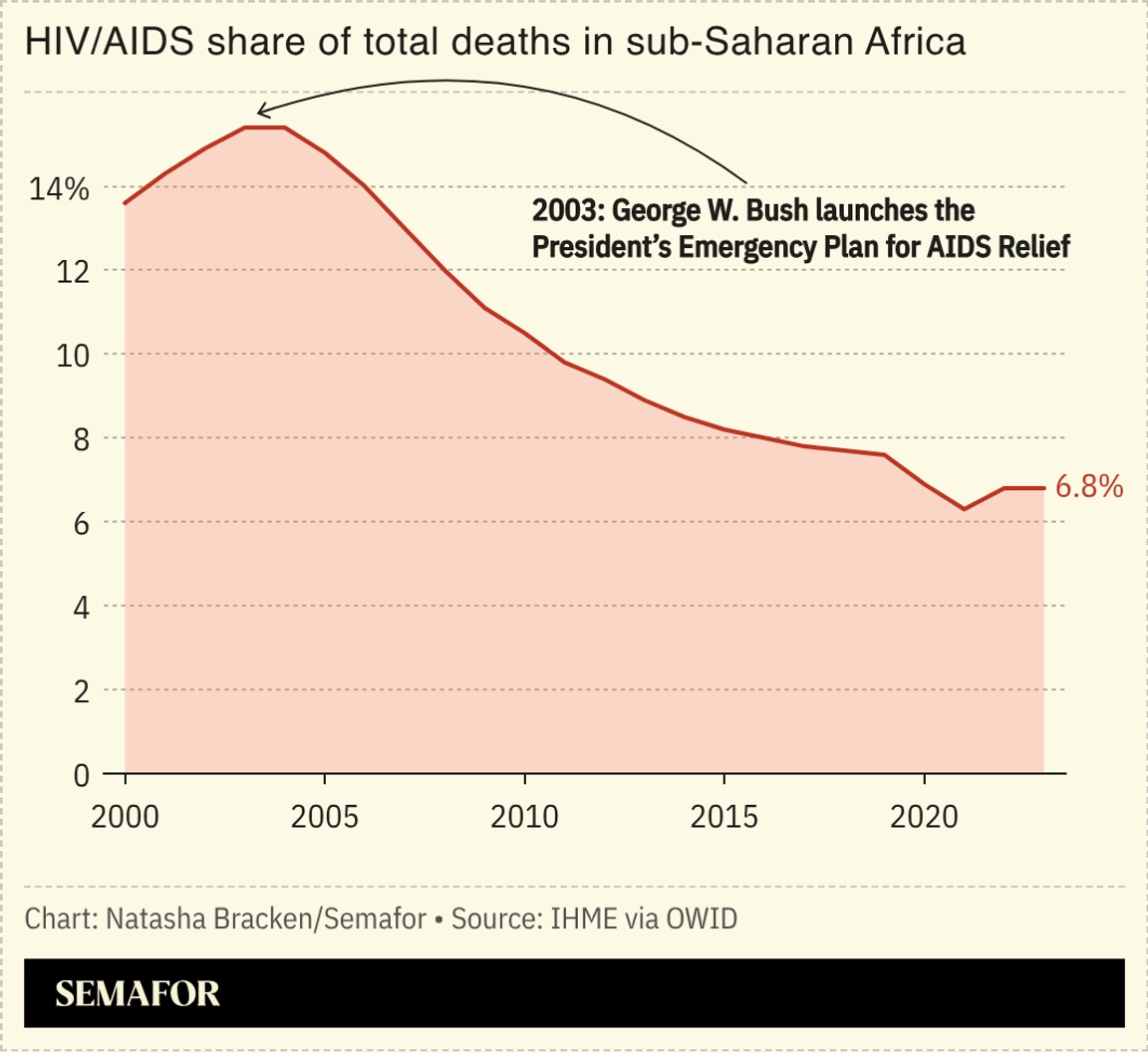 South Africa will raise the alarm over the steep decline in global health aid at a UN HIV/AIDS meeting opening today, officials said. The warning comes as the US plans to permanently cut its $8 billion HIV relief program, pushing the country’s fragile coalition government toward a fiscal and diplomatic crisis. The withdrawal of PEPFAR, first reported by Semafor on Thursday, comes almost 18 months after Washington froze funding for the program before advancing a reduced stopgap allocation late last year. It is the latest diplomatic scuffle between Pretoria and Washington, which has made repeated false accusations of Afrikaner genocide in Africa’s biggest economy. A senior South African government official, speaking to Semafor on condition of anonymity, expressed surprise at Washington’s decision to link HIV treatment to “invented issues.” South African government health department spokesman Foster Mohale said Pretoria had not received formal notice, but the decision “didn’t come as surprise” after an earlier freeze. “The department has long been working on a self-reliance plan… to minimize the impact of PEPFAR withdrawal,” Mohale said, adding the issue will be raised at the two-day UN High-Level Meeting on HIV/AIDS in New York. |
|
Abiy party wins Ethiopia elections |
 Ethiopian Prime Minister Abiy Ahmed. Tiksa Negeri/File Photo/Reuters. Ethiopian Prime Minister Abiy Ahmed. Tiksa Negeri/File Photo/Reuters.Ethiopian Prime Minister Abiy Ahmed’s Prosperity Party retained its large parliamentary majority in recent elections overshadowed by unrest in Africa’s second-most-populous country. The party extended its parliamentary majority, securing 90% of contested seats in this month’s general election, which 49-year-old Abiy was widely expected to win. More than 140 polling stations were closed on voting day in the country’s two most-populous regions, Amhara and Oromo — both opposition strongholds — over safety concerns sparked by armed groups fighting the government. Abiy rose to power in 2018 on promises to heal deep political divisions in Ethiopia — in 2019 he won the Nobel Peace Prize, mainly for his efforts to reconcile with longtime rival Eritrea — but he soon angered politicians from the northern Tigray region, who had dominated the government for decades. He is credited with achieving impressive economic growth, while leading the country during a brutal two-year civil war that ended in 2022. Simmering unrest in several regions has prompted warnings that fighting could boil over into “catastrophic” conflict. |
|
China-Africa trade drives yuan |
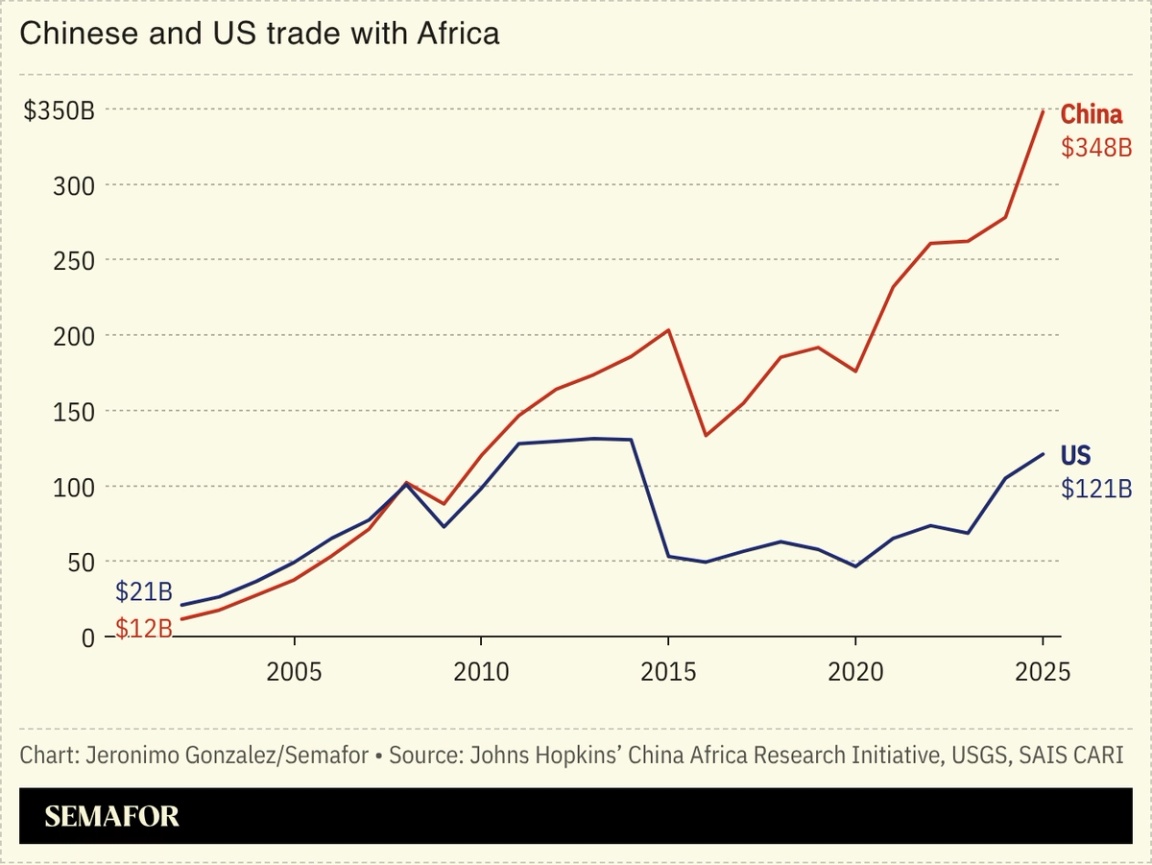 Trade between Africa and China surged last year, helping to drive increased use of the yuan in international commerce, a key priority for Beijing. China is importing a slew of goods from African nations for everything from bone pellets to avocado oil and apples, and bilateral trade jumped by 18% last year. China’s recent decision to scrap tariffs on African imports could drive that number even higher. The boost comes as Beijing and Washington vie for influence on the continent, with both seeking, in particular, greater control over Africa’s key mineral resources. However, the Trump administration’s decision to cut aid while threatening steep new tariffs has pushed numerous African nations closer to Beijing. “We are going straight into the hands of China,” a Nigerian economist told CNN last year. |
|
Zimbabwe miners seek extension |
 The Prospect Lithium mine in Zimbabwe. Philimon Bulawayo/Reuters. The Prospect Lithium mine in Zimbabwe. Philimon Bulawayo/Reuters.Lithium miners in Zimbabwe asked the government for more time to build processing facilities before a ban on concentrate exports takes effect in January 2027, Reuters reported. The leader of a lithium producers’ trade body said regulators had been asked for an extension because attempts to complete plant construction ahead of the deadline were at various stages, and only one had been completed. Africa’s top lithium producer has pressed miners operating in the country to process more of the battery metal locally. The southern African nation recently introduced lithium concentrate quotas and increased royalties on lithium concentrate exports to boost revenues from its natural resources. Zimbabwe’s local processing drive is part of a broader trend across the continent to capture more value from raw materials. But some mining experts argue that refining is the most volatile part of the minerals value chain and can sometimes backfire. In situations where mined materials are in short supply, for example, processors can be forced to pay for their feedstock. |
|
Botswana eyes solar power expansion |
 Botswana secured $100 million to build its first large-scale solar plant that will sell power to a regional market, as investors bet that rising electricity demand will offer lucrative returns on surplus power. The 100-megawatt Tati Solar Project is set to begin commercial operations next year, after securing financial arrangements with the help of South Africa’s FirstRand Ltd and Rand Merchant bank. Some 600 million people across Africa lack electricity, according to the International Energy Agency, and about half of southern Africa’s population doesn’t have access. The Tati plant will sell power to the Southern Africa Power Pool, which allows utilities and independent producers to sell power across borders, Bloomberg reported: Investors are “taking a view that there is sufficient demand” for the scale of capital infrastructure involved in the project, an executive said. |
|
Leaders target slavery reparations |
 Ghana’s President John Dramani Mahama lays a wreath at Osu Castle, a former slave post. Francis Kokoroko/Reuters. Ghana’s President John Dramani Mahama lays a wreath at Osu Castle, a former slave post. Francis Kokoroko/Reuters.African leaders agreed on a framework to demand reparations for the transatlantic slave trade, as well as debt relief. The agreement at a summit hosted in Ghana by President John Dramani Mahama and attended by the presidents of Liberia, Namibia, and Senegal comes on the heels of a UN declaration that the slave trade was a crime against humanity. About 12 million Africans were forcefully taken to the Americas and enslaved for labor. Calls for reparations have increased in recent years, reaching a crescendo with the UN designation in March — though the US, UK and a host of other countries either rejected the claim or abstained from voting on it. A document issued at the Ghana event outlined a 19-point plan that includes debt relief, return of looted artefacts, and the establishment of a global reparations fund, the BBC reported. |
|
 - June 22: The Southern African Development Community holds a virtual summit focused on regional peace and stability.
- June 24: Center for Global Development and the IMF hold discussions on the implications of Western aid cuts in sub-Saharan Africa.
- June 24-25: The Fintech Summit Africa convenes in Johannesburg, with a focus on agentic AI.
- June 25: South Africa releases producer inflation for May.
- June 25: Zambia and Namibia release first-quarter GDP data.
|
|
 Business & Macro |
|
|


