And, India's mega IPO rush.
 

India File

India File

By Ira Dugal, Editor Financial News, with global Reuters staff

India’s latest push for dollar inflows is drawing on its vast overseas population, with banks aggressively marketing a new deposit scheme. Will the diaspora rush to park funds in Indian banks, easing pressure on the rupee and boosting the outlook for domestic lenders? Write to me with your views at ira.dugal@thomsonreuters.com. 

And, two Indian mega IPOs are lined up for later in the year, with Reliance Jio and the National Stock Exchange filing draft papers for public offerings.


This week in Asia

  • US-Iran deal redraws the Middle East: Iran gains, rivals alarmed
  • Iran deal includes $300 billion fund, more than half of which already committed, source says
  • US holds off blacklisting China's DeepSeek, more than 100 firms deemed security risks, sources say
  • Aramco, seeking tens of billions of dollars, lines up more asset sales, sources say
 

Diaspora to the rescue


A man waves an Indian national flag in Times Square to watch the speech by India's Prime Minister Narendra Modi simulcast in New York September 28, 2014. REUTERS/Carlo Allegri 

Indians have a global presence — from Silicon Valley and the financial centres of London and Hong Kong to the oil and gas hubs of the Middle East. Many maintain close economic ties with home, notably through steady remittance flows.

In times of stress, India has turned to this 37 million‑strong diaspora for support.

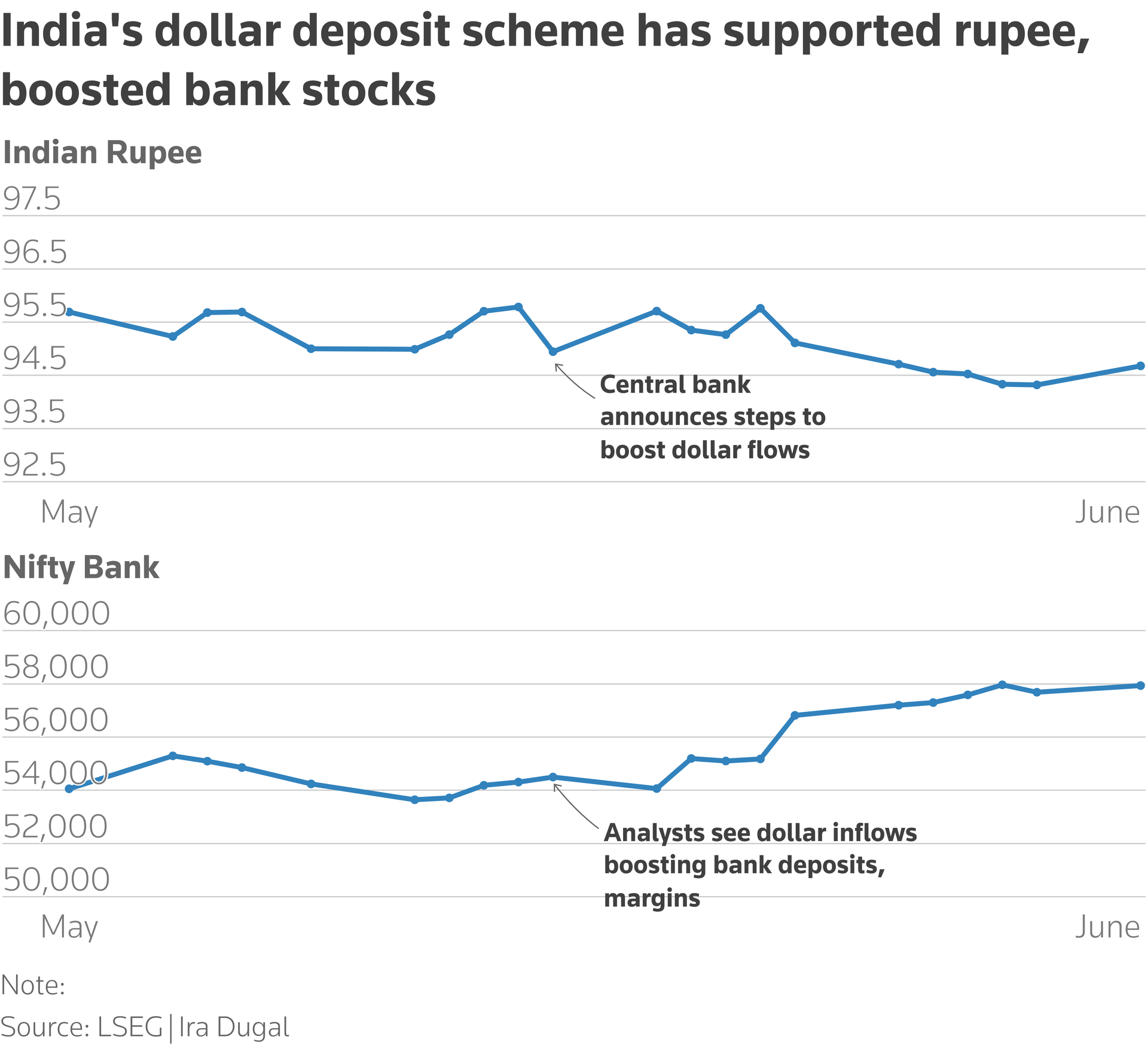
A recent scheme launched by the Reserve Bank of India (RBI) is the latest example. Announced earlier this month to help shore up a weak rupee, the RBI is offering to absorb the cost of hedging foreign currency deposits placed with Indian banks for three to five years. This allows overseas Indians to earn relatively high domestic interest rates without taking on currency risk.

It is now being aggressively marketed by banks, who have raised rates on such deposits to around 6% to 7%.

Analysts see it drawing in significant dollar inflows, supporting the beleaguered local currency when banks exchange those funds for rupees at the RBI.

Nomura puts the potential at about $55 billion, while Axis Bank sees scope for around $100 billion.

Banks are seeking the RBI's approval to offer dollar loans to these clients to maximize their investments. Typically this has been the purview of foreign banks, but local lenders want to offer leverage via their overseas branches or locations in India's tax-neutral hub, GIFT City.

With such leverage, returns could approach 12%, according to Macquarie analysts, who estimate inflows of $30 billion to $50 billion. Axis' estimates show that returns could rise to 15% at higher levels of leverage.


Collateral benefits

Banks stand to be big beneficiaries.

The inflows could revive deposit growth, which has lagged in recent years, while also improving liquidity in the financial system and pushing down market interest rates.

Lower borrowing costs have already encouraged companies to tap bond markets more actively.

Bank stocks have responded, with the Nifty Bank index rising nearly 7.2% over the past month, outperforming a 1.6% advance for the broader Nifty 50.

Large lenders with a strong overseas presence, such as State Bank of India and HDFC Bank, are seen gaining the most.

The scheme should help ease pressure on banks’ loan‑to‑deposit ratios, analysts at Ambit Capital said, noting that the deposits are exempt from reserve requirements, making them a more efficient source of funding and supportive of lending margins.

There are trade‑offs, however.

Bearing the hedging costs could weigh on the RBI's income and limit the surplus it transfers to the government. It will also need to return the dollars at maturity, building up forward obligations that could create future dollar demand, offsetting some of the currency support over time.


Market matters

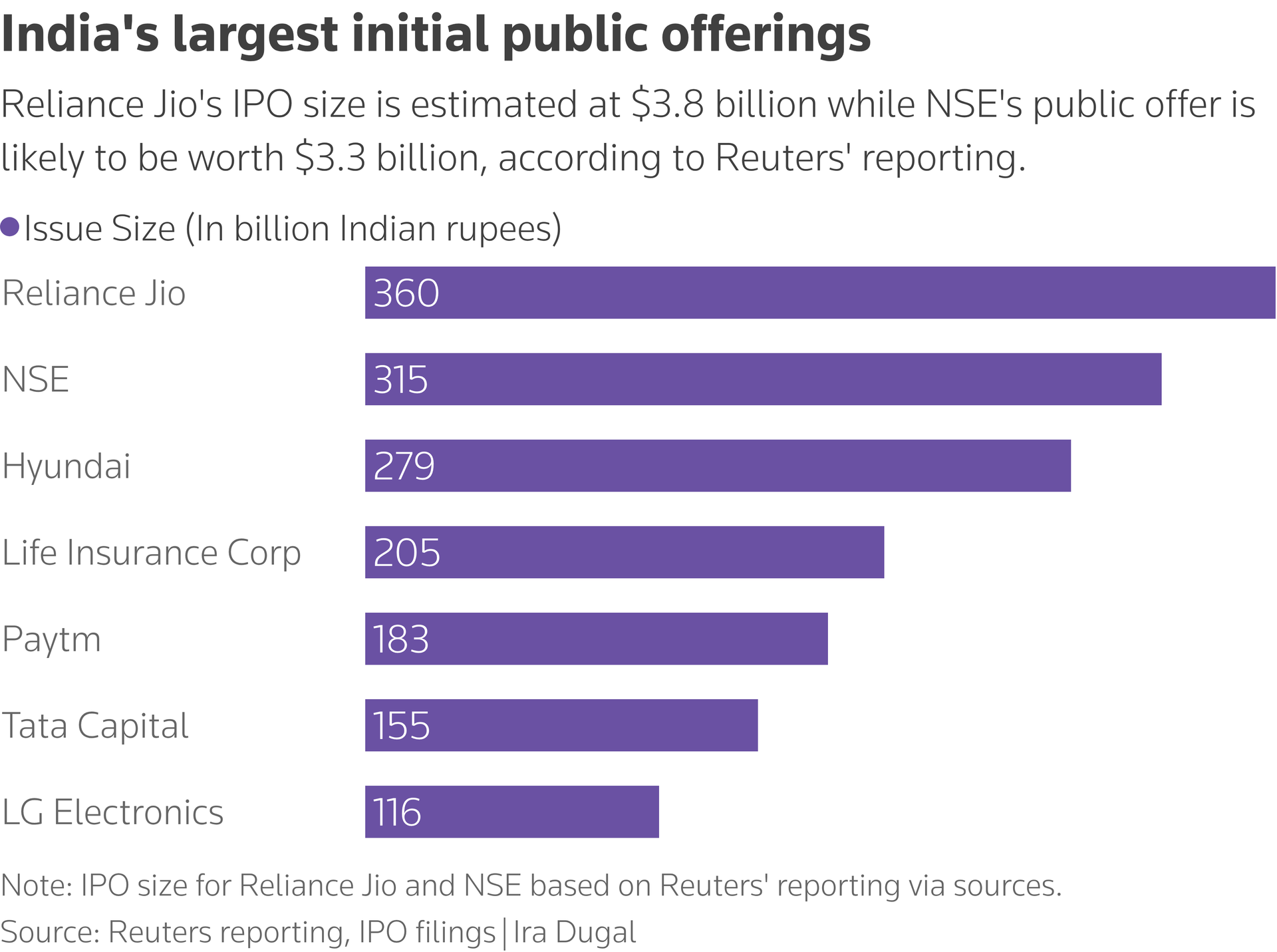
Mukesh Ambani's Reliance Jio and the National Stock Exchange of India both filed draft papers for public offerings in recent days, setting up a pipeline for mega issues to hit the Indian market in the second half of 2026.

Reliance Jio's IPO may look to raise $3.8 billion from the market. Read here for more on the business.

NSE's public offering, long delayed due to regulatory hurdles, could be worth $3.3 billion and hand investors a windfall.

This factbox explains how NSE became India's largest bourse and the world's most active derivative exchange.

Catch up here on some of India's largest IPOs.


This week's must-read

  • Global messaging app Telegram lost its bid to overturn a temporary ban on its app after the government alleged the platform was being used to leak exam papers. The Telegram ban was preceded by days of private sparring between the two sides. Read here for the backstory.
     
  • Tata Electronics said it has detected a recent "cybersecurity incident", after security researchers said a ransomware group has posted more than 200,000 files on the dark web. Read more here.