| | Tanker traffic through the Strait of Hormuz picked up and oil prices fell on Tuesday.͏ ͏ ͏ ͏ ͏ ͏ |
| |  | Energy |  |
| |
|
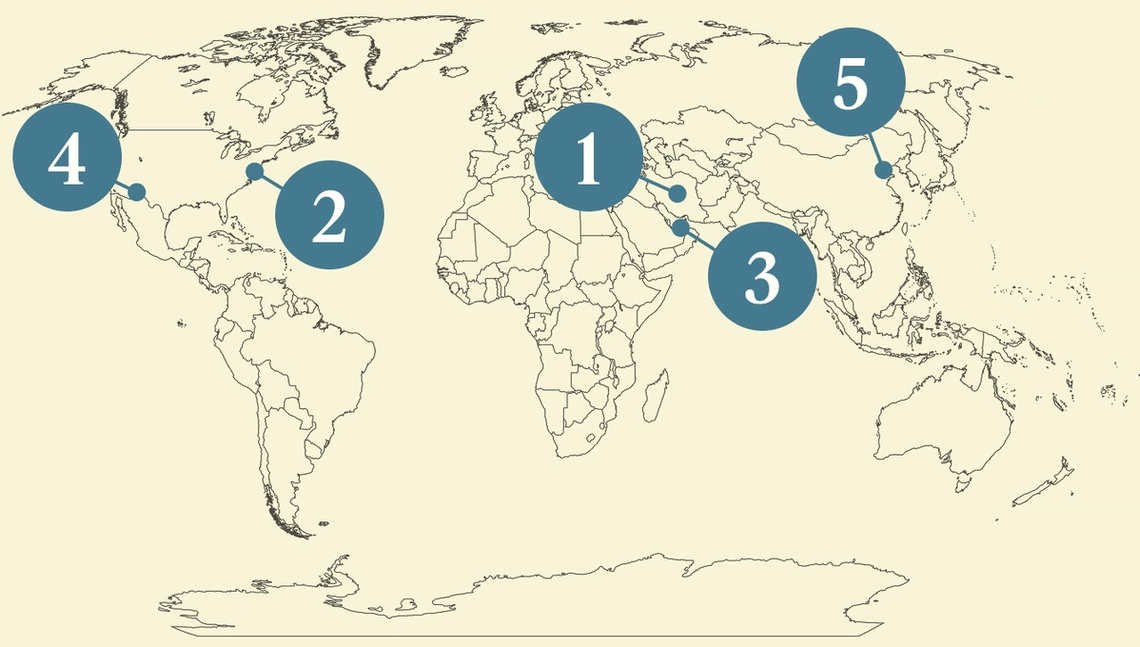 - Tanker traffic picks up
- Big Solar’s new playbook
- AI tools for US drillers
- Chevron’s data center play
- Green data center hurdles
 Trump administration loosens rules for drilling, and Iran could be the world’s next solar hotspot. |
|
 In a world riveted by an unprecedented fossil fuel crisis, does anyone have time for a big summit on climate change? In London this week, it seems the answer is yes. London Climate Action Week, now in its eighth year, was designed as a waypoint between COP conferences, and a place to elevate the work of entrepreneurs and organizers that can sometimes fall through the cracks at diplomatic summits. Like its sister event in New York in the fall, LCAW is more a sprawling assemblage of mini-events than one cohesive thing. Nick Mabey, who leads the environmental think tank E3G and also chairs LCAW, told me that although he can count more than 1,000 events (up from 750 last year) and at least two dozen global ministers and leaders in attendance, it’s impossible to count the total number of participants. And while climate may have fallen off global headlines in the last year, the scale of LCAW “is exposing there’s a difference between the elite media conversations and what many people are actually doing.” One overarching theme this year, he said, is “cooperation in a fragmented world. Yes, the world’s difficult. Geopolitics and war are getting in the way. The Americans aren’t in [the global climate diplomacy conversation]. But new coalitions are forming all the time.” The war in Iran has brought the goals of climate activists and hard-nosed security officials closer together. The upcoming COP summit in Turkiyë will focus on electrification, a goal that serves both groups, and which will also be the central theme in London this week. “Big things never get done for only one reason,” Mabey said. So as the world begins to construct the post-Hormuz security landscape, a summit on climate may be more urgent than ever. I unfortunately won’t be able to make it to London this week. But if you’re there, please drop me a line anyway and let me know how it’s going! |
|
 Stringer/Reuters Stringer/ReutersTanker traffic through the Strait of Hormuz picked up and oil prices fell on Tuesday, as traders and shipowners took an optimistic view of the US-Iran deal despite a setback over the weekend. The US agreed to waive sanctions on Iran’s crude oil exports for the 60-day period while nuclear negotiations continue, and permitted buyers, including US importers, to pay for Iranian crude in US dollars. That amounts to an important victory for Tehran, which said it had made “no new commitments” on nuclear inspections. At least half a dozen empty LNG tankers have managed to enter the strait, a sign that gas exports could also soon be on the rise, although a deadly, but reportedly accidental, explosion in Qatar on Monday could set that effort back. The oil price bubble caused by the war has now likely burst, Wood Mackenzie analysts wrote, although it will still likely take well into next year before prices fall to something like their pre-war level. And although the US and Iran agreed to set up a hotline to resolve future disputes about traffic through the strait, it will take at least through the 60-day MOU period for insurance rates to return to normal, Dennis Marvin, head of marine at the insurance firm MSIG USA, told Semafor. |
|
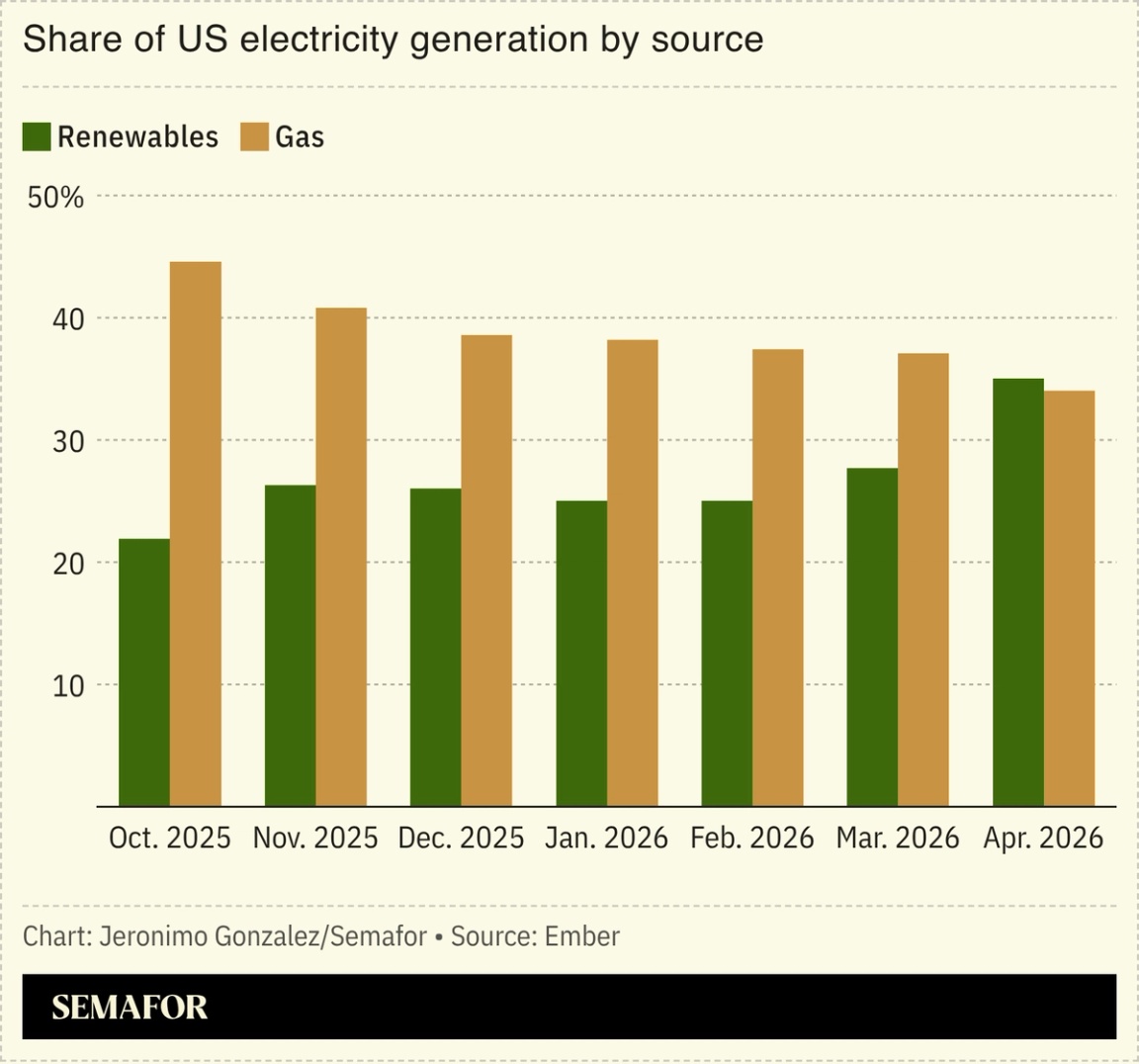 Despite its efforts to the contrary, the Trump administration is overseeing “a golden age of solar,” according to Tim Pawlenty, the Republican former governor of Minnesota and presidential primary contender, who is now the top US solar industry lobbyist. In his first interview since taking over as president and CEO of the Solar Energy Industries Association last week, he told Semafor the White House “has underappreciated solar’s role in how we’re going to solve these problems” of energy reliability and affordability at a time of booming power demand. Pawlenty said his priorities included pushing for a permitting reform bill to pass Congress this year and for sustained tax credit support for solar panel manufacturing in the US. He also needs to unite a fractious coalition that ranges from traditional environmentalists to MAGA influencers, and which is divided over issues including tax credits and trade relations with China. Yet despite the rollback of renewable energy tax credits and a federal government that routinely casts doubt on its efficacy, solar combined with batteries remains by far the fastest-growing energy source in the US, accounting for 91% of new power added to the grid in the first quarter of the year. |
|
| |  | Kelsey Warner |
| |
 AIQ CEO Dennis Jol at Semafor Gulf Live. Semafor. AIQ CEO Dennis Jol at Semafor Gulf Live. Semafor.Abu Dhabi-backed AI energy firm AIQ is looking to sell its products in the US, against the backdrop of the UAE’s $1.4 trillion investment commitment into the world’s largest oil producer. AIQ, a joint venture between state oil company ADNOC and Presight (itself a unit of AI firm G42), has spent six years building technology to improve safety and production at ADNOC and is now pitching the tools to oil and gas firms internationally, AIQ CEO Dennis Jol said at a Semafor event in Abu Dhabi last week. The firm has developed nearly 300 AI use cases at ADNOC, according to Jol, helping reduce downtime at drilling sites through predictive maintenance and increased productivity, and cutting some project timelines from weeks down to a matter of hours. “We’ve proven that we can do it here in the UAE. Now it’s time for us to export,” Jol said. |
|
Chevron’s data center play |
 Chevron agreed to a 20-year deal to sell power to Microsoft data centers using gas from the company’s fields in Texas. The next step is to build a 2.7-gigawatt power plant, which will receive financial backing from the investment firm Engine No. 1. The project is the highest-profile example yet of the converging interests of oil majors and tech companies, but also the challenges of the “bring your own power” strategy for data centers: Without a grid connection, the only way to ensure a stable power supply is to build more generation capacity than the project needs at any given moment. |
|
Green data center hurdles |
 David Gray/Reuters David Gray/ReutersChina’s push to power more of its AI data centers with clean energy is running into obstacles. A key goal of Beijing’s new mandate to boost domestic consumption of renewables is for clean energy to supply 80% of the power for its data center industry by 2030, a massive rise from 11% in 2023. Those ambitions are facing resistance from grid operators, who are wary of taking on additional risk and worry about electricity sales declining, Reuters reported. Another hurdle for renewables providers is trying to predict peak power demand for the facilities. China has found one novel solution: It launched the world’s first underwater data center that draws more heavily on green electricity than its terrestrial counterparts. Meanwhile, the US is importing more Chinese energy products to power its AI ambitions. China’s customs data showed strong gains in exports of green energy and battery products to the US last month, the South China Morning Post reported. |
|
 Wall Street fell in love with your life insurance. Should you be worried? Anant Bhalla had a front-row seat to Wall Street’s transformation of the life insurance industry. Now, he believes it has gone too far. On this week’s Compound Interest, presented by Amazon Business, the former CEO of American Equity joins Liz and Rohan to discuss the rise of “zombie” insurers, ratings shopping, and what comes next as life insurance has evolved into a multi-trillion-dollar investment engine. Listen to the latest Compound Interest now. |
|
 New EnergyFossil Fuels- The Trump administration pitched looser rules for oil and gas drilling on federal lands in an effort to make investments in the production of domestic fossil fuels easier.
- Iran is looking to attract some of Asia’s largest oil buyers while a 60-day US sanctions waiver is in place, helping the country clear a backlog of cargoes.
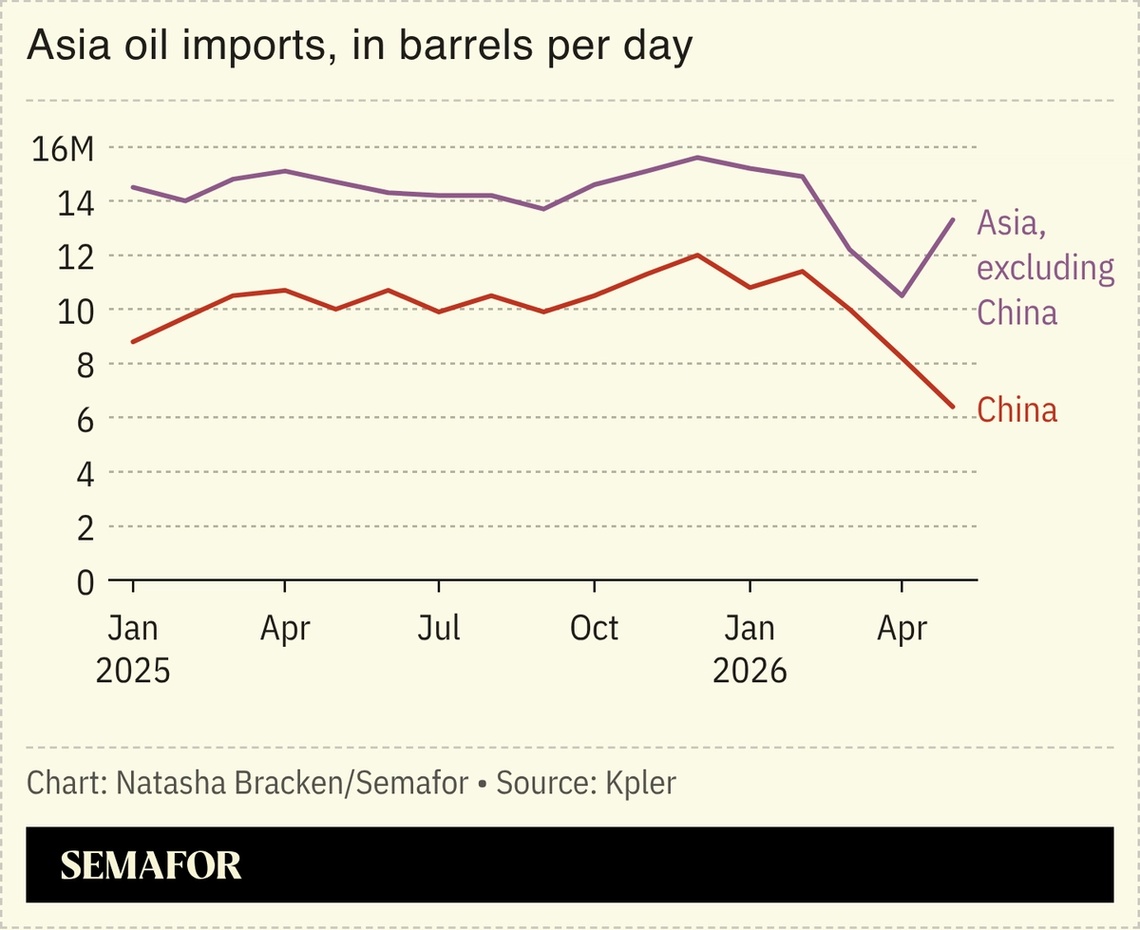
- While much of the world is staring at depleted oil and gas reserves, China’s stockpiles remain largely full, mostly because the country was importing more fossil fuels than it needed before the Iran war in an effort to improve self-reliance and its ability to weather supply disruptions.
 FinancePolitics & Policy- China announced new rules mandating increased use of renewables as it looks to move its focus from building new generation to making sure it gets consumed.
|
|
|


