| | In this edition: US lawmakers push for shift on Ebola response, Nigeria’s stock exchange CEO discuss͏ ͏ ͏ ͏ ͏ ͏ |
| |  | Africa |  |
| |
|
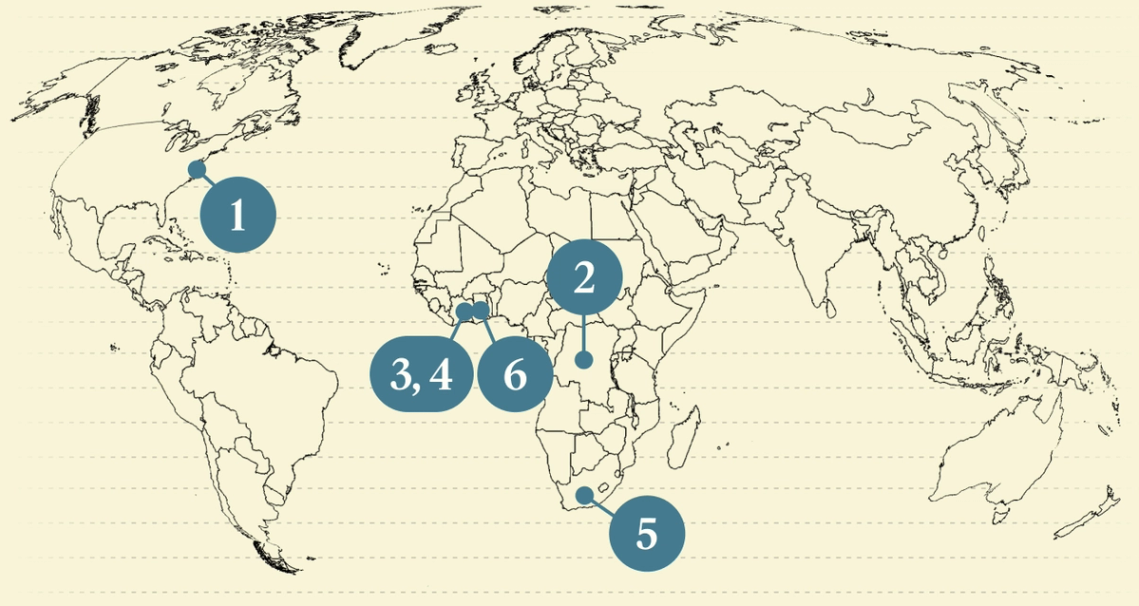 - Dems seek shift on WHO
- US to provide Ebola drug
- Dangote IPO excitement
- Nigeria plans police change
- S. Africa graft probe widens
- Weekend Reads
 The Congolese chefs raising the profile of their country’s cuisine. |
|
Democrats seek US shift on WHO |
| |  | Adrian Elimian |
| |
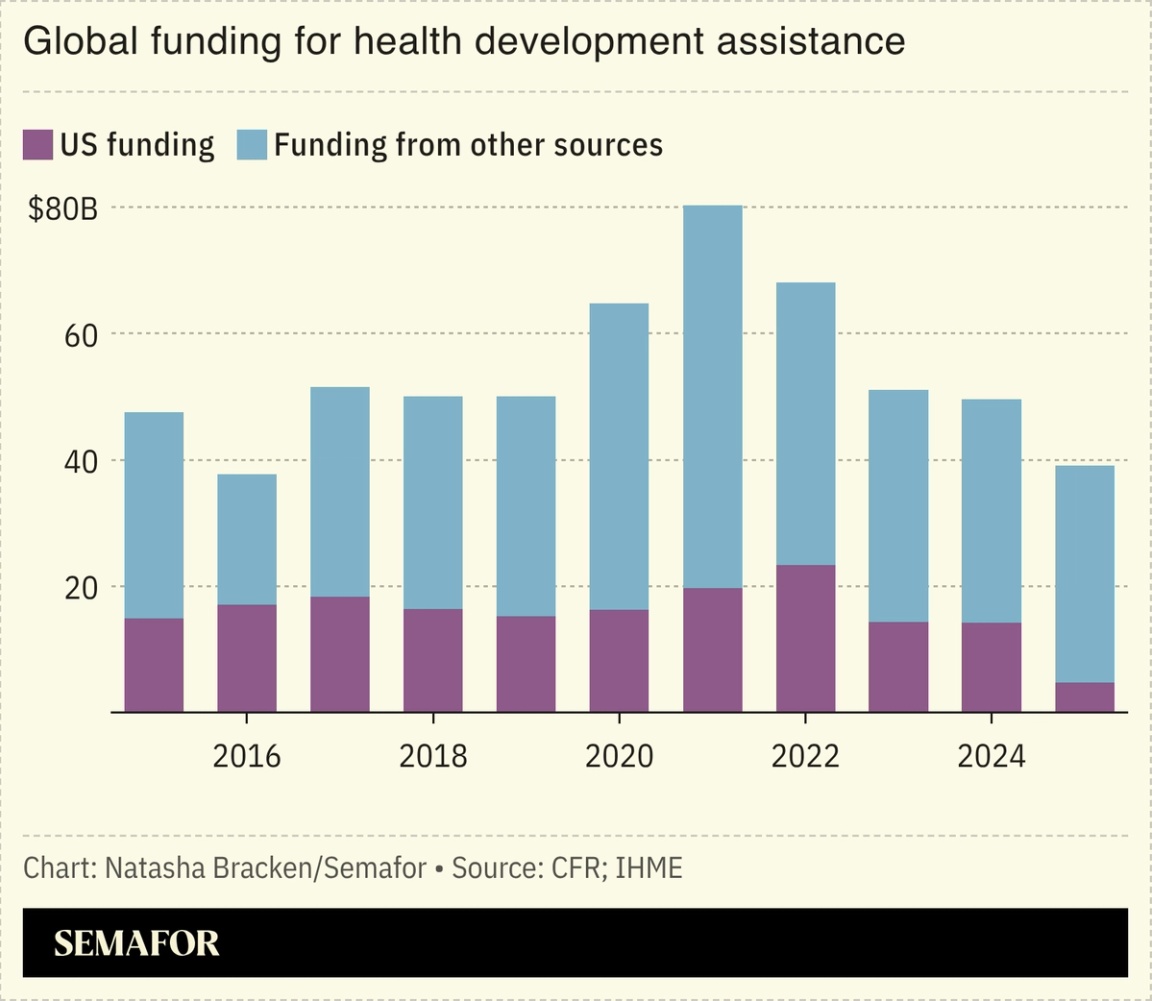 US Democratic senators are introducing legislation that would require President Donald Trump to rejoin the World Health Organization and immediately begin coordinating with the body on the ongoing Ebola outbreak in DR Congo and Uganda. The move points to efforts to force re-engagement with global health authorities after the shuttering of USAID and Washington withdrawing from the WHO this year. Sen. Jeanne Shaheen, who introduced the bill — details of which were shared first with Semafor — said aid cuts “exacerbated the crisis and left Americans more vulnerable.” The legislation is unlikely to advance in the Republican-controlled Senate. Its introduction follows the White House reportedly seeking more than $1.4 billion from Congress to help with the Ebola response, including to prevent it from spreading in the US. More than 1,000 cases have been reported in the outbreak. Experts fear that, without a strong global public health intervention, it could exceed the scale of the 2014-2016 West Africa epidemic that killed over 11,000 people. |
|
US to provide new Ebola drug |
 Baz Ratner/Reuters Baz Ratner/ReutersThe US will provide an experimental Ebola drug to DR Congo for a clinical trial in the region. Washington initially said the MBP134 drug cocktail from California’s Mapp Biopharmaceutical would only be used on Americans, but the trial could help with eventual US regulatory approval. The WHO also said trials for Remdesivir, used to treat COVID-19, would start next week for Ebola patients. Slowing the virus’ spread has been hampered by the fact that there is no known treatment or vaccine for the new Bundibugyo strain. Scientists are racing to develop four vaccines, two of which could be ready for clinical trials in two months, the head of a global vaccine coalition recently told Semafor. But disagreements over pathogen sharing have slowed lab testing to produce new treatments and vaccines, Bloomberg reported. |
|
Dangote IPO will be ‘landmark moment’ |
| |  | Alexander Onukwue |
| |
 Sodiq Adelakun/Reuters Sodiq Adelakun/ReutersDangote Refinery’s highly anticipated $4 billion listing on Nigeria’s main stock exchange, due by the end of the year, is expected to be a “landmark moment,” the bourse’s CEO told Semafor. The blockbuster IPO, which would potentially give the company a valuation of $40 billion, could help the exchange attract other large African companies by showing that Nigeria’s capital market can support “complex, globally significant transactions,” Temi Popoola said in an interview. The IPO would be the largest ever in Africa, roughly equalling the cumulative value of all new listings on Nigeria’s exchange in 2025, furthering efforts by policymakers across the continent to deepen capital markets by bringing more citizens into the financial system. |
|
Nigeria moves towards state policing |
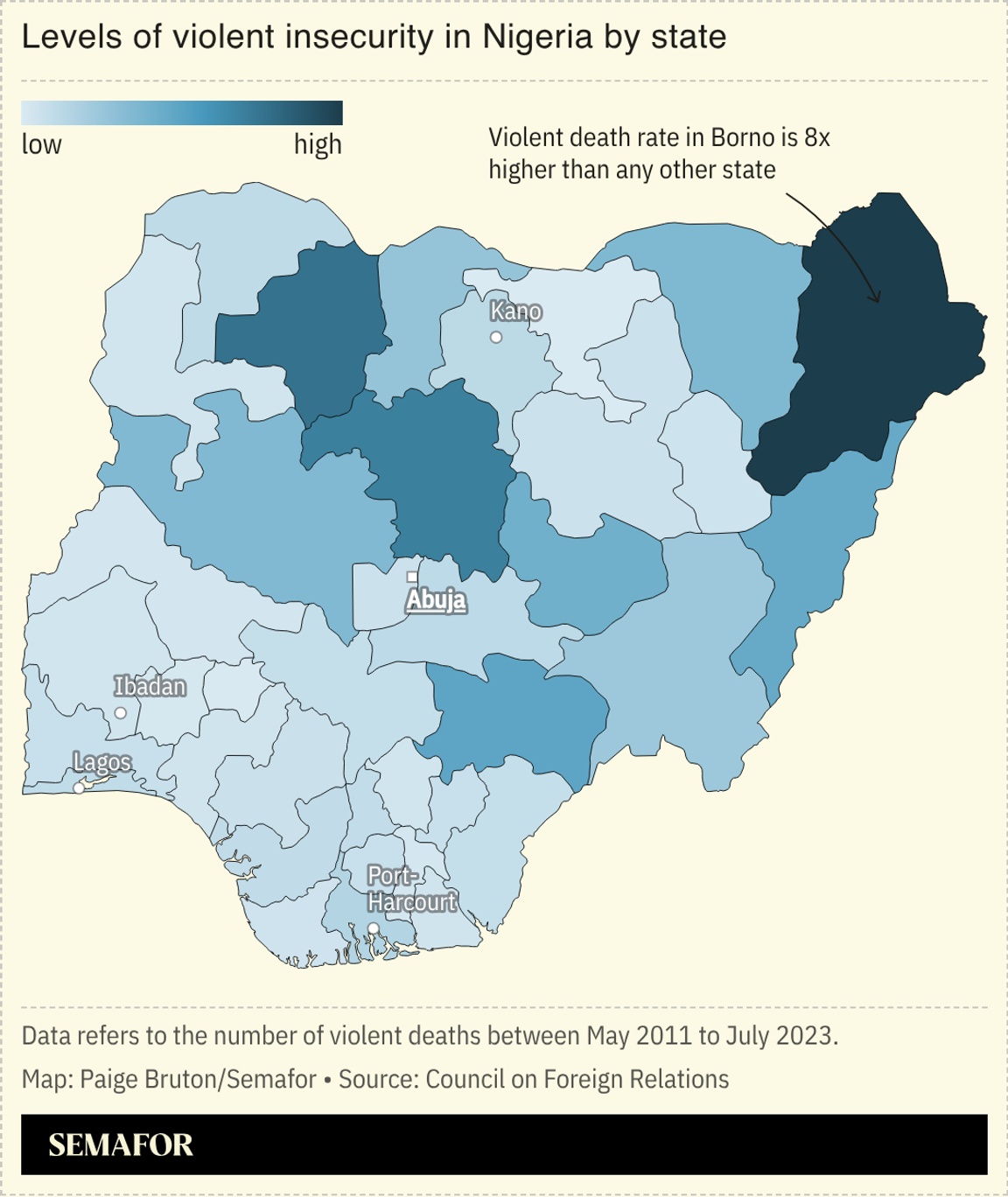 Nigeria’s Senate approved a constitutional amendment bill that will allow each state to create their own police forces, marking a new effort to tackle an endemic, decades-old security crisis. Waves of terrorist attacks, clashes between farmers and herders, as well as kidnappings for ransom have bedeviled Nigerian citizens in recent years, stifling economic growth and productivity in many parts of the country. More than 400 kidnappings have been recorded in Nigeria’s northwest region this year, according to conflict tracking platform ACLED. The approved bill will go to state assemblies and the president before becoming law. Calls for police forces run by each of the 36 states have grown louder over the years, with proponents arguing that a central police force in Abuja has proven inadequate in overseeing the country’s security needs. But critics warned that state governors could manipulate police under their control for political reasons. — Alexander Onukwue |
|
Plea deal widens S. Africa graft probe |
 Phill Magakoe/Pool via Reuters Phill Magakoe/Pool via ReutersA South African businessman pleaded guilty to corruption charges and offered to provide evidence against “high-ranking officials,” underscoring the breadth of a huge graft probe in the continent’s biggest economy. Vusimuzi Matlala entered the plea over a $12.5 million police healthcare tender-rigging case, admitting to bribing officials to secure a medical screening contract for which his company lacked adequate facilities. The deal has not yet been accepted by magistrates, but comes amid growing questions over law and order in South Africa: A national commission is investigating whether criminal syndicates have in effect taken over law enforcement, with a minister having been suspended and a top official facing criminal charges; at the same time, the country’s president is under pressure over an impeachment inquiry into the theft of undeclared cash at his property. A version of this item first appeared in Semafor’s twice-daily Flagship news briefing. Subscribe here. → |
|
|
 - Two new films use W.E.B. Du Bois’ final years in Ghana to explore whether Africa can still serve as a political, cultural, and spiritual anchor for the global Black diaspora, writes Bilal Qureshi in Bloomberg. W.E.B. Du Bois: Rebel With a Cause is a sweeping portrait of the scholar-activist’s life and ideas, arguing that his analysis of race, power, and democracy remains strikingly relevant today. The second film, BLKNWS: Terms & Conditions, dives into Du Bois’s Ghanaian chapter, using his self-imposed exile and Pan-African ambitions to examine the unfinished project of building Black futures across continents.
- A legal battle is putting Toyota’s role in Africa’s emerging electric mobility sector under scrutiny. The New York Times reports that Mobility for Africa, a Zimbabwean social enterprise that developed a three-wheeled electric vehicle and charging network for rural farmers, sued Toyota’s nonprofit mobility foundation, alleging it shared the organization’s proprietary technology and business model with a for-profit company operating in Kenya. The case highlights the growing commercial stakes in Africa’s EV market and raises broader questions about how local innovators can protect their intellectual property when partnering with global corporations.
- Fifty years after the Soweto uprising, apartheid’s linguistic legacy is still part of some South African universities. A new study of eight institutions found that African languages, spoken by almost 80% of the population, remain restricted by provincial boundaries, while English and Afrikaans are taught nationwide. Admission to African language programs still hinges on a student’s home language, mirroring apartheid-era ethnic classifications. The researchers argue that promoting African languages at a national rather than provincial level could break these silos, help foster genuine linguistic inclusion across the country, and preserve African language varieties.
- The Sahel’s armies are struggling against insurgent groups because they have failed to adapt to the changing nature of warfare, argues Georgetown University political scientist Ken Opalo in a new Substack essay. African governments should use defense spending to build domestic arms industries, research capacity, and technological innovation, rather than relying on imported solutions, he writes. Drawing lessons from Ukraine’s wartime experience, Opalo contends that integrating military strategy with industrial and technological development is essential to improving security.
|
|
 The insider guide to the energy transition’s new order. Penned by Climate and Energy Editor Tim McDonnell, Semafor Energy delivers sharp reporting and analysis on the policies, people, and power struggles driving the energy transition. As the world reshapes how it produces, distributes, and consumes energy, each edition helps readers understand how the energy transformation is defining the new world economy. Subscribe for free. |
|
 Business & Macro |
|
|


