| | In this edition, why Hollywood shouldn’t fear AI, and Qualcomm is in talks with phone manufacturers ͏ ͏ ͏ ͏ ͏ ͏ |
| |  | Technology |  |
| |
|
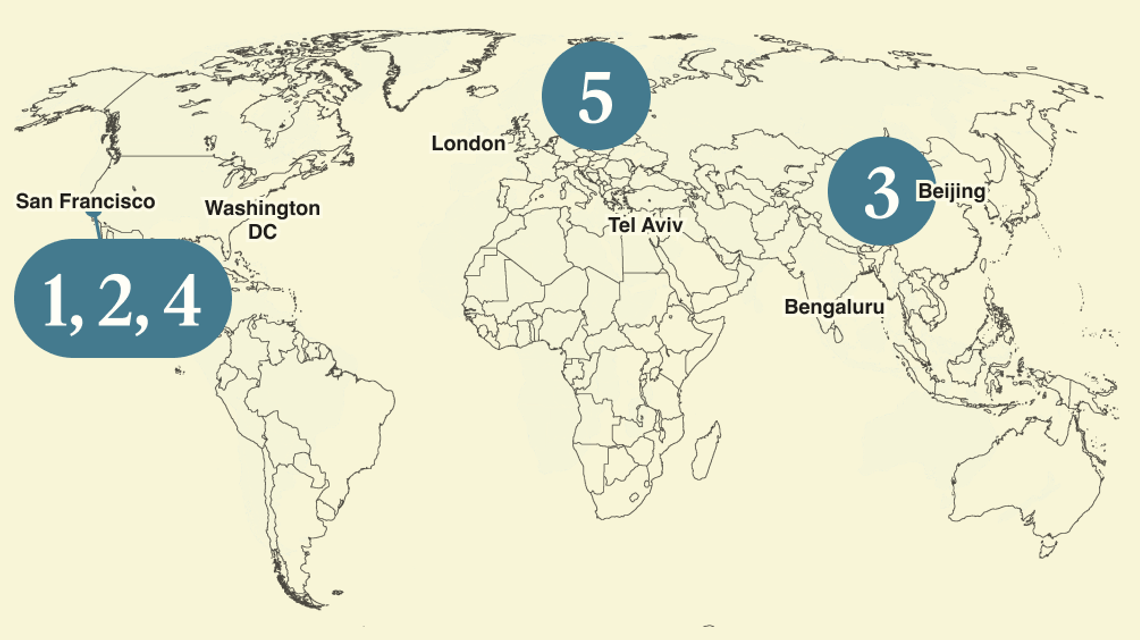 - OpenAI’s new chip
- Qualcomm’s data center tech
- Anthropic’s j’accuse
- The right jobs question
- AI lawyers for small biz
 The growing conversation about how AI impacts human creativity, and OpenAI unveils a new, “near-autonomous” chemistry tool. |
|
 Hollywood shouldn’t worry too much about generative AI — the transformer architecture that underpins AI models that can build images, videos, and songs from a single text prompt. While film executives may not like to say it out loud, AI is already being used to bring down costs and increase the speed of adding visual effects to movies. That means AI can help more artists make more movies, rather than seeing AI replace artists or the art. In the classic, computer-generated movies we’re used to, like the ones in the Marvel cinematic universe, there is a massive amount of labor and processing power spent on each scene and asset. Human actors perform in front of screens. The images and physics of the imagined world around them is added in later. With generative AI, the heavy lifting is done during the pre-training process. Once the model is built, it can be used to take a scene constructed by artists and tweak it, making the physics look realistic — not by modeling the physics, but by guessing at them based on absorbing an incredibly large dataset of real-world footage. This process is collapsing the filmmaking process into fewer steps, Amazon Web Services’ General Manager of Media and Entertainment Samira Bakhtiar said in an interview. Instead of waiting weeks to see how a digitally rendered scene looks, they can see the outcome in real time and make adjustments or reshoot it immediately. “It’s breaking down silos between the actor, the director, the producer, and then on the soundstage, they also have solution architects and data scientists that are working with them in real time,” she said. If a film uses these so-called “real-time hybrid” techniques to bring down costs, should it be categorized as an “AI-created” film? It seems more like a faster, better generation of the CGI viewers know and love. But if a film uses AI-generated actors, extras, even artwork and costumes, it makes sense for the film industry to encourage transparency, letting the audience, critics, and awards judges know. Based on my conversations at the Cannes Lions International Festival of Creativity this week, the best creatives in the business will end up using transformer architecture in some way. In the highest-quality implementations, human artists will develop the look, feel, and sound of film and video — whether it’s a Super Bowl ad or a feature film. And, with a crisis of ballooning budgets in the film industry, this change couldn’t come at a better time. |
|
OpenAI pulls ahead on custom chips |
 Sam Altman and Broadcom President and CEO Hock Tan. Courtesy of OpenAI. Sam Altman and Broadcom President and CEO Hock Tan. Courtesy of OpenAI.Since the ChatGPT moment nearly four years ago, the AI race has been viewed by many as a contest of model performance. Say what you will about OpenAI co-founder and CEO Sam Altman, but he saw from the very beginning that compute infrastructure would become an important battlefront, and his company is getting ahead in a key element that can make models do more, faster and more cheaply. His long-term strategy was evident earlier this week when OpenAI unveiled its custom inference chip: Jalapeño. Today, AI tools are capped by a supply-demand mismatch that limits their performance. By designing a custom chip, OpenAI can bring down the cost of serving its models to consumers. AI companies can design chips to work particularly well with their specific models, which improves performance per watt. Eventually, the optimization phase of the AI revolution will be critical to building a good business around AI. While OpenAI might be a little bit behind rival Anthropic on coding performance, it’s ahead on the infrastructure side, having gobbled up more compute than Anthropic, which is now partnered with SpaceX for compute resources. It’s clear, after this week’s announcement, that OpenAI also has a head start on the custom chip front. — Reed Albergotti |
|
Qualcomm plans new chip architecture in phones |
 Qualcomm CEO Cristiano Amon. Lexi Critchett/Getty Images for Semafor. Qualcomm CEO Cristiano Amon. Lexi Critchett/Getty Images for Semafor.Qualcomm, the chipmaker supplying smartphones and wearable devices, said it plans to use the new chip technology it created for data centers in smartphones — ultimately allowing AI to run better on mobile devices, said Executive Vice President Durga Malladi in an interview. When Qualcomm announced its data-center chips this week, it launched itself into the highly competitive data-center chip industry currently burdened by shortages. But, “what starts in data centers is not going to end there,” said Malladi. The company is in discussions with manufacturers of smartphones, personal computers, and cars about an aspect of its new data-center technology portfolio, Malladi told Semafor. Qualcomm’s High Bandwidth Compute architecture places memory and compute closer together by stacking chips vertically rather than placing them side by side, improving the speed and flow of data. The first generation of the new architecture is slated to launch in data centers next year, with the new chips becoming commercially available in 2028. Malladi didn’t disclose when Qualcomm will input its new technology into other devices. The stacking idea isn’t new, but it has so far appeared mostly in data centers, rather than in smartphones. When it does reach handheld devices, it will allow users to run more AI models locally and operate agents in an “always on” fashion without draining the battery. Qualcomm, which lagged on data-center tech for several years, is uniquely positioned in the field due to its decades-long run with smartphone chips. — Rachyl Jones |
|
Chinese models may not be major threat |
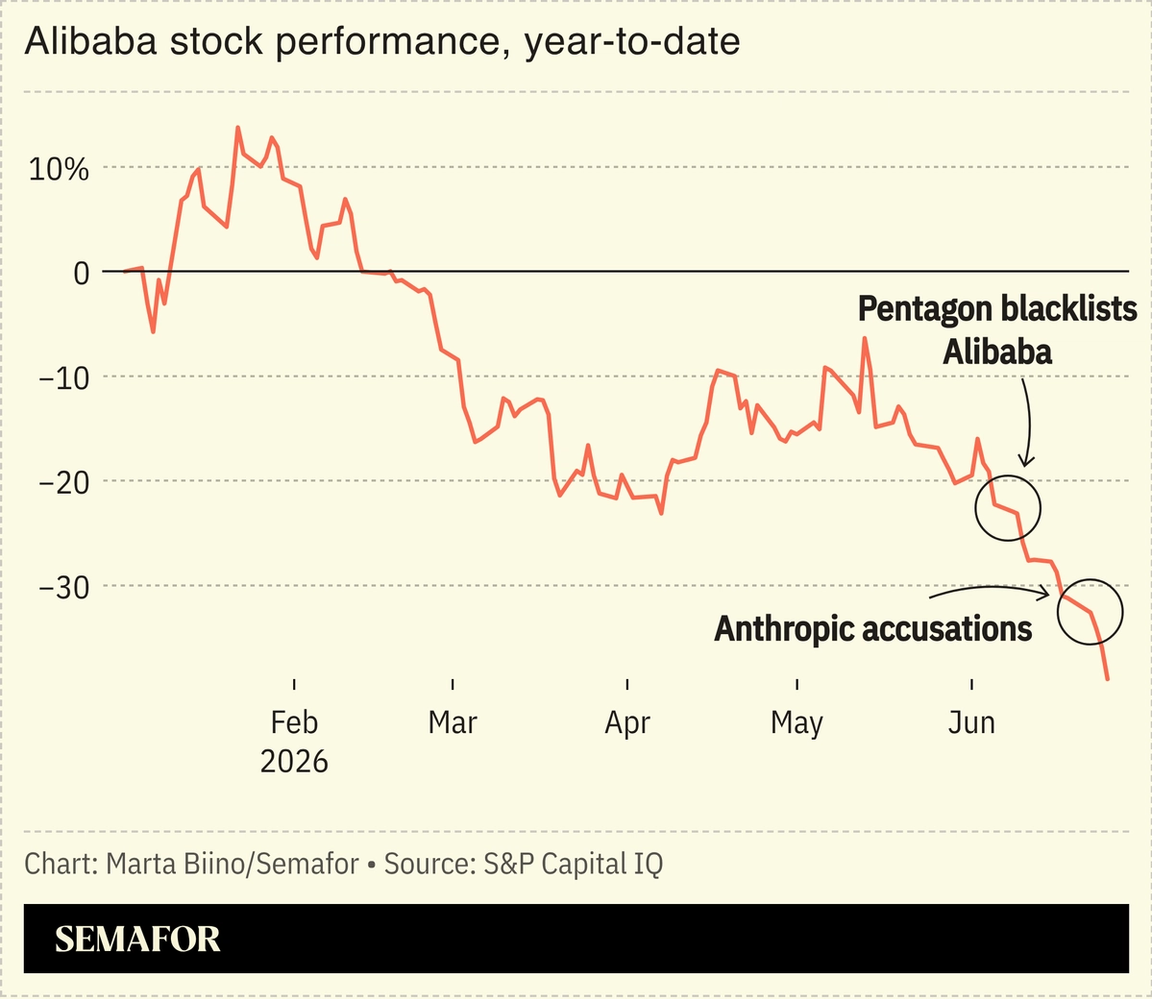 It’s not surprising that Anthropic is leveling an accusation at Alibaba for distilling its AI models. The practice is widespread, and not just in China. Elon Musk confirmed on the witness stand recently that xAI has distilled OpenAI models. Open Chinese models are free to use and extremely efficient compared to American frontier models from the big four: Google, OpenAI, Anthropic, and SpaceX. What’s unclear right now is whether they are as big a threat to the top AI companies as the US government (and now Anthropic) are making them out to be. Microsoft AI CEO Mustafa Suleyman told me recently that distilled models (which use a larger model to create synthetic data for training a smaller, more efficient one) are fundamentally weaker than ones trained from scratch. Models that were created using distillation might be good for purely cost-saving purposes, but not for the most complex tasks. A small, distilled model might be useful, for instance, if a company is rolling out a product to hundreds of millions of users. But the real revenue is in the most complex tasks that require the highest performance. (Today, the biggest use case in this category is creating software.) So it’s unclear whether the cheaper, open-weight models made by Chinese companies are a real business threat in the long run. — Reed Albergotti |
|
 Daniel Cole/Reuters Daniel Cole/ReutersFrom launching Call Her Daddy in 2018 to becoming one of the most successful podcasters in the world, Alex Cooper has built a highly influential media brand — and now she’s expanding into the creative agency space. On this week’s episode of Mixed Signals, Unwell co-founder Alex Cooper joins Max and Ben live from Cannes Lions to talk about growing her media business beyond podcasting, how her creative agency ended up going toe-to-toe with Call Her Daddy in revenue, and why she’s more interested in the marketing than most talent in her field. Plus, what she’s learned from her interview with Michelle Obama. |
|
OpenAI economist on AI and jobs |
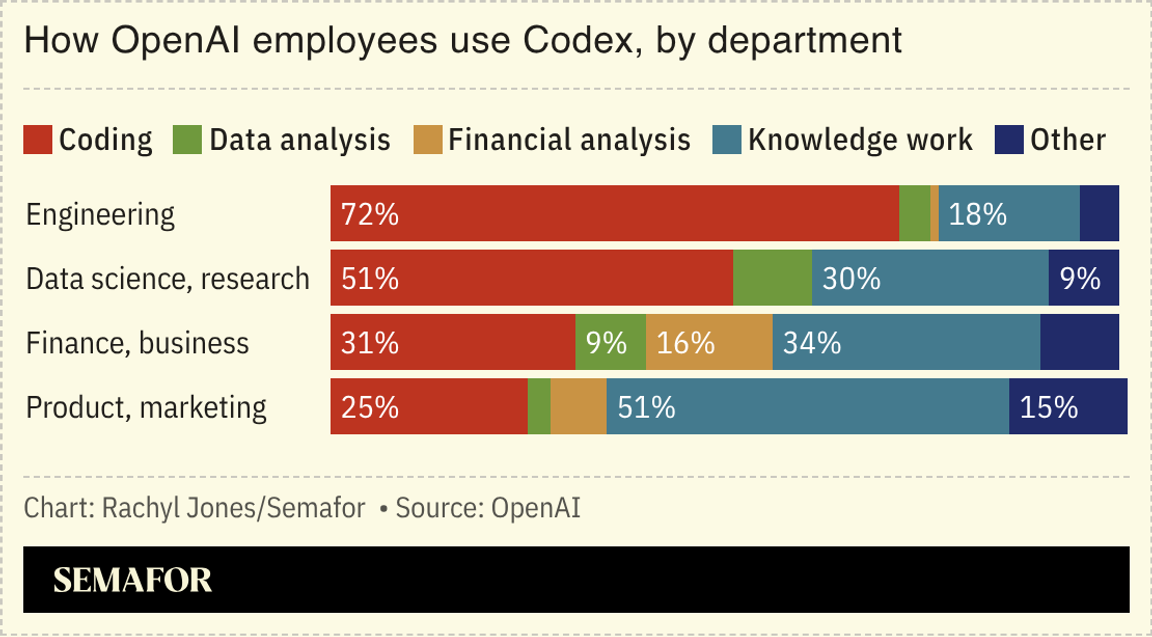 “Will AI replace me?” is the wrong question to ask. Instead, workers would be smart to ask: How will the prevalence of AI change the demand for my field? For years, there has been disagreement among tech companies, economists, regulators, and the general public about what AI will do to jobs. In a conversation with OpenAI’s Chief Economist Ronnie Chatterji, I realized they’re largely saying the same thing — and just talking past each other. In law, if legal services are more accessible and cheaper, perhaps that means people want more of them and the profession will grow. If those conditions don’t make the demand for legal services grow, the number of lawyers will decrease. “For some workers it’ll be a complement, and for other workers, it’ll create new opportunities in the industry that don’t exist,” he said. “Other times, there will be reallocation across sectors.” Technologists promising AI will complement work and employees fearing being replaced by it aren’t at odds — they’re asking different questions. — Rachyl Jones |
|
Legal help for startups, without the lawyer |
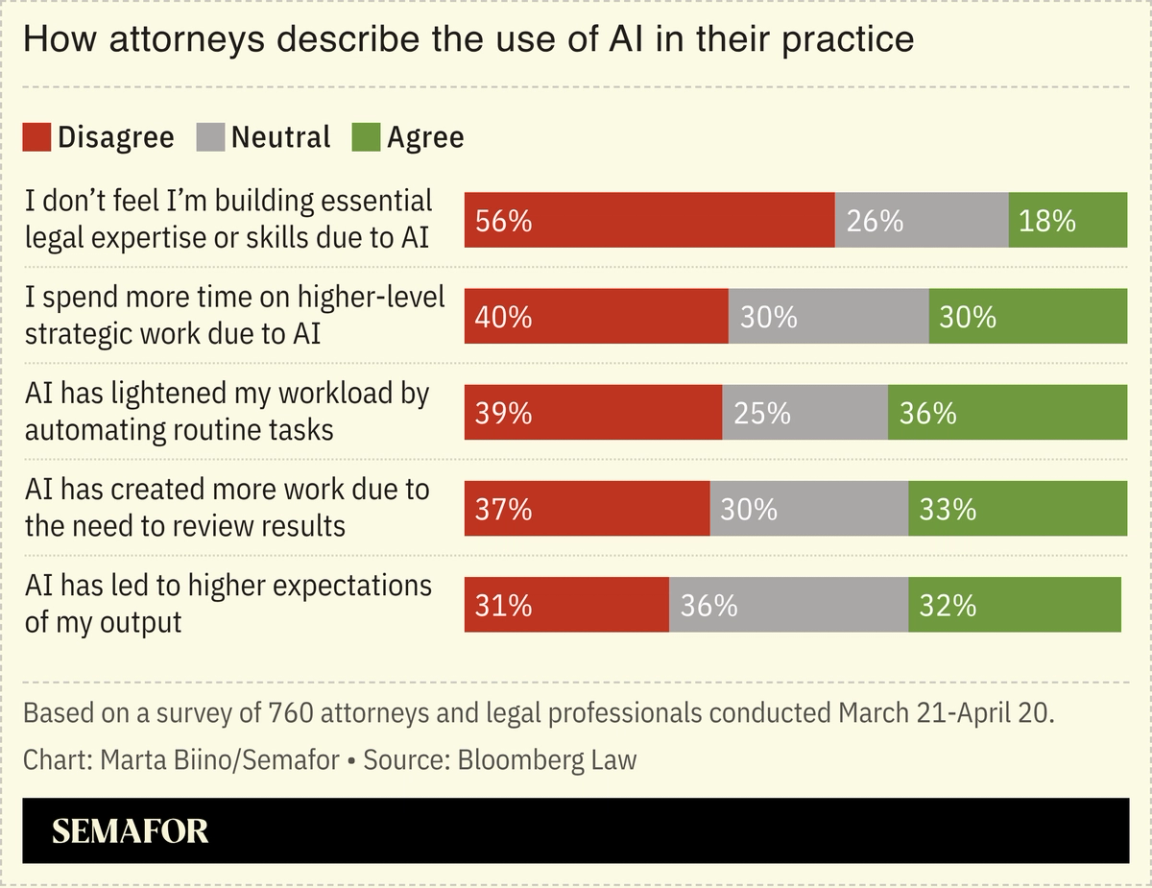 Speaking of AI expanding access to legal services, Palo Alto-based law firm Cooley built a platform that intends to help startups make legal decisions without a lawyer. Users can ask it to analyze nondisclosure and contractor agreements, locate proper business forms, and ask legal questions about company documents. Built with legal AI startup Legora and trained on Cooley’s data, the platform will roll out to the summer batch of Y Combinator startups first. Cooley says the product serves as an extension of legal aid to a group of smaller businesses that wouldn’t typically seek counsel at their stage, rather than replacing the work of its 1,400 lawyers on staff. Meta, Snap, and other tech companies ran into legal disputes over decisions made in their early years, including Legora’s own CEO Max Junestrand, a software engineer, who wrote early contracts with ChatGPT and left the company open to huge potential damages, Business Insider reported. Whether the platform can help startups dodge their next big lawsuit remains to be seen. But it suggests legal services are becoming a standard for anyone with access to AI, forcing lawyers to rethink who their customers are and what they will pay for. — Rachyl Jones |
|
 Join the 1% who won’t sleep on the future. Mindstream is the human-first AI newsletter that prioritizes clarity over complexity and progress over perfection — so you can make smarter moves, lead calmer conversations, and keep your team a step ahead, today. Subscribe for free today. |
|
 Paul Hackett/Files/Reuters Paul Hackett/Files/ReutersOpenAI unveiled a “near-autonomous” chemistry AI tool, capable of selecting research topics, designing and running experiments, and interpreting results. In a test, an agent was asked to find an existing chemistry problem it could solve, and chose to improve a vital but temperamental reaction commonly used in drug chemistry. It then proposed a fix, and tested the idea, boosting yields by about 50%, according to results released by OpenAI and Polish chemistry startup Molecule.one. It’s a modest but real advance, making it harder still to deny that AI can be “creative”: It generated and tested a new hypothesis, and AI is increasingly capable in several fields, from biology to math. But it also raises risks. While OpenAI chose a benign target, the same workflow could streamline the generation of new toxins or chemical weapons. |
|
|


