| | US stocks wrap up a historic quarter, the global oil market braces for a glut, and an Indonesian tec͏ ͏ ͏ ͏ ͏ ͏ |
| |  | Flagship |  |
| |
|
The World Today | 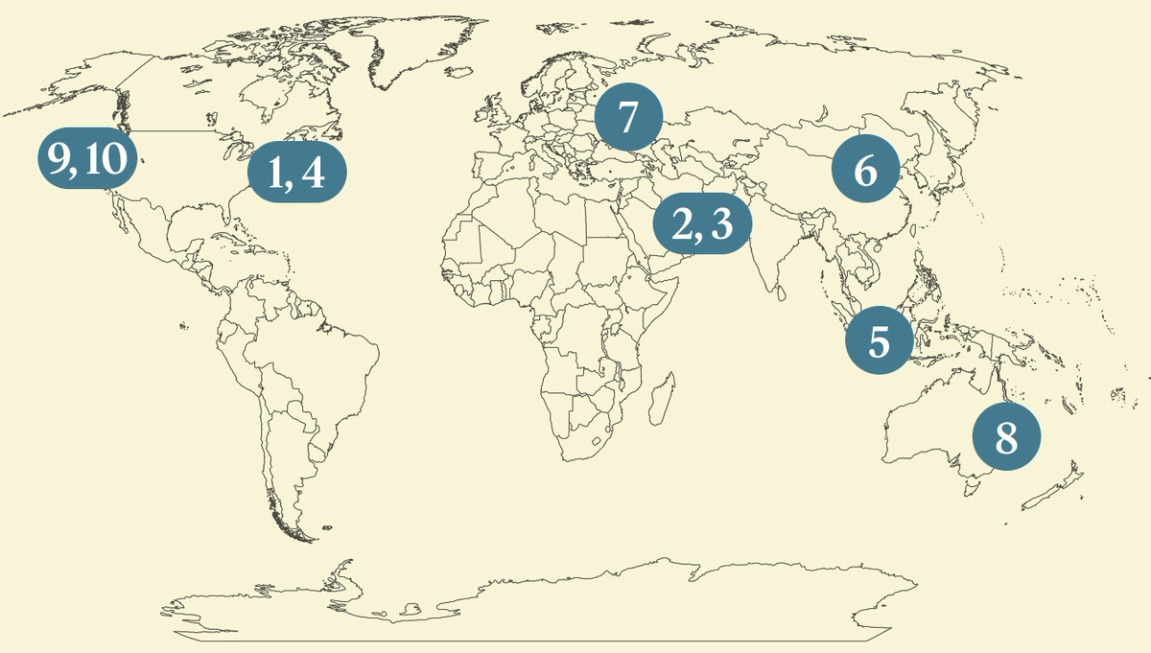 - Wall Street’s historic quarter
- Market awash with oil
- Indirect US-Iran talks
- Trump’s SCOTUS loss
- Indonesia graft verdict
- US-China climate race
- Studying Russian weapons
- Skirting social media bans
- Why AI won’t steal jobs
- Your weight in AI
 A dystopian rave novel. |
|
US stocks wrap up historic quarter |
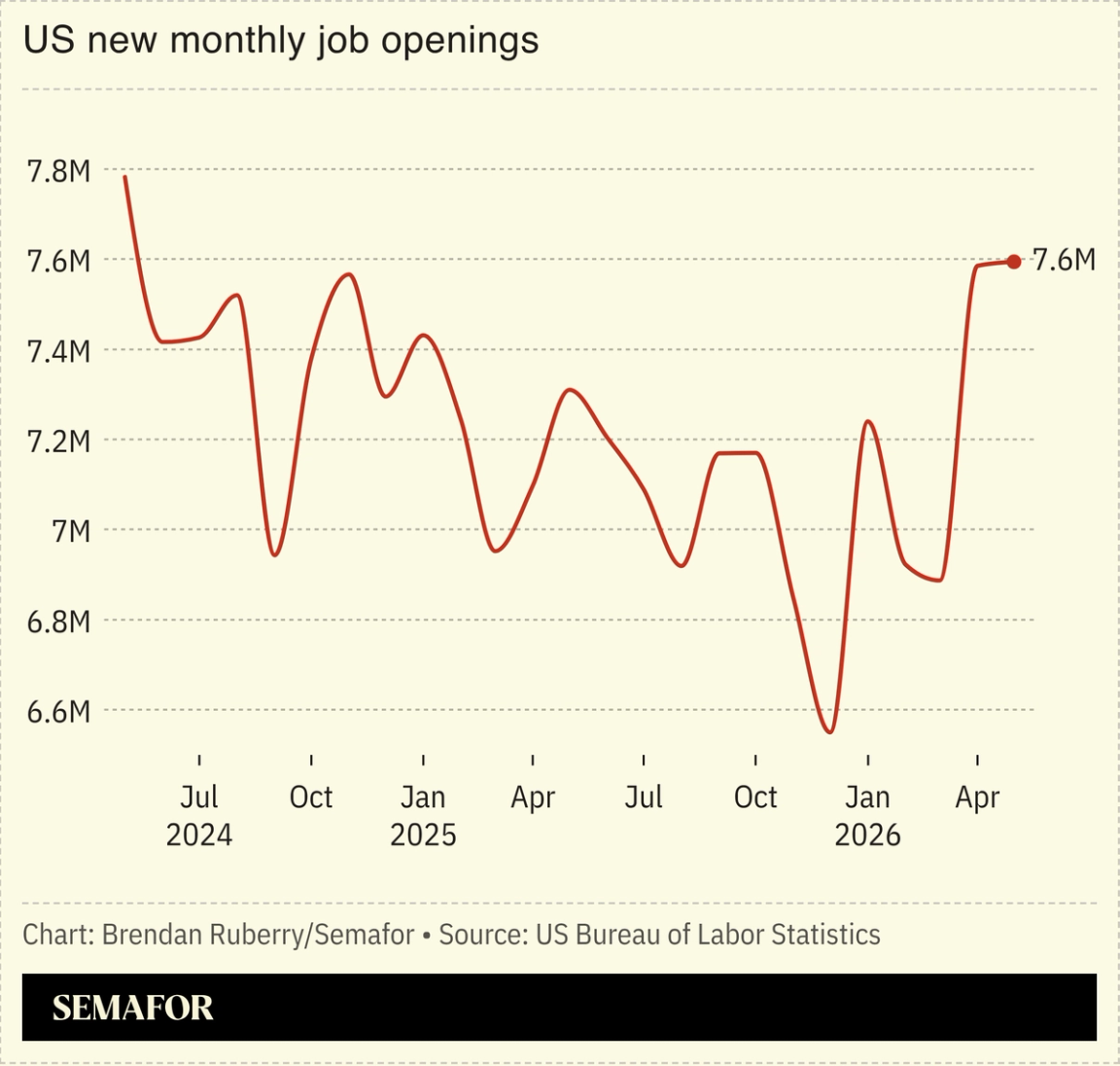
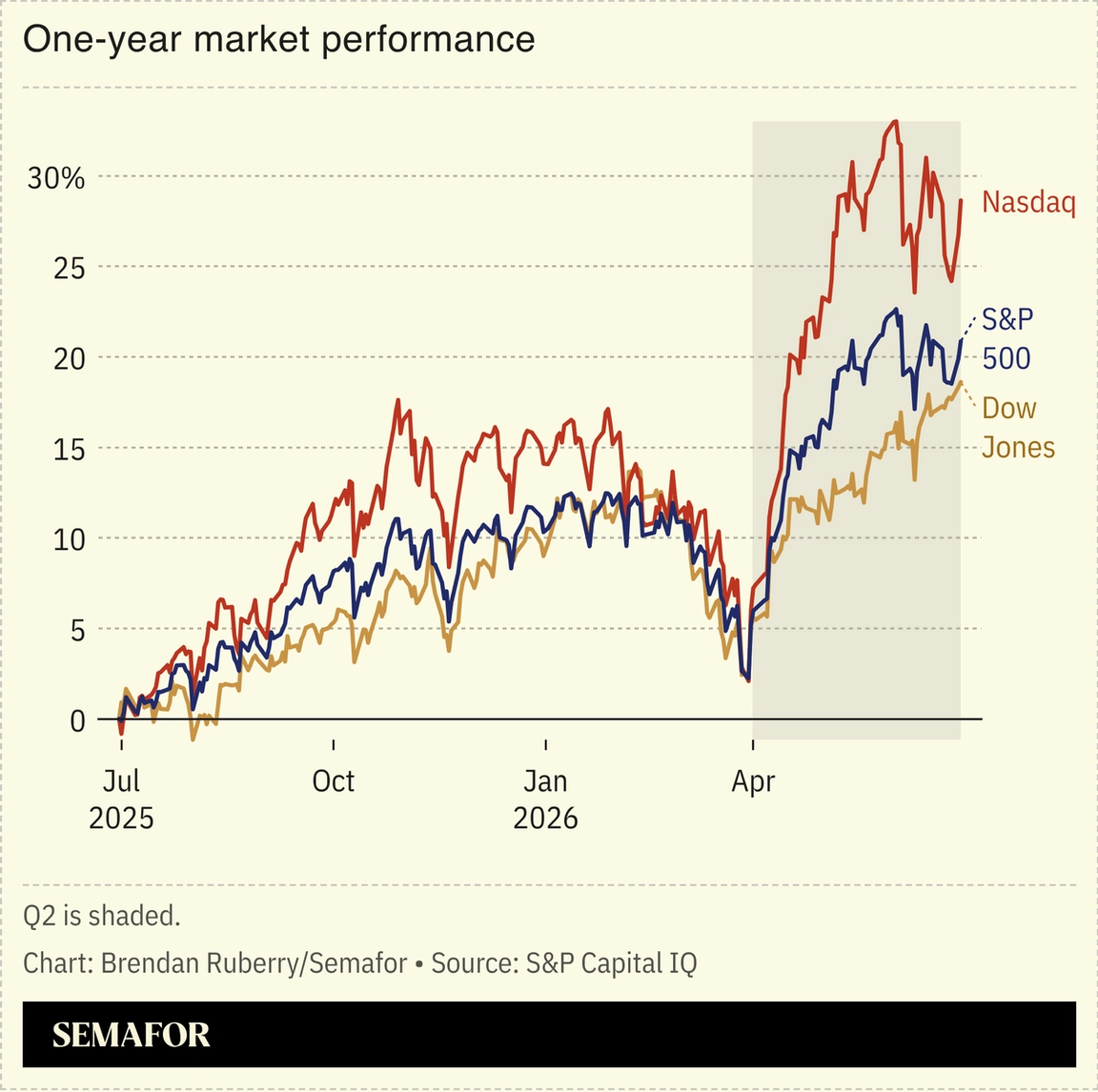 US stock indexes on Tuesday closed out their best quarter since 2020, as strong corporate fundamentals outweighed lingering geopolitical risk. “The lesson of the first half of 2026 is that earnings matter more than just about anything, except for maybe interest rates,” an investor said. Chip stocks in particular soared thanks to a global memory shortage stemming from the AI boom. “The markets have proven to be the ultimate grinder,” one strategist noted, pointing to the rally having endured “deep selloffs, the Iran war and a number of other outside influences.” Upbeat US economic indicators also drove Tuesday’s gains, as consumer confidence rose and job openings ticked up in a sign of a stable labor market. |
|
Oil market suddenly braces for glut |
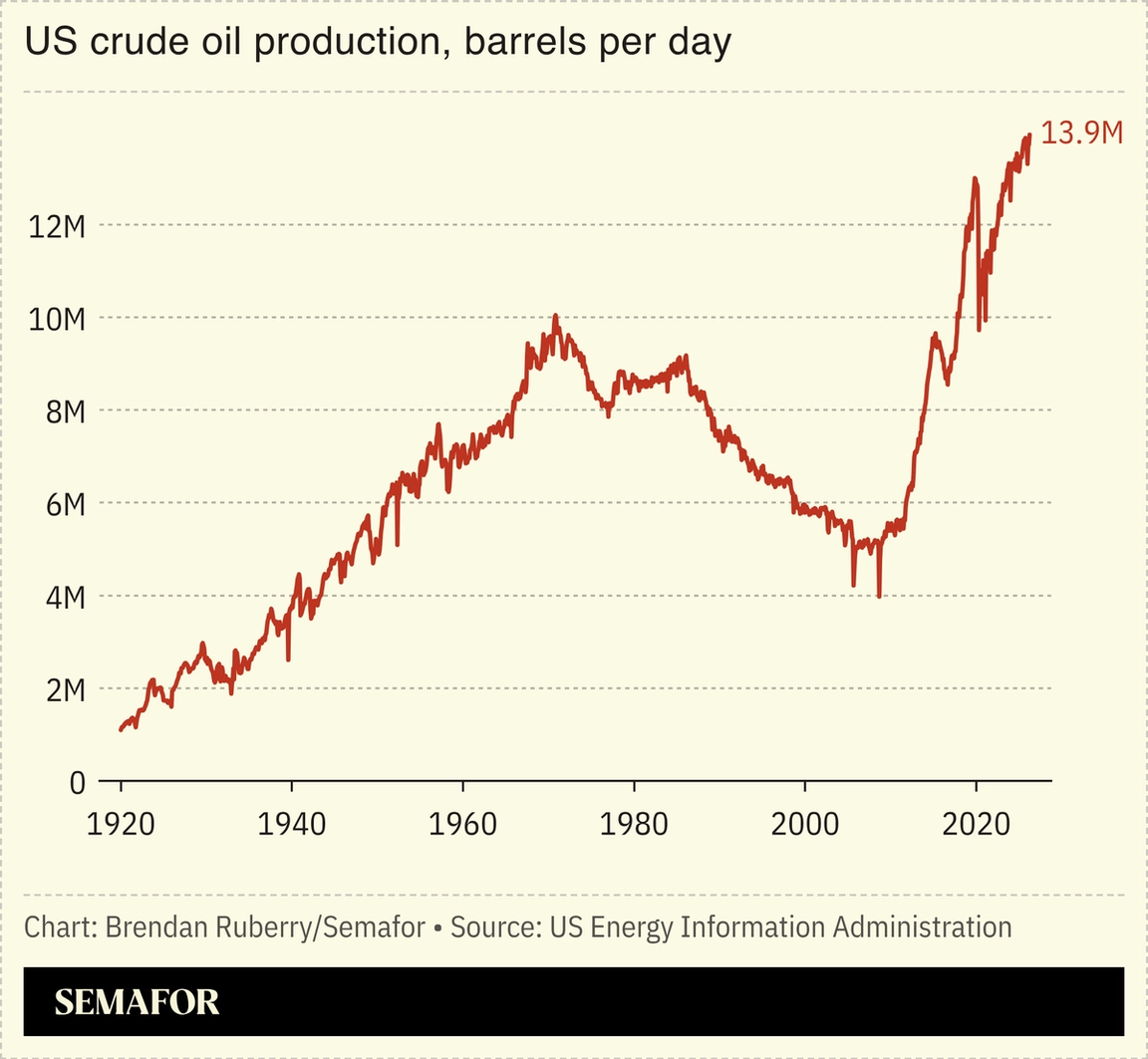 The oil market is coming full circle as millions of barrels that were stranded in the Gulf head to global markets, creating a sudden oversupply that has pushed prices to their lowest level since the US-Iran war began. Last Thursday, the number of tankers going through the Strait of Hormuz neared the typical pre-war average, Morgan Stanley analysts said. With record US oil production and exports and low Chinese imports, price estimates are being pared across the board. Goldman Sachs and Morgan Stanley lowered their Brent crude forecasts, with the latter saying: “Strip away the narrative for a moment and read only the prices. They describe a market that has weakened across the board.” |
|
US, Iran to hold indirect talks |
 Kim Soo-hyeon/Reuters Kim Soo-hyeon/ReutersUS officials arrived in Qatar for talks on the Iran war, but will meet with mediators, not Iranian negotiators. The lack of direct talks further complicates efforts to find a lasting end to the conflict and fully reopen the Strait of Hormuz. Iran is determined to assert control over the strait — Oman reportedly proposed a joint plan with Tehran to charge fees — but “every inch of the 24-mile-wide waterway is being contested in a test of wills and patience,” The Guardian wrote. Within Iran, too, priorities are diverging: Hardline military officials are pushing for full control of Hormuz, while civilian leaders like President Masoud Pezeshkian are aiming to get access to billions in frozen assets, The Wall Street Journal reported. |
|
Trump’s wins, losses at Supreme Court |
 Cheney Orr/Reuters Cheney Orr/ReutersThe US Supreme Court on Tuesday ruled against President Donald Trump’s attempt to end automatic birthright citizenship, preserving over a century of legal precedent and dealing a setback to a key White House priority. The decision, which blocked an executive order that Trump signed on the first day of his second term, marked the court’s second major blow to a cornerstone of Trump’s policy agenda, after striking down most of his sweeping tariffs earlier this year. But the justices have handed the president some wins: The court on Tuesday sided with Republicans in loosening limits on coordinated campaign contributions between candidates and political parties, and upheld state bans on transgender athletes in girls’ and women’s school sports teams. |
|
Indonesian tech tycoon sentenced |
 Ajeng Dinar Ulfiana/Reuters Ajeng Dinar Ulfiana/ReutersAn Indonesian court on Tuesday sentenced a tech tycoon to 10 years in prison in a closely watched graft case. Nadiem Makarim, co-founder of ride-hailing and payments platform Gojek, was convicted on charges that he engaged in a quid pro quo when he purchased more than a million Google Chromebooks for the country’s schools during his tenure as Indonesia’s education minister six years ago. Google denied the allegations. The verdict could further shake investor confidence in the country, as some view the case as a political prosecution. Makarim pointed to an “unprecedented wave” of criminal cases against technocrats, while one researcher said his trial could “become a real example that those unwilling to cooperate with those in power may be targeted.” |
|
How climate affects US-China competition |
 Maxim Shemetov/Reuters Maxim Shemetov/ReutersExtreme weather — and mitigation against it — will shape the future of competition between the US and China, two experts wrote in Foreign Affairs. The world’s two largest carbon emitters are at greater risk of climate change-fueled disaster that “threatens the physical foundations” of their power, including critical infrastructure, supply chains, and growth drivers like data centers. Climate adaptation is therefore central to the superpowers’ economic prospects, the scholars argued, and China appears to have an advantage through its investments in climate resilience and global dominance in clean energy: The country in 2025 delivered another record year for both solar and wind — more than the rest of the world combined, a new report found. |
|
Studying seized Russian weapons |
 TrophyLab TrophyLabUkraine will make captured Russian military ordnance available for study to allied governments. Thousands of Russian drones and hundreds of missiles explode over Ukraine every month, while vehicles and weapons are seized on the battlefield. The TrophyLab website currently lists 115 samples of seized Russian equipment, including a Kinzhal hypersonic missile and a T-90M tank, accessible to national defense ministries, approved companies, and research institutes. Ukraine has been quick to capitalize its battlefield experience for diplomatic and economic gain, Defense News noted: Kyiv has shared frontline drone footage to train AI systems and has helped support French and German defense startups, while selling its cutting-edge drone systems to friendly nations. Ukraine on Tuesday continued its barrage of large-scale drone strikes against Russia. |
|
 Bradley Tusk built a career fixing Silicon Valley’s toughest political problems for companies like Uber and FanDuel. But there’s one problem he believes can’t be fixed. On this week’s Compound Interest, presented by Amazon Business, venture capitalist Bradley Tusk joins Liz and Rohan to discuss AI’s Darth Vader-Luke Skywalker divide, the local element that big labs still haven’t figured out, and why he’s parting ways with venture capital altogether. |
|
Australia toughens social media ban |
 Hollie Adams/Reuters Hollie Adams/ReutersAustralia doubled the maximum penalty imposed on social media companies that fail to comply with the ban on under-16 users, as evidence grew that children are circumventing restrictions. Canberra introduced its first-in-the-world legislation in December, blocking all children from all major platforms. Since then, dozens of other countries have begun moving toward, or implementing, similar plans. Teens, however, have found inventive ways around the laws, whether by drawing on a mustache to fool age-verification scans or using VPNs. A study followed 400 children before and after the ban was introduced, and found relatively little change in social media use rates. The authors concluded that the ban was “unlikely” to have its intended positive effects on teen mental health. |
|
Why AI won’t wipe out jobs |
 An AI jobs apocalypse won’t materialize because generative AI systems simply can’t think like humans, and never will, a prominent sociology scholar argued. The fears around the tech stealing jobs stem from a fundamental misunderstanding of how AI models work, Zeynep Tufekci wrote in The New York Times: They are not “reasoning machines,” but “plausibility engines” that can predict which answer is most probable based on the data they’re trained on. This lack of logic is why several companies have rolled back customer-facing chatbots that erred in disastrous ways. While AI could, and is, impacting some jobs with predictable and formal structures, like coding, an “overwhelming number of jobs… need the specialized technology of good old-fashioned human intelligence.” |
|
|


