| | In today’s edition: Oman proposes a Hormuz fee, Kuwait’s Zain invests in Syria telecoms, and a $55 m͏ ͏ ͏ ͏ ͏ ͏ |
| |  | Gulf |  |
| |
|
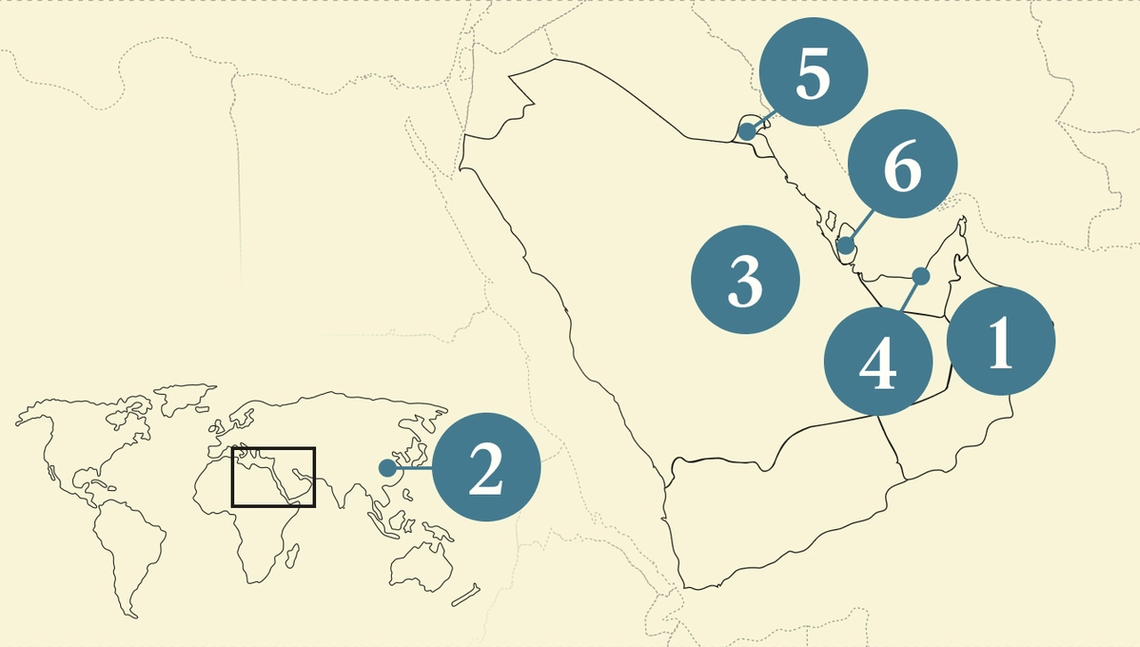 - Hormuz fees gain traction
- Saudi’s balancing act
- Consultants bullish on Saudi
- Record UAE oil exports
- Zain backs Syrian telecom
- Qatar reworks labor laws
 Someone bought a $55 million penthouse in Dubai. |
|
Oman touts ‘voluntary’ Hormuz fees |
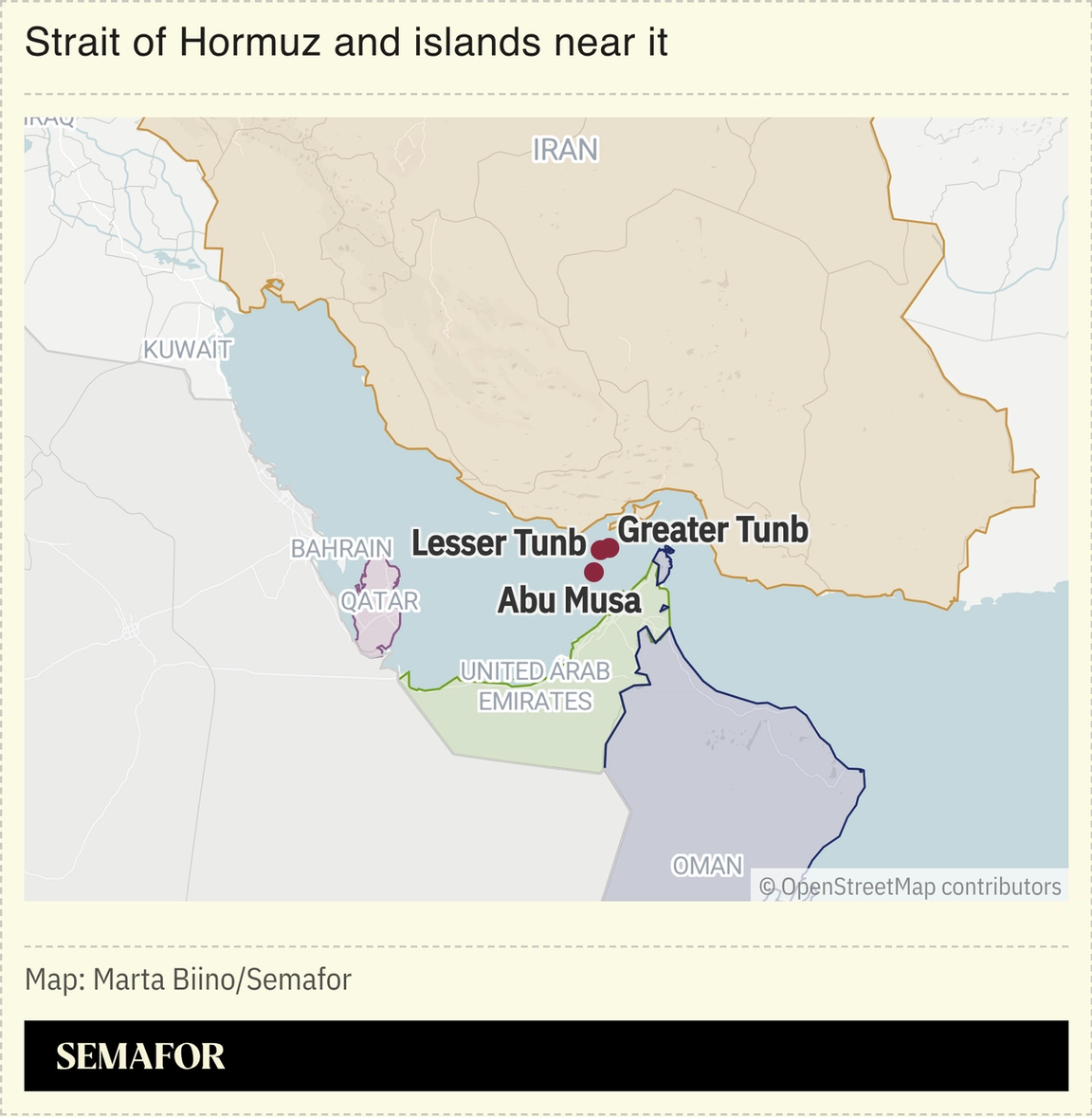 Oman proposed establishing a system with Iran to charge ships for navigation and safety services in the Strait of Hormuz, and presented the plan to the US, The New York Times reported. Modeled on voluntary funding arrangements in the straits of Malacca and Singapore, the fees could become one of the lasting legacies of the US-Iran war — with Gulf states likely to bear much of the cost. Tehran has repeatedly insisted it will retain a role in managing traffic through the waterway. Gulf states are united in opposing changes to the status of Hormuz, as are major global powers such as China and the US. Even Oman has said charging ships simply to transit the waterway would be illegal, but its foreign minister has drawn a distinction between mandatory tolls and voluntary service fees — a difference that may seem academic to shipping companies operating within range of Iran’s missiles. Meanwhile, US-Iran negotiations in Doha, conducted through mediators, were said to be progressing on Tuesday. US President Donald Trump signaled he was willing to extend talks rather than resume strikes, according to The Wall Street Journal. |
|
Saudi, China to strengthen ties |
 Faisal bin Farhan and Chinese Vice President Han Zheng. Courtesy of Saudi Press Agency. Faisal bin Farhan and Chinese Vice President Han Zheng. Courtesy of Saudi Press Agency.Saudi Foreign Minister Faisal bin Farhan is in Beijing this week. While the visit may be routine diplomacy, it comes against the backdrop of tensions between Riyadh and Washington over the Iran war. The readouts were characteristically sparse, saying the two sides “exchanged views on issues of mutual interest,” but did highlight the need for de-escalation and freedom of navigation in the Strait of Hormuz. The trip coincided with a Wall Street Journal report that the US is considering reducing its military footprint in the kingdom, after Riyadh declined to support an American operation against Iran. But any suggestion that Saudi Arabia is pivoting from Washington to Beijing is overstated: However strained ties with the US become, Riyadh has reasons to be skeptical of China, which failed to deter Iran from attacking the kingdom despite brokering a rapprochement between Tehran and the kingdom in 2023. Chinese technology and intelligence have also reportedly supported Iran’s drone and missile strikes on the Gulf. — Mohammed Sergie |
|
US consultant fights for share in Saudi |
 Bernd von Jutrczenka/picture alliance via Getty Bernd von Jutrczenka/picture alliance via GettyConsultancy firm Alvarez & Marsal aims to expand its Middle East business fivefold over the next few years, betting it can steal market share from rivals even as demand for advisory services shrinks. The firm, famous for leading both the Lehman Brothers and FTX bankruptcies, is on track to double its Gulf revenue this year despite weaker spending on consultants in the key market of Saudi Arabia, A&M’s Middle East head Colie Spink said in an interview. Riyadh ordered government entities to freeze payments to strategy advisers, management consultants, and law firms, Semafor reported in May. The government denied it was delaying payments. A&M expects growth to come from advising the kingdom on investment projects, mergers and acquisitions, and tourism and hospitality developments. Spink said the firm was also seeing rising demand for consultancy tied to localizing military manufacturing, which has acquired a new urgency in the wake of the Iran war. — Matthew Martin |
|
Abu Dhabi oil exports hit a high |
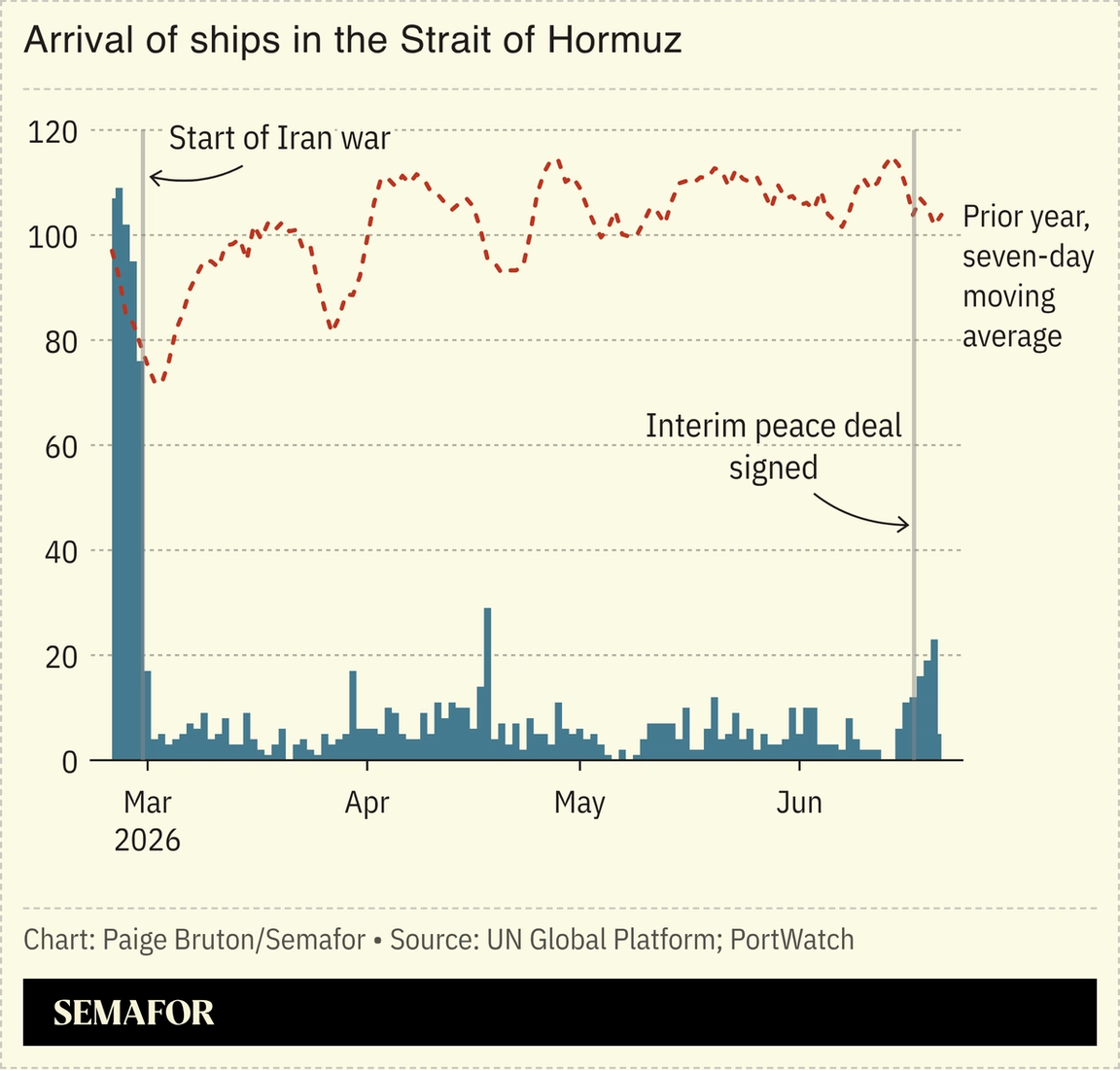 The UAE’s oil exports hit a record high in June, as the country took advantage of its exit from OPEC and skirted Iranian threats in the Strait of Hormuz. UAE exports averaged 3.7 million barrels a day during the month, according to industry data cited by Reuters — significantly above the 3.3 million seen earlier this year, or its previous 3.5-million-barrel OPEC quota. Abu Dhabi has sent tankers through the strait with their transponders turned off to evade Iranian surveillance, and used a pipeline to Fujairah that bypasses the chokepoint. Overall Gulf crude exports remain subdued though: Loadings rose to 7 million barrels a day in June, less than half prewar levels. |
|
Kuwait’s Zain lands Syria mobile license |
 Kuwaiti telecom Zain Group plans to invest more than $1.5 billion over the next decade to upgrade and operate a mobile network in Syria, the latest in a series of Gulf investments since the fall of the Assad regime. The company will acquire a 75% stake in the existing MTN network, with the Syrian government holding the remaining 25%; Zain said it will spend $800 million to modernize a service that ranks among the world’s worst in terms of speed and reliability. The deal adds to growing Gulf spending in Syria, as governments and companies jockey for a role in the country’s reconstruction. Emirati, Qatari, and Saudi firms have announced projects spanning aviation, banking, energy, ports, and real estate. |
|
Doha reviews workers’ rights |
 Saleh Salem/Reuters Saleh Salem/ReutersQatar overhauled its labor laws, adding for the first time provisions that allow for part-time and freelance work to be regulated, and others that make it harder to launch strikes. In changes the government said were aimed at “reinforcing the balance between the rights of workers and employers,” the maximum length of non-compete clauses has been doubled to two years. Larger companies will also have to set up joint committees of management and staff, and face enhanced oversight to ensure they pay wages on time. While strikes are technically legal in Qatar, the new regulations mean disgruntled employees face challenging hurdles to launch one: Among other things, they can only last six days, are unpaid, and employers can hire temporary replacement workers. Anyone who agitates for a strike for illegitimate reasons can be fired without notice. — Dominic Dudley |
|
 Checking In- Emirates is revamping its airport lounges, planning to invest at least 50 million dirhams ($13.6 million) in each one. The carrier operates 34 lounges outside Dubai; the first refurbished locations are in Munich and Frankfurt, with Istanbul, Manchester, and Mauritius expected to be completed this year.
Deals- Oman and France agreed billions of dollars’ worth of deals during a trip to Paris by Sultan Haitham Bin Tariq Al-Said, including a big water contract for French utility Suez, as well as deals for solar power plants and rocket launches from Oman’s Etlaq Spaceport. — Muscat Daily
- MGX raised $49 billion for an AI fund, which was larger than its $45 billion target. The new vehicle will deploy capital on top of the roughly $10 billion per year that MGX has already allocated to the technology. — Bloomberg
Power- Saudi Arabia and Egypt pushed back the commercial launch of a 3-gigawatt power interconnection between the two countries to the end of the year. The project was tendered in 2018 and originally scheduled to begin trial operations in April 2025.
Sports- Pouring billions of dollars into soccer players and sports infrastructure hasn’t guaranteed success for Qatar and Saudi Arabia at the World Cup, with both teams returning home after finishing bottom of their groups. — AP
|
|
 Bugatti Residences in Dubai. Courtesy of Binghatti Holding. Bugatti Residences in Dubai. Courtesy of Binghatti Holding.Dubai’s luxury real estate is still attracting wealthy foreign buyers. Developer Binghatti said it sold a penthouse at its Bugatti-branded tower in June for 200 million dirhams ($54.5 million), and another for 70 million dirhams. The deals follow the project’s record-breaking 550 million dirham penthouse sale late last year. While Dubai’s broader property market has softened during the war after years of rapid gains, branded residences — which feature amenities like artificial beaches, concierge services, luxury spas, and private car lifts — appear immune thanks to those seeking trophy homes. |
|
|


