| | In this edition, Europe’s lag in AI stems from fear, and Anthropic’s most advanced models get the gr͏ ͏ ͏ ͏ ͏ ͏ |
| |  | Technology |  |
| |
|
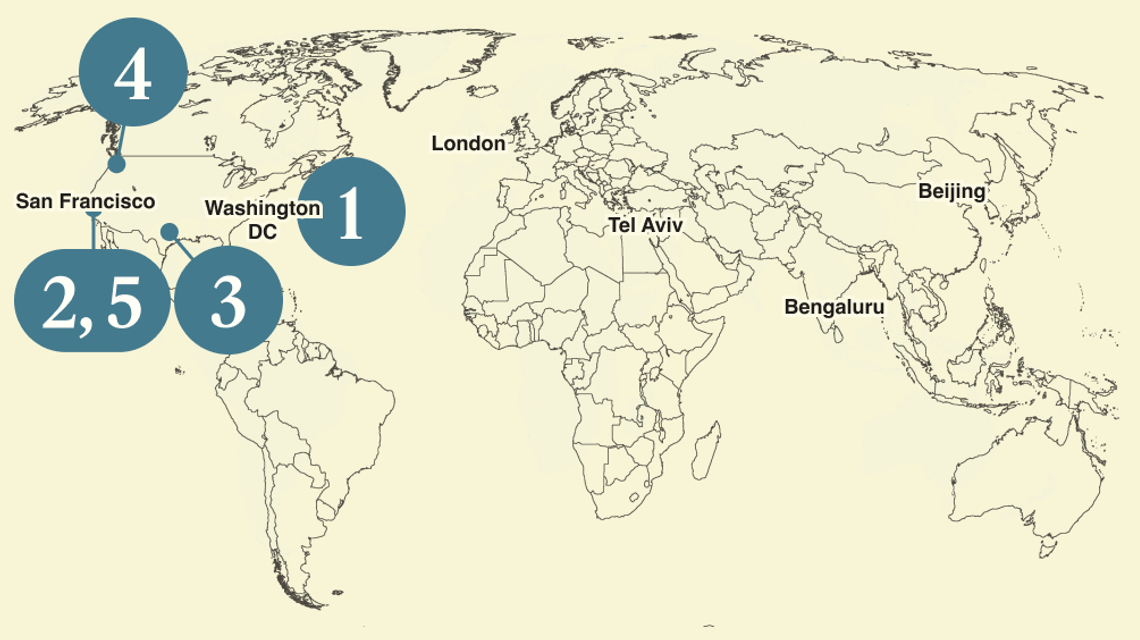 - Anthropic models resurrected
- Meta in the cloud
- SpaceX for kids
- Amazon’s rising carbon footprint
- Politicians’ AI conundrum
 Europe should build AI — and fear it, too. And there’s a new playground for humanoid robots. |
|
 There are apocalyptic scenarios, and there are apocalyptic scenarios. Right now, Europe has just one AI firm, Mistral, anywhere near the frontier — and only a fraction of the 25 gigawatts of AI compute that the US has. If Europe doesn’t change course, it risks becoming an economic backwater, asset-stripped and descending into anarchy, according to Europe 2031, a research project I recently worked on with a group of tech policy thinkers and investors. It was inspired by AI Futures Project’s AI 2027 report, which warned of AI destroying humanity by the early 2030s. As a pro-European, I found the whole experience pretty alarming. My fellow writers think Europe’s collapse would be a disaster, but they also think that there are far worse outcomes on the table, up to and including human extinction. (The US government, for its part, seems intent on pushing Anthropic, OpenAI, and other companies to win the global AI race, despite some political hiccups along the way.) Some Europeans think that AI leaders are deploying catastrophic risks as a way to market their products: Our products are so powerful they could destroy the world, imagine what they could do for your B2B sales! But I think that undersells the powerful, and in many ways still untested, technology. As I wrote in my first book, back in 2019 — long before AI was a multibillion-dollar industry with products to sell — many of the most senior AI figures were already worried about the technology’s real-world implications. But that didn’t stop them from forging ahead. When people like Dario Amodei talk about “existential danger,” they mean it, just as they mean it when they say that a positive AI outcome could mean an end to climate change, poverty, and disease. Who is right? I don’t know. But I do know that 100 years ago, it would have been wise to listen to the group of physicists who thought splitting the atom could lead to a devastating new weapon, rather than blindly trusting the ones who thought it was “merest moonshine.” If some of tech’s smartest minds are warning that the new technology they are creating comes with terrible risks, we should at least consider it a live possibility, even if it sounds like science fiction or hype. But that shouldn’t derail Europe from trying to develop a safe and secure AI industry of its own. |
|
Anthropic makes nice with US government |
 An example of usage of Fable 5. Claude/YouTube. An example of usage of Fable 5. Claude/YouTube.Following Commerce Secretary Howard Lutnick’s announcement that the US lifted its export ban on Anthropic’s most advanced models late Tuesday, the AI company’s co-founder Tom Brown wrote back minutes later: “Thanks for your partnership on this, Secretary!” The conciliatory tone was a radical pivot from Anthropic’s previous defiance of the US government: At one point, CEO Dario Amodei had suggested that the Defense Department first check in with the company before using its tools to thwart missiles. Up until now, Anthropic has taken the “path of most resistance,” Semafor’s Reed Albergotti wrote last month. But last week, the US government lifted its block on Anthropic’s powerful Claude Mythos 5 AI model, Semafor scooped, and the decision to unblock foreign nationals from using Mythos and Fable means Anthropic can now bring those models back online. The company is pledging to deepen its testing, information-sharing, and research collaboration with the US government, including giving it “expanded early access to both the models and the safeguards that accompany them” and dedicated Anthropic staff to “work alongside government evaluators,” the company outlined in a blog post. |
|
Meta cashes in on its excesses |
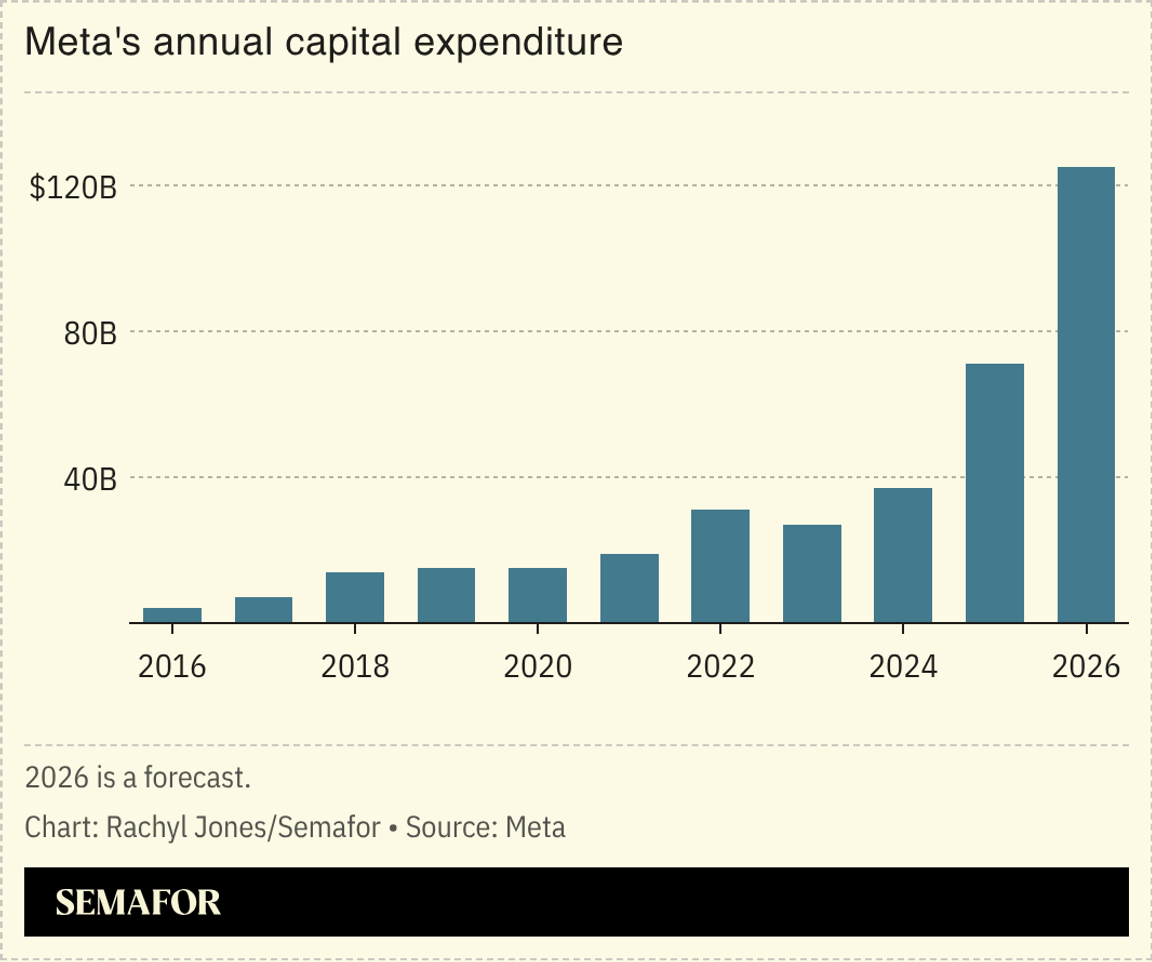 It turns out that while companies are trying to be the biggest and the fastest in AI, selling the leftovers is where a lot of the money is. Meta is building a cloud computing business and plans to sell excess compute to its competitors, Bloomberg reported Wednesday. The move is a signal that Meta doesn’t have enough usage of its own AI models, even as it spent gobs of (often borrowed) money on building data centers. The company’s shares jumped by more than 10% as investors cheered the promise that Meta might be able to recoup some of the $600 billion it’s pledged to spend by 2028. Meta’s compute business is also the latest manifestation of the circular economy in the AI race, like SpaceX’s recent decision to rent out data center space to Anthropic. With Meta’s models falling behind, becoming a cloud provider keeps it relevant in AI and buys it time to develop its own technology. — Rachyl Jones |
|
SpaceX, White House discuss stake |
 Elon Musk during a trip to China in May. Evan Vucci/Reuters. Elon Musk during a trip to China in May. Evan Vucci/Reuters.The Trump administration has spoken with SpaceX about donating stock to the children’s savings accounts known as Trump Accounts ahead of the program’s launch, Semafor scooped. Any donation would cement the ongoing reconciliation between Elon Musk and President Donald Trump following the implosion of their relationship last year. The accounts, which are expected to go into effect as soon as next week, are a broadly popular effort to shore up retirement security and bring more Americans into the stock-market boom. The administration has also talked to Sam Altman of OpenAI, which is pursuing its own IPO, about a similar arrangement. |
|
 AI, explained like you have a life. Every Tuesday, Quartz AI & Tech delivers a deeply researched, accessible essay unpacking the trends, breakthroughs, and real-world impact shaping the future of AI. And by “future of AI,” we mean the future of what we all do. Start receiving the reports. |
|
Amazon’s carbon bump ‘not a one-year story’ |
 Kara Hurst at a Semafor event in January 2026. Firebird Films/Semafor. Kara Hurst at a Semafor event in January 2026. Firebird Films/Semafor.Amazon’s carbon footprint is rising because of its data center buildout, and it will continue to do so for years to come, the company’s sustainability chief, Kara Hurst, told Semafor’s Tim McDonnell. The tech giant’s global greenhouse gas emissions increased in 2025 for the second consecutive year, from 69.5 million metric tons in 2024 to 80.8 million, according to its latest sustainability report, published Wednesday. Its operations also became more carbon-intensive for the first time since it started to track this metric in 2019 — increasing to 113 grams per dollar of revenue, from 109 in 2024. The increases are a setback in Amazon’s goal to be completely carbon neutral by 2040 — a target that is already the most aggressive of the company’s Big Tech peers. Amazon is tied with Meta as the world’s top corporate buyer of low-carbon power. But it is also leading the pack in data center construction and power procurement. Amazon declined to disclose the exact mix of its data center power generation sources, but across the tech industry the majority of data center operations are fueled by natural gas. “This isn’t going to be linear. It’s not going to be a one-year story,” said Hurst. |
|
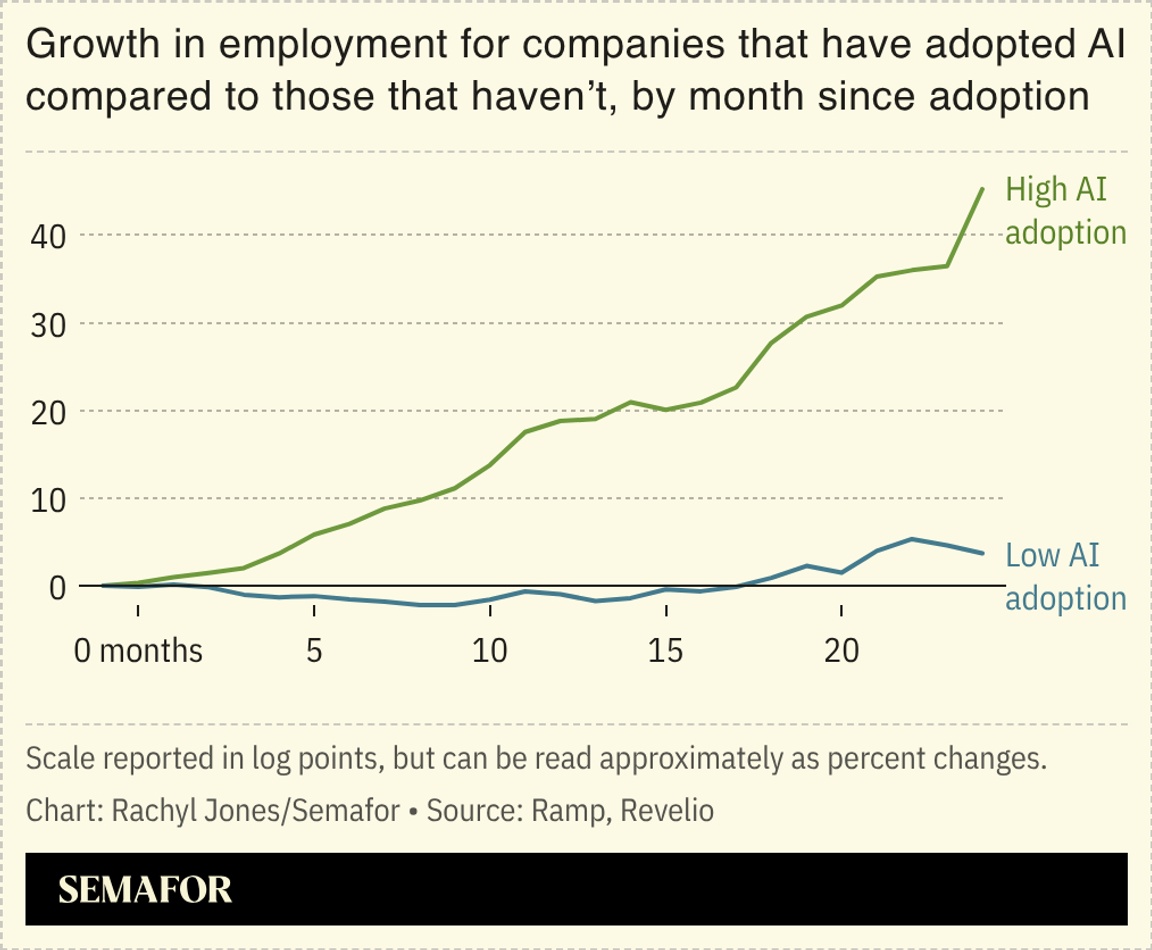 As California Governor Gavin Newsom inks a deal with Anthropic to expand the use of its chatbot Claude across state agencies, he’s also rolling out a plan to start tracking AI-related job losses. The dichotomy points to a political conundrum sweeping state capitols: As politicians attempt to rein in the power of the tech companies, they’re increasingly relying on AI products. (Newsom has the added complexity of trying not to alienate the US’ most powerful companies — and donors — as he prepares for a 2028 presidential run.) Measuring the number of AI-related job cuts has been difficult — and contradictory. New research by fintech Ramp and workforce tracking company Revelio, which measured AI spending against headcount changes, found that companies heavily adopting AI have increased hiring. Meanwhile, California’s new dashboard, which focuses on unemployment insurance claims, found no broad evidence of rising statewide unemployment resulting from AI. But the state did find rising unemployment claims among workers whose jobs are highly exposed to AI — like those in tech. So even if the warnings of sky-high job-related losses haven’t manifested yet, the fear among voters is a very real thing for politicians like Newsom. — Rachyl Jones |
|
 The Apptronik Robot Park. Courtesy of Apptronik. The Apptronik Robot Park. Courtesy of Apptronik.Humanoid-maker Apptronik has opened Robot Park, a factory in Austin, Texas, where its robots will practice real-world tasks across a warehouse the size of two football fields. The testing facility — one of the largest built — will help Apptronik amass much-needed real-world data to train its robots. “Hundreds” of the company’s latest humanoids will be in operation at the warehouse, the company told Semafor. Its previous testing site could only hold roughly 10 robots at a time. The bots will practice tasks they’ll perform for customers — often manufacturers — like packaging items together, sorting tools, and moving boxes around shelves. |
|
|


