| | The US Fed chief makes his international debut, Russia buys gas from India, and the Biscoff maker’s ͏ ͏ ͏ ͏ ͏ ͏ |
| |  | Flagship |  |
| |
|
The World Today | 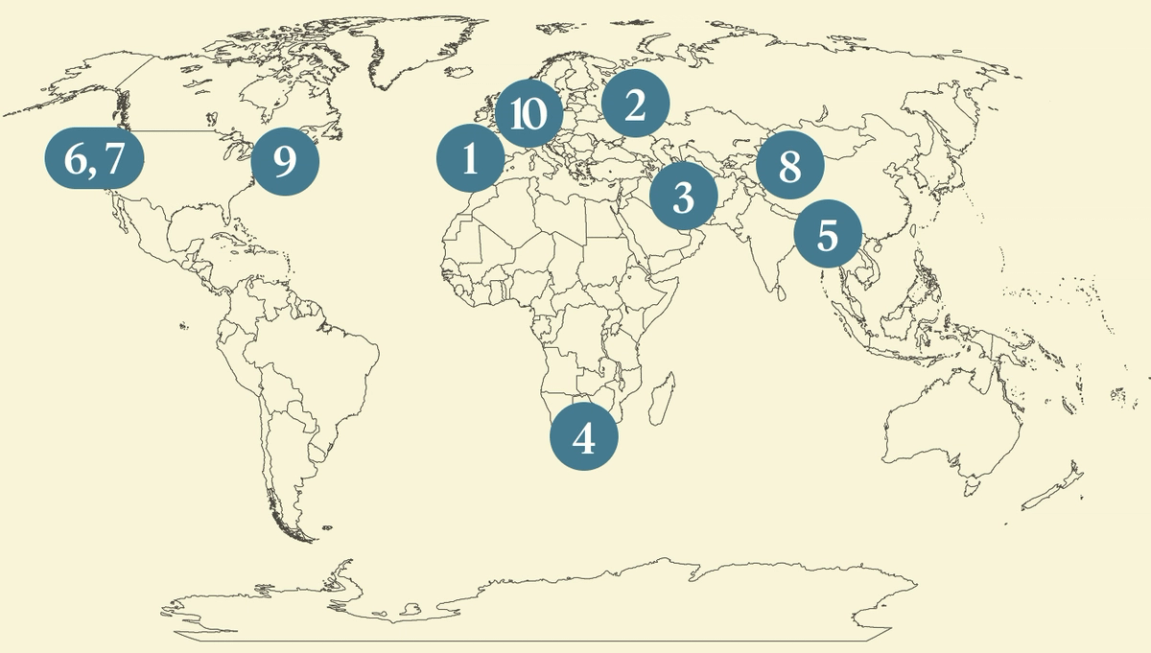 - No hints from Fed chief
- Russia’s fuel crisis worsens
- Iran’s oil clout weakens
- More protests in S. Africa
- Global chaos is local
- AI security concerns grow
- Meta to sell compute
- China’s ethnic unity law
- Zyn gets regulatory win
- Biscoff maker surges
 A ‘rip-roaring’ 250-year history of American journalism. |
|
Warsh finds ‘common cause’ with Europe |
 Pedro Rocha/Reuters Pedro Rocha/ReutersUS Federal Reserve Chair Kevin Warsh on Wednesday signaled inflation remains too high for his liking, but declined to offer hints on what the central bank might do later this month. In his international debut as chair, Warsh said he found “common cause” with his European, British, and Canadian counterparts in opposing “forward guidance,” the practice in which monetary policymakers suggest where the cost of borrowing may be heading. Warsh has argued that in times of elevated uncertainty, such signals risk boxing in the central bank, making it harder to change course. Shocks like Washington’s tariffs and the Iran war have complicated inflation forecasting, The New York Times noted, prompting central bankers to adjust their messaging. |
|
Russia imports gas from India |
 Alexander Ermochenko/Reuters Alexander Ermochenko/ReutersRussia is starting to import gasoline from India, Reuters reported, in a sign of the severity of Moscow’s fuel shortages. The shipments mark a shift in the countries’ energy dynamic: Earlier this year, India turned to Russia to mitigate a disruption to oil supplies spurred by the Iran war. Russian President Vladimir Putin this week acknowledged that Ukrainian drone strikes on refineries had triggered shortages, but downplayed the severity of a crisis that is “unprecedented” for one of the world’s largest energy producers, The Associated Press wrote. Lines are growing at gas stations across the country, and “average people are… grumbling and suffering,” RFE/RL wrote: “For Ukraine, that’s the goal.” |
|
Renewed oil flows give US leverage |
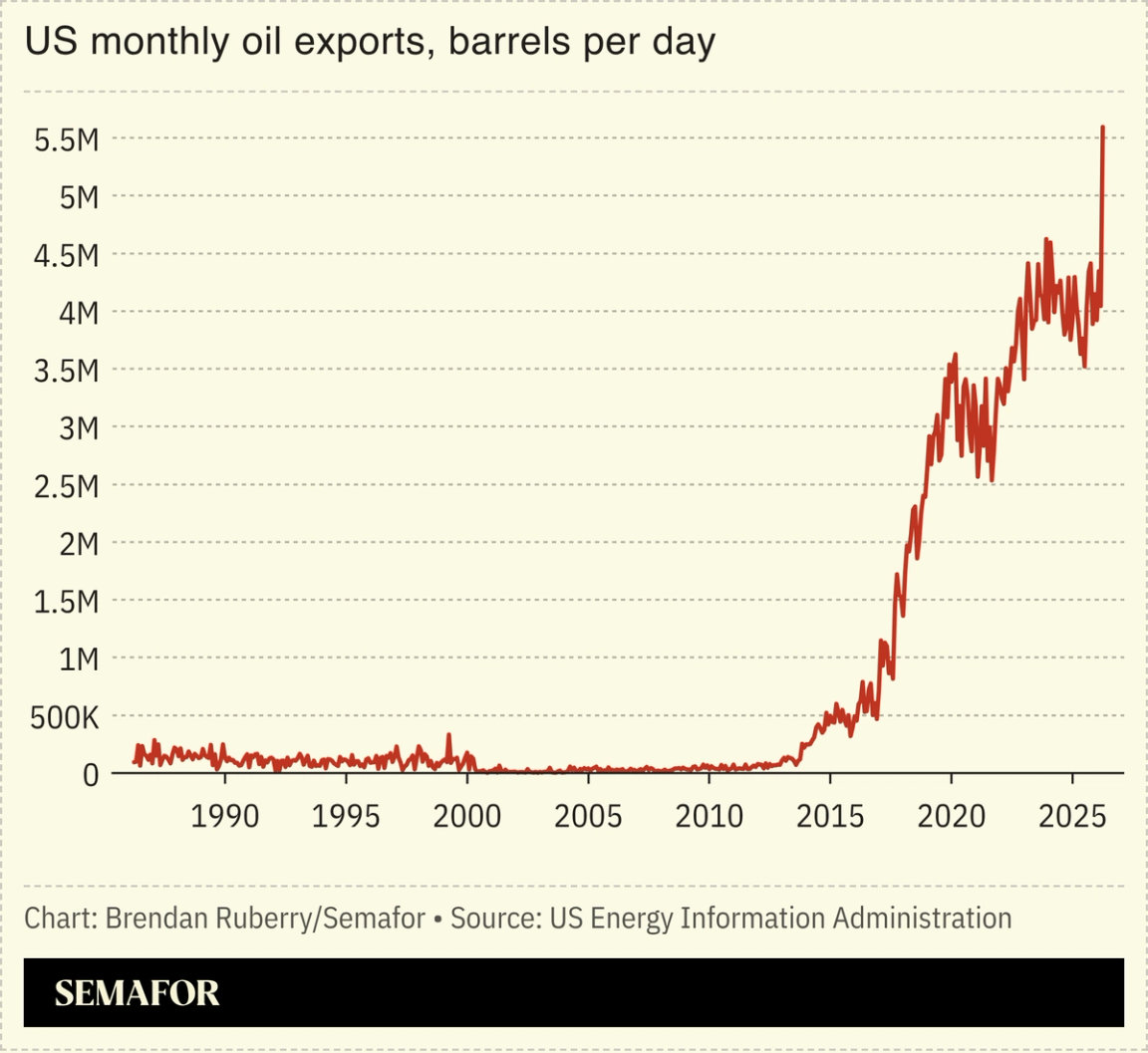 The recent surge in commercial shipping through the Strait of Hormuz could give the US additional leverage in talks with Iran, analysts said. More than 10 million barrels of oil are flowing through the waterway daily, a US official told Bloomberg, adding that the jump underscores Tehran’s limited ability to control traffic. The future of Hormuz is hanging over indirect talks in Qatar this week — US officials are making the case that Iran would gain more from a nuclear deal than tolls in the strait. Tehran could also benefit economically from open oil flows: Iran’s chief negotiator said the country didn’t export a single barrel of oil during the US blockade, but has shipped 40 million since it was lifted. |
|
S. Africa arrests 900 in anti-migrant rallies |
 Oupa Nkosi/Reuters Oupa Nkosi/ReutersSouth African authorities arrested more than 900 people during widespread anti-migrant protests on Wednesday that were occasionally marred by violence. The day’s demonstrations were mostly orderly, in stark contrast to 2021, when outrage at corruption and the government’s failure to provide services during the COVID lockdown sparked civil disorder across Africa’s most developed economy, where one-in-three citizens are unemployed. Pretoria’s elite will “spend the week congratulating itself for a peaceful protest,” Semafor’s Southern Africa correspondent argued, but “a government that cannot deliver jobs, services, or clean governance will continue to face mobilization from citizens who feel abandoned.” Protest leaders have vowed weekly demonstrations, and without meaningful reforms addressing joblessness and high inflation, the “next rupture will be something darker.” |
|
Global chaos isn’t spreading, report says |
 David Johnson/Reuters David Johnson/ReutersGlobal chaos isn’t spreading, but is highly localized, a new report argued. The impression in foreign policy circles, a former US ambassador to NATO wrote, is that “the erosion of the international rules-based order is a uniform, global trend.” But the reality, according to the Atlas of Impunity report, is that almost half of all recorded military battles in 2025 took place in Ukraine, and nearly a third of all state violence against civilians was in Myanmar. Outside of “a handful of highly repressive, war-torn states… collapsing into total systemic lawlessness,” Ivo Daalder wrote, most nations are “incrementally tightening their legal and institutional guardrails.” For the median global citizen, “daily life has actually seen a post-pandemic cooling of civil unrest.” |
|
Anthropic rolls back China tracking code |
 Yves Herman/Reuters Yves Herman/ReutersAnthropic is rolling back spyware-like code it implemented to track whether users are affiliated with Chinese AI labs. A cybersecurity newsletter reported that the Claude Code feature covertly tracked and transmitted information based on a user’s timezone and potential connection to Chinese tech companies accused of illicitly training their own models using Claude’s answers; an Anthropic employee called it an “experiment.” The episode underscores how US-China competition is shaping decisions around high-powered AI systems: The White House recently lifted its ban on foreign access to advanced Anthropic models, but businesses that now rely on AI still worry about a US “kill switch” driven by national security concerns. OpenAI CEO Sam Altman called for a US-led international forum to set global AI safety standards. |
|
Meta plans to sell excess compute |
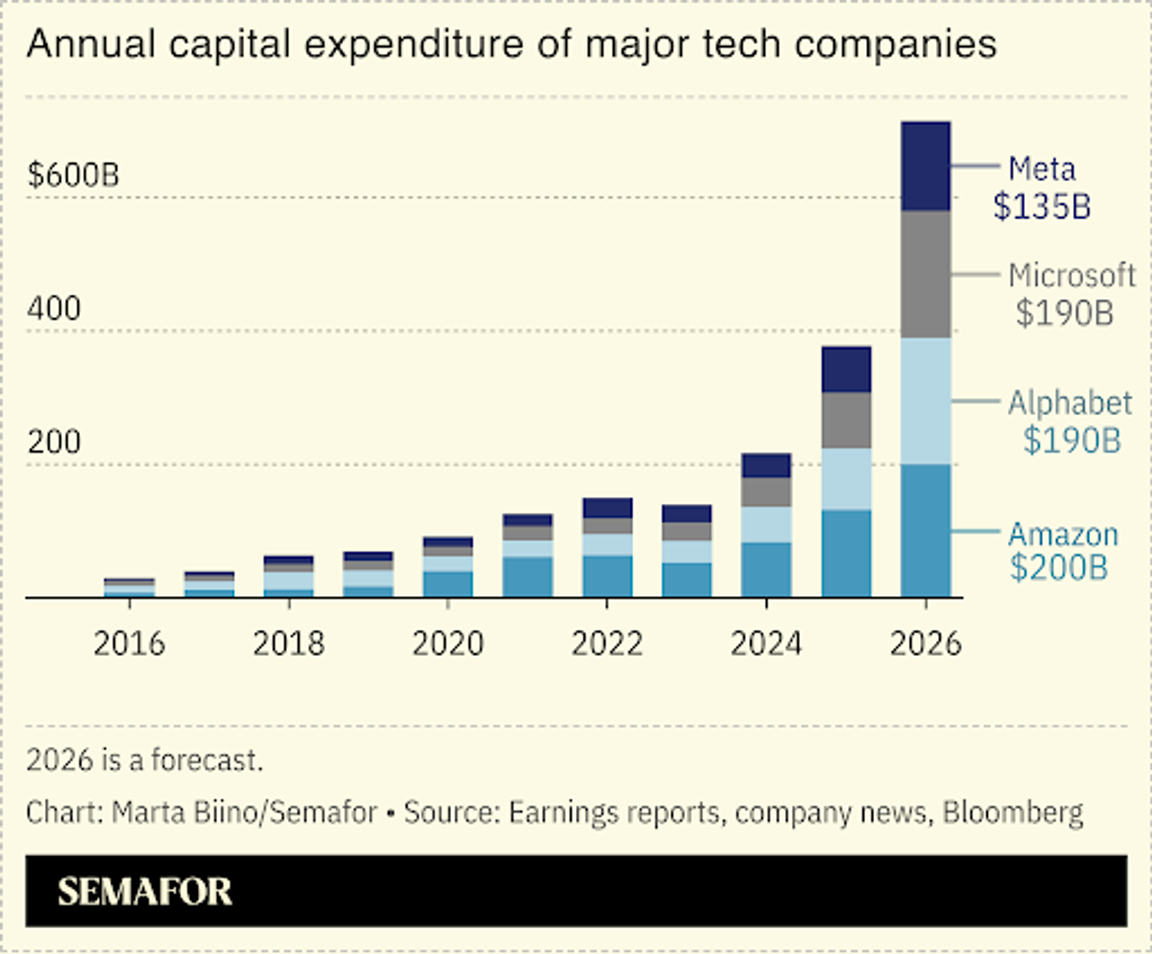 Meta is reportedly building a cloud computing business and plans to sell excess compute to its competitors, a signal that the US tech giant doesn’t have enough usage of its own AI models. The company’s shares jumped nearly 9% as investors were optimistic that Meta might be able to recoup some of the $600 billion in US AI infrastructure it’s pledged to spend by 2028. The cloud business is the latest manifestation of the circular AI economy, like SpaceX’s recent decision to rent out data center space to Anthropic. “While companies are trying to be the biggest and the fastest in AI, selling the leftovers is where a lot of the money is,” Semafor’s Rachyl Jones wrote. |
|
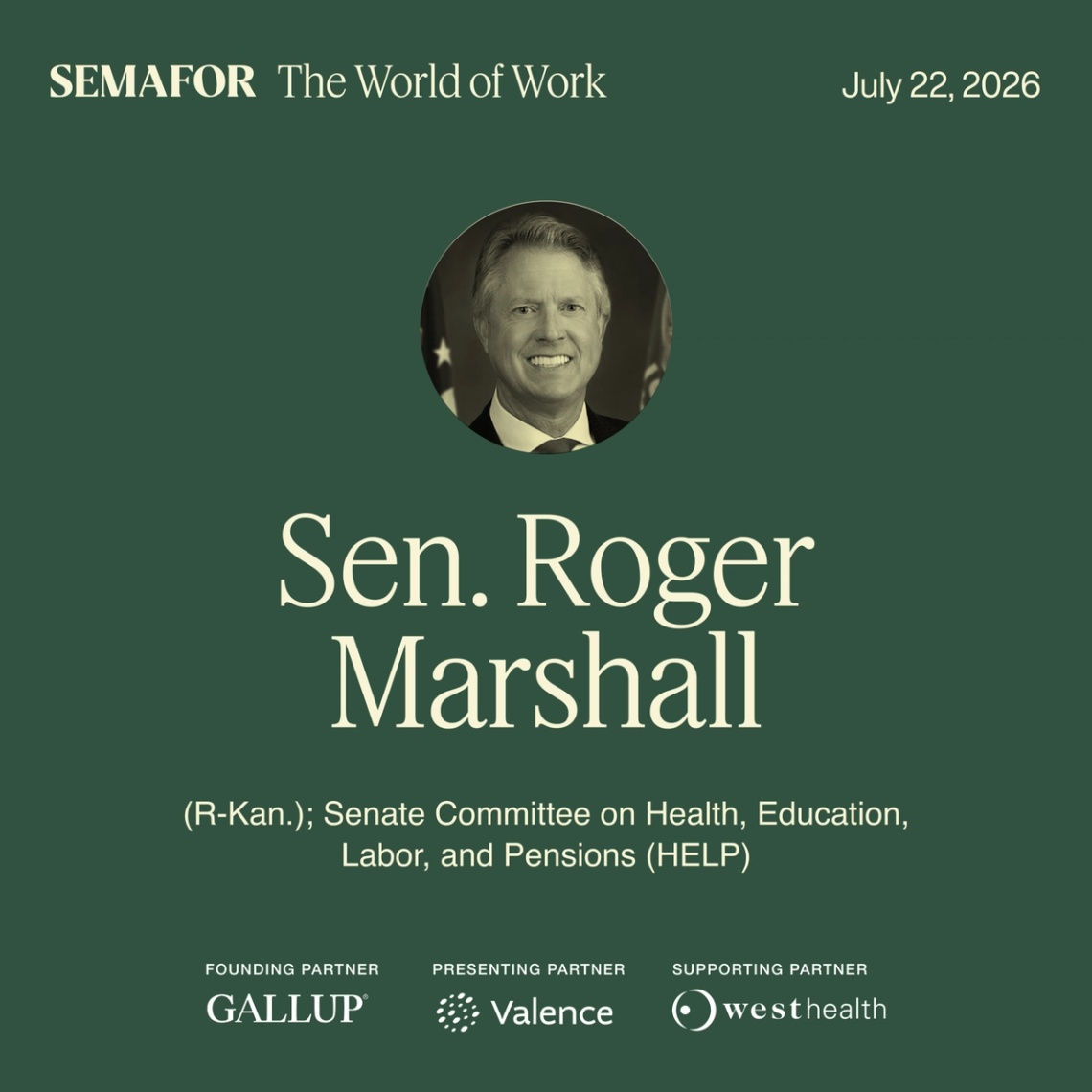 On Wednesday, July 22, Sen. Roger Marshall, R-Kan., Senate Committee on Health, Education, Labor, and Pensions (HELP), will join Semafor’s The World of Work in Washington, DC to unpack how institutions are adapting and thriving in an increasingly fragmented economy. As companies face rapid technological change, economic uncertainty, and shifting workforce expectations, leaders are rethinking performance, trust, and long-term success. To explore how AI adoption, workforce transformation, and evolving leadership demands are reshaping the future of work, Semafor editors will sit down with business executives and workplace innovators including Katy George, Corporate Vice President, Workforce Transformation, Microsoft; Claire MacIntyre, Chief People Officer, Sam’s Club; Mary Moreland, Executive Vice President, Human Resources, Abbott; Allison Peek Bebo, Chief Human Resources Officer, Pearson; and more. |
|
Chinese ‘ethnic unity’ law takes effect |
 Tingshu Wang/Reuters Tingshu Wang/ReutersA new Chinese law aimed at prioritizing “ethnic unity” went into effect Wednesday, despite criticism that it further erodes the rights of minorities. The law, which dictates that schools and agencies must use Mandarin as their primary language and forbids acts that “create ethnic division,” furthers government efforts to push minority groups like Tibetans and Uyghurs to adopt an identity “rooted in Chinese nationality,” CNN wrote. The law also empowers authorities to target groups and individuals outside China. But such efforts threaten to exacerbate Beijing’s tensions with other world powers, the BBC noted, even as China looks to improve its overseas image. |
|
Win for Zyn nicotine pouches |
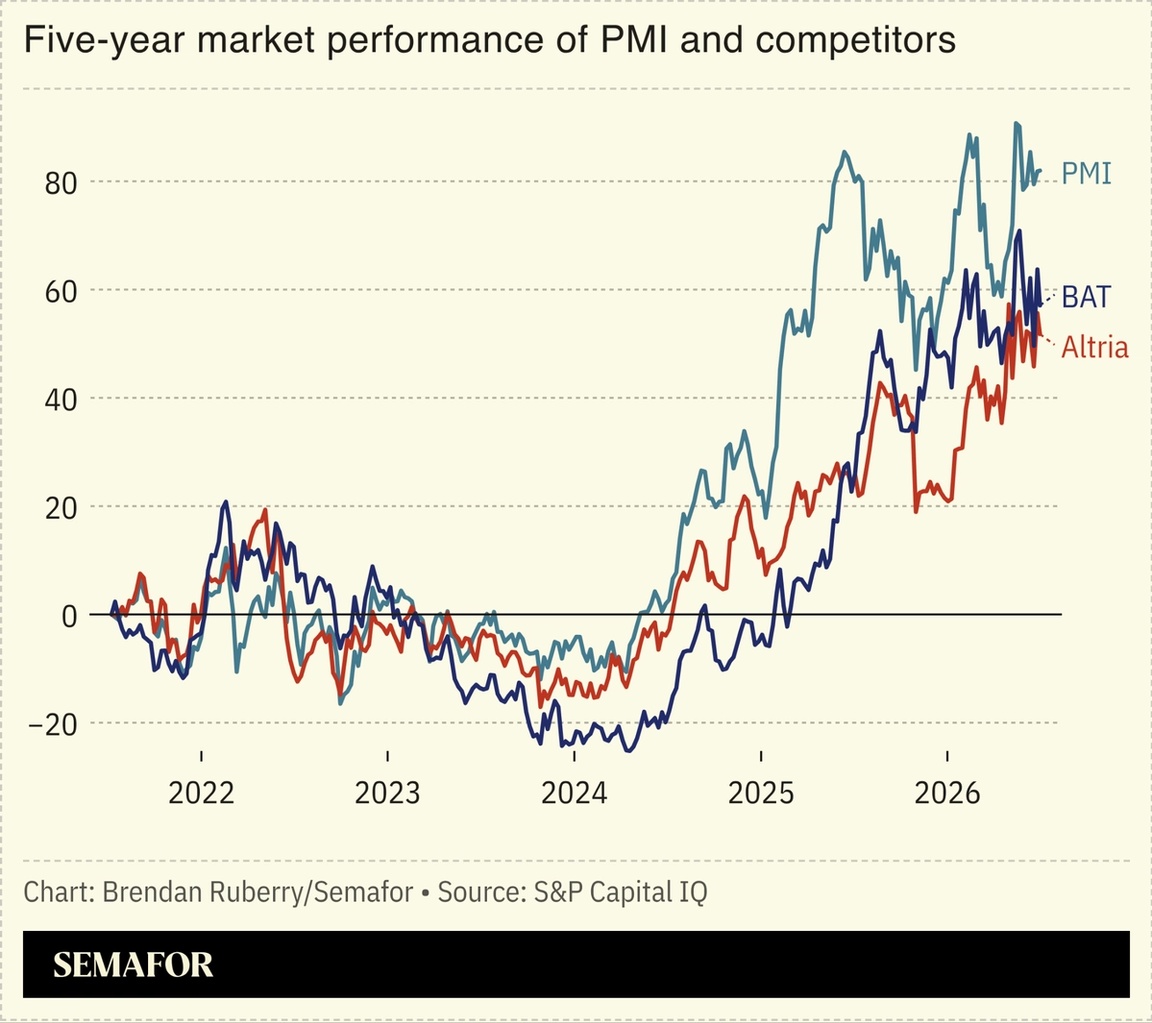 US regulators allowed Philip Morris to advertise its Zyn oral nicotine pouches as less harmful than cigarettes. The decision is a marketing win for the tobacco giant, which like other manufacturers is investing in smoke-free products. Tobacco replacements, such as nicotine pouches or vapes, are vastly less deadly than smoking — a low bar to clear, since smoking is extraordinarily deadly — and help smokers quit, according to a UK government review, but remain controversial in public health circles. The US surgeon general has called youth vaping an “epidemic” and vaping is not approved as a smoking-cessation tool. One academic argued in 2017 that opposition to such tools as anti-smo |
|
|


