| Forwarded this email? Subscribe for more |



 |
| By The Free Press |
It’s Monday, July 6. This is The Front Page, your daily window into the world of The Free Press—and our take on the world at large. Today: Frannie Block on the Chinese pastor finally set free. Arthur Brooks on why Taylor Swift’s prenup won’t protect her marriage. Aaron MacLean on whether Ukraine is winning the war. Dr. Cornel West on Conversations with Coleman. And much more.
But first: Two takes on the 250.
America is officially 250 years old. For the past year, we have been counting down to the semiquincentennial of the greatest nation on Earth—and it delivered.
Across the country, Americans poured into stifling heat, decked head to toe in stars and stripes. They flocked to the annual hot dog eating contest in Coney Island; lined the streets for parades in Ohio; reenacted the Revolutionary War in Boston; watched fireworks over Los Angeles; and, in Philadelphia, lowered a time capsule into the ground for our descendants 250 years from now to discover: a snapshot of America in 2026.
It was brash and joyous. In other words, it was American.
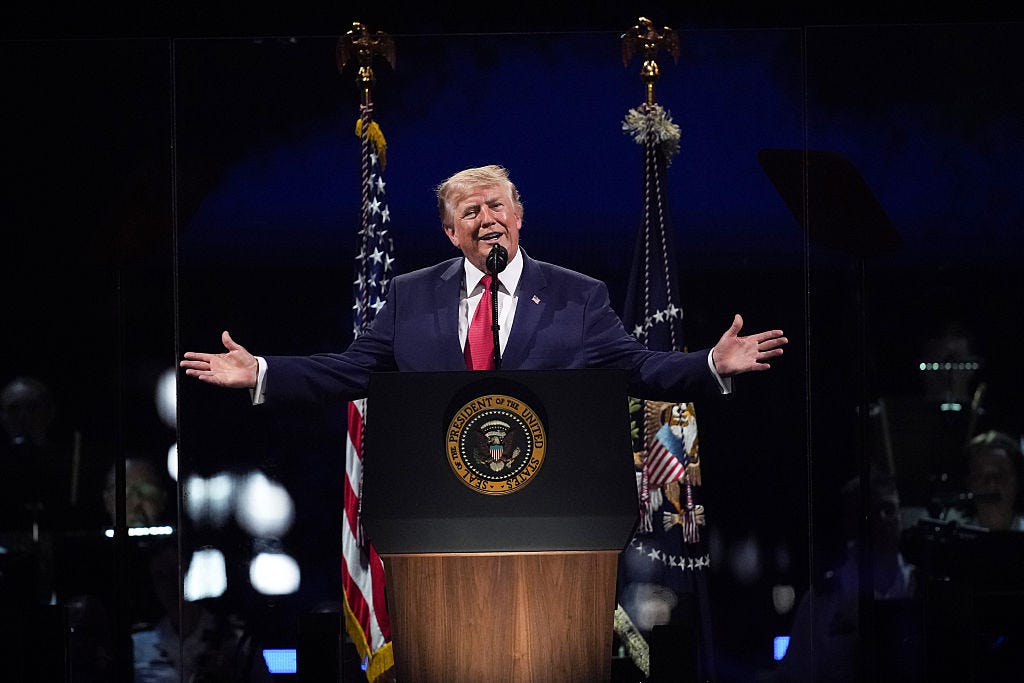
Which means it wasn’t complete without politics. Over the weekend, Americans were also treated to a series of speeches from elected officials. Two speeches—by President Donald Trump and New York City mayor Zohran Mamdani—were “built up by pundits as a political doubleheader,” writes Liel Leibovitz today, “offering twin visions of America present, past, and future, one from the left and the other from the right.” So what did these two addresses say about our politics? Liel’s verdict: Anyone hoping either would offer an accurate, let alone inspiring, account of American exceptionalism would have been sorely disappointed.
Read Liel’s piece to understand why our leaders got it so horribly wrong—and what he says is the truth about American exceptionalism at our 250-year mark.
—Jillian Lederman
 America at 250 Special Offer Limited time: Celebrate America’s 250th birthday with 25 percent off a subscription. |
 |
Ezra Jin, Pastor Jailed by China, Is Free
On July 4, 2026, I woke up to learn that Ezra Jin, a pastor who had spent more than eight months in a Chinese prison, was free—and in the arms of his family members in America.
The Free Press’s Frannie Block has covered Ezra’s story tirelessly since his arrest on October 14, 2025, when Chinese police executed a series of raids across China, rounding up nearly three dozen pastors and church leaders. They were charged with illegally disseminating religious information online.
Ezra’s daughter, Grace Jin Drexel, worked endlessly for her father’s release. “The Chinese Communist Party will never be able to put God in a box,” she told The Free Press in October, adding that she would do “everything in my power to bring attention to his story” and to fight for his freedom.
Fight she did. She traveled the globe—from Geneva, London, Rome, Berlin, and Brussels—to tell her father’s story and put pressure on both the U.S. and Chinese governments to consider his case, speaking twice in front of Congress. The case made it onto the negotiating table when Trump met Chinese president Xi Jinping in Beijing in May; after the summit, Trump announced that the leader was “seriously considering” releasing Jin.
The Drexels believe that Ezra Jin’s release on the eve of the Fourth of July is a “miracle.” It surely is. But it is also the result of months of determined work to raise his case to some of the most powerful decision-makers in the world, including both the president of the United States and China’s president. It is a testament to the power of advocacy, international pressure, and to one family’s resolution to never give up even in the face of the most daunting obstacles.
Read the latest news here:
And don’t miss Frannie’s agenda-setting deep dive into this case, and Beijing’s war on Christianity, “China vs. God”:
 |
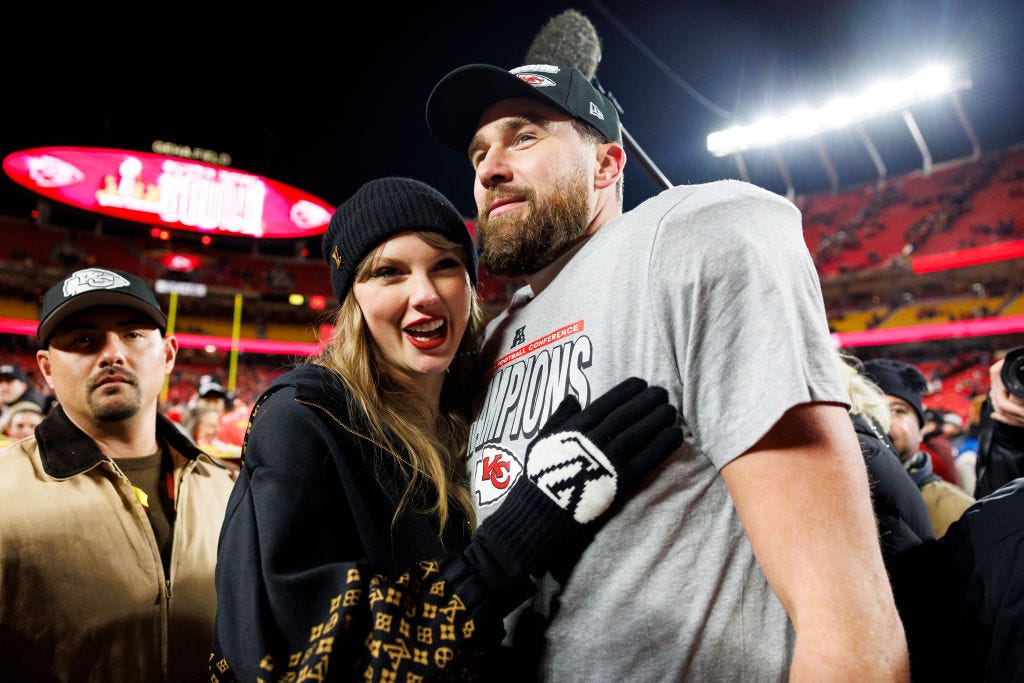
Arthur Brooks: Taylor and Travis, a Prenup Won’t Protect Your Marriage | |||||
 | |||||
|