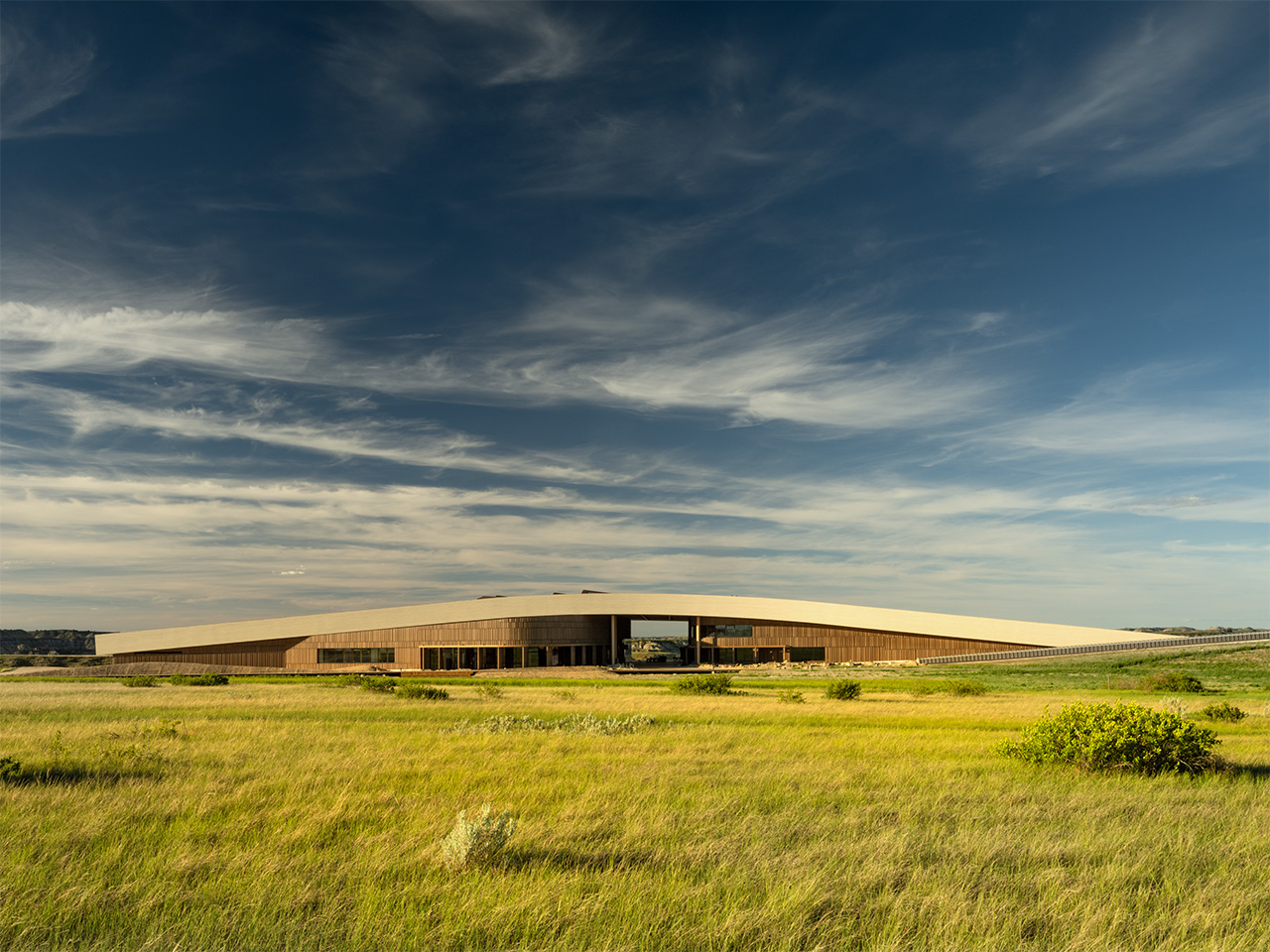
The Theodore Roosevelt Presidential Library, a tomato-shaped chair and Objects of Common Interest co-founder Eleni Petaloti.
|
Wednesday 8/7/26
|

|
|
London
Paris
Zürich
Milan
Bangkok
Tokyo
Toronto
|
|
|
|

Natural selection
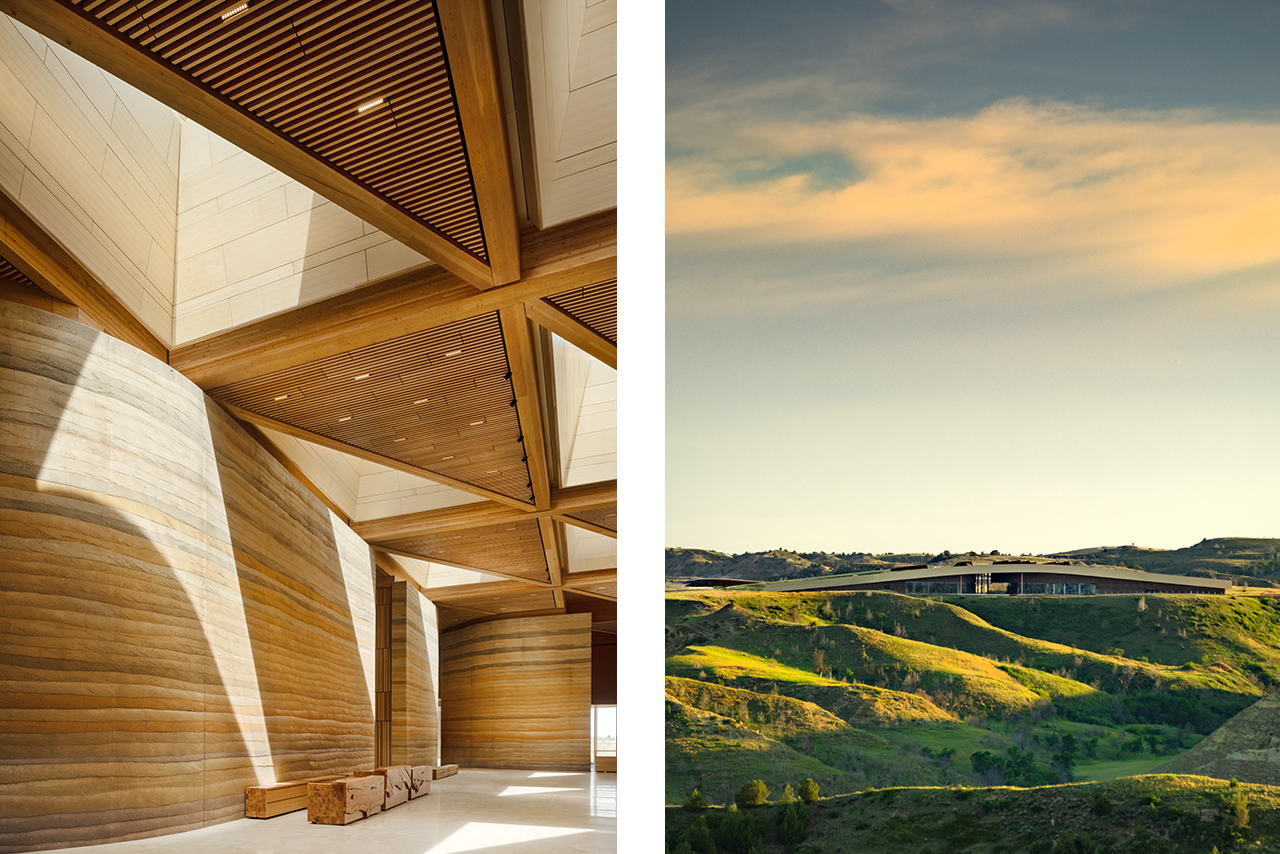
We begin this week’s dispatch by reading between the lines at the Theodore Roosevelt Presidential Library (pictured, below), which opened last week in North Dakota’s Badlands. We also seek out a fruitful reissue of the 1970s-era Tomato chair by Christian Adam and chat with Objects of Common Interest co-founder Eleni Petaloti about the importance of public spaces. Plus: a piece of Danish furniture with a hidden agenda. First up, writer Ekaterina Gorshkova on the design heritage of Montreal.
|
|
OPINION: Ekaterina Gorshkova
History in the making
When you think about cities known for design, Montreal rarely comes to mind. The unassuming metropolis is known for its harsh winters, festival-filled summers, bilingualism and unique blend of European and North American cultures. Growing up in Quebec’s largest city, I was used to seeing trees tower over low-rise apartment buildings with Juliet balconies, streets lined with wooden terraces and light garlands strung above Boulevard Saint-Laurent – aptly nicknamed The Main – which made the city feel like a film set borrowed from another continent. It still does – Montreal remains a stand-in for Europe’s capitals in many Hollywood productions.
But the place I grew up in is changing. Over the past decade, rent in Montreal has jumped by 70 per cent. To meet this boom, the city has opted for vertical density. Several new towers now dot the skyline. These top out at just under Montreal’s 232.5-metre height limit – a municipal requirement to preserve views of Mount Royal – but they have indelibly altered the city’s character and appearance.
|
It is against this backdrop that the creative community has begun to fight to keep the city’s design culture. As people gathered for Montreal’s inaugural Design Week earlier this year, a theme emerged: a desire to honour Québécois traditions by preserving and championing local craftsmanship and materials. But these efforts often involved choosing the path of most resistance.
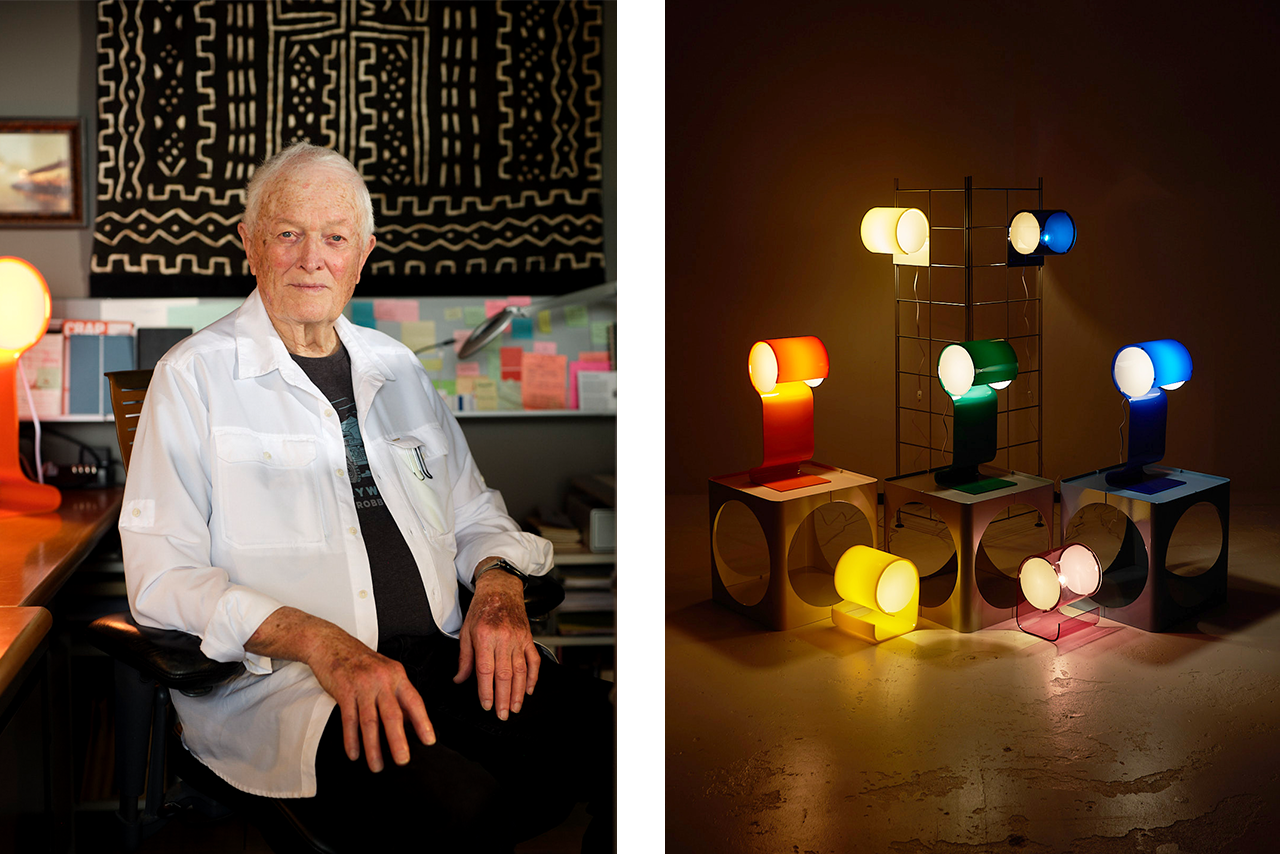
Take the work of Mathieu Leclerc. As the owner of Full Room, a shop specialising in vintage furniture, he has made it his mission to source and reissue pieces by iconic Québecois designers. Due to a near-total absence of digital archives, it’s a complicated task. But it’s also one that has unearthed names such as Jacques Legendre and Christiane Masson, designers of the Artik pendant lamp for Clic (a now-defunct Montreal retailer). Full Room is unveiling its first official reissue, Glo-Up lamps (pictured above, right) designed in 1969 by the now 90-year-old Montreal-based Douglas Ball (pictured above, left), on 16 July at Pari Passu gallery. For Leclerc, the work is as much about retail as it is recovery, rescuing objects from obscurity and returning them to the city’s living rooms.
In a similar vein, artists at Studio Beaumont are showing that the city continues to manufacture. A recent exhibition, While We’re Still Here, showed prototypes and work-in-progress tools alongside finished pieces in the former loading docks of an industrial building. Montreal has always been a place that embraces manufacturing grit as readily as its more romantic vistas.
Both pursuits are a demonstration of the push and pull between the city’s past and present. But celebrating Montreal’s heritage is also a platform for the future. While Montreal’s skyline might be changing, growing up, returning made-in-Quebec design to homes ensures that the city’s roots will always be on show.
Ekaterina Gorshkova is a London- and Montreal-based writer. For more analysis and insight, subscribe to Monocle today.
|
|
THE PROJECT: Theodore Roosevelt Presidential Library, USA
One for the books
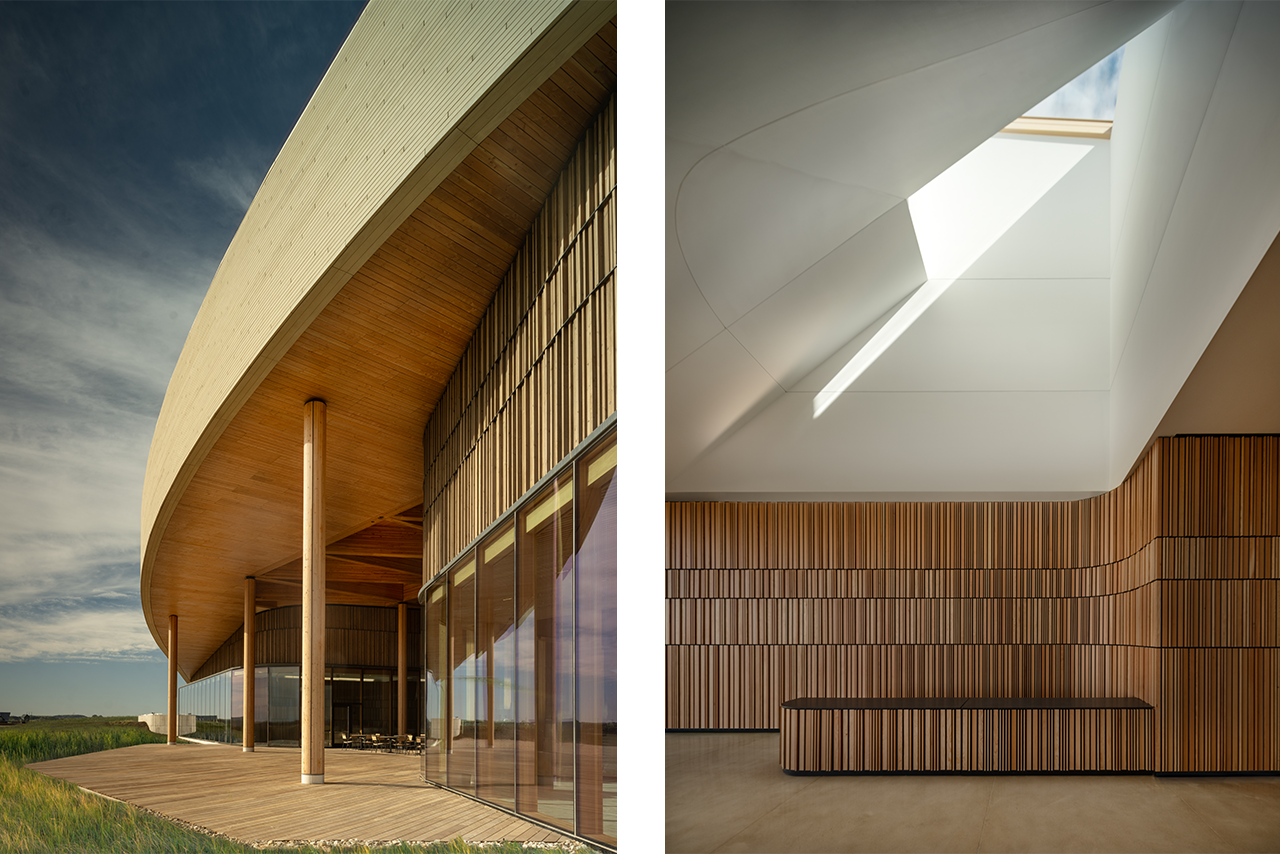
With harangues against corporate interests and a muscular foreign policy, both Democrats and Republicans find something to love in Theodore Roosevelt. The early 20th-century president’s library in Medora, North Dakota, opened last weekend to coincide with the US’s 250th anniversary. Designed by Norwegian architecture practice Snøhetta, the building and landscape centre on Roosevelt’s ardour for public lands. Distraught in 1884 after the death of both his wife and mother, the New York native found solace in the rugged buttes of Dakota’s Badlands and later established nearly two dozen national parks and monuments.
|
|
Resembling a sod house, the presidential library blends into the surrounding prairie. “The landscape should be the defining feature of the visitor experience; that restraint is the project’s boldest gesture,” Snøhetta’s Aaron Dorf tells The Monocle Minute on Design. “The ambition of the project was never measured by how visually expressive the building could be but by how deeply it could connect people to the place that profoundly shaped Roosevelt’s life and conservation ethos.”
For another outstanding presidential piece of architecture, read about the beaux arts Boston Public Library here.
|
|
WORDS WITH... Eleni Petaloti, UK
Public knowledge
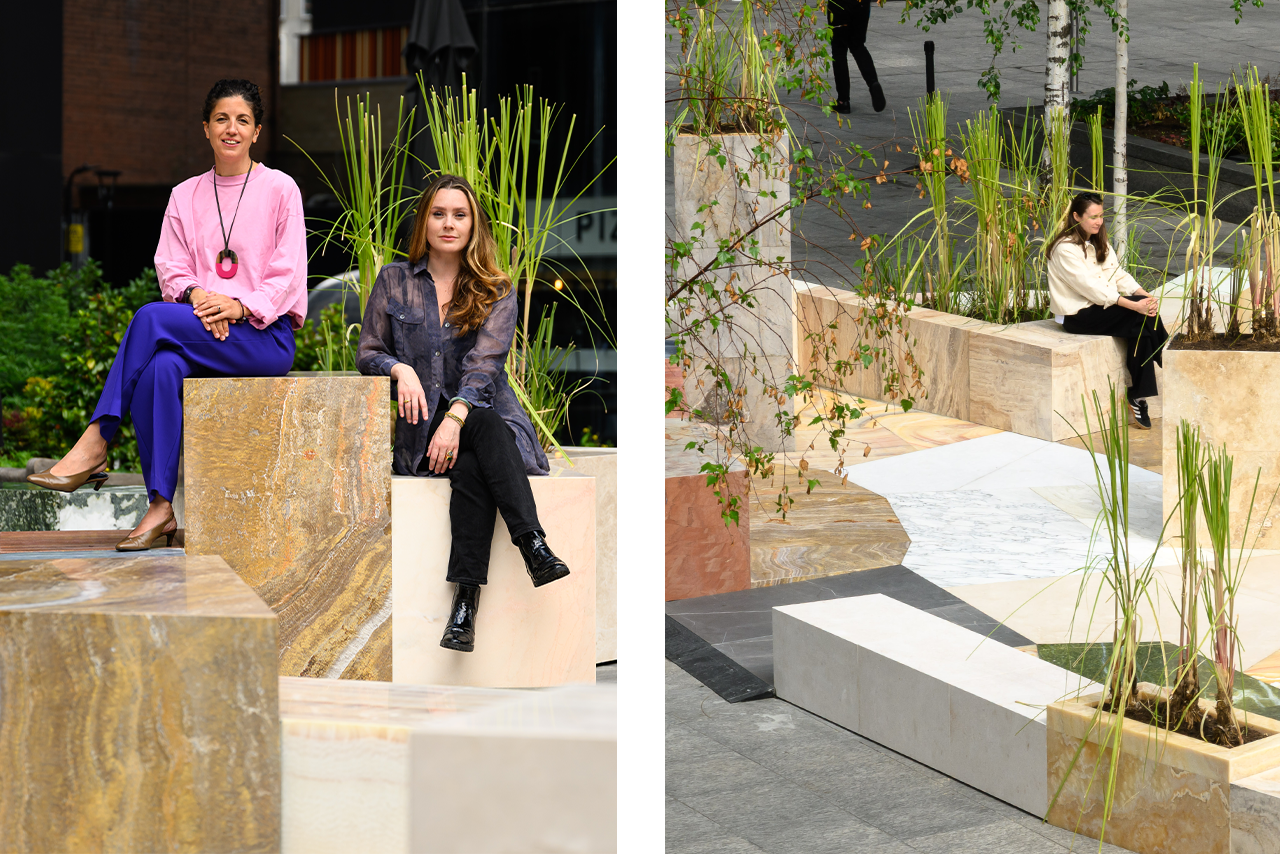
Eleni Petaloti is the co-founder of Objects of Common Interest. She runs the Athens- and New York-based design studio with Leonidas Trampoukis, while projects span everything from furniture to architecture. The duo recently completed Colour Field, a pavilion made from recycled stone, in partnership with Brookfield Properties. “Together with the curators of the project – Samantha Jade Williams (pictured, right, with Petaloti), vice-president of experience at Brookfield Properties, and Anne-Laure Pingreoun of Alter-Projects – we were able to create something that invites connection and interaction,” says Petaloti. Here she tells us about the pavilion and explains the benefits of slowing down daily life.
|
Tell us about the project at Principal Place. What makes the project unique?
For me, working within a public space is always a unique experience, especially when that space is in a city such as London. Public environments create a different kind of dialogue; they belong to everyone. What made this project particularly special was the story of the materials used. We brought together leftover marble pieces from all over the world – Brazil, Iran, Italy, China, Spain, Turkey – and transformed these fragments into a new composition. The work is like a public stage: a place where different materials, stories and people meet. In the same way, London itself is a place where people from across the globe come together.
What impact do you hope that it leaves?
I hope that people feel invited to come closer – to rest, interact, pause and spend time with the work. I want it to become part of their everyday experience, a place for unexpected encounters and small moments of connection.
What designer or movement has influenced you the most?
Shiro Kuramata and Cini Boeri are two figures that I always return to. They both followed unique paths and had the courage to translate their thoughts, ideas and personal worlds into design. There is a boldness and sensitivity in their work, a belief that objects can carry emotions and imagination beyond function.
The sky’s the limit: which piece of furniture would you love to own?
The Pyramid chest of drawers designed in 1968 by Shiro Kuramata and produced by Cappellini. It’s such a surreal and poetic piece. It sits somewhere between furniture and a dream.
What’s a recurring source of inspiration?
I’m always inspired by random, almost invisible moments of everyday life. A small bird my children notice; a caterpillar moving slowly; the color of a watermelon slice; a poem by Constantine P Cavafy. These simple observations are often small moments but they can open entire worlds.
A priority for you and the industry going forward?
At Objects of Common Interest we are focused – almost obsessed – with the role of public space and how design can give something back to the community. This should remain a priority for our industry: creating spaces and experiences that are accessible, generous and shared. This is exactly why the Principal Place project felt so meaningful to us.
Which city has the best design scene?
I love different cities for different reasons. But let’s focus on Athens. Visit The Breeder and The Intermission galleries; both are creating important conversations around contemporary art. Drop into Phāon and Mouki Mou, as both shops have beautiful selections and perspectives. And visit the SNFCC Park. It’s an amazing example of a project that truly gives back to the city and creates a generous public space for everyone.
For more from designers such as Eleni Petaloti, tune in to ‘Monocle on Design’ on Monocle Radio.
|
|
from the archive: Tomato chair, France
Fruits of labour
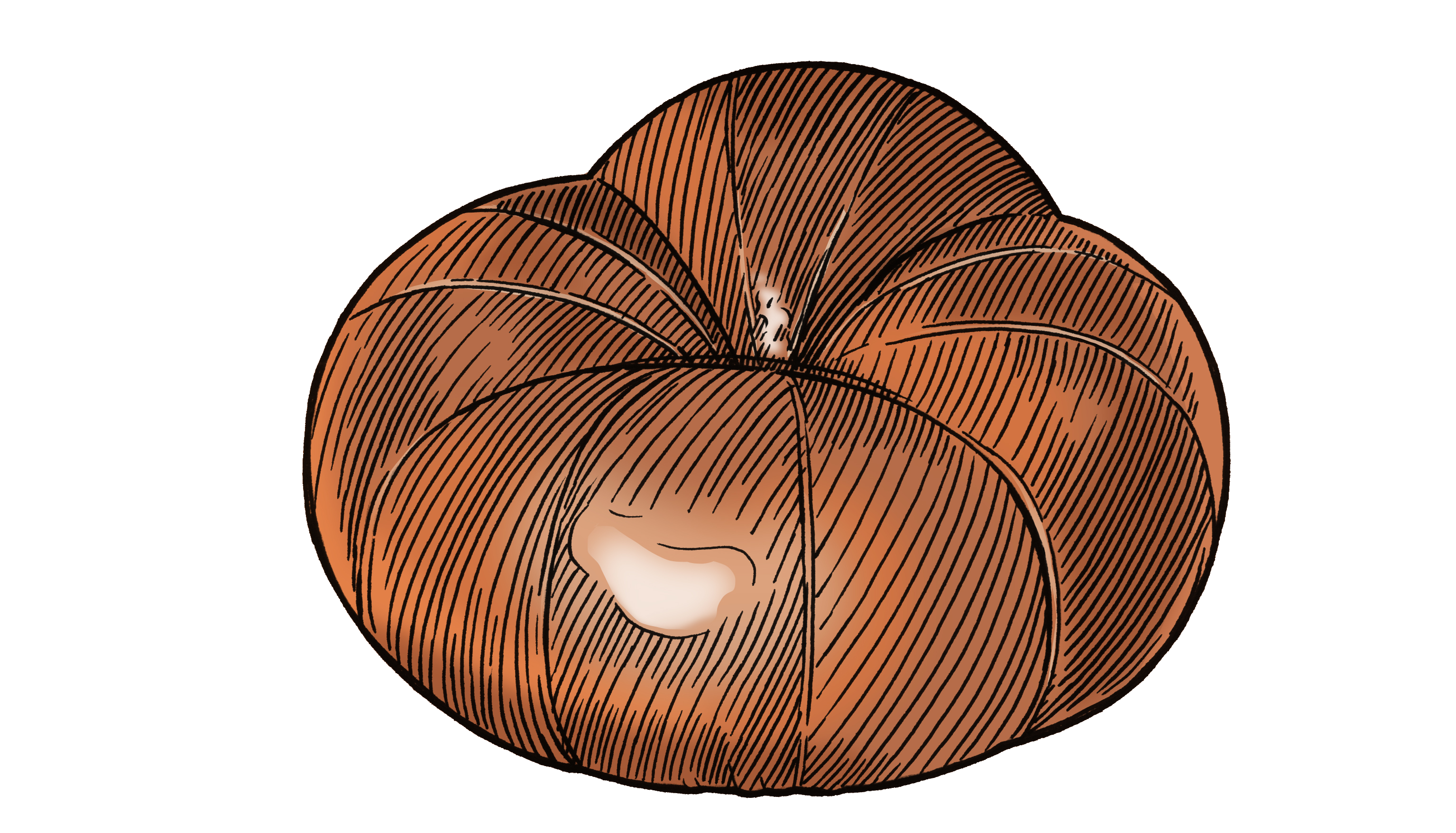
Luxury fashion labels are to thank for a surge in high-quality reissues of collectable furniture from the 20th century. Often, the pick is an obscure archival design that was originally too far ahead of its time or too complicated to produce but that has become highly covetable and helps to express the codes and values of the brand. A highlight from this year is the Tomato, a bohemian armchair from 1970 by French designer Christian Adam, which fashion house Chloé has reissued in collaboration with Poltronova, an Italian furniture maker headquartered in Tuscany.
|
Poltronova was founded in the 1950s, a time when most major Italian manufacturers were making more conservative work. Its factory was willing to produce novel and unconventional designs such as this armchair shaped like an heirloom tomato. The downsides of the piece were that it was not originally designed to be a sculptural seat and the production cost was high. Chloé’s delicious made-to-order re-edition is upholstered in supple leather and has even plumper filling than the original.
|
|
around the house: Trisse, Denmark
Joint success
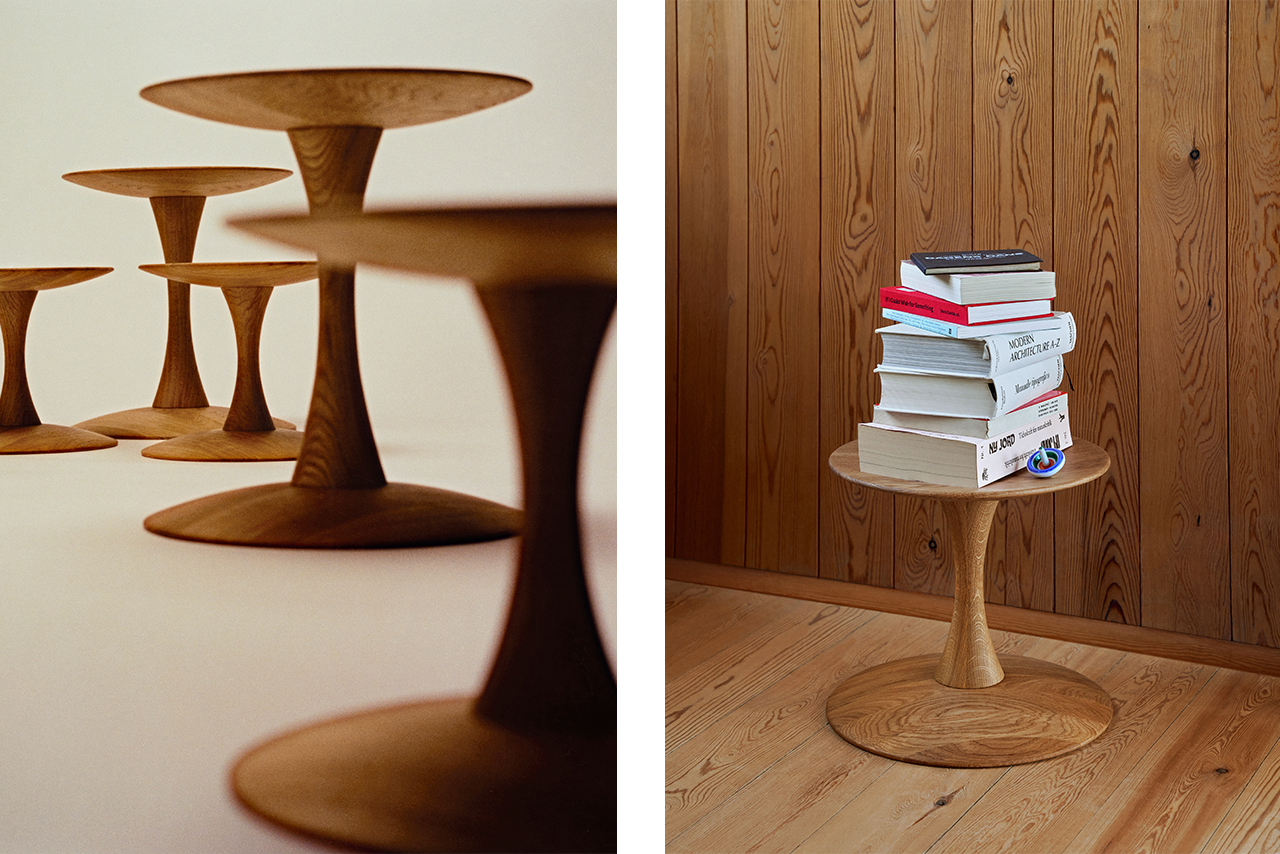
Nanna Ditzel’s varied contributions to the canon of 20th century Danish design include furniture made from wicker and fibreglass, textiles for upholstery and jewellery pieces for heritage silversmith Georg Jensen. But as a trained cabinetmaker, Ditzel often returned to woodworking. This is particularly visible across her partnership with Danish manufacturer Fredericia, where she became guest designer in 1989.
As such, Fredericia’s recent reissue of the Trisse is a satisfying feat of historical continuity. Originally conceived in 1962 as a design for children to interact with, it can also be used as a stool or a small table. Its simplicity is masterful: with a turned base and top in solid oak, there are no visible mechanisms that bind the components together. It’s proof that good joinery and craft knowhow are key to a design’s enduring appeal.
fredericia.com
|
|
Image credits:
Nic Lehoux, Maxim Morin/OSA Images, Mathieu Leclerc/Full Room, Jack Hall, Courtesy of Fredericia
This email is from Monocle whose
registered office is at Midori
House, 1 Dorset Street, London,
W1U 4EG. You have received this
email because you have previously
provided us with your email
address and subscribed to Monocle
bulletins.
© 2026 Monocle
|
|
|