Good morning readers.
Angela Skujins back on newsletter duties for this Thursday, where European leaders are steadily retreating to their capitals following a turbulent North Atlantic Treaty Organisation (NATO) annual summit in the Turkish capital. But they are not returning empty-handed.
Not only were the leaders in attendance gifted engraved pistols and live ammunition by host and Turkish President Recep Tayyip Erdoğan, they were also left to digest many proclamations by US President Donald Trump, NATO’s most powerful player.
Euronews’ NATO correspondent Shona Murray was reporting on-the-ground for the duration of the Ankara event, and says after five years of war on the European continent, and two years of rancour from a confrontational White House, it was a moment for Europe to prove it's serious about its own defence.
Eclipsed by Trump. This was quickly overshadowed by Trump threatening to cut trade with Spain over Madrid’s insistence to not raise defence spending to 5% of GDP, but also news that Ukraine would be granted an export licence to produce Patriot interceptors after years of lobbying.
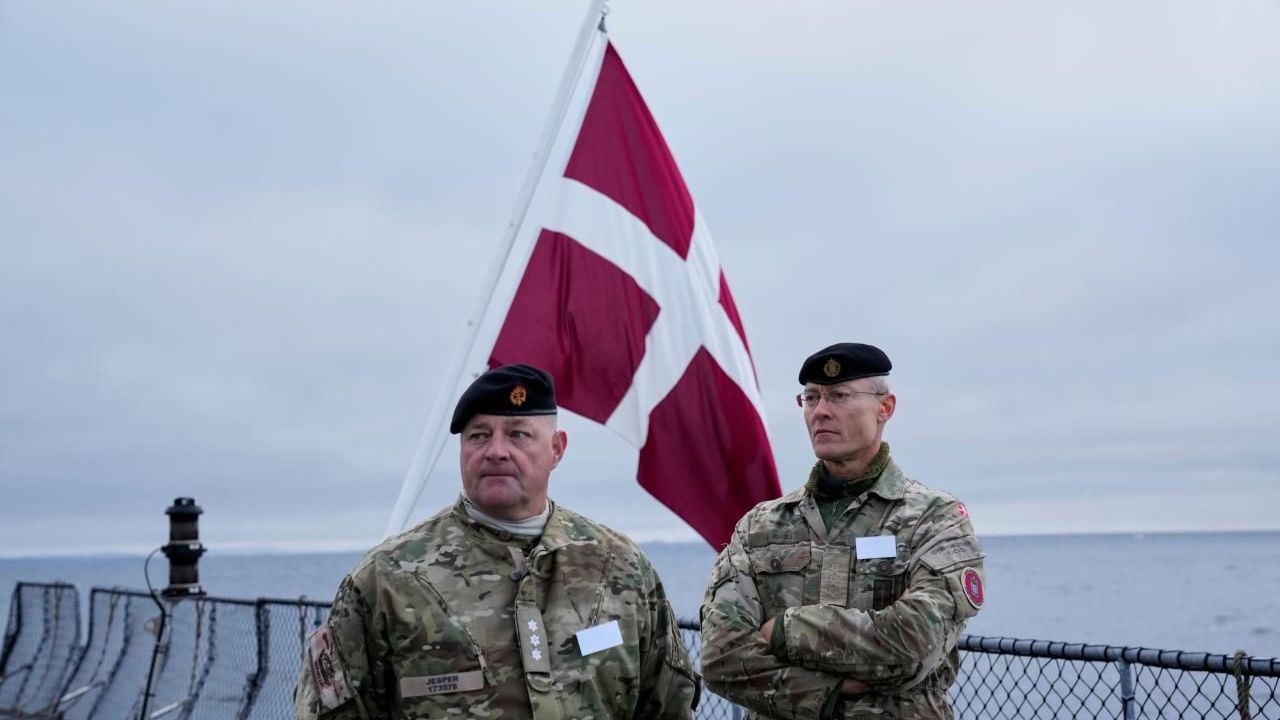
Trump also reignited his claim that the US should “control” Greenland — the semi-autonomous territory part of Denmark, with Danish Prime Minister Mette Frederiksen taking the threat seriously. “The US position is, unfortunately, very clear on this topic,” she said.
Former US National Security Adviser John Bolton told Euronews that Trump's latest comments on Greenland should be seen as part of his political style rather than an indication of US foreign policy. "He's trolling people," Bolton said.
"Why does he talk about taking Greenland? Because it drives people crazy. That's what it's about."
On top of this, Trump also described the Iranian leadership as “cuckoo” for allegedly misrepresenting a ceasefire agreement aiming to bring an end to the war in Iran.
The question is how the capitals today digest Trump’s declarations.
But according to Jamie Shea, former NATO official and Senior Fellow at Friends of Europe, the meeting went beyond the headlines.
He just told Euronews’ flagship morning programme Europe Today that Trump signed off on a communiqué, "which may not be the most interesting thing for the media, but it's important for diplomats."
"This is the official text where the US committed itself to NATO Article 5 collective defence and called it ironclad," he said.
"These were the kind of things that the allies wanted to hear, and of course he also showed some satisfaction, unsurprisingly, with the fact that his message on defense spending has been heeded." Watch.
Also in the news: finance ministers from the eurozone meet in Brussels. My colleague Eleonora Vasques writes in a dispatch that the main item to watch is Spain’s pitch regarding how to make common borrowing sustainable.
Blockbuster borrowing. In a proposal brought forward by Madrid, Spain wants a borrowing mechanism worth up to €850 billion per year with all member states participating. But Germany and the Netherlands are among the countries sharply against any form of common borrowing. Ministers will arrive from 2 pm, with a press conference scheduled at 7 pm.
Sunday lunch. Talk is gaining steam that European Union ambassadors may need to meet for an extraordinary Sunday session to rubber stamp a series of files before an impending 15 July deadline.
According to Jorge Liboreiro, this is because Wednesday’s meeting among the ambassadors consolidated the fault lines in the 21st package of sanctions against Russia for the country’s ongoing invasion of Ukraine. But the clock is ticking to find a resolution, and the already-scheduled Friday assembly might not deliver results.
Portugal and Germany have concerns about a proposed ban on Russian cod and pollack, as they are large consumers and their local industries risk being disproportionately impacted.
Pour oil on troubled waters. Meanwhile, Greece, Malta and Cyprus are questioning the idea of delaying the automatic review of the price cap on Russian oil until January 2026. The review is scheduled for 15 July and could easily send the cap from $44 to more than $60 per barrel.
And following pushback from France and Italy, the Irish presidency has narrowed down the entry ban on Russian soldiers to short-term visas and those who have directly participated in the invasion of Ukraine, Luca Bertuzzi reports.
All eyes will be on Friday's get-together to see if the ambassadors will need to work overtime.
One last thing. It’s the final day of the European Parliament plenary in Strasbourg, and our parliamentary correspondent Vincenzo Genovese writes to say that there will be a closely-watched vote today on a resolution condemning the war crimes in El-Obeid, Sudan.
A controversial portion of the text alleges foreign actors, in particular the United Arab Emirates, are fueling the fighting with military and financial support. Parliament’s right-leaning flank, however, wants it scrapped. The vote will occur between 12 pm and 2 pm. |