| | The US and Iran trade strikes for a second consecutive day, China mulls restricting global access to͏ ͏ ͏ ͏ ͏ ͏ |
| |  WASHINGTON, DC WASHINGTON, DC |  AMMAN AMMAN | SHENZHEN |
 | Flagship |  |
| |
|
The World Today | 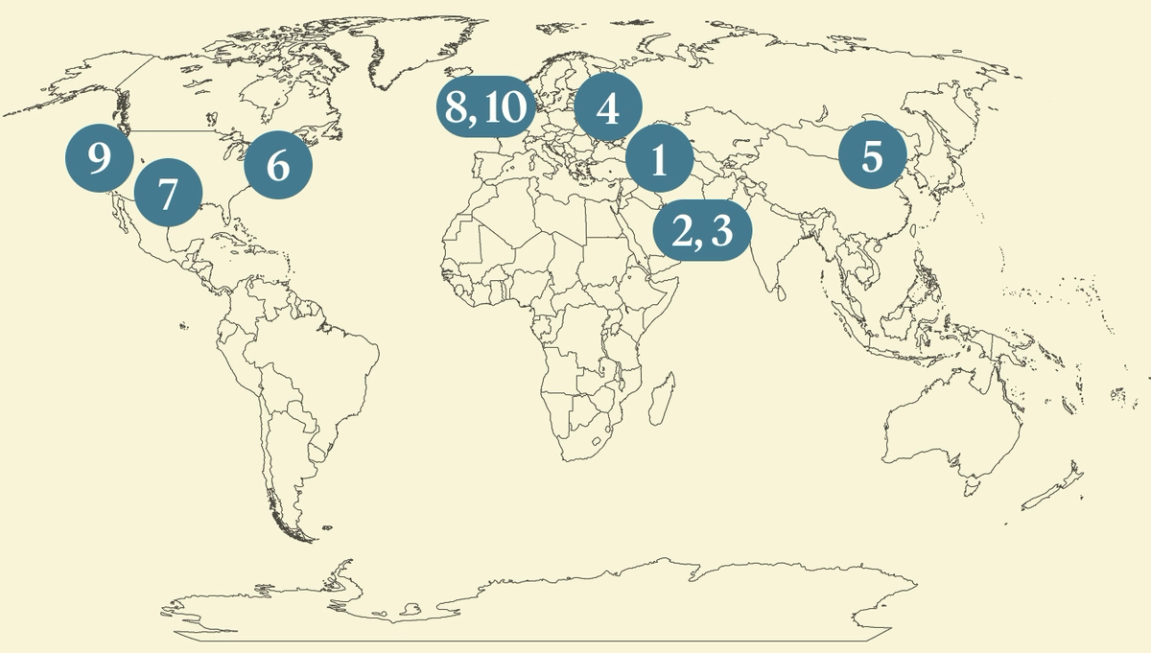 - Iran ceasefire crumbles
- Postwar energy risks
- Conflict’s corporate scorecard
- Russia targets Starlink
- China weighs AI curbs
- Democrats in disarray
- New space economy
- World Cup lessons
- Decline in reading…
- …and male testosterone
 A portrait of a man ‘plunging the world into an uncertain future.’ |
|
US, Iran trade fresh strikes |
 U.S. Central Command/Handout via Reuters U.S. Central Command/Handout via ReutersThe US and Iran traded strikes for a second day on Thursday, marking the most serious rupture yet in the countries’ crumbling ceasefire. Tehran said it attacked US military sites in Bahrain, Kuwait, Qatar, and Jordan, and Washington’s Gulf allies braced for further strikes, as President Donald Trump weighs reimposing the US blockade of the Strait of Hormuz. Tehran is focused on trying to control shipping through the strait, its key point of leverage and an issue which now arguably outweighs Iran’s nuclear program in importance for both sides. The US cannot easily walk away until the situation is stabilized, but any likely deal is unpalatable, Semafor’s Gulf team wrote. |
|
Markets reassess post-truce optimism |
 Brendan McDermid/Reuters Brendan McDermid/ReutersThe fading prospect of a durable US-Iran ceasefire is forcing investors and energy companies to reassess their post-truce optimism and brace for prolonged instability in the Middle East. Qatar is delaying plans to ramp up LNG production after attacks on vessels near the Strait of Hormuz renewed fears of shipping through the waterway. Energy analysts warned that the US’ strained oil stockpiles “are far from prepared” for the ceasefire to collapse, The Wall Street Journal reported. “The peace-trade rally that drove global markets to a series of record highs is looking fragile at this moment,” The New York Times wrote: Investors, who were too quick to assume the conflict was contained, are being forced to “once again adjust to geopolitical risks.” |
|
Earnings reveal uneven war impact |
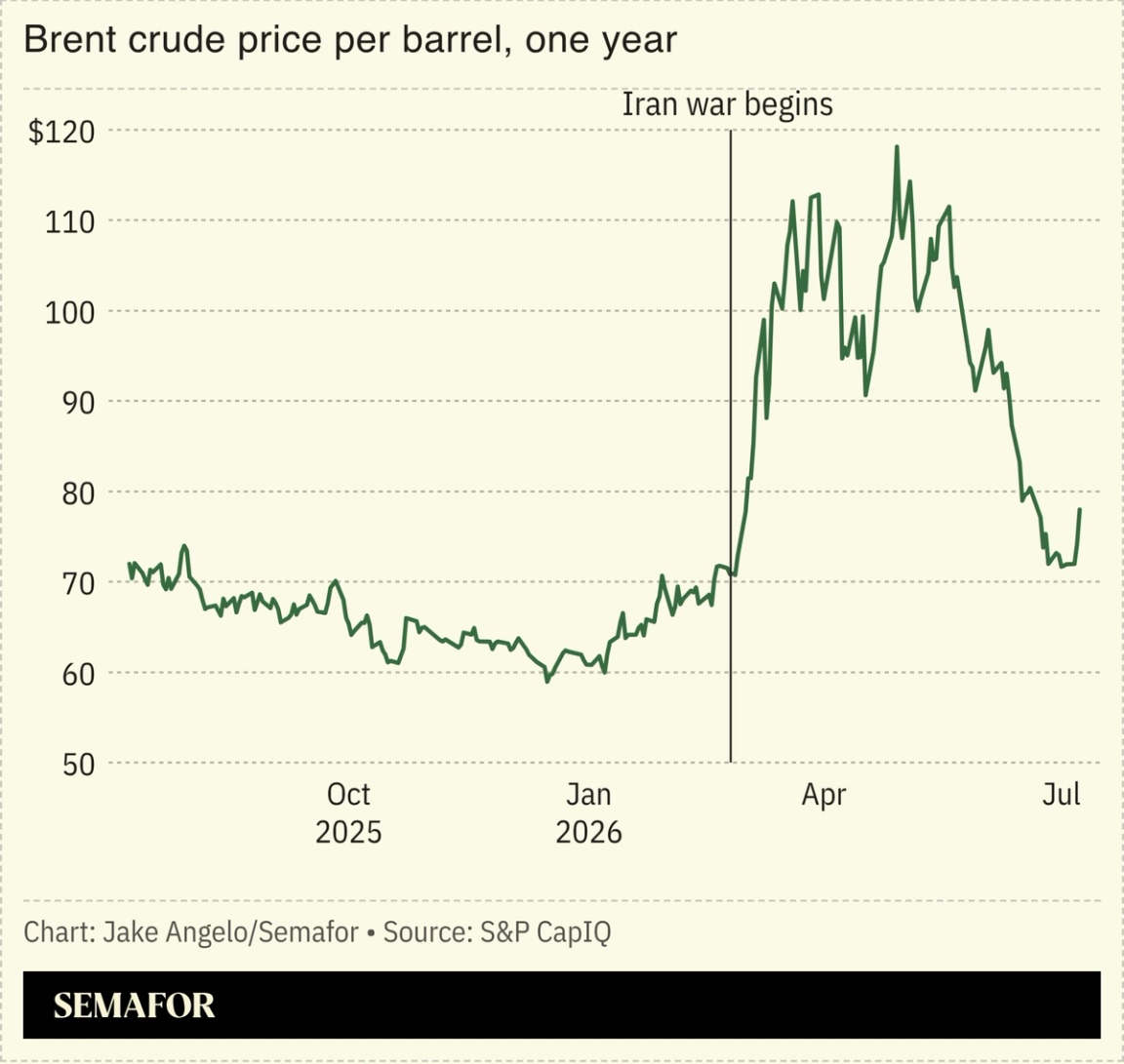 A slate of second-quarter earnings could present the clearest corporate scorecard of the Iran conflict’s impact to date. US oil majors and refiners are expected to report record profits as higher crude and fuel prices “trigger a wartime windfall,” The Financial Times reported, likely boosting US President Donald Trump’s case that the industry is profiteering off the fighting. Meanwhile, Gulf companies’ upcoming results are set to reveal a more uneven impact, Reuters noted: Energy firms saw potential gains from price swings, while airlines, retailers, banks, and real estate companies have shown signs of strain owing to disrupted shipping and weaker tourism and consumer demand. With the US-Iran ceasefire in jeopardy, the region’s risk premium is likely to stay, a strategist said. |
|
Russia-China effort targets Starlink |
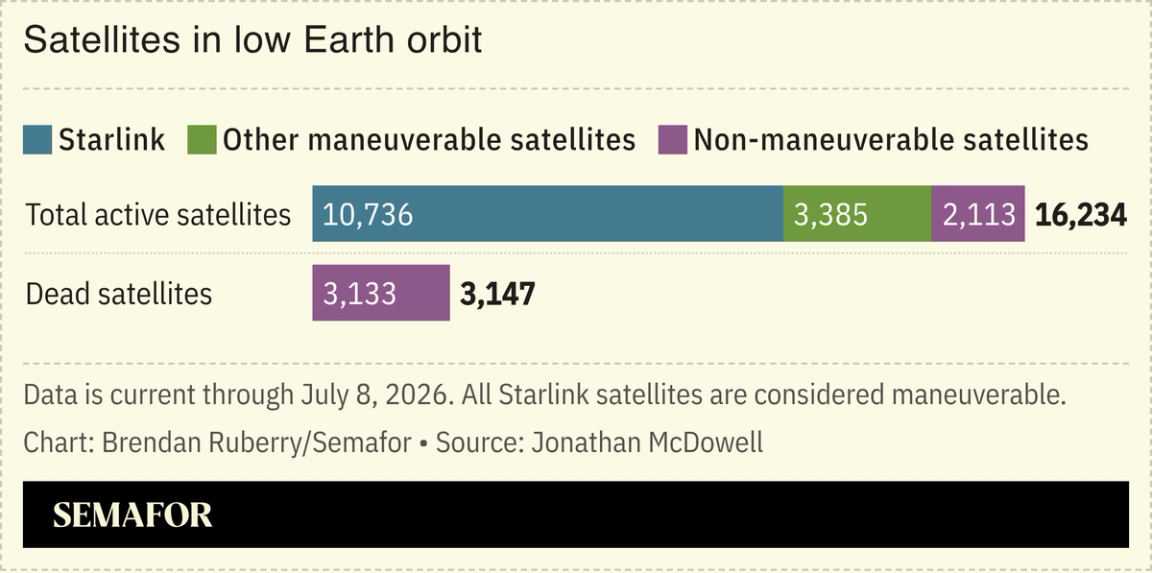 Russia and China are seeking the capability to disable and eventually destroy Elon Musk’s Starlink satellite network, an investigation found, as the allies deepen their clandestine military cooperation. The report by The Insider, Der Spiegel, and Le Monde highlights documents revealing a partnership “to build weapons neither country could develop alone,” including Starlink-specific malware and jamming devices. They also expose a “bargain” — Russian battlefield experience in exchange for Chinese tech, allowing the Kremlin to counter Ukrainian drone attacks while preserving Beijing’s ostensible neutrality. The revelations could complicate Europe’s relationship with China, which has denied aiding Moscow’s invasion. Russian forces are countering Ukraine’s devastating drone attacks, which are aided by Starlink, by deploying powerful jamming devices to disrupt the satellite internet system. |
|
China mulls curbing foreign access to AI |
|
Platner exit muddies Democrats’ future |
 Brian Snyder/Reuters Brian Snyder/ReutersThe end of a Democrat’s disastrous bid for a must-win US Senate seat has blunted the party’s efforts to oppose President Donald Trump’s agenda. Graham Platner’s populist campaign ignited the Democratic grassroots but many soured on the scandal-plagued candidate, underscoring the deepening rift between the party’s moderates and the left wing. Platner’s defiant departure on Wednesday raised doubts that Democrats could unify behind a replacement, threatening their chances of taking control of the Senate in the midterm elections. The debacle may have blown the Democrats’ opportunity to rein in Trump’s power, the Guardian’s Washington Bureau chief argued, suggesting Maine is a “warning that help is not necessarily on the way.” |
|
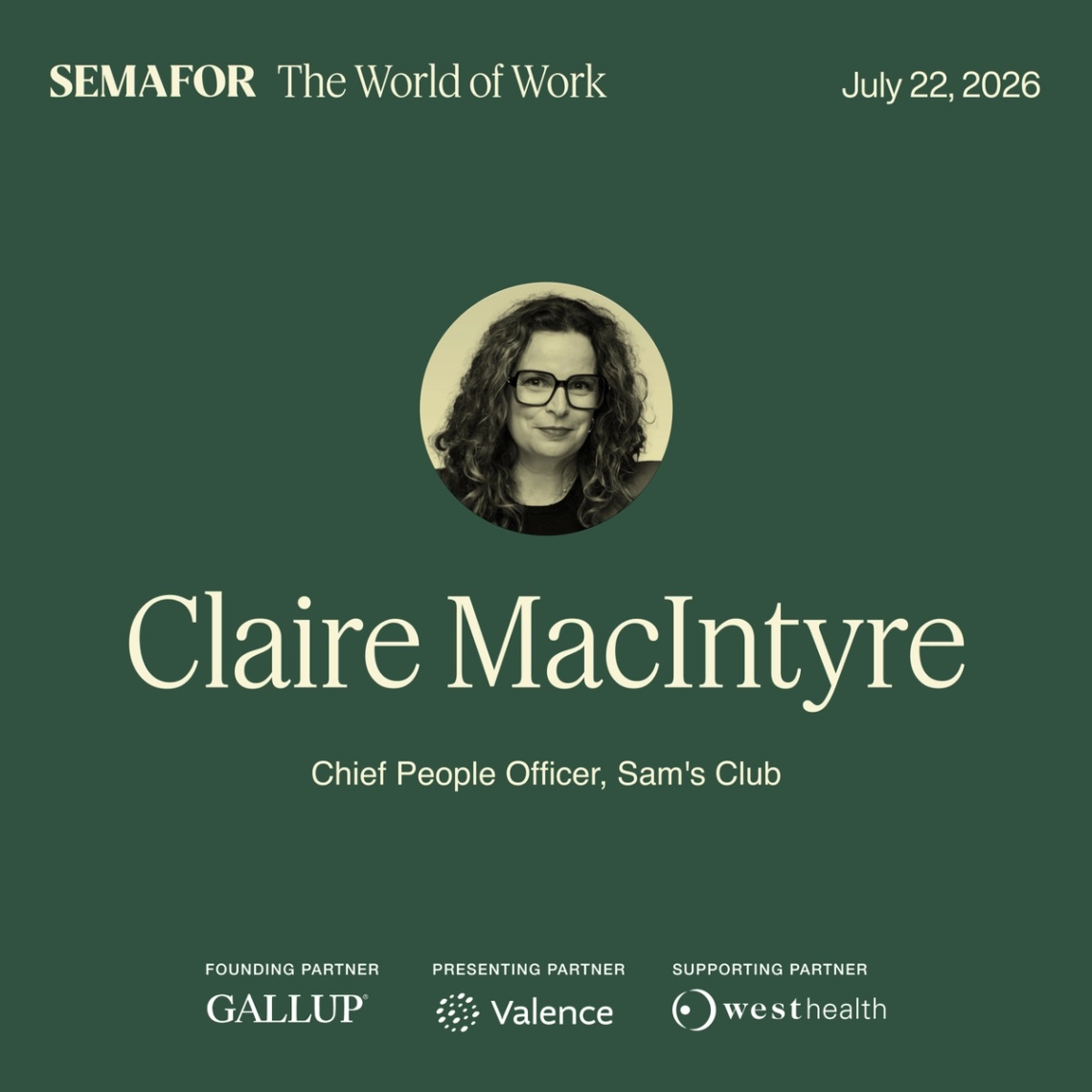 On Wednesday, July 22, Claire MacIntyre, Chief People Officer at Sam’s Club, will join Semafor’s The World of Work in Washington, DC to unpack how institutions are adapting and thriving in an increasingly fragmented economy. As companies face rapid technological change, economic uncertainty, and shifting workforce expectations, leaders are rethinking performance, trust, and long-term success. To explore how AI adoption, workforce transformation, and evolving leadership demands are reshaping the future of work, Semafor editors will sit down with policymakers, business executives, and workplace innovators including Sen. Roger Marshall, R-Kan., Senate Committee on Health, Education, Labor, and Pensions (HELP); Katy George, Corporate Vice President of Workforce Transformation, Microsoft; Mary Moreland, Executive Vice President, Human Resources, Abbott; Allison Peek Bebo, Chief Human Resources Officer, Pearson; and more. |
|
Lessons from the World Cup |
 Paul Childs/Reuters Paul Childs/ReutersThe World Cup has lessons for the post-AI world economy, a prominent writer said. Europe is falling behind on many metrics, but dominates soccer, partly because of the long history of its soccer clubs, Bloomberg’s Joe Weisenthal noted: Liverpool FC is 134 years old. Perhaps Europe’s advantage is that it is rich in history everywhere, not just soccer. “What will be scarce in the age of [powerful AI]?” Weisenthal asked. “A sense of history.” Another lesson, Semafor’s Liz Hoffman argued, could be drawn from FIFA’s controversial decision to overturn a US striker’s red card suspension: “FIFA has always been corrupt, might as well make it work for us.” That is also “how a lot of Americans feel about the economy.” |
|
Americans are reading less |
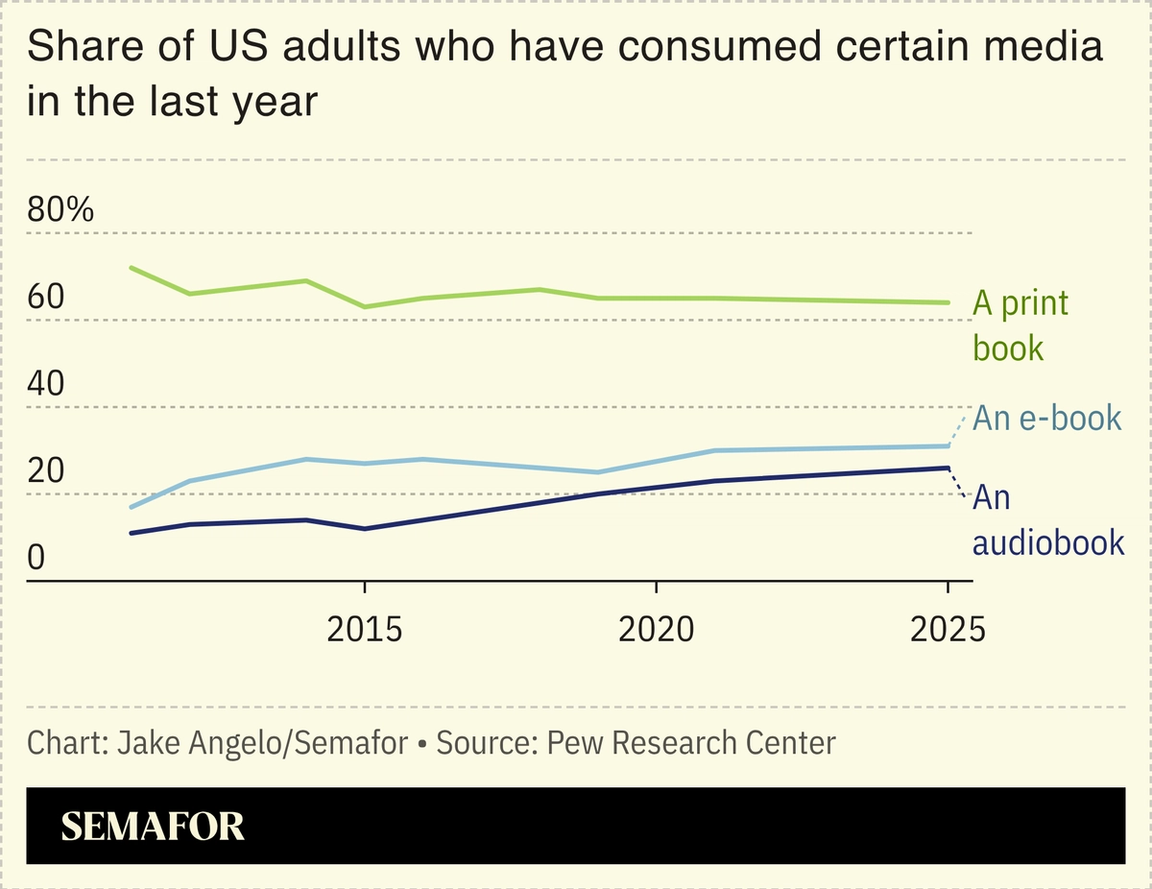 The age of reading is over, a leading journalist argued. Fewer than half of US adults said they read a book in 2022, and the percentage reading for pleasure on any given day fell from 28% in 2004 to 16% in 2023, Rose Horowitch noted in The Atlantic. The reality may be more complicated: Reading scores have fallen on average in wealthy countries, but that is mainly at the lower end of the reading spectrum — the most proficient readers have not lost that skill, and in some places may have improved — and could be partly an artifact of changing measurements. And globally, more people can read: Adult basic literacy rates worldwide have risen from 81% in 2000 to 88% in 2024. |
|
|


