| | The US and Iran look set to continue talks, Washington and Beijing face off on biotech and space, an͏ ͏ ͏ ͏ ͏ ͏ |
| |  | Flagship |  |
| |
|
The World Today | 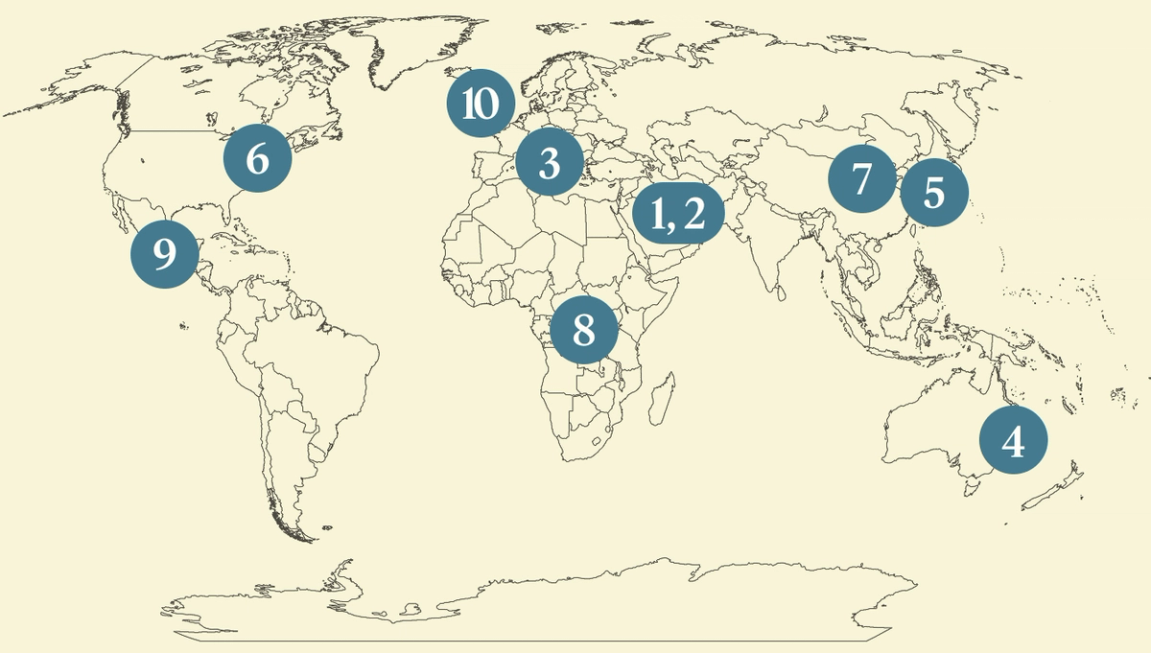 - US, Iran ‘technical talks’
- Oil market fears grow
- Russia’s hybrid push
- Asian powers’ pivot
- Chip stocks surge
- US-China biotech race
- US-China space race
- Ebola workers protest
- Mexico’s rail ambitions
- Bayeux Tapestry returns
 A ‘heroic, fascinating, and important’ (3,000 page) novel. |
|
US, Iran talks and strikes |
 IRIB via Reuters IRIB via ReutersThe US said it would hold “technical talks” with Iran despite the countries’ truce coming under huge pressure in recent days over their strikes against one another. Besides their attacks, the two sides remain far apart on the negotiating table with each holding what appear to be irreconcilable demands: Iran wants to control traffic through the Strait of Hormuz; Washington wants Tehran to give up its missile and proxy efforts. On one side, US President Donald Trump’s potential White House successors are presenting differing paths forward, while Iran’s leadership is trying to rebuild domestic and international support. “There may well be more talks,” the historian Kim Ghattas wrote in the Financial Times, “but there will also be more strikes.” |
|
 Aramco’s Ras Tanura refinery. Ahmed Jadallah/File Photo/Reuters Aramco’s Ras Tanura refinery. Ahmed Jadallah/File Photo/ReutersGlobal oil and fuel markets are ill prepared for a resumption of fighting between the US and Iran, analysts warned. Crude stockpiles across much of the West are near historically low levels, having been drawn down over the course of the war, while oil prices have jumped following strikes in recent days by the US against Iran, and by Tehran against US allies across the Gulf. Even when crude supplies recover, fossil-fuel products such as diesel, gasoline, and jet fuel are likely to be in short supply, JP Morgan said in a note to clients: Middle East oil refineries will take time to be fully repaired after suffering damage during the conflict and Russian refining capacity has been hammered by Ukraine. |
|
Europe battles Russia hybrid push |
 Ramil Sitdikov/Reuters Ramil Sitdikov/ReutersItaly and Poland cracked down on alleged spying by Russia, moves that come as analysts warned that the Kremlin may be looking to expand its use of hybrid warfare as its battlefield efforts in Ukraine stall. Rome expelled two Russian diplomats it said had carried out “serious and unacceptable acts of interference,” while Warsaw sentenced a couple for spying for Moscow. Experts fear that Russian President Vladimir Putin may be looking for ways to escalate his war beyond Ukraine as he seeks to pressure Western leaders into forcing Kyiv’s hand on a ceasefire deal that he can sell as a victory. That leaves Ukraine and its Western backers bracing “for a dangerous summer,” the Financial Times’ chief foreign affairs commentator wrote. |
|
Asian diplomatic, military moves |
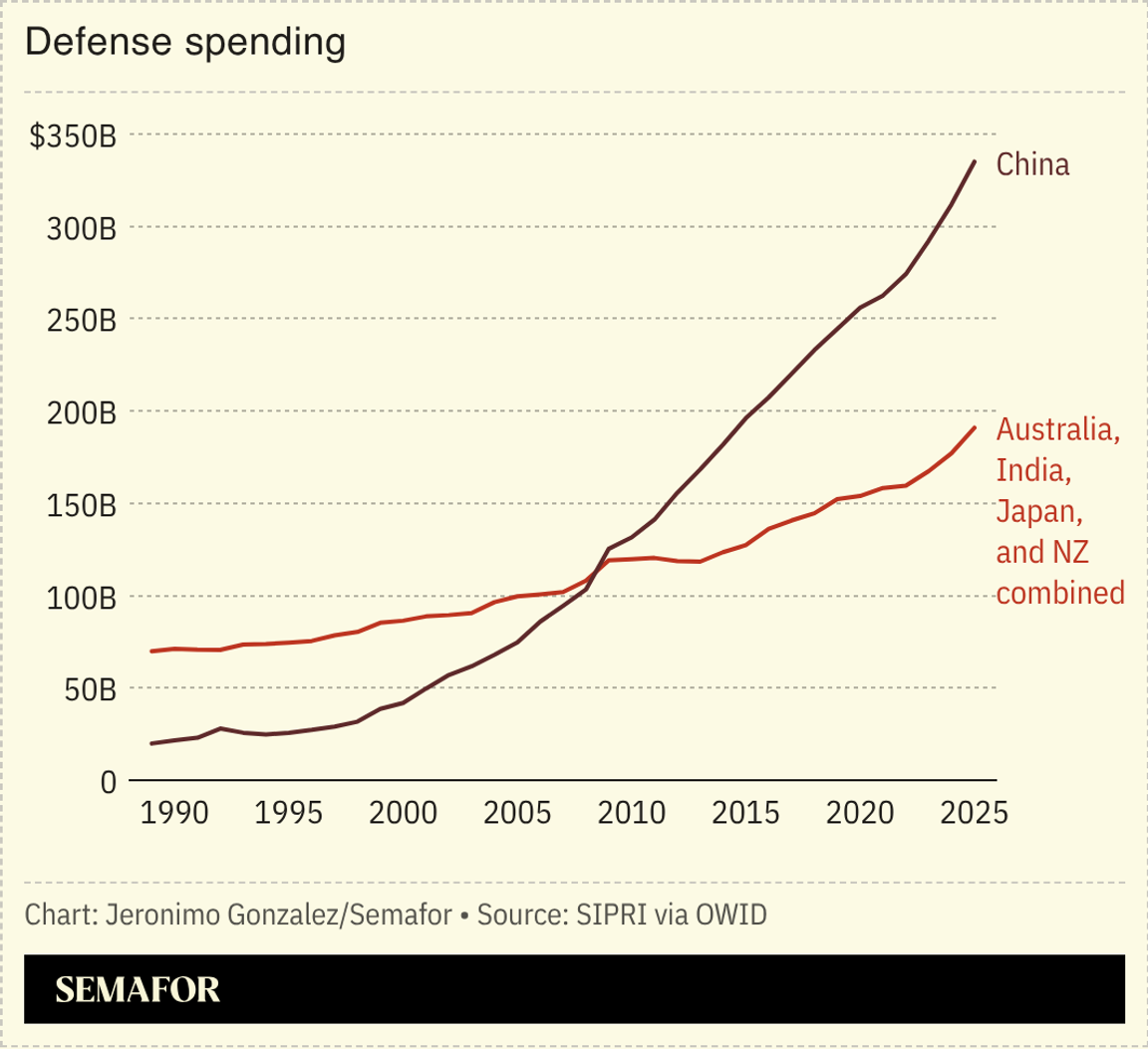 Asian powers are increasingly taking steps to gird against an unpredictable former ally in the US and an ambitious regional rival in China. Faced with delays in deliveries of missiles from the US, countries including Australia, Japan, South Korea, and Taiwan have all begun upgrading domestic military manufacturing capacity, Nikkei reported. Asia-Pacific leaders have also embarked upon separate but concurrent diplomatic offensives to deepen regional alliances: India’s prime minister this week signed a uranium supply deal in Canberra as he nears the end of a three-nation tour, Japan’s leader has hosted and visited a raft of major powers and minnows alike, while Australia has been signing defense agreements with nearby Pacific island nations. |
|
US biotech looks to respond to China |
 Mike Blake/Reuters Mike Blake/ReutersUS biotech firms, venture capitalists, and regulators are scrambling to respond to growing Chinese heft in the sector. Though American companies still dominate the pharmaceutical industry, according to a recent survey, Chinese rivals are making gains in key areas, including the number and speed of clinical trials. In response, the US is tweaking its rules to accelerate treatments getting to trial, financiers are demanding American portfolio companies pursue efficiencies, and startups are being more tight-lipped about their progress in order to avoid showing their hand to competitors on the other side of the Pacific. “We had gotten complacent because we never had a challenger,” one investor told The Wall Street Journal. “Now we need to go faster.” |
|
China reusable rocket recovery |
 China Daily via Reuters China Daily via ReutersChinese authorities recovered part of a reusable rocket following its launch on Friday, the latest salvo in a superpower space race in which Beijing appears to be catching up to Washington. The operation made China only the second country to successfully launch and retain such a craft, and should help cut costs in future, the South China Morning Post said. NASA’s chief said this month that the US was “very much in a space race right now” with China: Both countries are aiming to land astronauts on the moon within the decade, and build out a permanent presence there soon after, while on the private-sector side, too, US and Chinese firms are tapping capital in a bid to expand quickly. |
|
 Katie Nolan is questioning where sports media is headed. On this week’s Mixed Signals, the sports media host and Casuals podcast creator sits down to talk about navigating two decades of upheaval in the industry. Max and Ben ask Katie why she turned down gambling advertising when it was everywhere, how politics keeps inserting itself into sports, and whether the window that opened for women in the space is closing again. They also get into call-in radio, hockey’s underrated chaos, and what it took for her to become a Jeopardy! champion. Listen to the latest Mixed Signals now. |
|
 Gradel Muyisa Mumbere/File Photo/Reuters Gradel Muyisa Mumbere/File Photo/ReutersProtesting Ebola health workers in the Democratic Republic of Congo alleged that they haven’t been paid for their work, further risking efforts to contain the virus’ spread. African health authorities have warned that the latest outbreak is the “fastest-growing” ever; medics in the DRC were already facing almost impossible working conditions given the lack of medical supplies — a shortfall caused in part by sudden Western aid cuts — as well as the spread of misinformation. Reported cases in areas controlled by armed militias have raised fears that the disease could expand beyond authorities’ reach. “We have to plan actively around an explosion of cases,” a health expert working in militia-held territory told The New York Times. |
|
Mexico charts ambitious rail plans |
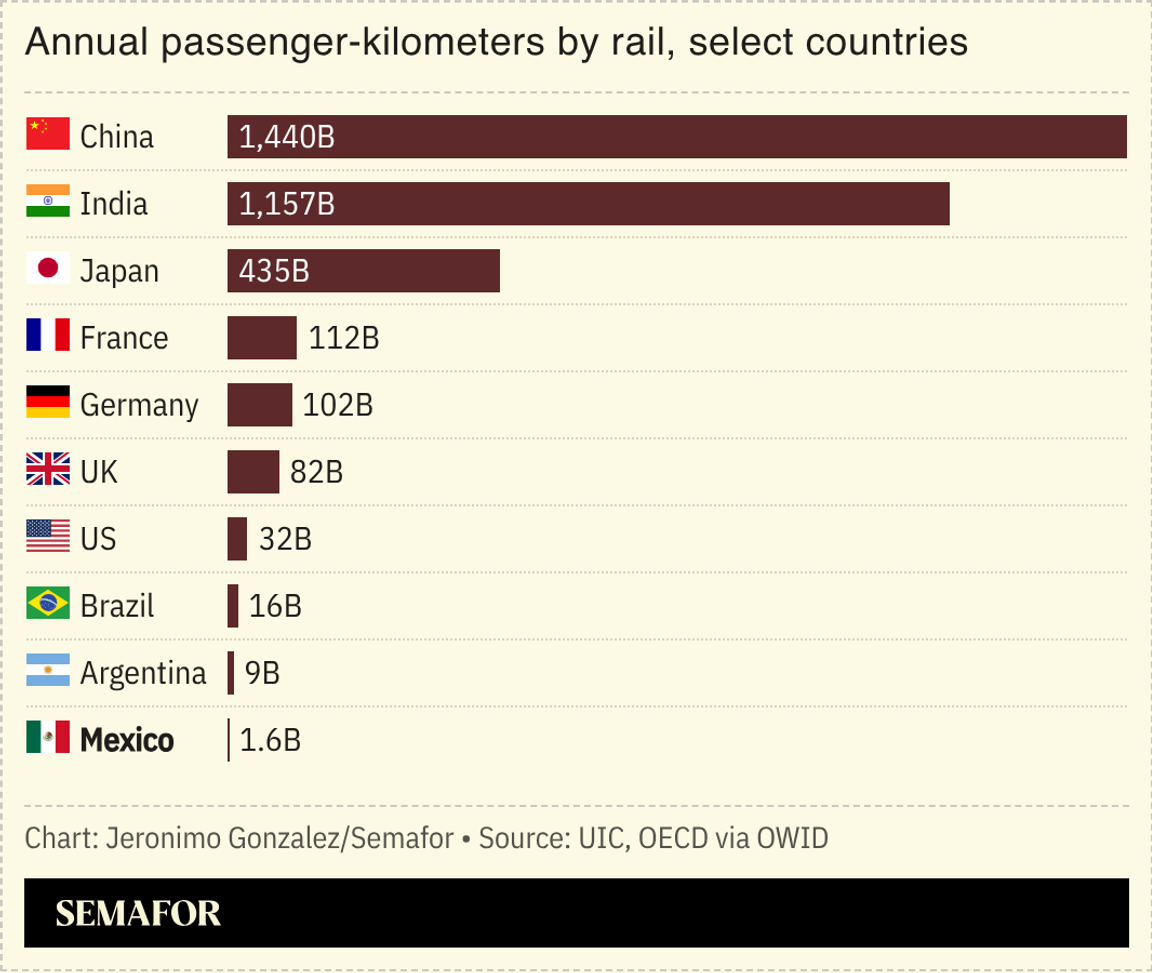 Mexican President Claudia Sheinbaum vowed to build 3,000 km (1,800 miles) of passenger rail nationwide, though analysts questioned the feasibility of her ambitions. Despite once having one of Latin America’s largest passenger rail networks, much of Mexico’s train system has fallen into disrepair, with lines now mostly used to ferry cargo to the US border. Recent efforts to revive the sector have failed, and experts question whether Mexico can afford the cash to invest in such projects, and warn that having the state in charge of building could trigger further risks: A train running on a line built by Sheinbaum’s predecessor derailed last year, killing 14 people. “Efficient travel is worth investing in. So is arriving in one piece,” The Economist said. |
|
|


