| | In this edition: South Africa’s anti-migrant protests weigh on business sentiment, Nigeria faces off͏ ͏ ͏ ͏ ͏ ͏ |
| |  | Africa |  |
| |
|
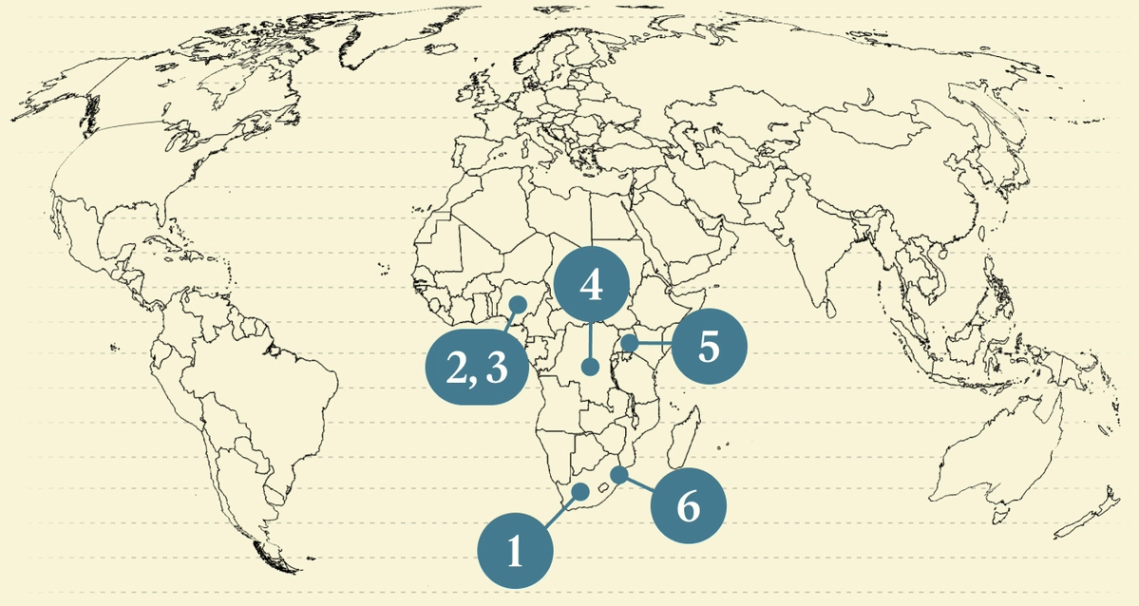 - Unrest hits businesses
- Abuja rejects IMF data…
- … and targets tech giants
- Ebola workers protest
- Africa lacks US envoys
- Weekend Reads
 Is catnip better than DEET at repelling mosquitoes? |
|
 Just as African capitals were working out the cost of the US-Iran war, the prospect of renewed fighting has returned. That should worry policymakers across the continent. The IMF’s latest World Economic Outlook says the biggest casualties from another disruption to the Strait of Hormuz will likely be smaller, oil-importing economies in sub-Saharan Africa with little fiscal room left after years of overlapping shocks. The IMF expects regional growth to hold at 4.3% in 2026, but says that headline masks a widening divide between countries able to absorb external shocks and those that cannot. East Africa has had a preview of how bad this can get. Kenya, Tanzania, and their neighbors — almost entirely dependent on imported refined fuels — have seen pump prices spike since April as the conflict disrupted shipping and raised insurance costs. In countries where people and goods move mainly by road rather than rail, higher fuel costs ripple through nearly every household budget. The IMF warns that prolonged disruptions to energy and fertilizer markets could also worsen food insecurity, particularly for countries dependent on smallholder farmers who cannot compete with wealthier nations for increasingly costly inputs. This “could heighten the risk of social unrest and domestic political instability,” especially where policy space is limited and elections loom. That is why the enthusiasm around Nigerian billionaire Aliko Dangote’s proposed $17 billion refinery in Kenya’s coastal town of Lamu is about more than another industrial megaproject. The planned 700,000-barrel-a-day facility would supply East African countries now reliant on imported petroleum, reducing their exposure to supply disruptions and refining bottlenecks abroad. For years, African leaders have argued that value addition should apply to minerals, not just raw ore. The Hormuz crisis suggests the same principle applies to energy. Refining more fuel at home won’t end all vulnerability to geopolitical turmoil, but it would leave fewer countries at the mercy of supply chains they don’t control. |
|
Businesses brace for more unrest |
| |  | Tiisetso Motsoeneng |
| |
 Oupa Nkosi/File Photo/Reuters Oupa Nkosi/File Photo/ReutersXenophobic unrest in South Africa has become a painful cost of doing business, executives warned, signalling that companies are bracing for a prolonged instability in a country eager to draw fresh investment. Protesters in Africa’s biggest economy — which is already grappling with the world’s highest unemployment rate, collapsing municipal services, and intensifying political agitation — have vowed weekly marches demanding the expulsion of foreigners, souring boardroom sentiment. South Africa’s “collective folly and ineptitude on migration” is making it harder for businesses to trade with the rest of the continent, said Sim Tshabalala, chief executive of Standard Bank Group. Economists say an exodus of foreign workers will trigger labor shortages and economic blowback, ultimately harming local businesses and informal markets that activists say they want to protect. |
|
Nigeria rejects IMF’s findings |
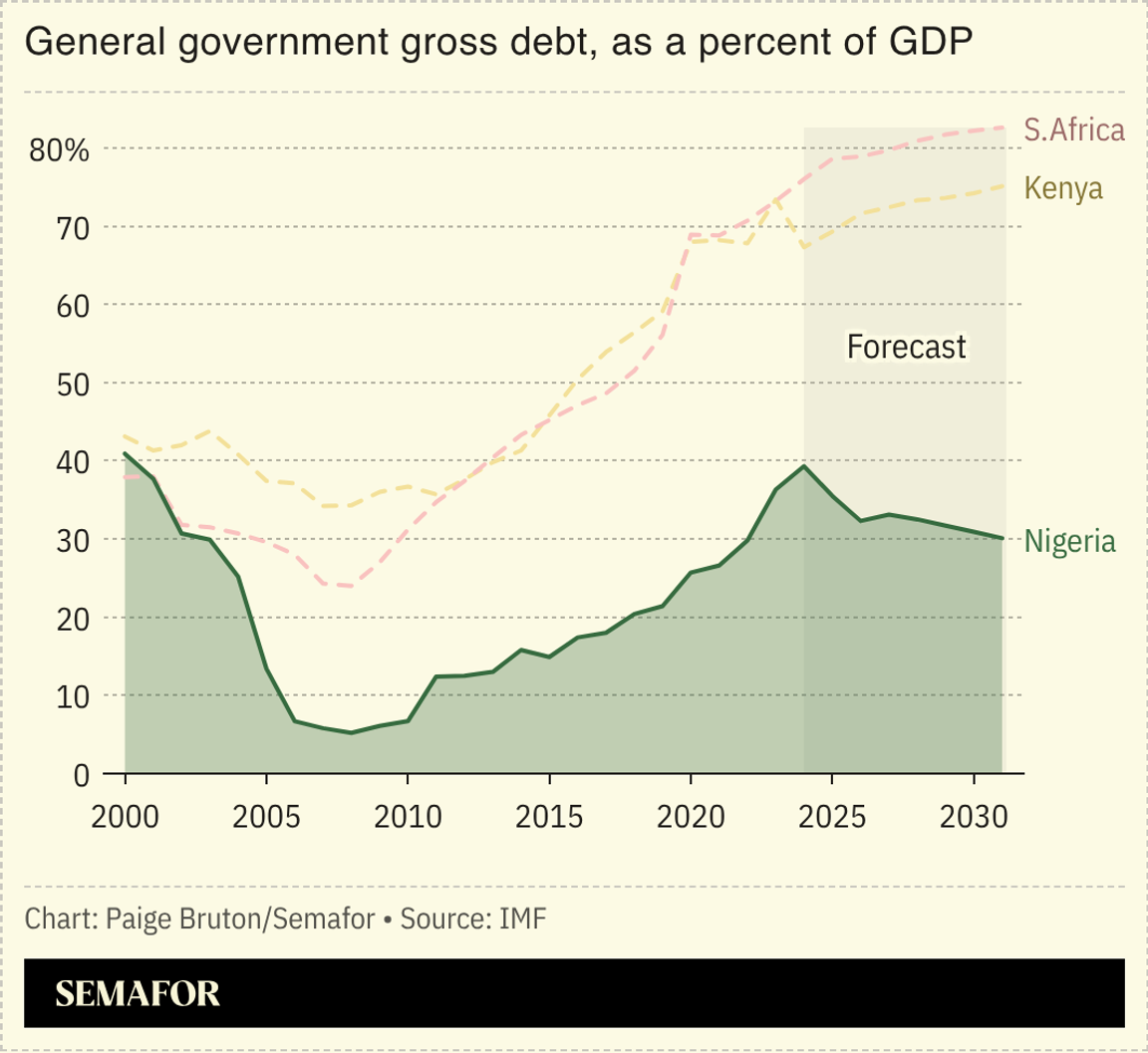 Nigeria rejected the International Monetary Fund’s finding that the country has engaged in extra-budgetary public spending that distorts its deficit levels, blaming poor interpretation of its financial reporting method for the misunderstanding. Even as it broadly praised Nigeria’s macroeconomic reforms of recent years, the IMF, in a June assessment, faulted “off‑budget spending and complex financing instruments” equivalent to about 2% of GDP that needed to be addressed through better transparency and accountability frameworks. Nigeria’s Finance Minister Taiwo Oyedele dismissed suggestions of impropriety, describing a practice in which some capital projects may be funded over multiple years by drawing from different sources of already appropriated funds, which he said “should not be misrepresented as evidence of unlawful expenditure.” Nigeria approved a $50 billion budget for the 2026 fiscal year. But its appropriation process has come under more intense scrutiny in recent weeks after a supposedly fake investment promotion agency was found to have received allocations from the budget. Anti-corruption agencies have begun investigating the incident. — Alexander Onukwue |
|
Nigeria targets Big Tech over news use |
 Sodiq Adelakun/Reuters Sodiq Adelakun/ReutersNigeria’s competition watchdog said it will investigate Big Tech firms over alleged anti-competition practices and unauthorized use of news content. The probe, announced this week, is the second major inquiry in three years against global tech firms undertaken by Nigeria, and points to growing global concerns over firms using proprietary third-party content to train AI models. Nigerian news groups had in March complained to President Bola Tinubu, alleging Alphabet, Meta, and X were among firms whose extraction of content from local publishers was undermining the press industry. Nigeria imposed a $220 million fine on Meta in 2024 following an investigation that alleged a breach of data privacy laws and market power abuse by the Silicon Valley giant. Meta has appealed the fine. The Nigerian examples follow similar cases elsewhere: The New York Times filed a lawsuit against OpenAI, accusing it of using copyrighted material to train AI systems, while five Canadian publications, including The Globe and Mail, filed a similar suit against OpenAI in 2024. — Alexander Onukwue |
|
Ebola health workers protest over pay |
 Gradel Muyisa Mumbere/Reuters Gradel Muyisa Mumbere/ReutersProtesting Ebola health workers in the DR Congo alleged that they haven’t been paid for their work, putting efforts to contain the virus spread further at risk. African health authorities have warned that the latest outbreak is the “fastest-growing” ever; medics in DR Congo were already facing almost impossible working conditions given the lack of medical supplies — a shortfall caused in part by sudden Western aid cuts — as well as the spread of misinformation. Reported cases in areas controlled by armed militias have raised fears that the disease could expand beyond authorities’ reach. “We have to plan actively around an explosion of cases,” a health expert working in militia-held territory told The New York Times. The World Health Organization said the outbreak has now killed more than 600 people — just days after the figure topped 500 — along with more than 1,700 cases. Twenty cases have also been recorded in neighboring Uganda, along with two deaths. |
|
US lacks Africa ambassadors |
 US President Donald Trump’s Senior Advisor for Africa Massad Boulos. Jean Bizimana/Reuters. US President Donald Trump’s Senior Advisor for Africa Massad Boulos. Jean Bizimana/Reuters.The US does not have a Senate-confirmed ambassador in more than 40 African nations, hampering Washington’s efforts to engage in security and diplomatic missions across the continent. While there are vacancies across the diplomatic corps, the gap in Africa-specific posts — including DR Congo, Kenya, Libya, Nigeria, and Sudan — is especially stark: It widened in December when the administration recalled more than a dozen career ambassadors from Africa, a move the American Foreign Service Association called “institutional sabotage.” The vacancies come as Washington negotiates high-stakes deals — like a US-brokered DRC-Rwanda peace agreement and a Libya peace deal — often through high-profile envoys like President Donald Trump’s Africa adviser, Massad Boulos, rather than resident ambassadors. — Adrian Elimian |
|
 - The Trump administration is using visa bans and financial incentives to pressure African nations into accepting migrants with no ties to those countries, according to a new AFP investigation. The reporting traces cases from Eswatini high-security prisons to secret holding sites in Ghana, finding that deportees have been held without charge, denied access to lawyers, and in some instances abandoned without documents in neighboring countries. The findings note how visa restrictions and aid deals have become leverage in Washington’s deportation strategy.
- After three years of civil war, Sudan has few real diplomatic or trade allies — a vacuum China is looking to fill. No Western country has an embassy remaining in the country; US aid was completely halted in 2025, and international emergency relief organizations run limited campaigns providing water and medicine amidst extreme violence. However, China is actively seeking investments in Sudan, Paul Mwirigi writes for The Diplomat. There has been little recognition of Beijing’s growing ambitions in the war-torn country, which are aimed at “locking in longer-term and fully extractivist deals.”
- Ghana’s reparations push is about more than compensation. The country is using the issue to revive pan-African solidarity and reshape Africa’s place in global politics, writes Solomon Osei Poku in African Arguments, arguing that reparatory justice should drive economic transformation, institutional reform, and stronger ties with the diaspora. The movement marks a shift from symbolic remembrance to a practical political agenda, with Ghana positioning itself at the center of a renewed Pan-African project, he writes.
- The sharp differences in how the world’s three biggest credit rating agencies assess African countries and institutions suggest the process may be biased. Misheck Mutize, who is a lead expert on credit ratings with the African Union, points to cases where Moody’s, S&P, and Fitch reached markedly different conclusions on the same borrowers, raising questions about consistency. He argues that flawed ratings inflate borrowing costs and urges African governments to challenge questionable assessments, diversify funding sources, and reduce reliance on Western rating agencies.
|
|
 Business & Macro |
|
|


