
|
 |
A Season of Death and Fear
From nervous Haitians in Ohio to a grieving family in Texas, the real-world effects of Trump’s assault on immigrants.
|



| ||||||||||||


A report this morning from the Navigator polling outfit contains new data from a national survey on attitudes toward the 2026 FIFA World Cup and U.S. viewership. It confirms that our enthusiasm at Bulwark HQ for the World Cup doesn’t make us oddballs. As of June 30, nearly half of Americans had watched a World Cup game, with more planning to watch as the tournament continues. And the numbers are the same for Democrats and Republicans. Bipartisan enthusiasm for globalization, ftw!
So enjoy today’s and tomorrow’s games—and next week’s semifinals and final. Happy Friday.
 |
The Quiet Before the Assault
by Jim Swift
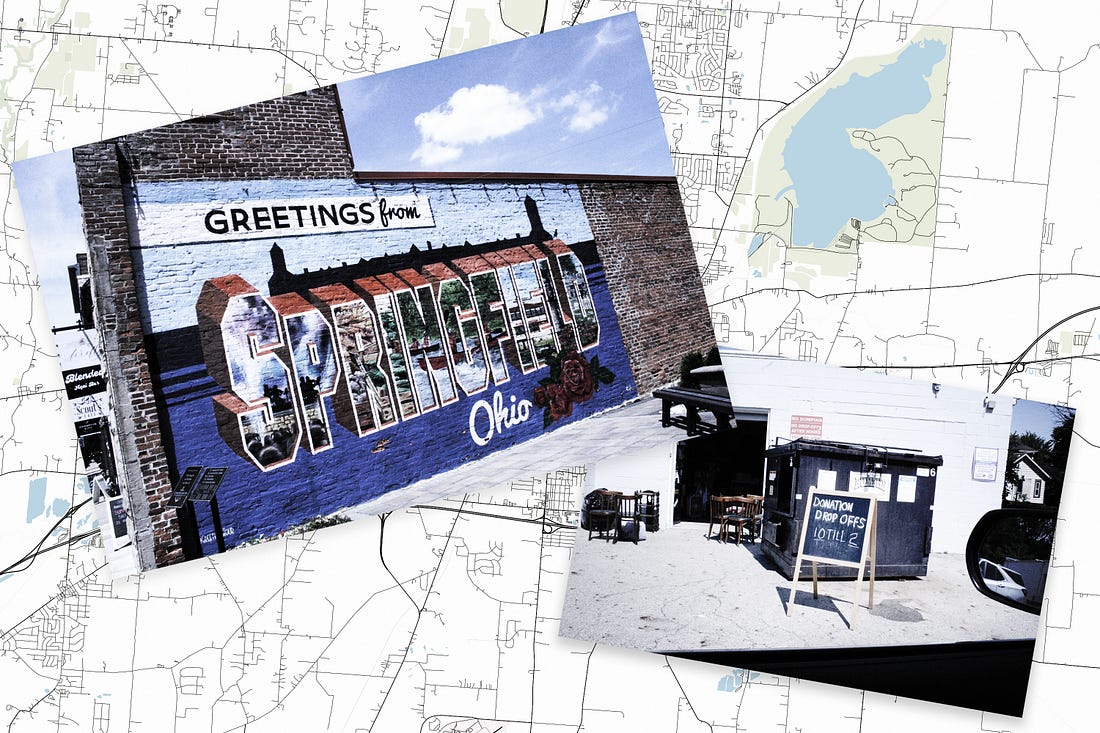
Springfield, Ohio
You’d think this town would be on the verge of panic.
It’s not. At least, not in public.
After the Supreme Court’s ruling in Mullin v. Doe two weeks ago paved the way for the Trump administration to deport from the United States perhaps hundreds of thousands of Haitian refugees, I came here to observe a rally for the city and its Haitian community and gauge the mood. It was somber but not despondent. But with today marking an important deadline—it’s the day on which work authorization under Temporary Protected Status is set to expire for refugees from Haiti and Syria—and the prospect of mass deportation drawing closer, I was curious to see if that mood had changed. How were people here adjusting to the fact that Springfield, which had built a future with its Haitian community, now has to wait to learn whether Washington will succeed in undoing it?
The people of Springfield—like many other cities across the country—now have to make some very difficult decisions. With those TPS work permits expiring today, employers will now have to choose between firing longtime employees or violating federal law.
And the temporary Ohio drivers licenses issued for those under TPS already expired earlier this week—which means that driving, for many of those people, is now illegal, and an easy way to get caught by DHS.
I visited the local branch of the Society of Saint Vincent de Paul, a Catholic charity dedicated to aid for the poor. Its thrift store is the engine for the organization’s community support hub next door, in a dated building with computer stations visible from the outside.
I noticed that the parking lot seemed pretty empty for a Wednesday afternoon. A multilingual sign explains the limit of items per customer in the free food pantry. I heard an employee named Chuck describe to the cashier what donations had just come in, as he lugged peanut butter and other goods toward the shelves.
Ohio Gov. Mike DeWine, who has longstanding ties to both Springfield and Haiti, told the local press earlier this week that the local Saint Vincent de Paul council was working to secure U.S. passports for the U.S.-born children of the Haitians here, as they are, without a doubt, U.S. citizens.
“A lot of great work has been done by a lot [of] good people in Springfield to help them do that,” DeWine said, emphasizing not only how good Ohio has been to these Haitians but how good the Haitians have been for Ohio. The surge of immigrants—estimated at upwards of 10,000—to Springfield from the earthquake-racked and violence-riddled Caribbean country was successfully absorbed thanks in large part to the local faith community and its charities.
That is, until 2024, when Donald Trump and JD Vance helped spread vile lies about Springfield’s Haitians supposedly eating their neighbors’ pets. Pastor Carl Ruby of Central Christian Church told me in February, “We [Springfield] typically get twenty . . . inquiries a year from businesses looking for a place to locate. We have not had a single one since the ‘cats and dogs’ comment.”
I visited with Rick, a Bulwark reader who has spent years walking alongside Springfield families during some of the most important moments of their lives, both in his day job in public health and in his faith community. That experience has given him a close view of the anxiety many are feeling.
Rick has counted the Haitians under TPS as both friends and neighbors. He’s learned a little French along the way, but told me that Springfield’s Haitians are “working really hard to assimilate and to learn the language and to do all the things that we so often say we expect of people.”
“They really want to be a part of a community,” Rick said, as we grabbed lunch at Charlo’s, a restaurant downtown.
He worried about biased news sources distorting people’s impressions of Springfield’s Haitians. “It’s hard to hear misinformation, knowing it’s harming people that I’ve met and have come to love,” he said. “We’re so isolated from each other. I feel like I can tell from day to day what news source people are watching.”
It’s not just the news media. The White House publishes its own alien-themed, error-laden website that the Ohio Immigrant Alliance says “creates a false impression of actual criminal activity.”
Some of the city’s Haitians have already been withdrawing from public life, stopping their attendance at church, or not appearing at work, according to people I interviewed. It’s not immediately clear if they’re staying home, like so many others across the United States from different communities fearing imminent deportation, or if they’ve left Ohio for other states, hoping to avoid the special scrutiny on this once-hopeful town. Thanks to the controversy over the Haitians in Springfield in particular—which, again, didn’t appear over more than a decade of immigration and assimilation, and really only exploded due to Trump and Vance’s agitation—the town has had to deal with