| | In this edition: drones that aren’t really drones, and an AI safety plan urges China and the US to p͏ ͏ ͏ ͏ ͏ ͏ |
| |  | Technology |  |
| |
|
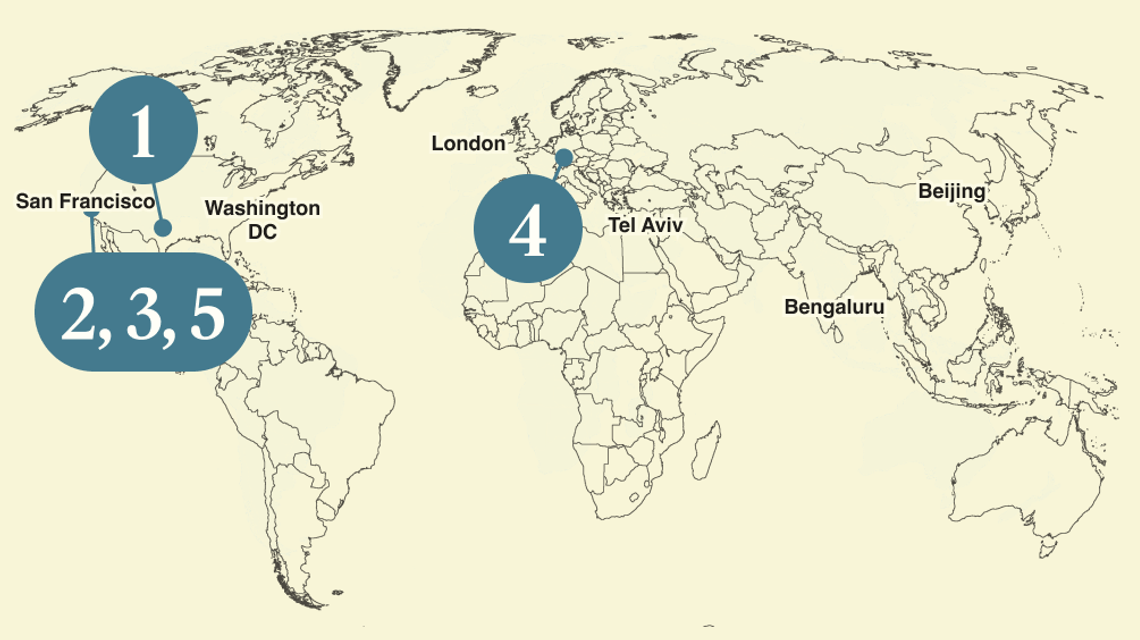 - Musk’s fast moves
- Meta’s new tools
- Wearables want your data
- Don’t call it a drone
- Tech’s wealth transfer
 A new view on the promise of AI, and the moat around AI-generated fiction. |
|
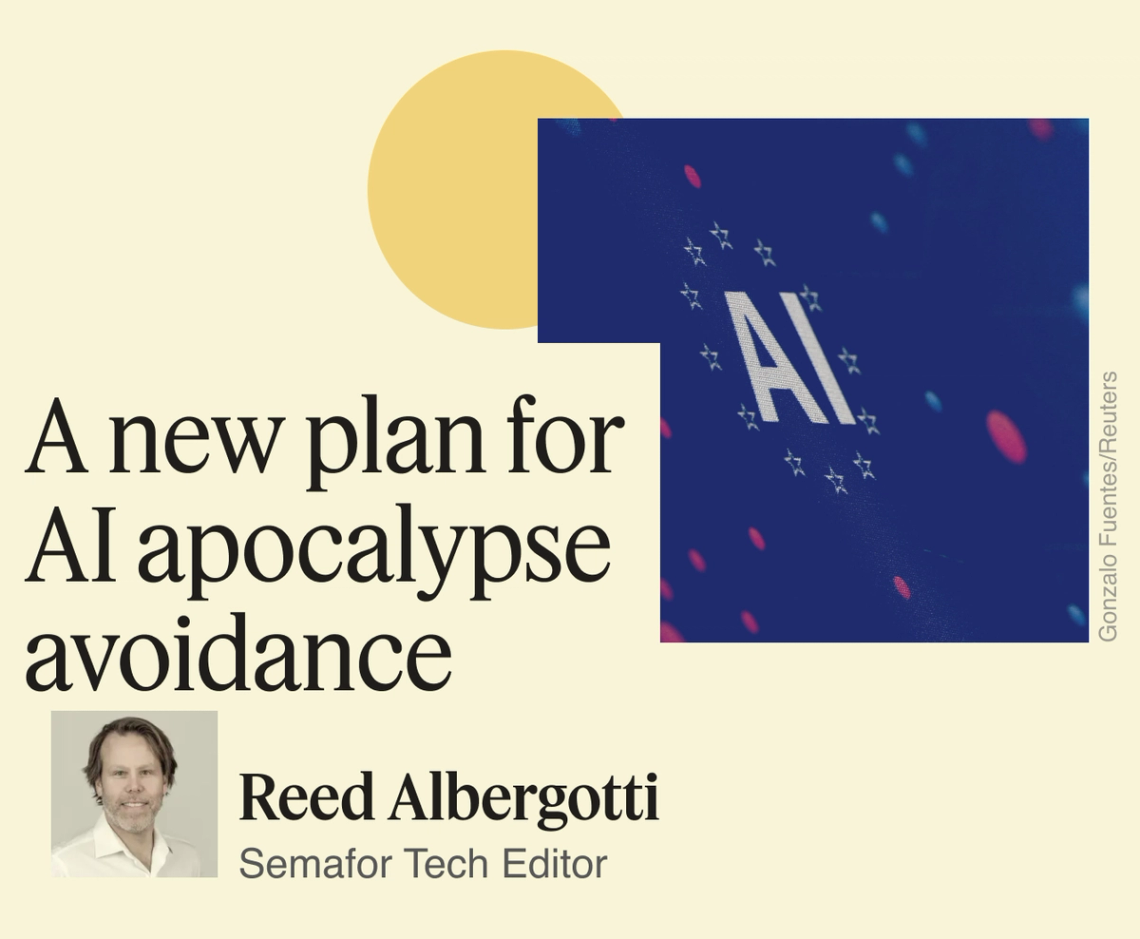 The AI Futures Project last year issued a gloomy prediction of what will happen if AI progress continues unchecked: Humanity doesn’t make it. This year, the research group headed by former OpenAI researcher Daniel Kokotajlo is going one step further. In AI 2040: Plan A, the group is advocating for the US and China to cooperate on a temporary pause of frontier AI research so the industry can build some scaffolding around safe development. “We’re not exactly de-growthers,” Kokotajlo told Semafor. “But if you want to actually benefit from that growth and abundance, you need to avoid the risks involved.” The idea has already drawn criticism from AI accelerationists who dismiss the “doomer” notion that superintelligent AI will inevitably destroy humanity. But if you read the report — and it is not light reading — “Plan A” is far from anti-AI propaganda. In fact, there is more than enough acceleration of AI to create unprecedented economic growth. It dispenses with the idea that AI replacing human labor will lead to economic ruin. But even if frontier AI development stopped today, current capabilities are enough to spur a years-long wave of innovation and economic growth. It just takes more data-center capacity and infrastructure for the benefits to fully materialize. “Plan A” pauses development for a couple of years, and has some pretty far-out ways of ensuring China and other countries don’t cheat to get ahead. The plan also reads a bit like a fairy tail in which world leadership suddenly comes together, setting aside politics, personal interest, and greed for the sake of humanity. It seems even more pie-in-the-sky when you consider brave global leadership is scarcer than GPUs and high-bandwidth memory. So far, the AI safety movement has used fear as a motivator. That’s clear in last year’s report, which made waves across tech and politics circles around the world. But after reading this year’s report, I wonder if a more optimistic message about the promise of AI and economic prosperity might be a better sales pitch, or at least lead to better outcomes. I posed the question to Kokotajlo, who said the goal was careful analysis, rather than persuasion: “Probably we’ll tick off a lot of people due to clumsy framing,” he said. “Hopefully, more savvy people can take inspiration from us and craft a plan that is really compelling and inspiring.” In other words, AI safety is not standing in the way of AI development and rapid economic growth. They can be the same thing. |
|
Musk acts fast, but can it last? |
 Brendan McDermid/Reuters Brendan McDermid/ReutersSpeed is Elon Musk’s superpower, but his abilities clearly have limits. Cursor and SpaceXAI announced Wednesday that they collaboratively released a new model, Grok 4.5, designed to work within Cursor. The announcement came with all the usual comparisons to the big foundation models against benchmarks that provide some vague sense of capability. But what matters is how fast SpaceXAI and Cursor moved. The two began working together in April and announced plans to go through with the $60 billion acquisition less than a month ago. That’s quick. Musk got a late start in the LLM game, and spun up xAI’s data center in astonishingly record time. He had nearly caught up to the frontier by last year, but then he took his eye off the ball and only later realized he needed a platform for his AI model to be useful for agentic purposes. OpenAI has Codex. Anthropic has Cowork. Google has Antigravity. SpaceX had to acquire Cursor. Once most of Musk’s empire is under one roof (SpaceXAI is likely going to merge with Tesla), the question becomes whether it will be possible for him to keep all of his ambitious projects moving at his usual breakneck pace. – Reed Albergotti |
|
 Brendan McDermid/Reuters Brendan McDermid/ReutersMeta this week rolled out two new AI models as it tries to catch up to competitors and assert itself as a top player in the AI race. Muse Image, true to its name, is an AI image-generation feature for advertisers, creators, and influencers with a feature that’s already causing concern about privacy and online safety: It lets users generate AI images using photos from public Instagram accounts without the account holder’s expressed permission. Meta has said it has safety mechanisms and guardrails for the tool, and that private accounts and those of users under 18 are excluded. Other account holders can opt out. On Thursday, Meta followed that by announcing Muse Spark 1.1, a model built for agentic coding with “very aggressive and attractive” pricing, CEO Mark Zuckerberg said in an interview with Bloomberg. Meta has ridden on the heels of other tech innovations before, like TikTok (Instagram Reels) and X/Twitter (Threads). And like SpaceXAI, it announced last week it would sell some of its excess compute. Muse Spark is chasing what Anthropic and OpenAI are already doing for developers accustomed to agentic coding tools, and Muse Spark doesn’t show major improvements in coding over its competitors’ models, according to benchmarks. – Jake Angelo |
|
Wearable-makers want to control the data, too |
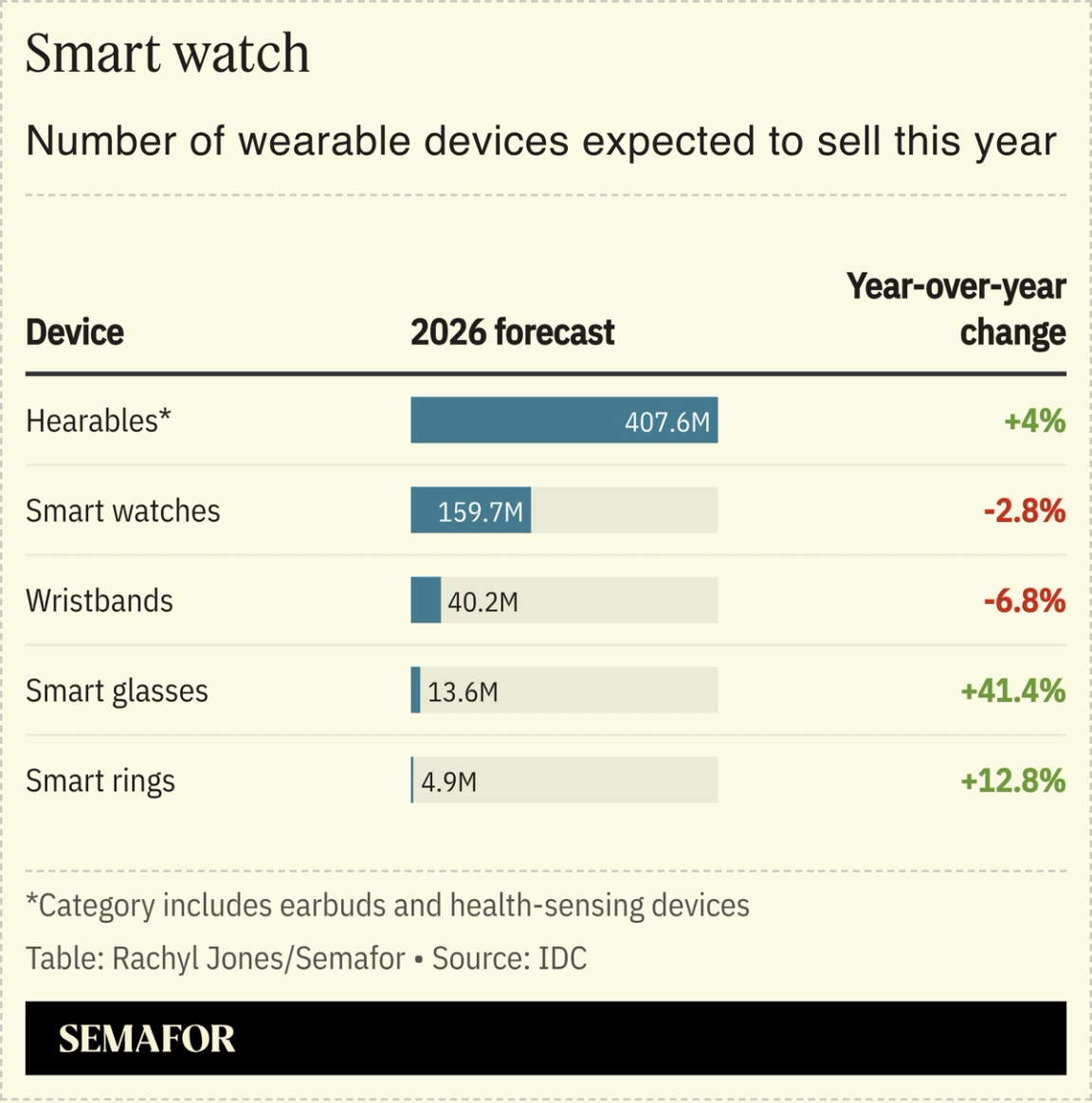 Wearable-makers want a smartphone-adoption moment. Chipmaker Qualcomm is working on up to 40 different kinds of devices with its customers, helping them design things like digital watches, rings, and glasses in a way that delivers consumer data back to the companies creating the products, Ziad Asghar, senior vice president and general manager of XR and wearables, told Semafor. “Pretty much every company that has massive or big AI investments” is jumping in, he said, declining to name his clients. Meta recently came out with a new, cheaper version of its AI-enabled smart glasses, and Google is set to release eyewear this fall. For hardware developers, collecting data means consumers can better personalize their devices, said Asghar, adding that their data can live on local hardware, which might also ease some users’ concerns over privacy. By controlling the data, companies can also keep users locked into their systems and away from their competitors, said tech analyst Carolina Milanesi. – Jake Angelo |
|
 Benoit Tessier/Reuters Benoit Tessier/ReutersGENEVA — Call it a self-flying camera. Call it a flying car. Just don’t call it a drone. Executives from three Chinese companies that make autonomous aviation tech told Semafor they don’t want to be associated with the term “drone,” which has become more linked to death and security risks than innovation, leisure, and transportation. US drone industry lobbyists have long tried to avoid the term, but the marketing materials on display at the UN’s AI for Good summit underscored how sensitive Chinese companies in particular have become to negative perceptions of their tech amid a global expansion push. Now, MQ Wang’s self-flying camera company HOVERAir has an office swear jar for anyone who says “drone.” Wang said the weaponized image of the tech has been “almost like a living nightmare for me.” The firm, which markets itself as a recreational tool for athletes and content creators, is currently blocked from selling its latest offering in the US under a new federal rule. EHang, which makes passenger drones, doesn’t “like the concept of ‘drone’ for our aircraft,” regional Vice President Ricardo Ortega said. “We are strictly focused on civil aviation.” Xpeng, the Chinese EV-maker that’s branching into robotics and aviation, prefers “flying car.” Drones are “now your little nephew’s annoying hobby at the party,” Europe marketing and brand chief Sven De Smet said. – J.D. Capelouto |
|
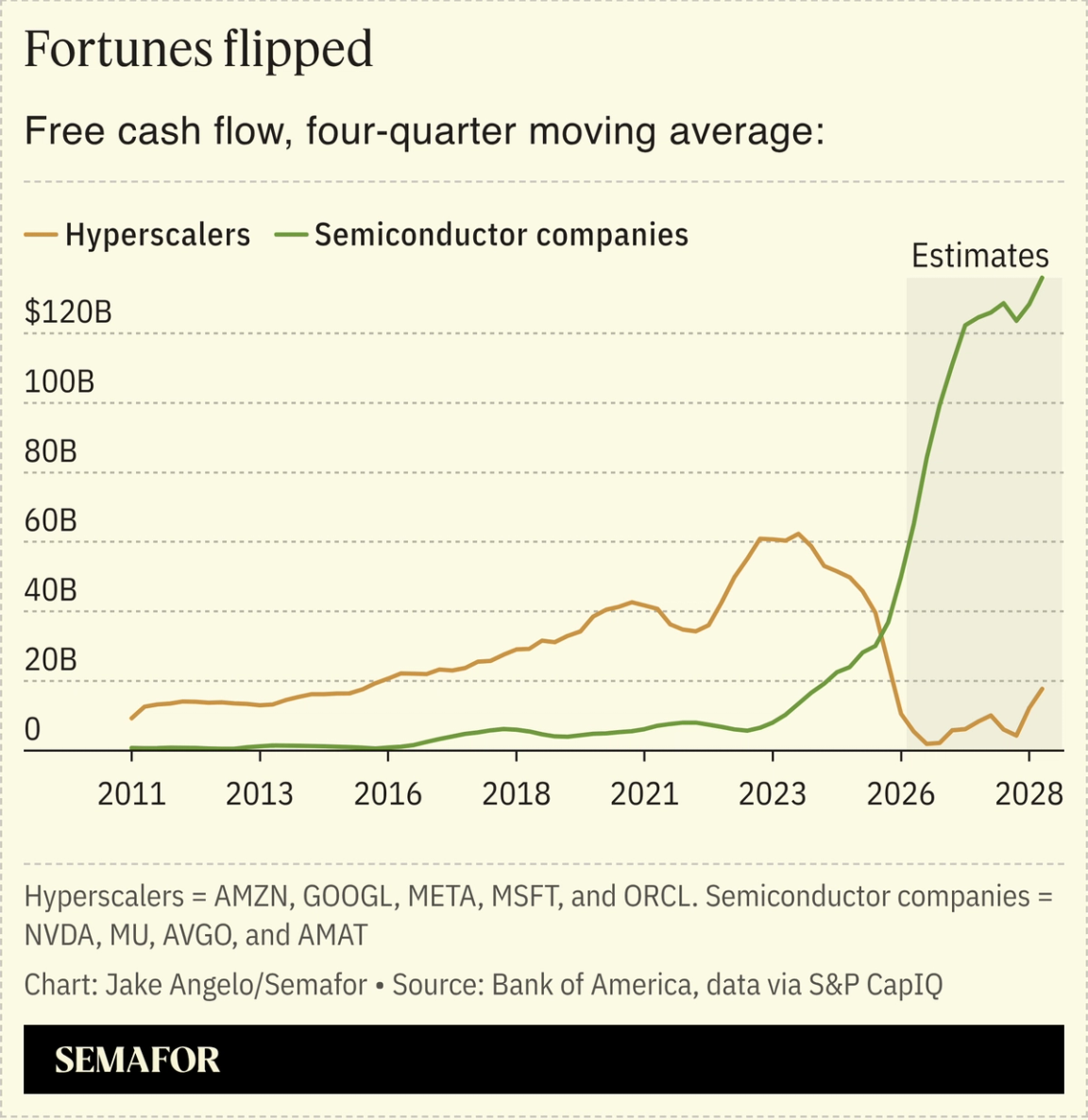 A chart this week from Bank of America ricocheted around Wall Street and Silicon Valley, capturing the “generational transfer” of profits in the AI ecosystem. Huge capital expenditures are collapsing big tech companies’ free cash flow, a metric prized by shareholders. Meanwhile, the less sexy companies that make the processing and memory chips that underpin AI models are raking in cash. As Semafor’s Liz Hoffman wrote earlier this week, investors have been chasing the chokepoints around AI in search of the next winner. Bets have shifted from the LLMs themselves (not that they’re having trouble raising money yet) to the infrastructure to house them, the applications to support them and, most recently, to the memory chips that make them work. This trend could ease as hyperscalers outsource more of their costs to private equity and chipmakers ramp up their own capex, but this represents the starkest snapshot we’ve seen of where the value from AI is moving. Sign up for Semafor Business, a twice-weekly briefing from two of Wall Street’s best sourced reporters. → |
|
|
 Katie Nolan is questioning where sports media is headed. On this week’s Mixed Signals, the sports media host and Casuals podcast creator sits down to talk about navigating two decades of upheaval in the industry. Max and Ben ask Katie why she turned down gambling advertising when it was everywhere, how politics keeps inserting itself into sports, and whether the window that opened for women in the space is closing again. They also get into call-in radio, hockey’s underrated chaos, and what it took for her to become a Jeopardy! champion. Listen to the latest Mixed Signals now. |
|
The rise of AI is changing professional writing. Most writing work is “stupefyingly boring,” the writer Teddy Brown noted: Product copy, white papers, SEO-targeted blogs. It “never needed to be that good,” and AI is well suited to churning it out. It was, however, well paid, and “younger writers… will be denied those stabilizing paychecks.” But there still seems to be a moat around fiction, which is supposed to involve a connection between author and reader. China’s serialized web-novel industry, which arose in 1990s internet forums and now generates billions of dollars in revenue, originally embraced AI writing to pump out content. But readers are being turned off by the shift, Rest of World reported, and platforms are trying to stamp it out. |
|
 Liz’s View: The mistrust between companies and the frontier labs they are in bed with is bubbling over into a fury channeled by Palantir’s Alex Karp in a chaotic appearance on CNBC last week. → |
|
|
|


