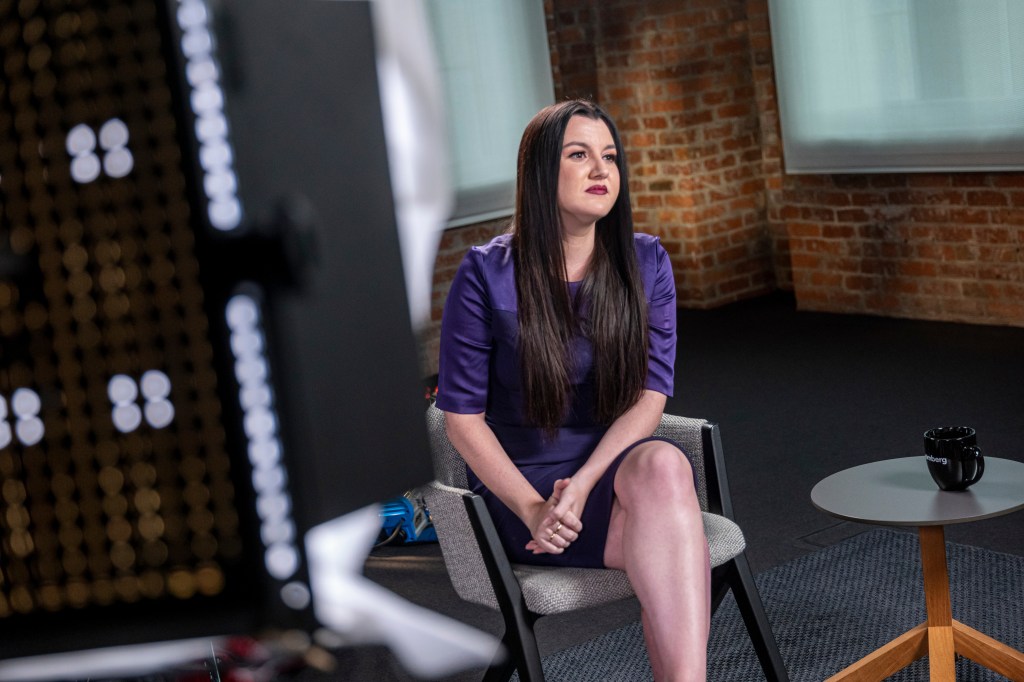
Three months ago, Fidji Simo announced
she would take medical leave from OpenAI. She was the company’s “CEO, AGI deployment,” a demanding job that involved overseeing more than half of OpenAI’s workforce and running nearly every aspect of the business of AI while CEO Sam Altman handled research and compute. But she’d also been struggling with the chronic neuroimmune condition POTS and experienced a relapse before starting the job of a lifetime last year.
“It’s now clear that I’ve pushed a little too far and I really need to try new interventions to stabilize my health,” she told employees in April. “I can’t wait to be back in the arena with you all soon.”
Sadly, it didn’t work out that way. Simo
announced last night that she won’t return to her full-time role at OpenAI and will instead become a part-time advisor. During her medical leave, “it became clear that the road to recovery would be much longer and more complex than I had anticipated—and that I needed to focus on it fully,” she wrote on X.
It’s a huge loss for OpenAI. Simo had become one of the most powerful women in the field, determining how AI would be integrated into every aspect of our lives, making decisions like the prioritization of OpenAI’s forthcoming “superapp.” (Even though she was on medical leave, we kept her at
No. 28 on this year’s Most Powerful Women list.) She was even overseeing other important execs like CFO Sarah Friar, freeing Altman up from management duties. After OpenAI’s IPO, Simo would have been a key executive at the public company.
So this turn of events, to me, reveals just how tenuous women’s grasp on power still is. It reminds me of two recent stories I’ve been covering: Melinda French Gates’
push into women’s health and the exit of Marianne Lake
from JPMorgan’s succession race.
French Gates has directed millions to women’s health and, as a new addition, women’s midlife health with this thesis: without their health, women can’t access their full power. That’s exactly what we’re seeing play out here. Women are more likely to suffer from autoimmune diseases like POTS; Simo
also has endometriosis, a chronic women’s health condition. Without adequate research and treatment for these conditions, women face additional barriers to leading in politics, business, and simply in their communities.
French Gates’ reason for tackling midlife health and menopause is that women are experiencing poor health at the exact same time they should be at the very peak of their careers. When I spoke with the billionaire philanthropist in May, it was shortly after Simo had gone on leave and Kate Rousch
had stepped down as OpenAI’s CMO after a battle with breast cancer, so I asked her what she thought. “We need women in all of these roles in society, whether it’s in state legislatures, whether it’s in technology companies, we need women changing society,” she told me. “When you see that, and it’s, ‘Oh, finally, we have more women at the top of technology.’ And then we just lost two—it’s just tragic to think of.'”
Meanwhile, when Lake left JPMorgan and was no longer a contender to take over as CEO after Jamie Dimon, I talked with experts about what that meant for the pipeline of women to top leadership roles. Korn Ferry’s Jane Stevenson
explained it this way: without more women in the running for these positions, each individual loss hits harder. “It’s not different than what happens to men every day, but it has a much higher cost because there aren’t as many women in situations to be the counterpoint,” Stevenson said of JPMorgan.
That’s what we’re seeing here, too. OpenAI has other important women execs, like Friar and chief revenue officer Denise Dresser. But it’s still rare in AI or even tech for a female exec to have the scope, influence, and impact that Simo did. Much of her role
is being split between president Greg Brockman and chief strategy officer Jason Kwon, with Friar taking up some responsibilities (she’s busy preparing for that IPO). In AI, there’s Daniela Amodei who has a similar role to Simo’s at Anthropic; Mira Murati building her own AI company in Thinking Machines Lab; and
female finance execs across major tech companies making spending decisions about the capital-intensive future of AI. But the numbers are slim.
Each individual female exec is important enough to impact the future of a major technological transformation. At OpenAI, for example, Simo shepherded ChatGPT Health, which offered a more secure chatbot experience for sensitive medical questions. No doubt, Simo’s own health experiences influenced her prioritization of that work.
Simo said yesterday that none other than Mark Zuckerberg urged her to take a year off to stabilize her health when it first began to decline while she was at Facebook. He told her to play the “long game.” “I didn’t even pause to consider it,” she said yesterday.
“I wish I had listened,” she says now. But when these opportunities for women are still so rare, it’s no surprise a top rising exec would be reluctant to step away for that long. (A man, less likely to experience these health challenges in the first place, might also have more confidence the perfect job would be waiting for him when he got back.) “I grew up believing that opportunities were precious and that when they appeared, you grabbed them with both hands,” reflected Simo, who grew up in a small town in southern France and became one of the most powerful execs in technology. She was right—but if the world were built to keep women in power, she would have had the support to stay there.
Emma Hinchliffeemma.hinchliffe@fortune.comThe Most Powerful Women Daily newsletter is Fortune’
s daily briefing for and about the women leading the business world. Subscribe here.