Lumina Foundation is working to increase the share of adults in the U.S. labor force with college degrees or other credentials of value leading to economic prosperity.
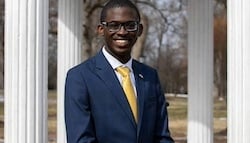
Devin Duncan is the student body president at the University of North Carolina at Chapel Hill and an incoming junior. Duncan says he is committed to making higher education a better place for the next generation of students and wants to see colleges do more to support students’ complex needs.
In this interview, he shares his thoughts about free speech on campus, tenure, what it’s like to be a Black student at a university that has ended all programming related to diversity, equity, and inclusion, and why he thinks colleges and universities must involve students when it comes to making decisions about their futures.
Women constitute approximately 58 percent of today’s college students, but many female students do not see themselves reflected in college and university presidents.
Approximately 33 percent of presidents in higher education today are female, with the percentage dropping to around 30 percent at Research 1 institutions. Of that number, just six percent are women of color. To gain insight on what it means to be a female president today, three presidents—one from a small private college, one from a public Research 2 institution, and one from a Historically Black College and University—share their experiences and perspectives.
Tony Acevedo's introduction to higher education started with a poster at the Otisville Correctional Facility that highlighted an information session on going to college. After spending more than 13 years behind bars, Acevedo says he was doubtful of any opportunities promising a better future.
After meeting with staff members, however, his skepticism began to fade. He enrolled in the City University of New York’s Prison-to-College Pathways Pipeline program, which offers incarcerated students the chance to earn an associate degree. In 2024, Acevedo was released midway through the program and continued his education at the Borough of Manhattan Community College. Now 40, he recently earned his associate degree in the liberal arts.
In Educated Out, Mara Casey Tieken challenges the widespread assumption that rural students lack aspirations to attend college, particularly highly selective institutions. She does so through the stories of nine rural, first-generation college students who enrolled at elite liberal arts colleges. Rather than portraying them as exceptional individuals who escaped rural America, she presents a more complicated story about ambition, family, place, and the costs of educational mobility.
Her book asks readers to reconsider both what rural students face when they enter higher education and what higher education owes to the communities they leave behind.
North Idaho College is promising qualifying graduates that they will secure a job within six months of graduation or get into a transfer program. Otherwise, NIC will provide additional courses, support, and training at no cost.
The program goes into effect for students starting this fall. The goal of the guarantee is to show the community, students, and critics the value of college degrees, says the school's president, Nick Swayne. It’s also another way for NIC to invest in student success beyond graduation, Swayne says.
Generative AI is changing the way people research and study, but can it change the way we think? National surveys find more than 85 percent of U.S. college students use artificial intelligence tools to explain complex concepts, summarize articles and research, prepare for tests, and even brainstorm ideas. But what if outsourcing one's brainstorming to artificial intelligence extinguishes innate creativity?
That's the question troubling Rebecca Winthrop, head of the global task force on AI and education at the Brookings Institution. She explains more in this interview.


.jpeg?width=500&upscale=true&name=images%20(100).jpeg)

.jpg?width=500&upscale=true&name=istockphoto-514934422-612x612%20(1).jpg)