South Carolina is the place that I love and call home, and I knew and covered Sen. Lindsey Graham for more than two decades. His death, as Graham was running for a fifth term, begins a tumultuous new chapter in this state's politics during a year that has already been full of upheaval.
As the conservative state's senior senator and an influential ally of President Donald Trump, Graham was presumed to be on a reelection glide path. Now, Gov. Henry McMaster must choose a temporary replacement who can serve until January — while the state also prepares a special primary so voters can choose a new Republican nominee for the general election. Plus, moderate vs. progressive primaries move to the Midwest, younger Jewish Americans' support for Israel and AP photo journalist Alex Brandon reflects on photographing Graham. |
|
|
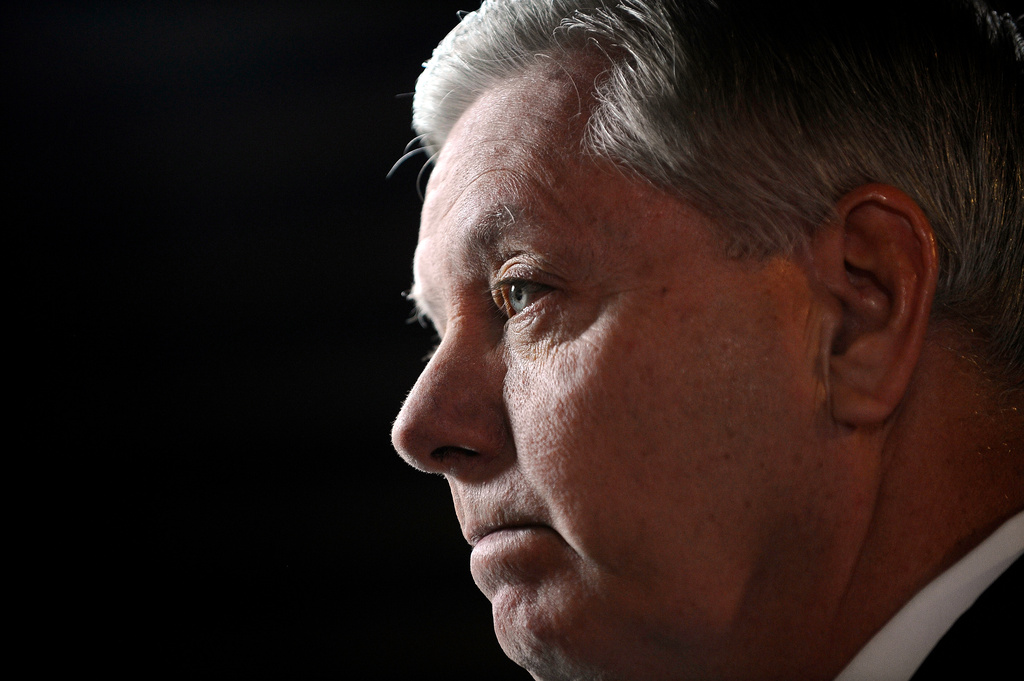
Sen Lindsey Graham, R-S.C., speaks to the media before the CBS News Republican presidential debate at the Peace Center, Saturday, Feb. 13, 2016, in Greenville, S.C. (AP Photo/Rainier Ehrhardt, File) |
Who could replace Lindsey Graham? South Carolina's next steps after senator's death — By Meg Kinnard The rare open Senate seat has ignited a scramble among South Carolina's most ambitious conservatives, who have been eager to climb the political ladder.
Republicans just finished a sprawling and bruising contest to figure out their nominee for succeeding McMaster, who is wrapping up his second term. State Attorney General Alan Wilson won the nomination, overcoming a field that included Lt. Gov. Pamela Evette, Rep. Nancy Mace and Ralph Norman — all of whom are now eyeing Graham's seat following his death over the weekend.
According to South Carolina law, a one-week filing period for a special primary election begins on the second Tuesday after the candidate’s death, or July 21.
The special primary election would be held on the second Tuesday after that filing period closes, or Aug. 11. Any necessary runoff would follow two weeks after that, or Aug. 25.
From that point, the new nominee would have just over two months to campaign for the general election on Nov. 3.
No Democrat has won a Senate seat in South Carolina in decades, and Republicans in recent history typically take statewide seats by double digits. So while history suggests that Graham was en route to a fifth term, Republicans are carefully surveying the landscape for the general election face-off with Charleston pediatrician Annie Andrews, who won the Democratic nomination last month.
Read more from me on South Carolina's scramble for Graham's seat. |
|
|
|
Midwest primaries pit moderates against progressives |
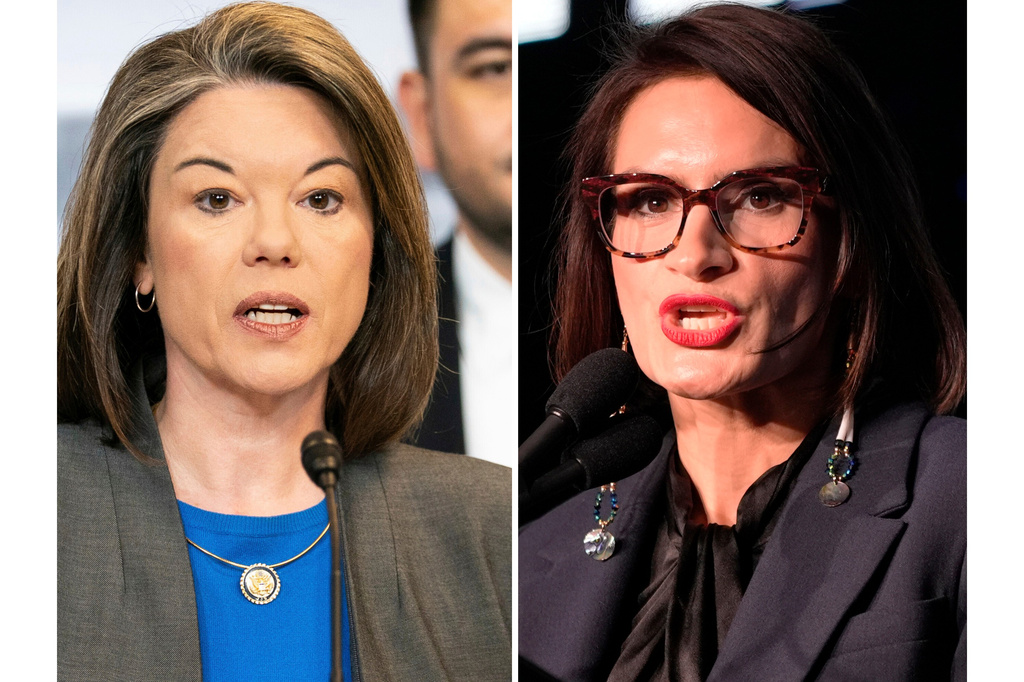
This photo combination shows Rep. Angie Craig, D-Minn., left, Jan. 15, 2026, in Washington and Minnesota Lt. Gov. Peggy Flanagan, Nov. 5, 2024, in St. Paul, Minn. (AP Photo/Allison Robbert, Abbie Parr, file) |
The next big races between moderates and progressives are in pivotal Midwestern states — By Matt Brown
August primaries in Michigan, Wisconsin and Minnesota will be another gauge of Democratic voters’ frustration with the establishment. The races across the Upper Midwest may also offer another test of the electability of hard-left candidates.
The Minnesota primary, in which U.S. Rep. Angie Craig and Lt. Gov. Peggy Flanagan are vying for the seat vacated by Democratic Sen. Tina Smith, is Aug. 11. Wisconsin also holds its primary that day — one week after voters will choose nominees in Michigan on Aug. 4. In Michigan, Rep. Haley Stevens is running against progressive Abdul El-Sayed for the state's Democratic Senate nomination in a race Democrats must win to hold the seat held by Sen. Gary Peters, who is retiring and has endorsed Stevens. And in Wisconsin, democratic socialist state Rep. Francesca Hong has surged in the state's Democratic gubernatorial primary against more conventional Democratic lawmakers, including former Lt. Gov. Mandela Barnes and current Lt. Gov. Sara Rodriguez.
In each case, progressives hope to prove that an economically populist message resonates with voters beyond deep blue enclaves where they have had recent success, like New York City and Denver. But Democratic leaders fear that the insurgent candidates risk blowing winnable races for Democrats with messages considered too radical for most voters. Read more from Brown on these pivotal Midwestern contests. |
|
|
|
A family with Israel flags attends Shabbat services at Temple Beth Sholom in Miami Beach, Fla., Oct. 13, 2023. (AP Photo/Giovanna Dell'Orto) |
Support for Israel isn't a high priority for younger Jewish Americans, an AP-NORC poll finds — By Giovanna Dell'Orto and Amelia Thomson-Deveaux
Support for Israel is a key component of the religious identity of many Jewish adults ages 45 and older in the United States, but younger Jewish adults are more likely to prioritize other forms of connection, like celebrating Jewish holidays, according to a new AP-NORC poll.
That suggests the generational divide on Israel’s actions since the Hamas-led Oct. 7, 2023, attack that triggered the war in Gaza extends beyond politics to religious identity.
The survey of 1,022 Jewish adults from The Associated Press-NORC Center for Public Affairs Research shows that this split on support for Israel is particularly apparent among adults who identify as religiously Jewish. Jewish adults who are religiously unaffiliated but identify as Jewish in other ways tend to have less of an emotional connection to Israel in general. Among the religiously Jewish adults — who make up 68% of Jewish adults overall — about 6 in 10 say that being Jewish is “extremely” or “very” important in their life, regardless of their age. But about half of older religious Jewish adults say that supporting Israel is “extremely” or “very” important for their Jewish identity, similar to the percentage who say that about celebrating Jewish holidays. By contrast, only about 4 in 10 younger religious Jewish adults emphasize support for Israel, while about 7 in 10 say celebrating Jewish holidays is highly important.
Read more by Dell'Orto and Thomson-Deveaux on the latest polling. View the AP-NORC Polling tracker. |
|
|
|
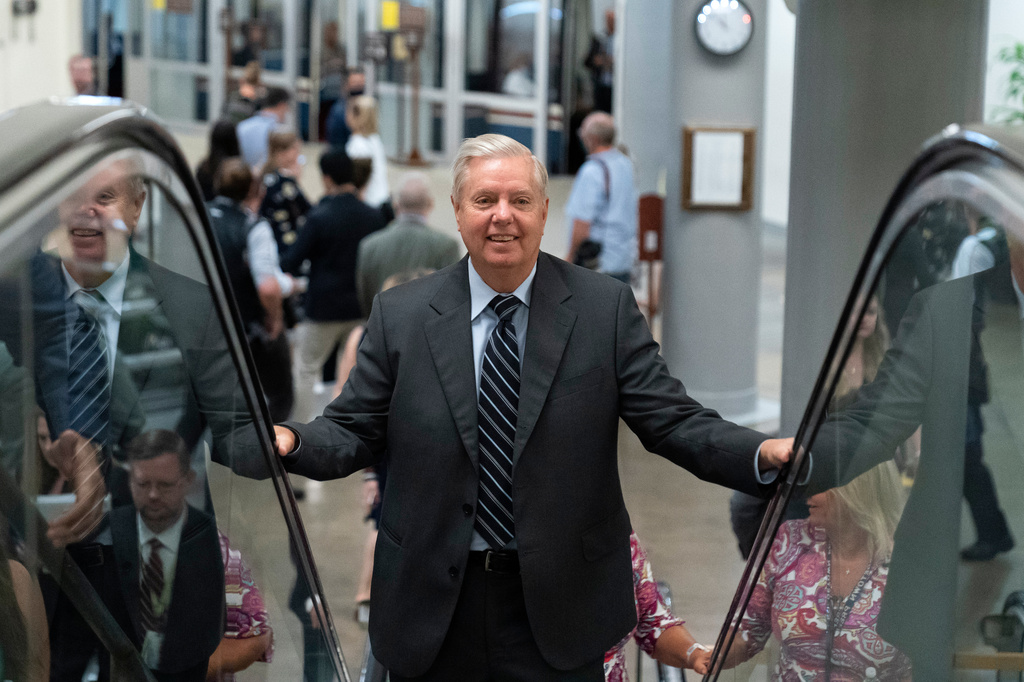
Sen. Lindsey Graham, R-S.C., heads to a vote on Capitol Hill, June 8, 2021, in Washington. (AP Photo/Alex Brandon, File) |
Washington-based photo journalist Alex Brandon has spent years covering politicians, and Graham was among those he said understood journalists' role: "Some members were always in a hurry, and some members took their time when they knew that we needed to make a picture of them. And he was one of the latter. Senator Graham understood how the game was played."
Explore more of Brandon's work covering Washington and politics. |
|
|
|
|