The world’s Achilles’ heel

Follow energy market shifts and the forces driving the transition to clean power. Subscribe to Reuters.com for $1/week.


Power Up

Power Up

A Reuters Open Interest newsletter

By Ron Bousso, ROI Energy Columnist


Data refreshes every time you open this email. For more energy news, click here. Please send any feedback to powerup@thomsonreuters.com.

Hello Power Up readers,

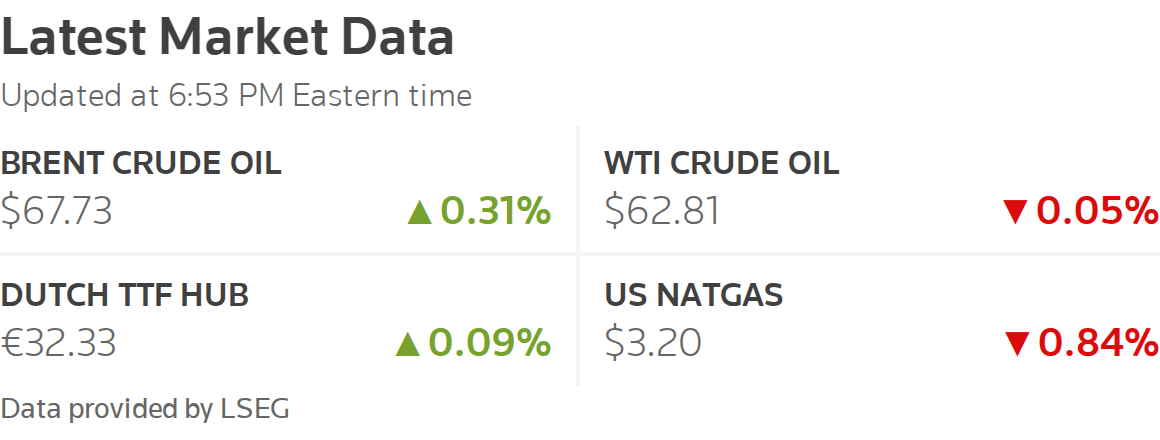
It once again feels more like wartime than peacetime in the Middle East, as U.S. and Iranian forces exchanged heavy missile and drone assaults overnight. Tehran targeted U.S. facilities in states across the Gulf and said it had once again closed the vital Strait of Hormuz, sending oil prices higher.

This is the sixth straight day of violence in the region, leaving the June 17 U.S.-Iran ceasefire deal in tatters. In the past week, U.S. President Donald Trump has said he considers the ceasefire over, though he left the door open to more talks. On Sunday, Trump said in a phone call with Reuters: “We're beating them up.” 

As we’ve highlighted in recent weeks, the conflict is now almost entirely centred on the status of the narrow waterway that transported a fifth of the world’s oil and gas supplies before the war. While Iran wants to establish a permanent system to collect fees in the strait, the U.S. and Gulf countries insist on free passage. Officials from Iran and Oman, which share the strait’s coastlines, met over the weekend to discuss ways to permanently reopen the strait, but no progress appears to have been made.

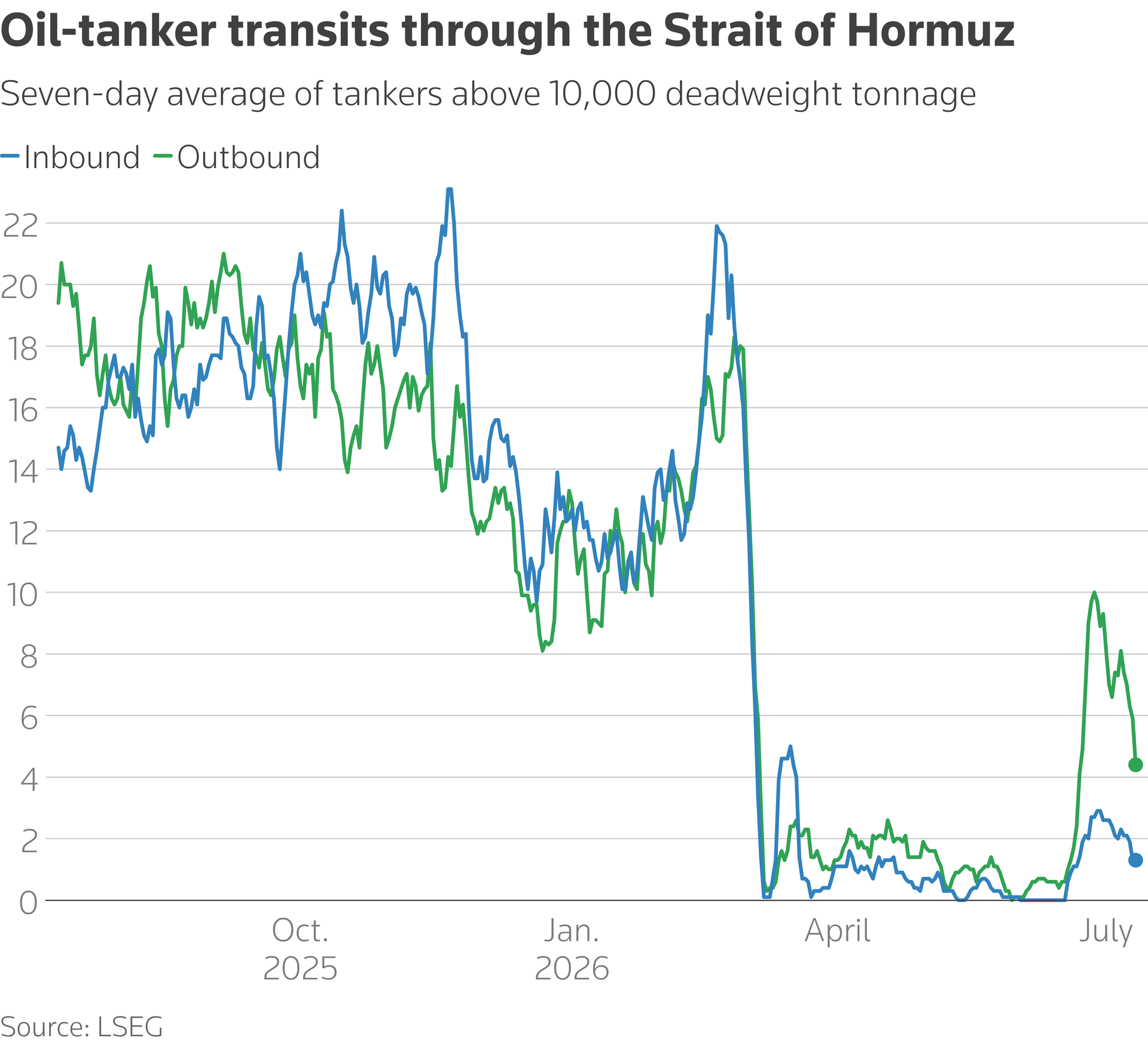
A trickle of tankers continues to flow through Hormuz, though the number is unclear since some vessels switch off their transponders to avoid detection. One thing is certain – oil and gas flows from the Gulf are a fraction of what they were before the war.

So for now, the world continues to muddle through, tapping storage which is running thin after four-and-a-half months of disruption. Europe has less than a month of aviation fuel supplies, Reuters reported, a bleak prospect as we enter peak summer travel season.

Zooming out from the Hormuz tensions, the battlefields of the Middle East, Ukraine and Russia are showing how cheap, mass-produced drones have transformed modern warfare, exposing critical energy infrastructure as modern economies’ Achilles' heel. The implications for the energy industry are profound. More on this below.

Here are a few more headlines:

  • Asia's imports of liquefied natural gas (LNG) are poised to hit a six-month high in July while Europe's imports plunge to their lowest in nearly two years, wrote ROI Asia Commodities Columnist Clyde Russell.
  • And ROI Energy Transition Columnist Gavin Maguire wrote an in-depth column looking at how batteries have transformed from the quiet workhorses of the economy into a cornerstone of the modern world.

As always, don’t hesitate to contact me at ron.bousso@thomsonreuters.com or follow me on LinkedIn with any questions or thoughts.


Top energy headlines

  • Hormuz traffic slows to two-month low as renewed US, Iran strikes raise safety risk
  • Oil gains over 4% as Trump says US reinstating Iran naval blockade 
  • Trump: Iran blockade reinstated, US to charge 20% on Strait of Hormuz cargo
  • OPEC further lowers 2026 global oil demand growth forecast
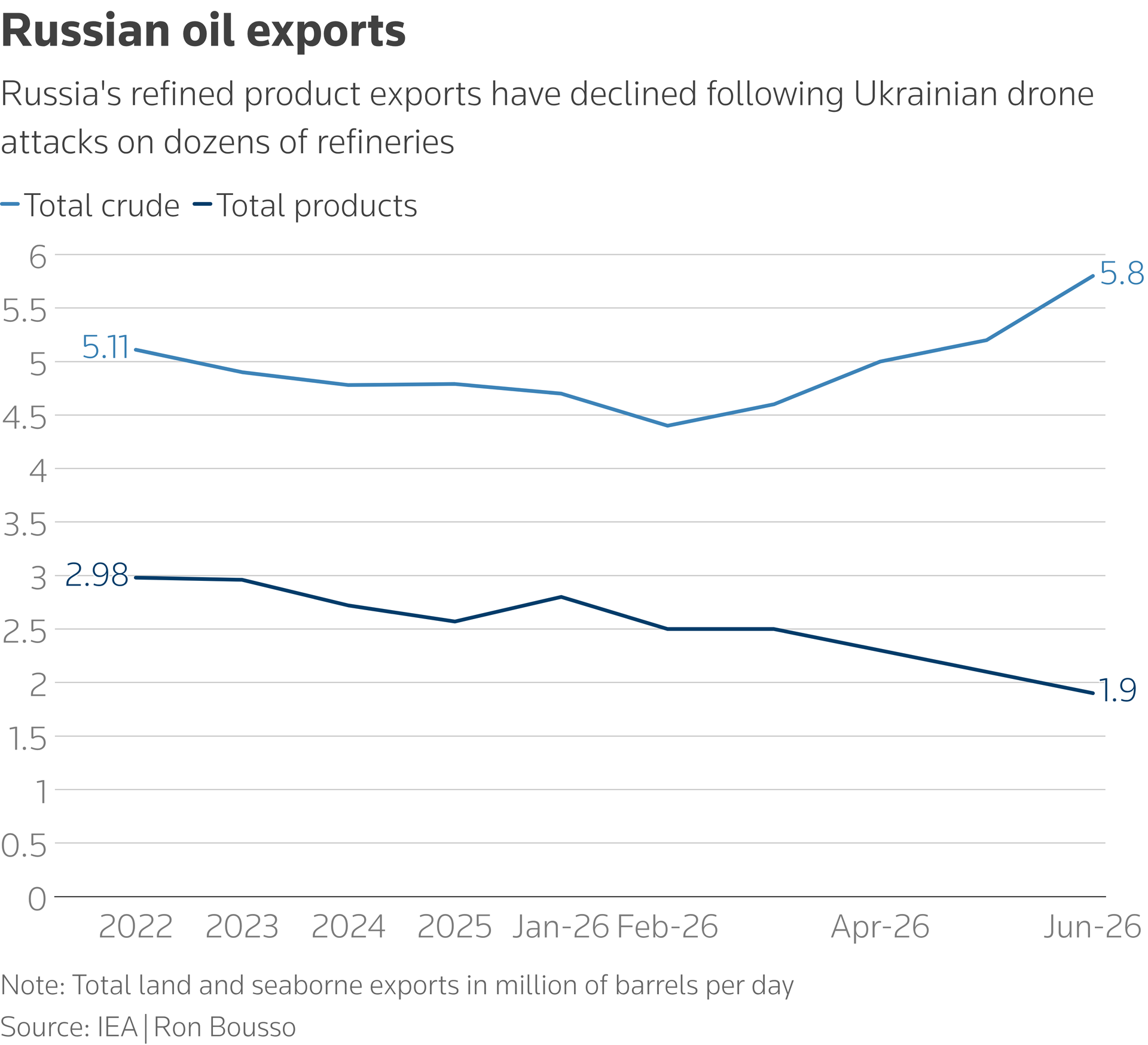
  • Central Asia feels the pinch of Russia's fuel crunch


The world’s Achilles’ heel

Lessons from the battlefields of Ukraine, Russia and the Middle East have shown how unmanned aircraft can evade traditional air defences, turning oil refineries, power stations, export terminals and pipelines into prime targets.

Facilities that took decades and billions of dollars to build can now be threatened by swarms of drones costing a few hundred to a few thousand dollars apiece, dramatically shifting the balance between attacker and defender.

The wars in Ukraine and Iran have exposed the vulnerability of critical infrastructure around the world, from energy facilities and telecommunications networks to transport systems and power grids.

In the Middle East, producers are now looking to build thousands of kilometres of pipelines bypassing the Strait of Hormuz.

While such infrastructure may reduce exposure to a single strategic chokepoint, every kilometre of new pipeline, pumping station or power substation creates another potential target for increasingly sophisticated drone attacks. 

Ironically, measures designed to improve energy security could also create fresh vulnerabilities – and the risk ⁠extends beyond the Middle East.

Read the full column