Hello,
Wildfires are raging throughout Europe, Canada and the United States as record temperatures continue across the northern hemisphere.
Around 19 wildfires have been reported across England and Wales, according to local firefighters and rescue teams. In North Wales, a major incident was declared by emergency services on Sunday after the blaze broke out, as firefighters continued to try and tackle the blaze on Monday.
In fact, a friend of mine notified me about being able to smell the smoke from the Welsh wildfire all the way in Liverpool where local fire control operators advised residents to make sure their windows and doors remained closed. Click here for a local report about the smoke.
There are still hot weather warnings in place, with amber and yellow heat health alerts from the UK Health Security Agency. But what about the rest of Europe? Before we get into the wildfires, please see below for a few other interesting ESG stories on my radar: |
|
|
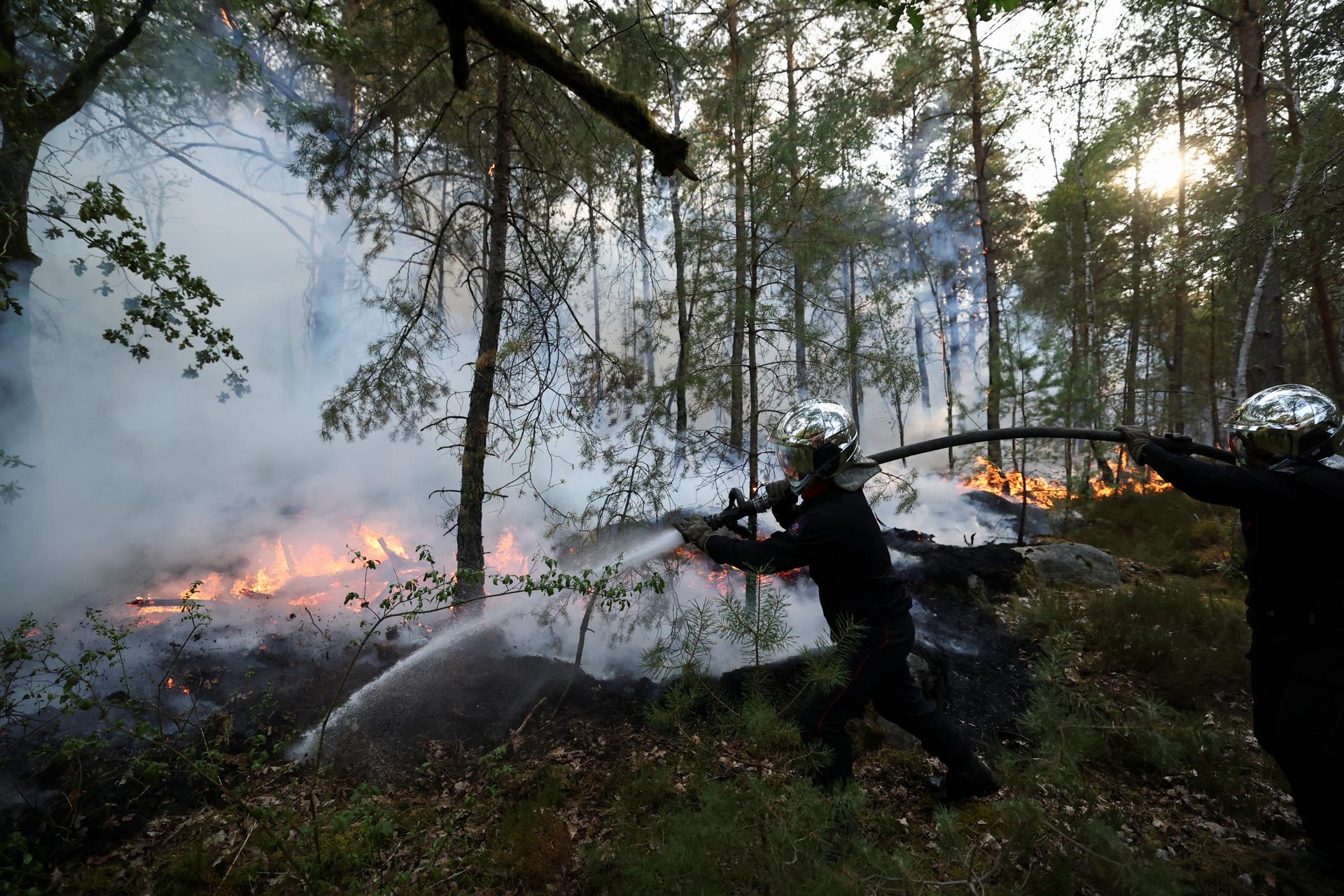
Firefighters work to extinguish flames in the Fontainebleau forest in Noisy-sur-Ecole, near Paris, during a heatwave affecting large parts of France. REUTERS/Stephane Mahe |
Spain's death toll from one of its deadliest wildfires rose to 13. The region is enduring its third heatwave of the summer, with tinder-dry vegetation and high temperatures fueling blazes from the Iberian Peninsula to France.
The French government deployed hundreds of firefighters to tackle a fast-moving blaze that broke out alongside a motorway near Fontainebleau, home to one of France's best-known royal palaces.
For the first time in the Greater Paris area, air assets were dispatched to contain the blaze which turned the skies black. Firefighters are still tackling the fire today. Click here for the latest story.
Smaller fires in the area also disrupted high-speed train services. Up to 800 people were evacuated from their homes. Interior Minister Laurent Nunez said the circumstances of the fire were suspicious: "There were around ten points where the fire started within a 1,000-metre radius, which suggests it may have been started deliberately."
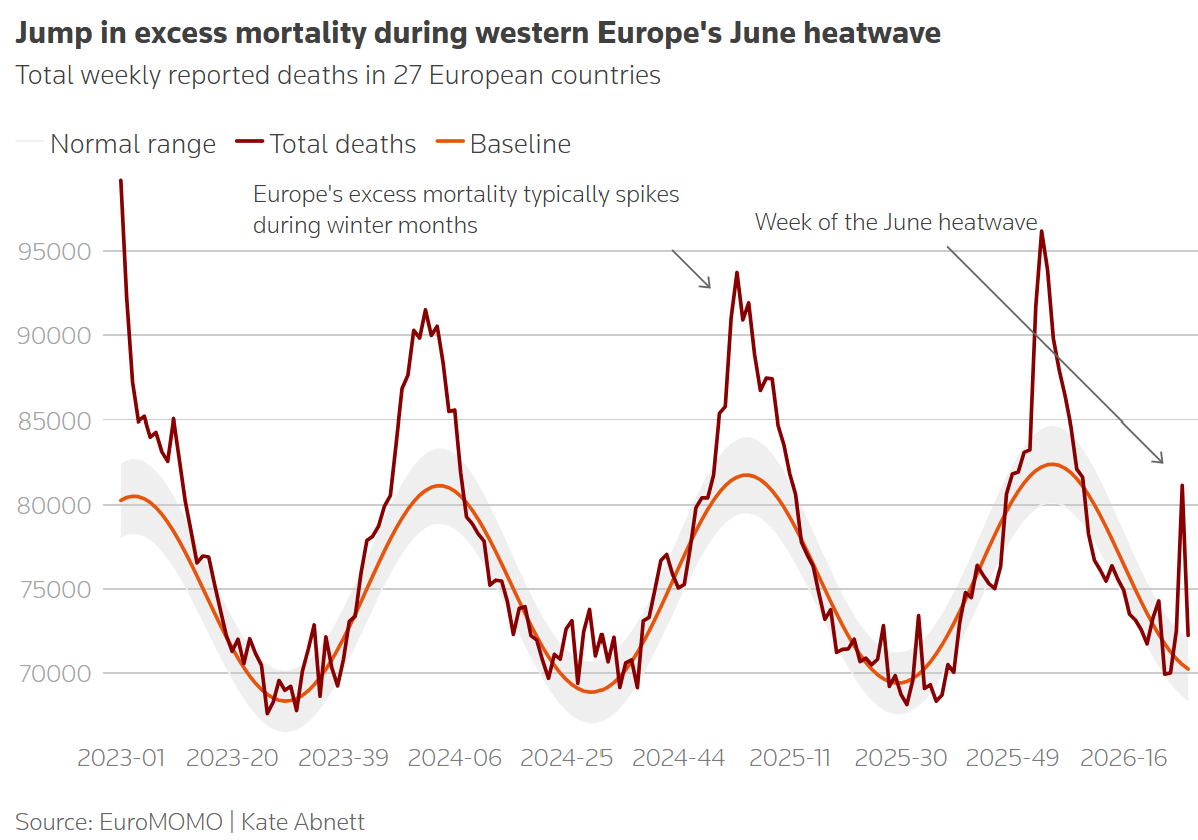
At least two people were arrested on suspicion of having started the fire. Forecasters say the heatwave is expected to continue until the middle of the week with a new heatwave expected to last at least a week next week, hitting neighbouring Italy. Many scientists say climate change is making wildfires more frequent and difficult to combat. Click here to keep track of the heatwave across Western Europe via the Reuters Climate Monitor.
According to the Reuters Climate Monitor, the average high across Western Europe was forecast to be 29.4°C, which is 6.3° above the normal high for July 14 from 1961-1990. The most extreme anomalies were forecast for Belgium and France, where highs were expected to reach more than 9 degrees above historic norms. |
|
|
|
Declaring a peacetime emergency |
Over in the United States, Minnesota Governor Tim Walz mobilized state National Guard troops to battle wildfires on the state's northern border with Canada over the weekend. The fires have covered more than 800 acres in five days and are yet to be contained, according to a Minnesota state website.
They are among the latest in a swath of fires that have raged across the United States due to hot, dry conditions driven by an El Nino weather pattern across the continent.
"I’ve declared a peacetime emergency and mobilized the National Guard to assist with wildfire response in northern Minnesota," said Walz, a Democrat. "Minnesotans extend our deepest gratitude to all of the first responders working around the clock to keep their neighbors safe."
The National Weather Service put out an extreme heat warning and heat advisories are in place across a large portion of the Great Basin through the northern Plains and areas farther east into New England.
This heat is expected to be exceptionally rare and produce numerous high temperature records, according to the NWS. It reminds me of The Summer of Death, by author, journalist and Switchie fan Geoff Williams, which chronicles the deadly North American heatwave of July 14, 1936, that killed thousands in the United States and hundreds in Canada. It's worth a read for the lessons it offers from the past. |
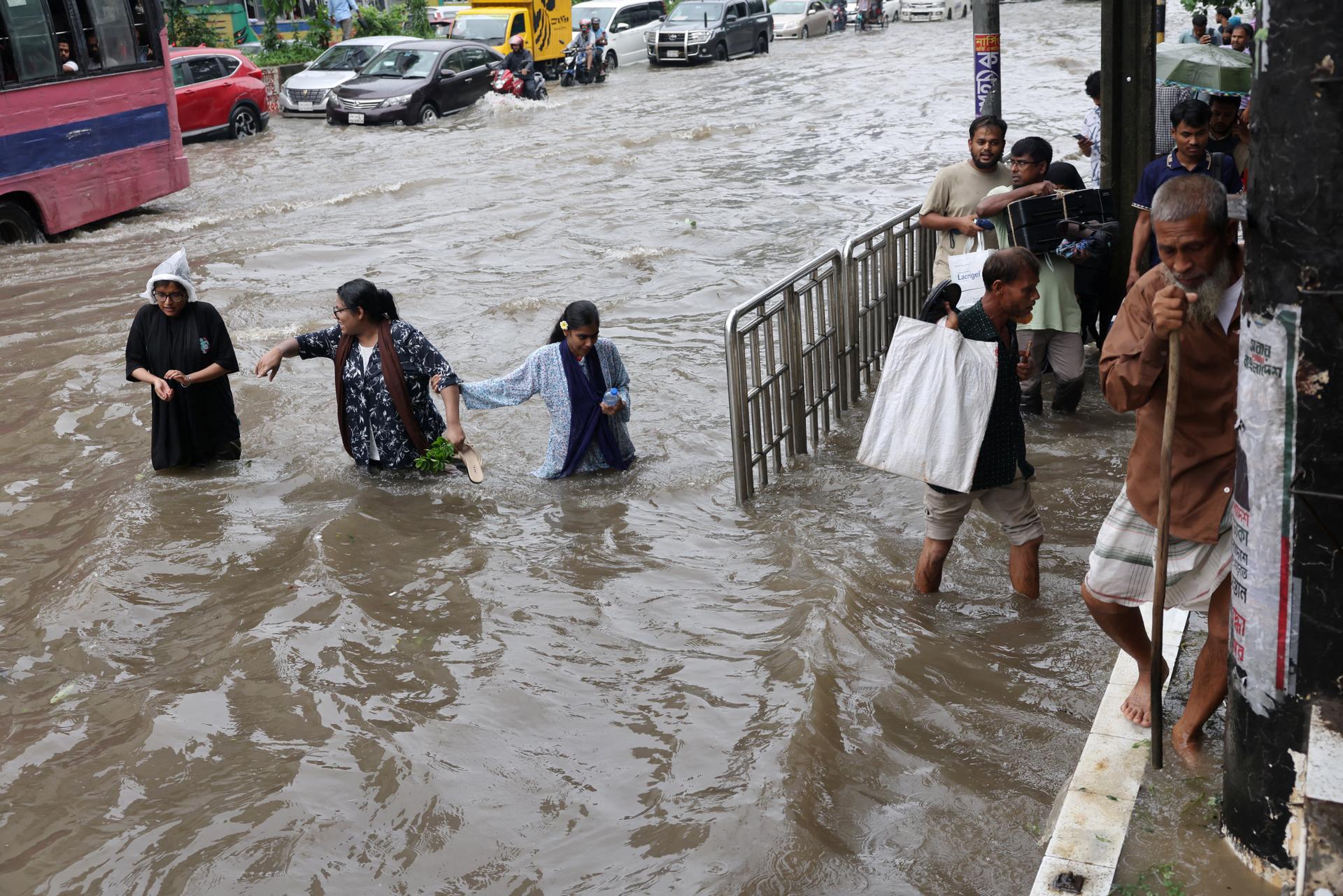
People and vehicles move through a flooded street following torrential rain in Dhaka, Bangladesh. REUTERS/Mohammad Ponir Hossain |
-
Deadly Bangladesh floods: At least 44 people in southeastern Bangladesh have died after floods and landslides triggered by days of torrential monsoon rain, as authorities raced to deliver aid to devastated communities over the weekend. The disaster management ministry said that flooding across seven districts has disrupted daily life, isolated thousands of families, and stranded 267,918 households. Click here for the full report.
-
Typhoon Bavi: The most powerful storm to strike mainland China this year brought heavy rain to the eastern coast over the weekend and lashed densely populated cities with violent winds. The storm forced more than 260,000 people to evacuate their homes in northeastern Liaoning province, as Typhoon Bavi brought intense flooding. Heavy rain is expected to persist through Tuesday, with extreme downpours in some areas, authorities said.
-
Venezuela quake memorial: Young Venezuelans are mourning their loved ones after deadly earthquakes that struck the state of La Guaira in northern Venezuela last month. The youth have watched their parents struggle through an economic crisis that has lasted more than a decade, political upheaval and outbreaks of violence while friends and relatives migrated abroad. Click here for a moving story about how a teen dancer survived the quake.
-
Texas fracking: When France and Spain meet for the World Cup semi-final today, it will be in Dallas Cowboys' home stadium in Arlington, Texas. Click here for an insightful piece by Ethical Corp Magazine on how the city of Arlington is home to French energy giant TotalEnergies’ fracking operations that are as close as 300 feet (100 metres) from homes, schools and daycare centers.
-
Albania resort: Miami-based businessman Artur Shehu is wanted in Albania for allegedly laundering drug money and falsifying deeds to land where Jared Kushner plans a multi-billion-dollar resort, according to the country's organized crime agency. Shehu denies the allegations, his lawyer said, but confirmed prosecutors have issued an arrest warrant. In April, Shehu sold the resort site to Albania Land Development, a company owned by the Kushner-backed project's developers and other investors which led to multiple protests.
|
|
|
|
Deb Forder, safety manager for Oxfordshire County Council’s Fire and Rescue Service, shared her thoughts on how to stay safe while out in the heat amid forest fires: “Please be careful, act responsibly and follow our important safety guidance.
“If you’re going to be out and about in the countryside, please make sure you don’t discard your cigarette or throw it from your car; take your rubbish home as even something like a glass bottle can start a fire if it heats dry grassland by reflecting the sun’s rays. “When using a barbeque, ensure it's in good working order and follow the instructions.
“It’s important to make sure any gas pipes are in good condition and connected correctly, placing the barbecue on a stable surface so it cannot fall over, and keep it well away from anything that can catch fire. “After use we recommend that you make sure any cylinders are properly turned off and if using charcoal or a disposable barbecue, please don’t dispose of any coals in your bin for at least 24 hours, and never leave a lit barbeque unattended.”
The fire prevention guidance extends to gardening, particularly the burning of unwanted cuttings and plant waste. The advice is to make sure any fire is at least 18 metres away from houses, trees, hedges, fences and sheds.
“Please don't build your bonfire more than three metres in height and keep buckets of water or a working hosepipe nearby. Once your fire has died down, spray the embers with water to stop it from reigniting and keep a watchful eye to make sure it doesn’t flare up again.” |
|
|
|
|