|
|
 
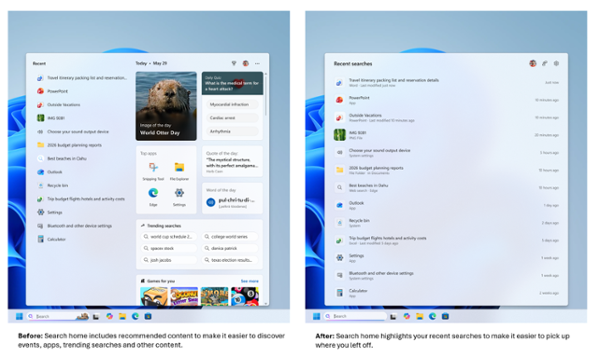 |
| New, uncluttered Windows Search interfaces (Microsoft) |
Microsoft is testing improvements to Windows 11's search function in its latest beta build, aiming to create a calmer, less cluttered user experience. The update prioritizes local search results over web searches, removes promotional content from web results and allows users to disable web and Microsoft Store suggestions. These changes are part of Microsoft's broader effort to enhance Windows 11 based on user feedback.
|
|
|
|
|
Supply chain leaders face rising labor costs, proliferating sales channels and growing fulfillment complexity. Exol ™ solves for that, providing broad-based access to modern fulfillment powered by robotics and AI for companies of all sizes. Learn more |
|
|
|
| ADVERTISEMENT |  |
|

|
Microsoft will make passkeys the default authentication method in Entra ID starting in September, with SMS and voice authentication ending by February 2027. The move aims to enhance security against AI-driven attacks, as passkeys require biometric verification or device possession, making them less susceptible to phishing and credential theft.
|
|
|
Chinese semiconductor startup Dongfang Suanxin has unveiled a plan to rival Nvidia by using software-defined computing and 3D-stacked near-memory architecture to bypass US export controls. "We have to forge a path of our own," founder Wei Shaojun says.
|
|
|
Apple has released the public beta of iOS 27, featuring Siri AI, performance improvements and a redesigned Screen Time experience. Siri AI, the main feature, leverages Apple Intelligence to enhance conversational abilities and personal information searches. Other notable updates include customizable Liquid Glass, faster app launches, and enhanced child safety features. The beta is available for iPhone 11 and newer.
|
|
|
Google is integrating AI into Sheets to make data analysis more accessible to users with limited spreadsheet skills, says Eric Birnbaum, director of product management for Google Sheets. Users can now use Gemini to automate tasks such as formatting and data entry. "For so many years, the spreadsheet was a gatekeeper; if you couldn't speak the rigid language of spreadsheet formulas, you couldn't extract the value from data. But by introducing these natural language interfaces, AI is separating the analytical capability from the technical literacy," Birnbaum says.
|
|
|
|
|
Product discovery has shifted to AI platforms like ChatGPT and Copilot. Human-centric copy is no longer sufficient. Join our July 23 webinar to audit your catalog health and enrich data at scale without tech stack disruption. Register now » |
|
|
|
| ADVERTISEMENT |  |
|

| |
 |
| (PhonlamaiPhoto/Getty Images) |
Enterprise security teams have rapidly increased AI integration in their programs over the past year -- AI use has jumped from 50% to 78%, according to the SANS Institute survey of cybersecurity and IT practitioners. Despite the rapid rise, four in ten practitioners report the absence of formal AI adoption policies, and over half report no established frameworks for AI audits. Additionally, most practitioners lack visibility into where AI models are deployed or what information they handle, raising concerns about the protection of sensitive data as AI becomes more embedded in security operations.
|
|
|
|
The prevalence of "artificial intelligence" in job titles has more than tripled in the US since 2022, with 63% of such postings outside traditional tech companies, per Indeed's Hiring Lab. Many of these roles have existed for decades, but now require AI proficiency, signaling innovation and attracting applicants.
|
|
|
As technology and AI reshape the workplace, companies are rethinking how they develop and retain talent. A recent CompTIA study found that most HR and IT leaders believe improving employee skills is critical. The research also shows growing investments in AI training and digital fluency. Certifications continue to play an important role, with nearly all organizations recognizing the value of validating workforce skills through credentials. |
|
CompTIA Network+ offers a way to build and validate essential networking skills that employers value. The certification covers key topics such as network connectivity, cloud and virtual networking, troubleshooting, performance monitoring and cybersecurity fundamentals. Designed for aspiring technical support specialists, network operations professionals and system administrators, CompTIA Network+ helps develop the practical knowledge and job-ready skills needed to manage and secure modern networks.
|
|
|
| | |


.png)