Lumina Foundation is working to increase the share of adults in the U.S. labor force with college degrees or other credentials of value leading to economic prosperity.
For decades, higher education and career and technical education have largely operated as separate pathways. But a new partnership in New York hopes to blur that distinction by allowing students to build both academic and workforce credentials along the same educational pathway.
The University of Mount Saint Vincent last week announced a partnership with Apex Technical School to establish a skilled trades training program on its Riverdale campus in the Bronx. Beginning with electrical training, the program will enable students to earn industry-recognized credentials and pursue associate and bachelor’s degrees through articulation agreements. The model aims to reduce barriers between vocational and higher education and allows students greater flexibility to enter the workforce while continuing their education.
In February, several University of Wisconsin regents were so frustrated with the system’s president during a presentation on artificial intelligence that they started texting one another.
Soon after, President Jay Rothman would be out of a job. At first, it was not clear why. But text messages and emails between the regents and Rothman show the extent that disagreement over what to do about AI played a role in his abrupt firing. The conflict speaks to the increasing uncertainty the technology is bringing to all levels of higher education.
As part of a sweeping, coordinated crackdown on state-level tuition equity laws and immigration enforcement, the U.S. Department of Justice recently filed suit against Massachusetts and Rhode Island, challenging the states’ tuition equity laws that grant in-state tuition to undocumented students.
The recent filings broaden the battlefield beyond base tuition rates, explicitly targeting state-funded financial aid, institutional grants, and scholarships as forbidden taxpayer-subsidized benefits. If the DOJ successfully invalidates these laws nationwide, tens of thousands of enrolled students will see their tuition bills double or triple overnight, effectively pricing them out of a degree midstream. For institutions already grappling with domestic enrollment cliffs and declining international student revenues, the sudden loss of tuition-paying students will reshape campus budgets and demographics for years to come.
After the U.S. Department of Education began implementing major changes to federal student loan programs on July 1, some groups are cautioning borrowers against enrolling their student loans in a new repayment plan. The new plan, they warn, won’t be a qualifying program for Public Service Loan Forgiveness, a popular federal student loan forgiveness program.
The new repayment plan changes will leave borrowers with fewer (and in some cases, more expensive) options for managing their student loans. And this will be particularly true for “new” borrowers, defined as those who take out new federal student loans or consolidate their existing loans going forward.
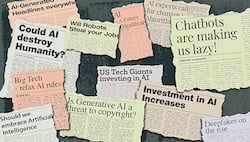
The arrival of generative artificial intelligence has sparked fierce debates among adults about what it should and shouldn't be used for. But what is it like to grow up and learn in the age of AI?
Seven teenagers from across the country weigh in with their thoughts on that question. Their responses cover a wide range. Tessa Klein, 18, says she's found AI helpful: it has provided useful feedback on essays and walked her through complex science concepts. Eighteen-year-old Dammie'on McColley of Indianapolis says the technology is so much bigger—and more worrisome—than a useful online tutor.
The future community college president will succeed less by managing institutional functions and more by orchestrating regional systems as a chief convener of employers, educators, elected officials, philanthropists, workforce organizations, and community partners around a shared vision for regional prosperity, contends Mordecai Ian Brownlee, president of the Community College of Aurora in Colorado, in this op-ed. In other words, the next generation of community college presidents will be remembered less for the institutions they managed and more for the ecosystems they built.
Brownlee believes this transformation should encourage aspiring presidents because it offers one of the most significant leadership opportunities for them to influence their institutions, as well as the economic strength and social mobility of their communities.



.jpg?width=500&upscale=true&name=istockphoto-1493192783-612x612%20(1).jpg)